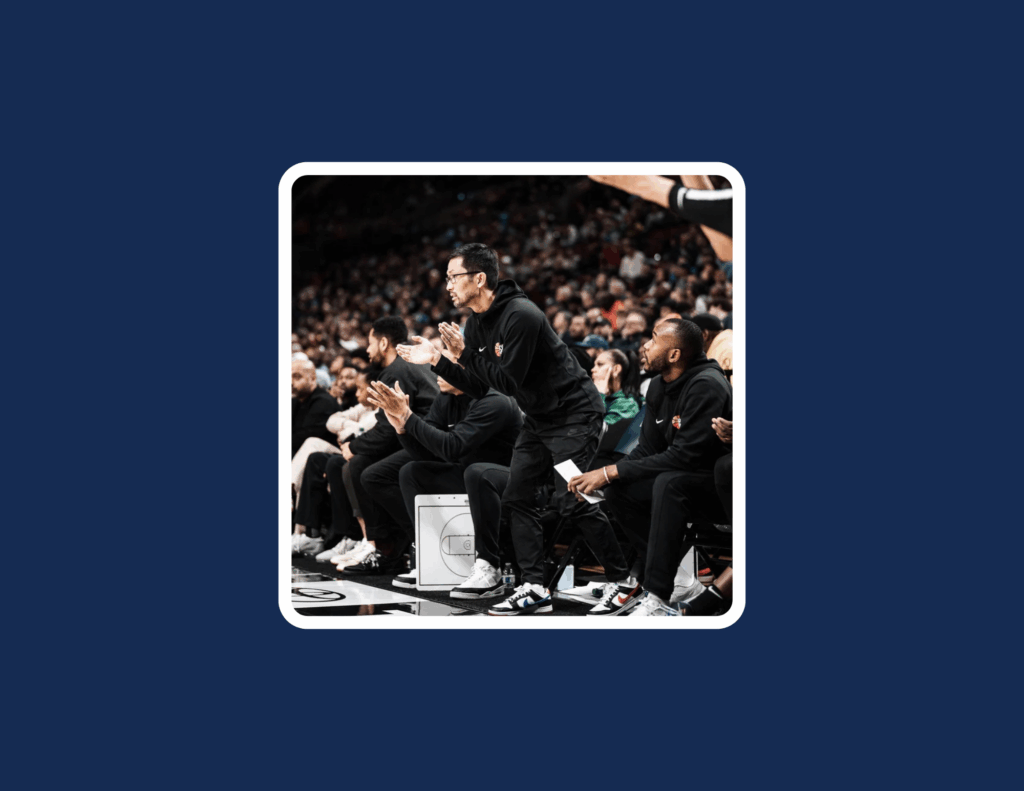
MARSHALL CHO – FOUNDER OF MEADOW PARK BASKETBALL – EPISODE 1189
Website – https://meadowparkbasketball.com/
Email – [email protected]
Twitter/X – @coachcho

If you listen to and love the Hoop Heads Podcast, please consider giving us a small tip that will help in our quest to become the #1 basketball coaching podcast.
Marshall Cho is the Founder of Meadow Park Basketball offering training, camps, and clinics in Lake Oswego, Oregon.
Marshall began his career as an educator through the Teach For America program, teaching mathematics in the South Bronx and Harlem and serving as the boys basketball coach at Future Leaders Institute, where he led them to a New York City Charter School Championship.
Fate then led him to Mozambique, where Marshall worked as a volunteer coach and instructor with the Mozambican National Basketball Federation as well as the varsity boys basketball coach at the American International School of Mozambique, a program that he launched and developed. During his time in Africa, Marshall also served as a coach for the NBA’s Basketball Without Borders Africa and led various volunteer efforts such as conducting basketball clinics with local basketball clubs and rehabilitating basketball courts through partnerships with Hoops 4 Hope and the U.S. Embassy.
Returning to the U.S., Marshall worked as an assistant coach at DeMatha Catholic High School in Hyattsville, Md. During his time there, DeMatha won two WCAC championships, compiled an 88-19 record, and sent four players to the NBA: Victor Oladipo, Jerian Grant, Quinn Cook, Jerami Grant. He then embarked upon his next chapter back in his home state as Director of Basketball Operations at the University of Portland for the Portland Pilots.
Marshall served for eight seasons as the varsity boys basketball coach at Lake Oswego High School, where he earned the distinction of being among Oregon’s first Asian American varsity boys basketball coaches. During Marshall’s tenure, he won the Three Rivers League title for three consecutive seasons as he was named league Coach of the Year each year.
Marshall worked as the head coach for consecutive years (2024 & 2025) with the World Select team at the Nike Hoop Summit, where he had volunteered with Team USA in years past. He also worked as a court coach at USA Basketball’s Men’s Junior National Team Minicamp in conjunction with the NCAA Final Four and as the camp lead instructions director for the Yao Foundation Camp in China.
On this episode Mike & Marshall discuss the critical need to prioritize skill development over competition in youth basketball, advocating for a shift toward a more balanced ratio of practice to games. In our discussion, we delve into the systemic issues that have led to an environment where the emphasis on winning has overshadowed the essential learning process inherent in training. We explore the significance of fostering a culture wherein young athletes can engage in meaningful practice sessions that promote skill acquisition, rather than merely participating in games for the sake of competition. The conversation also highlights the insights from Marshall’s extensive coaching career and his commitment to nurturing the next generation of players. This episode ultimately highlights the essential role that coaches play in shaping not only skilled basketball players but also well-rounded individuals, ready to face the challenges of life.
Follow us on Twitter and Instagram @hoopheadspod for the latest updates on episodes, guests, and events from the Hoop Heads Pod.
Make sure you’re subscribed to the Hoop Heads Pod on iTunes or wherever you get your podcasts and while you’re there please leave us a 5 star rating and review. Your ratings help your friends and coaching colleagues find the show. If you really love what you’re hearing recommend the Hoop Heads Pod to someone and get them to join you as a part of Hoop Heads Nation.
Grab a notebook before you listen to this episode with Marshall Cho, Founder of Meadow Park Basketball.
What We Discuss with Marshall Cho
- Why an emphasis on skill development is critical as we attempt to shift from a game-centric to a process-oriented approach
- The reduction of pickup basketball has resulted in a generation of players lacking opportunities for real-time learning and growth
- Fostering relationships and mentoring young athletes to navigate both basketball and life
- Why the role of a coach should be viewed through the lens of education, prioritizing student-athlete development over just wins and losses in a competitive environment
- The ratio of workouts to games in youth basketball should ideally be two to one, promoting skill development over only competition
- The importance of community involvement in youth sports
- The need for educational initiatives to elevate the status and respect of high school coaches within their communities
- Why three-on-three basketball is a superior method for youth development, allowing more touches and opportunities for learning
- The necessity of mentors in shaping young athletes’ understanding of the game
- Why encouraging experimentation in informal play, such as pickup games, is crucial for player development
Like this show? Please leave us a review here — even one sentence helps! Consider including your Twitter handle so we can thank you personally!

We’re excited to partner with Dr. Dish, the world’s best shooting machine! Mention the Hoop Heads Podcast when you place your order and get $300 off a brand new state of the art Dr. Dish Shooting Machine!
Your first impression is everything when applying for a new coaching job. A professional coaching portfolio is the tool that highlights your coaching achievements and philosophies and, most of all, helps separate you and your abilities from the other applicants.
The key to landing a new coaching job is to demonstrate to the hiring committee your attention to detail, level of preparedness, and your professionalism. Not only does a coaching portfolio allow you to exhibit these qualities, it also allows you to present your personal philosophies on coaching, leadership, and program development in an organized manner.
The Coaching Portfolio Guide is an instructional, membership-based website that helps you develop a personalized portfolio. Each section of the portfolio guide provides detailed instructions on how to organize your portfolio in a professional manner. The guide also provides sample documents for each section of your portfolio that you can copy, modify, and add to your personal portfolio.

Hey coaches — you’ve got a game plan for your team… but do you have one for your money?
That’s where Wealth4Coaches comes in.
Each week, they deliver simple, no-fluff financial tips made just for coaches. Whether you’re getting paid for camps, training sessions, or a full season—Wealth4Coaches helps you track it, save it, and grow it.
It’s time to stop guessing and start building.
Subscribe now at wealth4coaches.beehiiv.com/subscribe
And follow them on Twitter @Wealth4Coaches for daily money wins.
Your money needs a coach.
Start with Wealth4Coaches.
THANKS, MARSHALL CHO
If you enjoyed this episode with Marshall Cho let him know by clicking on the link below and thanking them via Twitter.
Click here to thank Marshall Cho via Twitter
Click here to let Mike & Jason know about your number one takeaway from this episode!
And if you want us to answer your questions on one of our upcoming weekly NBA episodes, drop us a line at [email protected].
TRANSCRIPT FOR MARSHALL CHO – FOUNDER OF MEADOW PARK BASKETBALL – EPISODE 1189
[00:00:00] Narrator: The Hoop Heads Podcast is brought to you by Head Start Basketball.
[00:00:20] Marshall Cho: If we can get to two workouts, to one game ratio in the US, we’re winning. Instead of one workout in four or five games, we’re falling behind. There’s a reason why it’s happening. We just fallen in love with the easy way out. Just rolling the ball out and hiring some referees, turning the scoreboard on. And we love a winner and a loser in our country.
And I think it’s become really black and white with that. And I think there’s nuances of the game that we can take away and those things come when you’re really digging deeper into the process of a certain drill, certain skill sets, certain concept. I think there’s beauty in that, that we’re missing out.
[00:00:58] Mike Klinzing: Marshall Cho is the founder of Meadow Park Basketball offering training camps and clinics in Lake Oswego, Oregon. Marshall began his career as an educator through the Teach for America program, teaching mathematics in the South Bronx and Harlem, and serving as the boys basketball coach at Future Leaders Institute, where he led them to a New York City Charter School championship.
Fate then led him to Mozambique or Marshall worked as a volunteer coach and instructor with the Mozambique in National Basketball Federation, as well as the Varsity Boys basketball coach at the American International School of Mozambique, a program that he launched and developed during his time in Africa.
Marshall also served as a coach for the NBA’s Basketball Without Borders Africa, and led various volunteer efforts such as conducting basketball clinics with local basketball clubs. And rehabilitating basketball courts through partnerships with hoops for Hope in the US embassy returning to the United States, Marshall worked as an assistant coach at the Matha Catholic High School in Hyattsville, Maryland.
During his time there, DeMatha won two WCAC Championships compiled in 88 and 19 record, and sent four players to the NBA Victor Oladipo, Jerian Grant, Quinn Cook, and Jeremy Grant. He then embarked on his next chapter back in his home state as Director of Basketball operations at the University of Portland for the Portland Pilots.
Marshall then served for eight seasons as the Varsity Boys basketball coach at Lake Oswego High School, where he earned the distinction of being among Oregon’s first Asian American varsity boys basketball coaches. During Marshall’s tenure, he won the Three Rivers League title for three consecutive seasons as he was named League Coach of the Year.
Each year. Marshall worked as the head coach for consecutive years 2024 and 2025 with the World Select Team at the Nike Hoop Summit where he had volunteered with Team USA in years past. He also worked as a court coach at USA Basketball’s Men’s Junior National Team mini camp in conjunction with the NCAA Final Four.
And as the camp lead instructions director for the Yao Foundation in China.
Hey, Hoop Heads score big on Dr. Dish Basketball’s end of year sale. Give your team the gift of extra more efficient reps this season. It’s a perfect gift to your team. For the holidays during the Dr. Dish end of year sale, everything must go. You’ll get three to $4,000 off select Dr. Dish models. Visit drdsihbasketball.com and get your Dr. Dish shooting machine today.
[00:03:26] Sean McDonnell: Hi, this is Sean McDonnell. Boys Varsity Basketball Coach at University School in Cleveland, Ohio. You’re listening to the Hoop Heads Podcast
[00:03:38] Mike Klinzing: Coaches. You’ve got a game plan for your team, but you have one for your money. That’s where Wealth4Coaches comes in. Each week, we’ll deliver simple, no fluff financial tips made just for coaches. Whether you’re getting paid for camps, training sessions, or a full season, Wealth4Coaches helps you track it, save it, and grow it.
It’s time to stop guessing and start building. Subscribe now at Wealth4Coaches.beehive.com/subscribe and follow us on Twitter at Wealth4Coaches for daily money wins. Your money needs a coach. Start with Wealth4Coaches.
Grab a notebook before you listen to this episode with Marshall Cho, founder of Meadow Park Basketball.
Hello and welcome to the Hoop Heads Podcast, it’s Mike Klinzing here without my co-host Jason Sunkle tonight. But I am pleased to be joined for the second time, one of the guys that I consider to be an original hoop head, Marshall Cho Marshall, welcome back to the Hoop Heads Pod Man.
Been a long time,
[00:04:45] Marshall Cho: Mike. Thanks for having me. Long time feels like yesterday in some ways, and it does feel like a long time because I know you had hundreds of episodes since I got on. So congrats on everything and all. All you’ve, you and Jason have accomplished.
[00:04:59] Mike Klinzing: Absolutely. And thank you for that. I really appreciate it.
When I think about you being on the first time, I remember you and I had a phone call. I can’t remember if it was before. I feel like it was after I had you on. I remember I was sitting watching my daughter’s soccer practice. I can still remember when I was sitting, when we had just a long conversation, just talking some basketball and kind of catching each other up on what we are doing.
I feel like that’s what this podcast tonight is going to kind of be like, of just catching up and figuring out what you’ve been up to. And so let’s start with where we left off the last time we talked, which was, you were at that point the head coach at Lake as Wego High School in the state of Oregon. Just kind of give people an update.
What, what have you been up to? What have you been doing? And then we’ll, we’ll dive into some of the specifics as we go forward here.
[00:05:43] Marshall Cho: Yeah. At the time I was deep in it. I think I was interviewing you maybe after practice at Lake Oswego High School, in my own, in, in our high school office.
I’m tuning into you from my, my home office at the moment. And I still live in Lake Oswego. My kids are here as a, I have a high school sophomore and a middle school seventh grader. So yeah, it’s just in the blink of an eye. I spent eight years there, two graduating classes. It, it felt like in some ways I thought I was going to be there forever, but like I most, you know coaches who may tune into your show I think many of us realized that we, at the end of the day were caretakers of the program and for, again, in this day and age to coach eight years and have the success that we did have the impact, i’m really grateful for that time and, you know for the last two years, just been trying to figure out what’s what’s the next step of impact? How do I increase my reach in terms of being a bridge builder? How do I leverage all the community building practices that I gained being embedded deeply into the lake community and trying to figure out much like what you and Jason have been doing in terms of using your podcast platform to serve coaches across the country.
Trying to leverage the good of having been a hoop summit. World team head coach for the last two years, having been blessed to get a chance to volunteer with the junior national team program for USA Basketball for about close to 10 years. And trying to think through what are some things that I can do as a servant of the game to, to build a bench for the next generation of coaches.
Coaches coming up and being in many ways a, a bridge for families as well. Now being outside of a high school program, how do I serve all the kids that are coming to my camps and clinics through Metal Park? A venture that I just started recently to be to give themselves a chance to be high school student athletes.
[00:07:37] Mike Klinzing: What have those conversations sounded like in your head when you’re asking yourself those questions and you’re trying to answer them? How much of that is going on just with you inside your own mind, and how much of it has been you having conversations with people that are a part of your network, kind of bouncing ideas off of them?
[00:07:57] Marshall Cho: Yeah, that, that’s really good, Mike. Yeah, I think many, many of us get, kind of get stuck in our heads with a lot of things, don’t we? I think for me I’ve had a sense of urgency, if I’m being honest with you, since leaving, like Oswego. I’m just an all in kind of guy. If I’m into something that’s, I’m going to give 110%.
So in some ways there, there was a natural break. I would say you, you give so much of yourself to a program. I think, to be honest with you, maybe the first year was really just taking a step back and recharging and reconnecting with others that, that I haven’t had a chance to do because I did so much spent, you know spent so much time here within the Lake Oswego community.
Ultimately, yeah, if you want to have impact you have to deal with other people. So I’m fortunate, I have a lot of good friends who are good sounding boards. So when If I have something in my mind percolating, I try to get it out right away. And I’ve been really trying to come from a place of abundance and says scarcity.
I think oftentimes high school coaches we’re limited by our, whether the regulations we that, that we follow all the, all the check boxes that we have to hit as coaches I think sometimes we’re, we, we, and I say as if I’m still the active, active coach could, but once, once a high school coach, always a high school coach.
But I think trying to approach fixing this basketball puzzle in the open market because, I mean, I just think the game of basketball in our country is in a really funny place. So the fact that I sat in the chair and led a community for a long time and going. How much work that is.
it’s just, it’s you and I have said this before in our last podcast, just from our influence of having served at the Snow Valley, Iowa camp. High school coaches in this country are the last of the cowboys. I mean, and I don’t know what you’re seeing your neck of the woods, but you’re out here in Oregon every year.
The head coaches that are taking over programs are younger and younger. I think they have less and less support than ever. They, they have, they go through a lot of scrutiny whether it’s in social media, whether it’s in the back channels of disgruntled or unsatisfied parents.
So, yeah, I think. Anytime that I have something, a, a idea, whether it’s like organizing a coach’s clinic or just getting, gathering a social gathering if I’m doing a clinic, making sure it’s open to coaches to just have it be a open door policy just like we would have with our players and giving coaches access to just steal away drills or just come in and be fed by the community that’s in, in the gym that I’m assembling.
So I think, yeah, the, the, as soon as I have something I’ve been really proactive about engaging other coaches in, in whatever I’m doing, and it’s been, it just really aling experience and looking forward to doing more of those in the coming year.
[00:10:50] Mike Klinzing: As you walk through that process of, again, trying to have an impact on coaches, right?
But also how do you think about. Impacting players. And what do you see as being the balance, if you could strike an ideal balance between impacting players and impacting coaches, obviously you’re, you’re impacting coaches, that stretches it a little further, right? Because if you impact a coach, that coach can know go and then impact their players.
Yeah. But I know you’re doing a lot of work with players as well. So how do you think about that balance when you start talking about impact and influence in the basketball world?
[00:11:25] Marshall Cho: Yeah, I think so a couple things just to catch up the audience I’m sure people are like, what, what is marshman up to?
if you’re not a full-time basketball coach, what do you do with all the free time that I have now? So the first couple years I was traveling a lot doing some clinics and speaking engagements overseas. the hoop summit game is just really one, one week out of the year.
So, you know I joke with my friends that I’m. Win list in the last three tries. So I’m, I’m owing three in three years one year as an assistant coach under Caleb Canales. It was a close one. Bronny James hit a big shot. Ja, Jared McCain made some plays down the stretch and they, they got us on that one two years ago.
we had a pretty close game at the halftime, but then I had Cooper Flag decided that they were going to take that game going down the stretch. So good for Cooper and the gang. And and then this past year we, we, the world team, the hoops have a world team. We were able to at least force overtime and Tunde Yahu, who’s now a freshman at Baylor, had a game time layup, nominal player.
Had a lot of blast but I joke that I’m oh three when it comes to official games, you know? But beyond the hoop Summit game what I’ve been working on is a lot of youth camps and clinics. So you and I have had a little bit of conversation about that. So what’s been really fun is I.
I’m lucky that I get to coach at and have this mountaintop experience with the Hoop Summit. But my every day for the most of my last three years has been in the gym with kids who are just learning the game or a lot of high school kids from other programs outside of Lake Oswego. What’s been really fulfilling because I always had kind of an unease about dealing with other high school coaches, players, and that really kind of stuck to my community.
But the freedom of just now being able to serve just kids all over our metropolitan, Portland metropolitan area has been just, just a blast. And if I’m being honest with you, just as it is to coach the best players in the world, like whoever is in front of me at the moment, they’re the most important player I have.
Right. So. I think people, like, for people like you and me who’ve been in this profession for a long time, if we’re not getting fed back by the energy and the enthusiasm and hunger for learning for the game that these young kids have, like, we’re not, we’re not going to last in this very long. So I’ve just been having a blast just seeing kids who could tantrum left-handed and six weeks later they’re making a left-hand layup in a live game situation.
that’s just as fulfilling and comfort compelling for me as a coach, as it’s for bringing together 12 players from all over the world and getting them to buy into a single mission. So yeah, I would say in terms of the players, the impact is it’s have to be two way street.
But in terms of me having specific things that I can give to them, I think the conversation might, that I find myself having a lot is, Hey, I know what your high school coach is looking for. And then just really defining for them like two or three things that they need to work on the off season that they can take to their coaches and say.
Hey, coach, I know my role last year was X, but this year I’ve added a, b, c to my game, and I would love for my role to expand, whether that, whether a kid can articulate that in person would be something, you know. But another thing would be that that they can prove themselves with their play and surprise our coaches and show that they’ve actually had intentional work.
And really the challenge then is for, for me to produce players like that in the off season that go back to their high school programs so that the coaches are saying, wait, who are you working with again? And go, oh, coach Cho meadow Park. Oh, okay, that makes sense. And that’s the, that’s how I think how I’m counting my wins these days.
And that’s been fun because that, I think that’s more subjective, right? Like, I think I’m undefeated, or I’m batting a pretty high percentage when it comes to producing that result than a scoreboard. So,
[00:15:23] Mike Klinzing: makes sense. All right. For people who don’t know the. Genesis of the Meadow Park name.
Give people the explanation of where that name came from, and then we’ll dive into more of exactly what you’re doing with that and how you’re going about doing the things that you just described.
[00:15:41] Marshall Cho: Yeah, no, this is, this is part of my crowdsourcing agenda tonight is meadow Park is just in its infancy.
It’s, it’s two, two months and change into it. So I’m hoping that by just even, I’m hoping to steal away some ideas from you and our conversations and the audience can listen in, but hopefully once you, you spread this you disseminate it to your community, maybe people will hit tune in and say, Hey, dummy, like this is pretty easy problem to solve, or, you know gimme some feedback.
Yeah. But yeah, let me just for the audience couple things that’s maybe even personal and maybe a little bit vulnerable, but I’m just kind of an open book and I, that’s how I’d live my life. I lost my mom to stage four breast cancer. She fought for about 12 years. It would be 12 years this Thanksgiving, but I just my mom just passed away about a month ago.
So the a lot of why when I left lake Oswego prior to taking the Lake Oswego job, I thought I would be a college coach. And I was on a division one coaching staff at University of Portland much of how I ended up a high school coach, much of how I ended up volunteering all my free time in the off season to go to USA basketball events.
And even though I, and one path, my dream had kind of been denied or I wouldn’t say it was this beautiful path came about and I just years of so many you know. The I, lake Oswego and all the basketball thing is one thing, but the most important thing is I have like 11, 11 years and 11 months of just incredible memories that I have with my mom, with my two younger siblings and their families who relocated from New York to care from our mom.
So this is for any coaches out there who, who’ve lost loved ones to cancer or who have loved ones who are going through that just, just an ugly, the ugliest fight, the, the biggest game. if you can imagine where we’re starting down in the deficit it is, it’s for, for our mom, it’s stage four breast cancer.
It’s like being handed like a 20 point deficit going into the fourth quarter and Wow. And you’re you’re hopping into a game that way and say, Hey, make the most of it. But part of what metal, what came out of Metal Park is Metal Park is the name of a public playground where I grew up and learned a game in Springfield, Oregon.
We are an immigrant family. I was born and raised in South Korea. We moved to the United States in 1986. My parents had like typical, you know families immigrating to the states, chasing a dream, the American dream they had no money. And basketball was the one game where they can buy me a ba ball and I can go across the street to the park.
And I had access, I had access to community, I had access to older people who were actually took interest in a skinny Asian kid who couldn’t speak the English and was trying to kick a basketball instead shooting it with the beef form or whatever. Right? So really Meadow Park is, is a, in a way, an homage to my parents’ immigrant sacrifice.
I think it’s trying to share that value and share that spirit for anybody who comes into our gym to say, like, if you have a dream, like anything that’s even super. Like audacious, like if my parents can do it, not speaking, the language coming in their later adulthood, three kids. And they can allow through their sacrifice, allow their kids to grow up and live out their dreams.
Like this basketball stuff isn’t that complicated, you know? So it’s an homage to them, but it’s also I think it’s a connecting point if I have a name like this, because like Mike, like I can take a break from me trying to answer this question and saying like, Mike, where’s your metal park? You know?
Where did you fall in love with the game?
[00:19:30] Mike Klinzing: I know exactly. So the first part, if I think about where I fell in love with it, just first of all just shooting on the driveway was number one. But then when I think about me playing the game, playing the game was that my hometown, which is Strongsville, Ohio, and we had some courts at the rec park.
Mm-hmm. So we just always called it. It was just the wreck. So we were going, Hey, I’m going up to the wreck tonight to play. And similar to your story, at least in a sense of when I first started going up there, I was probably the youngest person that was trying to get onto the main court, for lack of a better way of saying it.
Yeah. And I always laugh because there was another guy who, he’s now passed away, but he was, his name was Mr. Fry and he was probably, he was, we thought of him as being super old back in the day. Marshall, like, he seemed like he was ancient and he was probably, yeah, he was prematurely gray hair, but he was probably like.
35 or 36 years old, maybe at the time when I’m, let’s say 14 or 15. And so he and I were usually the two first people to get to the court because I was the youngest and he was the oldest. And so if eight other guys showed up, mm-hmm. Well, there’s two more guys that you could get into a game and you could start playing.
So you knew you could always get in the first game and you knew if you hung around till the end, you could probably get in the last game when there was still eight or nine guys that wanted to play. So that was kind of always my philosophy. And yeah, my courts, I don’t know if your courts still exist, but my courts don’t exist anymore.
There’s, there’s a library where, where my courts were. So I, every time people, when my family or anybody tells me I’m at the, I’m at the library, I’m like, nah, you’re at the courts, you’re at the rec as that’s what I’ll, that’s what I’ll always think of, that particular area and being able to just ride my bike.
And I know that for anybody who’s listened to the podcast at all, you know how much I lament the passing of just the, the playground basketball and pick up basketball. Culture, and I know that, yeah. For someone from our, from our age group and you talked about it, just the people that were older than you that kind of took an interest and looked after you and helped you and mentored you, and even if they didn’t do it in any kind of formal way, but just the fact that they try to get you into a game where they give you a little, Hey, here’s a little bit of instruction, or here’s a little tip that you can use in this particular moment.
And I always feel like, again, for me, I had a lot of great moments in organized basketball, but if I look back at the things that made that, that I had the most fun with, honestly, like a lot of my best memories are just from playing pickup basketball in various places. When I think about just stuff that had an impact on me and stuff that was, let’s face it, right?
We all pick up the ball and start playing, not so we can go to work and work hard and do all. Started playing because it was fun. And when I think back to my introduction to the game, whether it was on the driveway, whether it was on the courts, I played because it was fun. And I like to challenge myself and I like to try to beat the person across from me and all the things.
And I like to work with five, four other teammates and figure out how can we make this, how can we make this team good enough to be able to win the game that was in front of us and at, at that time, stay on the court, which kids don’t even, they don’t even understand the concept of yeah, if you lose, you’re going to sit for an hour and a half at this particular playground or at this particular gym.
And it’s just a different it’s a, it’s a different world the way that basketball is today. And it’s one, look, there’s certainly positives to it, and I’ve said that many, many times. But I’ll also say that in, in the best old man spirit that I’m so glad that I grew up in the era of basketball.
That I did, I would’ve loved playing a a u. I would’ve loved going and traveling around to gyms and that was just barely in its infancy when I was in high school. But I do know that if you ask me would I trade flying across the country to play in an AAU tournament or just riding my bike up to the courts and playing with the guys that I did, I still think I’d probably just ride up to the courts and play.
because I just have so many good memories of the people and the basketball from those experiences. And I know that was like, I know that it’s the same for you because you and I talked before, but again, it’s just, there’s no way that, there’s no way I would ever give that up as part of my, as part of my basketball life.
It was so influential and just so much fun, to be honest.
[00:23:51] Marshall Cho: Yeah. And think about it, I just I just flipped the script on you. I just turned into an interviewer. But there’s something to be said about the asking that open-ended question and just for the last three, four minutes, you’re like, just.
Giving you a chance to go, go revisit that. Right. And that’s been just an awesome thing. Like, I’ve lost count of how many people have said their driveway, but I always go like, okay, well gimme the address. Right? And you just get the number on the street and it just sounds so cool when you hear it, you know for me, so then it’s 8 44 Mill Street, right?
Like everybody has that address, whether they’re still living there or whether they’re the place they’ve moved on to and moved multiple houses since then. And just even like, think about how cool is like, I know you run a thousand camps, but like, like what if you ran one camp that’s like severely, like extremely discounted because you don’t have the facility rentals, but you just go find a park somewhere and you call it the hoop pets, the rec camp.
And pay homage to your rec center. Right. And then have kids play on the blacktop for two, three hours. Yes. Right. And so that’s been really cool. I’ve had one initiative. I had a six week run where I was down the street at Riverside High School here just down the, down the way from Lake Oswego where I live.
Chuck Matthews is a good friend of mine. He’s got a small school that he small school in our state program that he just start is going into year three. And so he, he opened up the gym on a Saturday, so there was no custodial fees. And I’m sure this is all just getting into the weeds of gym rentals for high school coaches that we all dealing with.
And I think that’s like every state in our country now. But because a public high school coach was opening up a gym, right. He could be this Mr. Fry character. Right. We all have this character person who gave of himself for the community. I had a, a six week run, Mike and I called it the metal park pickup Run.
And so this experiment even is, we came in, I had two different age groups. I had one age group for an hour and a half with third or eighth graders, and then a high school group. And the first few sessions I had like 30, 40 parents go up, right? Like, let’s say for the first one. And inevitably the third and three eighth grade parents, they don’t just drop off the kids.
Like, first of all, they’re dropping the kids off. The kids aren’t walking to the Riverside High School. But even I brought them all in. I said, Hey, parents, I know you’re used to all the camps and clinics and workouts. This isn’t that. And for the next hour and a half, I’m going to be Mr. Fry, right?
I’m going to be that old guy at the playground and I’m going to organize these three pickup games. And please just watch your children play, call their own fouls. If there’s a, and you know this Mike. Youth basketball, there’s like, I don’t know how many jump balls where they were. And I had to teach them, Hey, so when that situation happens, you have to say first like, or Right, or you shoot for it.
You, you don’t have a jump ball, you don’t have a position arrow. You don’t have a clock that stops. Right. And it was really interesting, like some parents like had no idea what that was. And the other half, the other half of the parents were like, they had this instantaneous like, flashback to what they did.
And they’re like, oh, I get what you’re doing. This is so cool. You know? And then the other half of the parents were like, I don’t know what this is. I’m, I want to scream instruction from the baseline where I’m just sitting and I’m supposed to watch. Like, no, like actually go, go do something for an hour and have, go free, be free.
But a lot of parents didn’t understand that concept either, you know? But what was the coolest thing was Mike, when, when we get out of these kids’ ways and say, Hey, just play. They’ll do it. They’re, they’re good at it. And they’ll argue and there’s situations where kids are arguing about a call and you let them figure it out.
You, you let them resolve conflicts on their own. You let them make their own calls, you let them have to wait again. And so what I even learned from that kind of little beta testing is that testing as we lament this time passed, like we might not be that far off from getting back to it if the adults in each of the communities wants to step up and give those give that kind of access to our kids.
[00:28:13] Mike Klinzing: I think there’s twofold, right? When I talk about that one is just whether you think about a facility, whether it’s a gym or you think about playing outside. Mm-hmm. On the playground. Part of that is educating parents about, hey, sometimes you have to step back. And sometimes just that experimental play is better for them than.
Formal training or a practice with a coach? Yeah, I think there’s something to be said for, right? The freedom to experiment. If I was playing in a pickup game, and I’m sure you were the same way, and I’m sure you know people from back in the day, if you’re playing in a pickup game and maybe you’re a lot better than the players you’re playing against, maybe I only dribble with my left hand, or I say, I’m only going to work on such and such a thing.
And kids today never, ever get an opportunity to do that because there’s always a scoreboard. There’s always a coach. Mom and dad are always in the stands, and so they don’t get that opportunity to experiment. I think that’s one of the things that’s missing. And then I think the second part of this is that all of us as parents, and I can honestly say I’m probably as guilty of this as anyone, is that when I was 14 years old, I would just get on my bike and ride up to the rec park and play pickup basketball.
And I don’t know that there’s a ton of parents out there. That will just turn their 14-year-old loose on their bike riding the city streets to go and play basketball at a park with not just people who are 14 years old, but someone who’s 37 or someone who’s 21, or someone who’s 26 and all the
[00:29:51] Marshall Cho: Yeah.
[00:29:52] Mike Klinzing: Cast of characters Yeah.
That I was playing basketball with. And so I think when, when I try to analyze, well, what’s happened to pick up basketball, I think that, again, part of it is just the fact that we become so used to it always being organized and they’re always being a coach and an official, and parents in the stands. And then the second part is we just don’t give kids that opportunity to go and be on their bike riding to the playground.
We’re, we’re constantly watching them, pulling them back in. And of course, you and I, when we were playing at the park, right. Nobody, I mean, my parents knew that I was at the park, but they didn’t have my location on their phone. I didn’t have to call them and check in in between every game or tell them, Hey, I I got there at five 30, I’m going to be home at eight 30.
I just got home whenever the games were over, and some nights that was six 30 and some nights it was nine. And my parents just, that’s just the way it was, and now it’s completely different. I think those are the two things. Yeah. When I look at the impediment to bringing back pickup basketball, at least for kids, to me, I think those are the two biggest impediments.
So I don’t know how you see, just in the experiment, and again, you’re talking about you organizing that, right? You’re, yeah, you’re, you’re organizing a pickup situation that you, and I didn’t have anybody organize that. It was just like everybody knew you go to this park on this day at this time, and that’s when the good players are going to be there, or whatever the case may be in a, in a particular town or, or gym or playground, whatever.
[00:31:23] Marshall Cho: Yeah.
[00:31:23] Mike Klinzing: I just
[00:31:24] Marshall Cho: think. You are right. I think for, again, we don’t want to look, sound like two old guys sitting on our porch yelling at kids riding their scooters down the street they’re electric by the way now, and they go 35 miles an hour. So I dunno if these kids would even hear us if they’re yelling at them, they just, they just past us.
But what I, what I do, what I am getting at is and this is, no not, I think there’s a time and place for kids to play AU basketball and there’s a lot of kids who play pickup the, they’re not, they’re all playing organized basketball within the team, like a club team set up. I think that’s pretty prevalent in our country.
What I, what I’m thinking about is we’ve also elevated and glorified the Rico Hines runs, or these pickup games that happen at UCLA in the off season with Rico Hines, a former NBA coach, think he, he might still be a current coach, but then you see these video clips of Draymond Green, the old man on the porch yelling at all these person second year players.
And then you go, wait a minute. That’s like a, let’s say a 12, 13-year-old vet playing with a guy who’s maybe a college student at UCLA or rookie at, in Toronto, or second year in Boston. Right? And so you have this range, and instead of having Steve, Steve Kernott at these pickup runs, it’s being led by the veterans, right?
It’s being led by guys who played and know the tricks of the trade. I think what’s been really cool I mentioned the younger kids, but when I do the high school ones, I’m very intentional about bringing a guy if, if he hasn’t left for college yet, I’m going to invite a college guy. I know there’s a pro guy who’s in town, but he doesn’t have a contract yet.
I’m going to call him in and I’m trying to recreate that range, age range, right? And then what that does is it gives that in our high school run, we had a sophomore kid who’s pretty gifted on, we actually had even had an eighth grader who went through the third to eighth grade session, played from 12 o’clock to one 30, still has juice in his legs because eighth graders should play 18 games a day or whatever so, right.
He stayed behind. And now I have this 18-year-old to a, a professional player playing in Europe to a college player who hasn’t left for college and a bunch of high school kids. And that, that eighth graders, young Mike Klinzing and all of a sudden you see this eighth grader, see, you see the sparkle in the eye and you go.
Oh, you, he’s seeing something of, and he’s learning something about himself. He was an eighth grader, toss on to court. Now he’s not guarding the pro who’s going to Europe next week, but he was guarding another kid who’s a ninth grader or 10th grader. He was getting up and down the floor and he didn’t embarrass himself.
He didn’t die, still standing. And I think about the, the possibilities that kid is walking away from the gym with going, wow, like, I can do this. And giving that moments of inspiration. Like, I don’t know if you get that, if you’re playing in the 15 news tournament down the street where your parents had to pay $15 to watch you play, and these games are either 30 point blowout wins or 30 point blowout losses.
Right? And you’re getting four of those over the weekend, and you go, what, what did you learn from that? So I think if, when, when clubs maybe even, I know locally there’s a, a au club called Players Only led by Marques Matthews. He’s a former division two coach. I know I’ve seen him do that. where he’s got his guys, but he’s got a lot of guys who played maybe D two, D three, maybe some of them you one they played, but they’re working professionals and they come in and play on the weekends.
that’s something that I try to do even on some of my runs. But I see when I see a club really doing something similar and giving these high school kids like exposure and it’s always the guys who are vets who know the little tricks of the trade and they’re going to talk some tracks.
They’re going to tell you what to do, they’re going to tell you what not to do. Those teaching points, I think, are so invaluable. And if you’re equipping your high school players to have that kind of teaching and they’re going into a high school season, they’re going to be miles ahead.
[00:35:38] Mike Klinzing: I do agree with you there. I do think that that that mentorship piece of it is one of the big things that’s lost, right?
Because most of the coaching that kids get today is not from an older player. It’s mostly from a coach. And again, that’s not to say that mm-hmm. Information from a coach. You and I wouldn’t be coaches if we didn’t feel like the things that we were sharing with players was valuable. But I do think that there’s also something to be said for if I’m playing on a team with an older player who can then pull me aside and say, Hey, in this situation, maybe think about this.
Or, Hey, we need this to happen and we need you to do that. Or again, when you’re playing pickup basketball, you also get the opportunity to play all kinds of different roles depending upon what type of team you’re on. Right? Yeah. If I’m a 14-year-old and I’m on a really good team and we’re at a, we’re at a park where it’s really high level basketball, well guess what?
I’m probably not getting that many shots. I better just defend and get the ball to my best players.
[00:36:32] Marshall Cho: And that’s it. Your role is very limited.
[00:36:36] Mike Klinzing: Yeah, but I, but I learned that, right? I learned, I learned that at some point I have to play a role, right? I think that’s one of the things that’s oftentimes lost on young basketball players and maybe even their parents more so than anything, is even if you’re the best player when you’re in fifth grade or you’re in ninth grade or you’re a senior in high school, like at some point your ability to just have the coach hand you the ball and say, Hey man, go do your thing and do whatever you want to do.
Like at some point, unless you’re LeBron or there there’s maybe 10 guys in the NDA right? Who get that freedom. And other than that, there’s not many guys at any level of basketball that just the coach hands them the ball and says, go do your thing. Eventually we all have to fit into a role. And I think that pickup basketball kind of starts that.
And that’s not to say that you can’t be a star in pickup basketball. because that same 14-year-old who’s a role player, when they’re playing with older players, if they’re playing with their peers, now they get to be the star and they have the ball all the time and they’re making decisions. And I think that that there’s tremendous value to me.
And that as opposed to, yeah, if I’m playing with my club team or I’m playing with my high school team, my role is kind of set. And if I’m a defender and rebounder and screener, well that’s kind of what I do every time I take the floor. Yeah. And when do I get an opportunity to, as you said earlier, how, how do I expand my game?
How do I stretch myself? And yeah, I could do it in training or I could do it in small group and that kind of thing. But it’s hard, it’s hard to develop that without the game reps of trying to do something different outside of what you normally do. And that’s where I just think the, the man I, that’s where pickup basketball, just, I think it fills, fills a, fills a role in the ecosystem that, that we’re, that we’re missing.
And I think if you could figure out a way to bring that, bring that pickup back and make it a, make it something viable to me, man, the, the value to the basketball world would be immense.
[00:38:30] Marshall Cho: I take that as a challenge. I’ll take that on and maybe the next podcast interview, we haven’t gotten years before we revisit this, but I going back to this young man, the eighth grader who came to this open run pickup, run for three hour window, right?
I stole this line this way of thinking about role players as from a slapping glass podcast. I listened to years back and I shared it back to Danko and those guys over on the interview when I was on their podcast and it was a European coach, and he said, there are three, three positions in basketball.
we, we think about the traditional position as a point guard, shooting guard our small forward power forward centers, but really, like for a younger, young player, what you’re saying about those roles is they’re the creators. Run or in any organized basketball game, right? Chris Paul is a creator.
Yo at his size, is actually a creator. He creates advantages for, for his players, right? With the for his teammates with the gravity that he has, whether he’s scoring or passing. And then there’s the finishers. The guys who can shoot just lights out the catch and shoot guys. it could be a Duncan Robinson, he’s a finisher, right?
Even though he’s not a guy who’s finishing up the rim. But then you had the lob catchers with the modern day big. So in the high school game, you, you had that football player. Maybe he’s only played basketball during the winter season, but he’s the guy who on pick and roll can roll hard and catch, catch a pass from your point card and finish.
There’s the finishers in the game, right? And then there’s the workers, guys who don’t know how to shoot can’t dribble, right? But they can set screens, they can dive, they can cut, they can run the lane, right? So let’s say I, this is how I I teach the kids in the pickup games. So this kid who’s an eighth grader who was just in this third or eighth grade run, right?
And he’s on the court with a bunch of six, seven, eighth graders and he’s a creator and a finisher, and he works hard, but he’s really getting to be the man, right? And so he’s feeling pretty good about himself. I go, Hey man, you did a pretty good job, dash. Why don’t you stick around for an older one? All of a sudden he gets into the older run.
He’s not a creator, not a finisher, and he’s only having to work. He’s only getting to do it. Occasionally he can finish by shooting, and if he makes a shot, then hallelujah. This is an amazing moment. And we get to celebrate that for, for the next week. But within a three hour span, this kid was exposed to all three roles that you have in the game, right?
And he have to dabble in each and every one of them. Like how much more valuable is that than four empty calorie ball, volleyball, basketball games?
[00:41:05] Mike Klinzing: Yeah. It’s, it’s, it’s way, way more valuable.
[00:41:09] Marshall Cho: Way more valuable. It’s, there’s no question I if, if I was a current high school coach anywhere in the state of Oregon and I’m proposed this option, this alternative, I’m taking that option all day, every day.
[00:41:25] Mike Klinzing: Lemme piggyback on that by saying, how do you feel about elementary school kids playing, if not exclusively, mostly three on three as opposed to five on five? I always feel like if I’m a high school coach, I love it. Yeah. If I could find me up, if I could just get my, if I could just get my elementary school kids playing against each other, three on three, and you could divide them out by level, say the best 10 kids are kind of on this court, the next best 10 are on this court, whatever.
Yep. The amount of touches. Yep. And just opportunity to play, I feel like is astronomical and it goes back to what I said before. I think a lot of times you have touch and space, right?
[00:42:11] Marshall Cho: Yeah. Touch space, tightness of space and problem solving.
[00:42:16] Mike Klinzing: Yeah. And I, and I think that one of the advantages that someone who’s a high school coach has over someone like you or I, right, who are doing it in the private sector, is that if I’m a high school coach and I go to my basketball community and I say, this is what we’re going to do, even if I’m a parent, I’m like, oh, why are we playing three on three?
Like, I, our kids should be playing five on five. I kind of have to fall in line to some degree with my high school coach. I know I’m maybe giving maybe giving it a little bit too much credit that people would fall in line, but, but I think there’s a piece of that credibility, at least a little bit, that a high school coach has that maybe somebody who’s an outsider.
Doesn’t of, Hey, let’s try this. Let’s play some three on three with our young kids to, again, go through the things that you talked about, problem solving, touch space, all those things that three on three creates as opposed to let’s have eight year olds running up and down the floor that’s a high school court and shooting at 10 foot baskets, that they’re just chucking it up.
I mean, again, I always feel like lower baskets for younger kids, Marshall, to me, are always, it’s always one of the most important things because I, what’s fun about basketball is making shots and if. Eight year olds are playing on a nine foot basket or an eight and a half foot basket, guess what happens?
More shots go in and more people are happy and they just get to play and they, they want to play more because they could score. And that’s, that’s what anybody who picks up a ball, that’s the first thing, that’s the first thing that you learn how to do is, is toss the ball up there and watch it go through the basket.
And so, I don’t know, I think the, the combination of, of pickup and three on three, if we could figure out a way to make that a more normal part of the basketball environment, I think we’d be, I think we’d be in a lot better place as a, as a basketball country, if that makes any sense.
[00:44:10] Marshall Cho: No, and abs, I mean it makes so much sense, you know think about Brazil and Sal.
How many kids are playing Sal growing up and you got a smaller field, you got less players, you got a smaller goal. So you’re having to be more accurate with how you’re kicking it. And then the, all the the kids who emerge from that street culture are the ones who get plucked away for the, for the national team program.
And now they’re playing 11 on 11. Right. think about Yoic, who everybody is now. The big thing is like, we should all make our kids play water polo. Right. And the angles that you have to use and and making those passes. Like you’re talking about multisport athletes, like Yeah.
All, all of those things. I think introducing something that is so maybe to parents even might be foreign in terms of three on three. Well, guess what? Mom and dad, if you’re playing three on three, Johnny, little Johnny, little Marshall, little Mike has nowhere to hide on defense. So he better figure out how to be effective as a defensive player if he’s slow footed, if he’s shorter, if he’s physically lacking, he, it’s all to me at the end of the day.
Comes back to problem solving. And three on three, I mean. It could be something that if it’s not a pickup run or it’s in conjunction with getting guys to play pickup basketball, like we just talked about if they combine that with three on three I think it could be, it could be the winning formula for the off season.
I honestly, if I was a varsity coach right now, that’s, they just did those two things and they played in the fall sport, whether it’s soccer, football, or cross country, I’d be over the moon, you know. There’s a gentleman named Joe LokI dunno if you’ve ever had him on the, on the pod. He’s, he’s a musket.
He worked with the men’s national team this past year, coach out of Pittsburgh, Pennsylvania. And he and I have had some lengthy conversations about the benefits of three on three. And he has personal testimony from the, the three on three program he’s done where sometimes he would take kids from other AAU programs, eight, nine, who don’t a lot minutes, give him take him and let be in the three on three league or team or whatever.
These guys at the bottom of the roster are starting to pass up the guys who are playing five on five. So, and I think I, hopefully I didn’t steal any thunder by sharing that testimony of Joe, but like he can tell you himself, like, that’s a coach I trust has computer at the highest level in three on three.
And he’s sitting here telling me like, he’s, he’s seen it firsthand. I tried to do that when I had a conversation with them last year, all, all fall last year for the high school players who were coming in. All I did, I rarely did five on five. If I was, if I had about an hour and a half in the gym with these guys I would divide it up by like 40 minutes of skill skills work.
Probably another maybe 25 minutes of three on three and then maybe 10 minutes of five on five. But most nights, like the kids just love their three on three reps. So they, they would come to me and say, Hey, can we stay in this and can we keep doing this? So no, I think. I if you, if you pitch that I would, I would be the first one to sign, sign behind you and say, Hey parents, like, listen to Mike that he might be on something.
[00:47:27] Mike Klinzing: And there’s so many variations, right, that you can do a three on three. When you think about just the old school way that you and I pop, probably played three on three, whether you go make it take it or you just check it up after every basket, whatever, then you can go with the, you could go Snow Valley cutthroat, right?
In terms of three on three, you can go the, the, the current FBA three on three rules and just there’s, there’s so many different ways to approach it and attack it. And I do feel like if people saw it and kids experienced it and then you were able to stick with it for a year or two or three, I think any high school program that adopted that I think would see the benefit.
In a lot of different ways. I think their players, yeah. At the top become more skilled. I also think you’d have bigger numbers because to me it’s always more fun to play three on three, especially again, especially at the elementary school level where you and I both know if you watch a third or fourth grade basketball game, right, it’s, it’s that one or two kids that to use your Yep.
Lexicon, it’s the creators, right? It’s those one or two creators that have the ball. Those kids are having a blast, but the other eight kids are just, they might as well be running on a track for as much as they get a chance to touch the ball and really do anything that’s, and then as you said in three on three, you can’t, you can’t hide on either side of the ball.
And so I really think that that’s, whew, the value of that I think is, is huge. So let me ask you this, to go along with this discussion. When you’re thinking about your camps, right, that, that you’re getting off the ground and that you’ve been doing, how do you, how do you approach the. The competition part of camp, we can get to the teaching part, but when you think about just mm-hmm.
The competition, and kids, obviously I know any camp that I run, when you’re doing drills, kids are always like, when are we going to scrimmage? When are we going to play? When are we going to have a game? Yeah. So just how do you approach that part of it for camp? I’m curious what your thought process is there.
[00:49:27] Marshall Cho: Yeah. I think it just really depends. Let’s say if I have a week long camp, right? I try to do where it’s a buildup. I think it’s something similar to Snow Valley. Like for those, those of you who may not be familiar I think that’s where Mike and I first met when Mike and Jason were visiting Snow Valley, Iowa.
Iowa. And I had been working that camp for consecutive summer, and I remember it was probably a late night conversation where you were like, what do you mean we, there’s only one game per day, you know? And this is a camp where we had six o’clock morning workouts, breakfast, and then like two clinics lunch, three clinics dinner.
And then you come back and play a game, right? So two things like the great players, they learn that you’re at the shooting station, you are always competing, right? So if you’re going to, if you’re going to always this, whatever age you give them message and the kids can process and go, oh, I understand it.
Everything I do is a competition. Oh, I’m always measuring myself against what I had done yesterday. Like if you’re delivering that message in camp every day, or clinics every day, that’s the most important lesson you can teach a kid, first of all, right? But then you get the stubborn kid who’s still like, yeah, yeah, yeah, I get it, coach.
That’s, that’s nice, but when do we scrimmage? And then you go, yeah, you we’ll scrimmage the last 30 minutes. You know? So for me, if I have a three hour camp, I’m probably letting them scrimmage like the last 45 minutes or an hour max. I always for me, I think there’s so many other camps and clinics where you just roll the ball out and kids are playing five on five the whole time with very little supervision and under the guise of play.
I think I frame the camps and clinics that people come to differently than if it would be pick up basketball. I think there’s a time to play. I think there’s a time to work. I think if it’s the ratio of giving them the fundamentals is two to three. Two to one. I think that’s a pretty good value for the parents.
You know you and I know Coach Sta Showalter, the junior national team pretty well and he would say this to anybody who would hear it because he had gone overseas with the best players in our country and come back and seen how skilled these players are. Right? They may be lacking in the depth in the roster from one to 12 like we might have.
But you see the advanced players who are now all running the league as MVPs of the league, she Gil just Alexander Gni Luca, right? Nicola Yoic and these guys overseas are having four to five practices for one game. That’s the ratio that they’re getting. That’s the story that that we like to put out there often.
I don’t know if we get to that. If we can get to two workouts, to one game ratio in the us, we’re winning, right? Instead of one workout in four or five games that we’re going to, we’re falling behind. There’s a reason why it’s happening. We, we just fallen in love with the easy way out of just rolling the ball out and hiring some referees, turning the scoreboard on, and we love a winner and a loser in our country and I think it, it’s become really black and white with that.
And I think there’s nuances of the game that we can take away. And those things come when you’re, when you’re in, when you’re really digging deeper into the process of a certain drill, certain skillset, certain concept. I think there’s beauty in that, that we’re missing out on because we’re so caught up in the thing that we get at the surface level with time scoring in, in, in the game format.
[00:52:50] Mike Klinzing: Yeah, I agree with you and I think, again, it goes back to something that I said earlier, which is. Educating Educat, the parents who make decisions about where they take their kids and what programs they decide to go to. Yeah, and I’ll, I’ll give you a good example. Yeah. Just from our community here, I got approached, yeah, I guess it was probably two, two years ago.
This is the third year I’ve been doing it. But like two, three years ago, I got approached, a guy took over the recreation department in our city. He took over the youth sports and in his previous community, the kindergarten and first grade did an academy style of basketball where it was all teaching and doing fundamentals and that kind of thing.
And previously in our community, what had happened was the K one put four teams in a gym that had, whatever, two quote unquote full court, so four baskets. So there are four teams practicing at the same time of. Whatever, five and five and six year olds. And then they would play, so you’d get like start out, maybe the first week or two, you’d have a one hour practice with your team, and then by the third week you’d be playing 30 minutes of a full court game with kindergarten and first graders.
And then by like week four or five, it would just be a, an hour of five on five for a five and 6-year-old. And so he wanted to, to transform it into something that was more like what you and I are describing where you’re, you’re teaching and trying to put things together. And so we did that and the first time we did it was two years ago and there wasn’t a lot of pushback, but he got.
I would say multiple emails from people saying, no, we don’t want to be a part of this program. my older kids went through it and they got to play games and why are, why are we doing it? Why are we doing it this way? Yeah,
[00:54:35] Marshall Cho: yeah, yeah, yeah, yeah.
[00:54:37] Mike Klinzing: and so it’s just, it’s kind of interesting again, and it was a small percentage again, I think most people were on board when you come.
And so I was fortunate enough to be able to kind of lead that and the change and the development of it and just kind of going through and figuring out for me, what did that look like for, how could I give those fifth and those five and six year olds, how could I give them the best start in the game of basketball that made them have fun for the hour that they were there?
Help them learn something about the game and leave them with a good feeling so that next year they’d want to sign up and keep playing. Either come back to the program if they were kindergartners or move on to the. Whatever to the second grade program next year. And so you kind of try to figure out, well, how can I, how can I make it so that those kids are all having fun?
And of course as well as anybody that if you have a bunch of five and six year olds in the gym, you don’t just have the five and six year olds. That kid has probably mom, dad, brother, sister, grandma, uncle, cousin, everybody, grandma, grandpa, their dog. Yeah. They’re all there and they’re all there.
Everybody’s watching. And this is
[00:55:41] Marshall Cho: the thing. Let’s talk about the product for a minute. Let’s talk about that. Because like, I’m thinking back to when I coach my son kindergarten team, and here comes coach, show he’s got this one with resume. Oh, what’s he going to do? I’m like, no, we are only as good as the players are coaching.
And then the product you get in those weeks, the, the once a week game where you have practice for 30 minutes and then you play the game for an hour. The, the, the, the statistics you’re counting is. Mike, pass it, pass it, pass it. I’m open, I’m open, I’m open. Like you just would get a gazillion of those. And then you have the kid who’s just doesn’t know what to do.
He’s running around, running around. Double dribble. I mean, I think back on those times and I go, what a colossal waste of time. Like even with the concept and lower hoops, small balls. But like now actually the full circle. Do you know what Mike, I am now even more triggered to think about being your vice presidential candidate for this national push to make elementary, at least kindergarten through second grade.
Should, maybe we just make it three on three should two on two even. But that, that probably doesn’t work. But three on three, like you can do it with two different hoops. Now you got 12 kids playing. Mm-hmm. Right. Versus 10 kids on the foot. So you just put two more kits on the floor. like, and then you sub them out.
You make them run around. I mean, think about all the advantage disadvantaged stuff that we would do where you create an opening. This is again, like people have been doing this forever before they slap the three letter CLA to a constrained LED approach. Mm-hmm. You could have the three kids we could do the Braveheart game even where you ah, you run the cross cross that intersect and you’d come back and you play Even that would be better.
Where, but now, yep. Mike, you can hand the ball over to Jimmy for one possession. You play. Okay, now you give it to Johnny, he gets to touch it and he gets to make a play. Whether he shoots it or a pass. But like, I’m not saying like, let’s give just everybody a handout. Everybody gets a medal. But you know what, I don’t know about medals, but everybody, every kid deserves to have the ball in their hands to, to experience being a creator for a rep or a finisher for a rep or a worker.
For a rep, right. And in one position, you get to do that. Maybe a, if you, if you, instead of a pick and roll, you get the ball and one kid sits a wide pin down. Now I’m getting really technical for kindergarten, second grade basketball. One kid sits a screen, he’s the worker. The other kid comes off the screen, he gets a layup.
He’s the finisher. The creator gets to give the ball to the finisher. Everybody just played all three roles and it took five seconds. Yeah. Okay. Switch, switch, switch, switch, switch. So instead of the multiple, pass it. Pass it. I’m open, I’m open. Now it’s like, switch. Next possession. Next possession, next possession.
Next rep. Next rep, next rep. That’s, if we had that for 90 minutes, I mean, you could, you could have the world’s best kindergarten, first and second grade team, like in the country. Maybe they, then you can get ranked by Paul B and Cardi and all our other friends, you know? Yeah.
[00:59:00] Mike Klinzing: Yeah. It’s, it’s so true.
I mean, I do think that. What I try to do with my program is to make sure that the kids have the ball in their hands as much as possible, right. So mm-hmm. We’re starting out, we’re doing like some footwork, some jump, some little jumping stuff to warm up. Yeah. But it’s working on their feet. Yeah. and you see kids like just doing scissor jumps at five years old, the number of kids who are trying to just find the rhythm of what that looks like.
So we start with that every week, and then we do some simple like,
[00:59:28] Marshall Cho: yeah.
[00:59:28] Mike Klinzing: Rolling ball handling drills where again, every kid’s got the ball in their hand. Mm-hmm. So again, when, when grandma and grandpa and uncle and cousin are all sitting there. They don’t just see the kid wandering around. Even if it’s a kid who doesn’t know much basketball, that kid’s still like, they’re watching them.
Yeah. The kid’s got the ball for the first Yeah. Whatever, 20, 20 minutes of the program. And then the other thing that I feel like it, it, it’s sort of a, I don’t know if I stole it necessarily from Snow Valley or it’s just kind of the way that it, it just kind of adopted itself. But just like at Snow Valley where you have like the lead clinician who comes out and demonstrates the drills.
Mm-hmm. Right. And then everybody breaks up and teaches it. Well, I’ve kind of used that same model with the K one, which is nice because again, yeah. Oftentimes right at that level, especially when we’re talking about recreation basketball, those people are volunteers, right? Their parents, some of them know something about the game and maybe have coached an older kid or have a basketball background, but a lot of those people are people who.
Aren’t basketball coaches, and so they don’t really even know if they’re having a practice on their own, then guess what they’re doing? They’re either, they’re either doing nothing and just winging it when they show up or they’re having to go and look on YouTube or try to figure stuff out and, Hey, what am I going to do with these kids?
And then you and I always say this to people, you and I take for granted the ability to organize kids like into three lines or put this group over here and this group over here, and people who don’t have experience with kids. It’s amazing sometimes to watch them struggle with something that I don’t even, I don’t go into it even thinking about how I’m going to put this line over here in that line over there.
Yeah. Yeah. And so I guess my point is, is that for communities if, if you’re out there listening and you’re trying to figure out a way to do the youth basketball thing with volunteers, the best way to do it is. Demonstrate it yourself. Take a team, demonstrate what you want to have happen, and then every coach doesn’t have to plan the practice, doesn’t have to plan the activities.
That’s all done for them. They just help to execute at each basket. Yeah, and I found that to be a really good part of what we’ve done with this K one program. And it’s something that, I haven’t done it with my camps yet, Marshall, in the summer, in the camps, I still kind of give the coaches the autonomy to say, okay, you got the shooting station, you come up with the drills and you do what it is that you want to do with the shooting station.
But the more I, the more I look at what we’ve been able to do with the five and six year olds, the more I think that it might not be all bad to just have everybody kind of, all right, right now we’re going to do, this is our shooting station, and here I’m, I’m going to demonstrate some drills. And then boom, you go back and coaches are teaching it.
So it’s a, it’s a fine line, right? because you want to trust your coaches and have them do, bring their own personality to it too. So it’s a. I do think with the little kids, and especially with Vol parent volunteers, it’s a great way to take, it takes the pressure off of those coaches. Like I’ve had so many coaches come to me and say, Hey, Mike, man, it’s so good that I I coach my older kids and I had to spend a bunch of time searching videos and figure out what I was going to do, and now I can just show up.
And you got it all planned, and all I have to do is kind of watch what you’re doing and then Yeah, help. And of course I’m walking around and helping them too. So it’s, I think it’s been a really good thing. Yeah, just if there’s anybody out there that’s looking for something, for those, for those really little kids organize it that way, I think is a really, is a really positive way to go about it.
But,
[01:02:55] Marshall Cho: think about what you just said, said, and that you don’t think about it. But you also shared, you, you just recently retired. Congratulations by the way, from all your years of teaching and serving kids. When you’re, when you’re a beginning teacher, you, you have to have veteran teachers come and observe you and give you notes, right?
Like, I think some of the most valuable things that I use today as a basketball coach is the fact that I spent 12 years in the classroom. And when I was first starting out as a middle school math teacher in the South Bronx, or I moved on down to a charter school in Harlem. I wasn’t a good teacher yet.
And it took five, six years of just the constant feedback of this is how you deliver a message. This is how you deliver a teaching point, especially a, a subject that’s, that could be dry and straightforward as mathematics, right? And then you go, once you’ve done all that, then as a educator you start to think, well, where’s the art in this math?
Right? But it took me all these years of people pouring into me who are vice principals or instructive specialists who would come into my classroom and critique how I manage my classroom, how I gain their attention, how I. Think about all those things that you learned as an educator in the classroom first that you do, you don’t even think about.
So when you’re giving, sharing that anecdote, like, yeah, like a lot of people come in and if you’re the best teachers or the best, best coaches or the teachers, we’re all in the education business. How many times have you said, Hey, we have to educate our parents, we have to educate our players. Hey buddy, like scrimmage will come.
You can have your candy after you’ve had your veggies. Right? And so we’re constantly in the, in the teaching business. And so I think about like one time I and this is typical, like I had a classroom of 35 students and I had like 32 desk chairs. And I’m just like, what, what am I doing here?
How am I going to make this work? And I had a my vice principal walk in and the kids had a pen, pen in their desk. Like in a, just a weird way, like a just sitting on the desk and he came in, took that pen, and he looked at the kid, made eye contact and said, I only want every time you have a writing utensil on the desk, I want to here, it could have been this way, it could have been vertical, horizontal, it didn’t matter.
Right. But he adjusted the pen and had it at, sit at the upper right corner of the desk and he made a big deal out of something so little. Right. And then he turns around and winks at me because now all the kids are like, oh my gosh, Mr. Waxman’s making, he’s making a big deal out of this little thing.
What’s he going to do next? Right. And I remember just watching this master teacher in, because you can’t teach until you have the full, undivided attention of your group. Right. I won’t, I refuse to coach like I refuse to continue talking and giving instruction. If I don’t have eye contact from all 12 of the players in my huddle, I’ll stop.
Like that. That’s one thing I’m known for. Like if you look in my huddle, you’re not going to see a guy like wandering off into space. Right. But think about all the things like that that you do, Mike, that we picked up as educators first. Yeah, for sure. And that’s a dying breed. Yeah. As there are so many walk on coaches now that the, the amount of teaching of the amount of work that we have to teach coaches to become teachers of the game is that much harder because that training is not happening in the classroom.
They’re not they’re not learning that in their corporate jobs that they have before they walk onto a court dealing with high school players.
[01:06:35] Mike Klinzing: So tell me how we do that. What’s your thought process and how we try to help coaches be better and behave more like educators and less like corporate America?
[01:06:44] Marshall Cho: Man, that’s, that’s a tough one. I don’t know if I have an answer for you on that one. I think, I think it takes, I think it’s a two way. I think we I think about I think about this program that I did called Teach for America. It’s, it’s a very prestigious program. the selection process is super rigor.
You’re like one of 15 candidates that get selected to teach, and once you get selected, you get the, you get the perks of going to teach in the most challenging schools in the country. And so I was accepted to Teach for America in 2000. I’d beaten out all these, like, could be Ivy League grads, Stanford grads, and I’m just some kid from a public university at University of Oregon.
But what I had was, I had a lot of work experience working summer camps, being a youth youth pastor as a college student at the, the little church that I grew up in, in Eugene. And so I had a lot of interactions and reps with young people. So when I went through the interview process, I stood out, right?
That’s not to brag that I got accepted into the super prestigious program. It’s to remind myself that I was in the right fit because I was a c plus accounting student in business school and getting rejected from all the accounting firms that I was applying for for work coming out of college.
So that was a very important lesson learned, I learned right away. But when I think about that organization and the support structure that it gave, and then the prestige it gave back to that, that desire of wanting to be a teacher I don’t think we do enough of that for coaches. So I think it starts there.
I think it’s elevating the importance of what coaches are to each of the communities. I think we take high school coaches and all the work that they do for granted, I don’t think we, the way we pay and compensate high school coaches is anywhere near the value of what they should be, pick and paid. And you, and I know this firsthand.
I, again, not to put any numbers out there, I’m going to say I made, I made in one week or two weeks of running camps and clinics. What I made in an entire year in a stipend at a public high school being a coach and people were like, oh, lake Oswego, it’s the wealthiest suburb of Portland.
I’m sure you got paid extra. No, I didn’t. Like, I earned everything and I gave it, I gave, well we made in camps, I split it with our assistant coaches who were getting paid nothing. Right. And I remember, I’ll re my, I’ll never forget this. When we went through COVID and I knew that the mental health challenges of our student athletes were being tested and pushed to a limit.
we were the first ones who got permission to have outdoor workouts. I remember like being out in a and it rains here all the time. It’s, boy, it’s November my, it’s, I don’t know about where you’re at. You’re going to deal with snow. It’s just cold rain all the time here. Right? Yeah. That’s our reputation.
Yes. Yes. And we’re, we’re out in these wet base we can’t even be in the gym. We’re out on the baseball field and I got like 50 kids out there running with their masks on rain jackets. And, but we were, we, as our coaching staff at Lake Oswego High School, were on the front lines of having contact points with these kids more than any other teachers in the district.
Not getting paid for it. But we know the work that we did saved lives. Right. And I know there’s. Countless coaches across the country who was doing, who were doing the same thing out there, and yet we don’t have union rights. If a parent has a complaint, we could be the first one. We got no rights when it comes to those things.
it’s, we’re at the whims of administrators who is willing to fight for you or not. We got, we don’t get any professional development budget to further enhance what we need to do. We have a legendary coach in our state, Tom Johnson, who just won the state championship. He’s coached here for four decades.
And he says something that I think, I think about all the time, that when you’re a varsity basketball coach, you have a captive audience who is hanging on who is, who are there by choice and want to learn from you. And if you don’t use that opportunity to teach about life lessons and about integrity, about delayed gratification, all the things that even you can’t even, I’ve had conversations about social justice and topics of social studies that maybe teachers in our district would not broach.
So there, there are opportunities for high school coaches to be so impactful, and yet we’re not compensated that way. We’re not looked upon that way. And I think it just, all of it, I think if we can start there and do things to celebrate coaches, uplift coaches the type of stuff you’re doing, what you’re doing is you’re, you’re offering up free educational opportunities for coaches who can’t afford professional development.
This is oftentimes how your listeners are becoming better coaches and that’s just not enough. That’s not good enough.
[01:11:37] Mike Klinzing: Yeah, I think you’re right there, Marshall, in that when you look at the respect that a coach has in any sport, right at the high school level, and you think about where they are in the community, and not every community is the same.
Not every coach is positioned is the same. Not every coach conducts themself in the same way. In front of their community. And yet I look at in so many ways just the conversations and the things that you hear primarily coming from parents, right? That’s primarily where either the praise or the criticism typically comes from.
because those are the people who are the most involved in the program and have again, the most stake in, in what goes on. But oftentimes, I just feel like so, so often that we hear the negative, right? You hear from the negative parent, those voices are the loudest and
[01:12:36] Marshall Cho: there’s a smile. Maybe you have 30
[01:12:37] Mike Klinzing: players in your pro.
Yeah. Maybe you have the 30, maybe you have 30 players in your program and there’s two parents that are disgruntled and 28 that are maybe not. Ecstatic because everybody wants their kid to play more and get more shots and all those things. But there’s 28 people who understand kind of what it is that you’re doing and how you’re going about your business.
And unfortunately it’s that loud sometimes minority that gets heard and then that’s where that beats down on a coach’s self-esteem their will to continue to do all the things like what you just described, right? Being out on the baseball field during COVID in the rain, trying to have an impact on kids.
Like there are obviously varying degrees of how dedicated a coach is, right? Some coaches are going to go that extra mile. Some coaches are just kind of going and and doing what they have to do. But the fact of the matter remains is that 95 to 99% of coaches are out there trying to do the best job that they possibly can with their players and.
Putting in an a ridiculous amount of time that most parents have no understanding whatsoever of the amount of time. Even if you just look at the visible time of going to workouts, going to open gym, being at the games, being at practice, even if you just take the visible time, it’s not, people don’t respect or understand it and then you take all the time that’s invisible of preparing and watching film and the administrative things that you’re doing and planning practice.
And just, again, I don’t have to go through the list for you or our audience, but it’s crazy the amount of time that coaches put in and I think you’re a hundred percent right in that how can we start to get, not just within the coaching community, coaches having respect for one another, but just how can we increase the profile of respect outside of the profession amongst whether it’s the school community, parents, administration, just of the value.
That coaches bring to the table. And I still think that to me, when I look at the value of a coach, right? Or I look at the value, you talked about being a teacher early on in your career and how important that was to you. And then you think about the people that influenced you, right? And the people that had an impact on you when you were a kid.
And most likely it was a teacher or it was a coach, but it wasn’t the person who was the best Xs and O guy. It wasn’t the teacher that she was the best at teaching you calculus. It was the teacher that stopped and looked at you and talked you and put their arm around you and let you know that they cared.
And I think that’s the piece of it that in America today that we’ve lost is it’s not about test scores. It’s not about wins and losses. And sure, those things have a place in our society, but man, it’s that. We all need, we all need those relationships. And we all, especially young people who again, so often just, they so often just get lost in their phone, right?
They’re just lost in, in the social world. That is the thing they’re carrying around in their pocket and they miss that human touch. And I just like you, I struggle with the answer to that question that I asked you. I don’t know what the answer is. I know what I’d like to see. Yeah. I just dunno how, I just dunno how we get there, if that makes any sense.
[01:16:03] Marshall Cho: Yeah. I, I think, I think like you and I talked about I think it’s in that, it, it’s rooted in, I mean, I, the argument I was trying to make is, let’s start with valuing the starting point of where coaches are. Let’s appreciate that. Yeah. the fact that these people have made a choice to give up and all the things that you listed off the, the time seen and unseen.
But you know what, what’s the other thing? I think I want to, I know we got a limited time here, but I think the last thing I want to really just. Hit upon is, because I know the audience for you is mostly coaches, and I think if I’m sitting here talking to your audience, your community that you built I just think at the end of the day, like, what is it?
The, the quote man in the arena, we’re the ones in it, not the cold and timid souls who are out there shooting arrows at us. And I think, I think you take for sure, you take pride in, you take a healthy dose of pride and courage from that fact that you have made that choice to step in. And the joy that you’re going to get out of it is from the interactions and the no one.
Just that, that deep faith to knowing that the seeds that you’re sowing and the words that you’re giving of affirmation, the words of truth that you’re giving to challenge those who aren’t giving of the best. All the, the art of coaching that, that’s really where it’s become so fun and so fruitful and if you stay in it long enough, like you’re going to, you’re going to be fed back from it that you can, you can sustain, right?
But I think for, for me, like I think back on the eight years of Lake Oswego, I never, and this, I think if I were to go back to high school coaching, it, it changes maybe the cons, the constituencies are definitely the parents as well, but how I measure my success was never going to be what the parents are going to say.
Never, not once. And I told the parents that like, you are not my constituency. You may not be happy with me, but if my only one and only job is to make sure that your son is the, is the one who know I’m being. Compassionate that I’m being challenging and all those things. And if your son comes to you and has complaints, I will sit down and have a conversation with you, but I’ll not have that conversation unless your son or daughter.
Right. I never coached girls basketball. But your, unless the player that I’m working with your child, if they don’t have any issues with you, I cannot take time out. because I have all, every hour, every minute that I have has to go back into the kids. And so I think it’s just reminding the coaches who are in it now that, that’s, that’s really your priority.
Now don’t ignore the parents. because they will be the ones to, you know the disgruntled ones that you mentioned that are the ones you’re going to eat at your joy, protect your energy with that. But we’re, we’re in it for the kids. It’s, it’s as simple as that. It shouldn’t And if the administration can’t support you on that, I think I think you’re in a tough spot. And it’s, that’s the other thing, like, people were like, Hey, how could you leave Lake Oswego? What a great job. No. Like, I have other challenges that I want to take on. And I think good coaches also deserve to go to places where they’re they can bloom and continue to grow.
And oftentimes it’s, it’s becoming harder and far harder to find those jobs. But you, you can find those. You and I think, you know that I feel like I’ve been rejuvenated and fed enough that I know that I’m raring to go again. But and sometimes it’s okay to take those breaks and just more and more this, Mike, the coaching jobs are going to be there.
Yeah. If you’re, if you’re good and if you’re, if you’re in the for the right reasons.
[01:19:47] Mike Klinzing: And I think the other thing is there’s lots of different ways, just again, through this conversation. Hearing the things that you’ve done since you left Le Lake Oswego, just to be able to have an impact and to be able to a, grow and stretch yourself.
And then also to be able to give back and to, to be able to impact players and coaches in a different way. Right. There’s lots of different ways that you can do that. I always say that this podcast is, I can never give back to basketball what it’s given me. I can, I, there’s no possible way I can ever give back.
And if this podcast is some, in some small way, my, my thank you letter to, to basketball for everything that it’s given me over the course of time and hopefully what it’s done is, is given people. Something that has made their basketball life or, or their life in general better for having listened to an episode or a thousand or however, however many they’ve however many they’ve decided to, to take, to take part in.
So again, Marshall, this has been a lot of fun, man. I feel like you and I could talk for five or six hours and just keep on going through basketball philosophy and ideas and thoughts. But before we get out, I want to give you a chance to share how can people connect with you, find out more about what you’re doing, share your social media website, whatever you feel comfortable with.
And then after you do that, I’ll jump back in and wrap things up.
[01:21:07] Marshall Cho: Yeah. Yeah, so, coaches are welcome to reach out anytime. I had an old friend of mine, Alan Stein, who was a strength. Strength condition coach at the, I overlap with them. And he had this thing where he’s like, Hey, I answer every email, like it comes to me.
And I think that rubbed off on me. And I try to do that with every coach. So I’d be happy to answer any questions for your audience. My email address is just [email protected] The program that I’m running is now www.meadowparkbasketball.com. I’m on Instagram as Coach Marshall Cho.
I’m on LinkedIn. You could search my name. But yeah, I would say those are probably the most the best ways to get ahold of me. And yeah, I look forward to the follow up conversations that happens. And thank you so much for giving us this time to catch up and yeah, it was a blast.
Appreciate it.
[01:22:00] Mike Klinzing: Absolutely Marshall. This was a lot of fun. We will definitely not let six and a half years go by or whatever it’s been since last was that last one. Goodness. I saw. It’s so, it’s something like, it’s something like that because I know you were in my first group of guys that I had everybody’s social media memorized.
It was easy when I was typing stuff in, I’m like, Hey, it’s Marshall. Yeah. Like it’s Joe Harris. Yeah. it’s Greg White. It’s all these guys. Yeah.
[01:22:26] Marshall Cho: Yeah.
[01:22:27] Mike Klinzing: So we’ll definitely make it happen again. Like I said, I feel like we could talk we could talk for hours. So can’t thank you enough for taking the time tonight, Marshall.
Really appreciate it. And to everyone out there, thanks for listening and we’ll catch you on our next episode. Thanks.
Your first impression is everything when applying for a new coaching job. A professional coaching portfolio is the tool that highlights your coaching achievements and philosophies, and most of all helps separate you and your abilities from the other applicants. The Coaching Portfolio Guide is an instructional membership based website that helps you develop a personalized portfolio.
Each section of the portfolio guide provides detailed instructions on how to organize your portfolio in a professional manner. The guide also provides sample documents for each section of your portfolio that you can copy, modify, and add to your personal portfolio. As a Hoop Heads Pod listener, you can get your coaching portfolio guide for just $25.
Visit coaching portfolio guide.com/hoopheads to learn more.
[01:23:33] Narrator: Thanks for listening to the Hoop Heads Podcast presented by Head Start Basketball.