
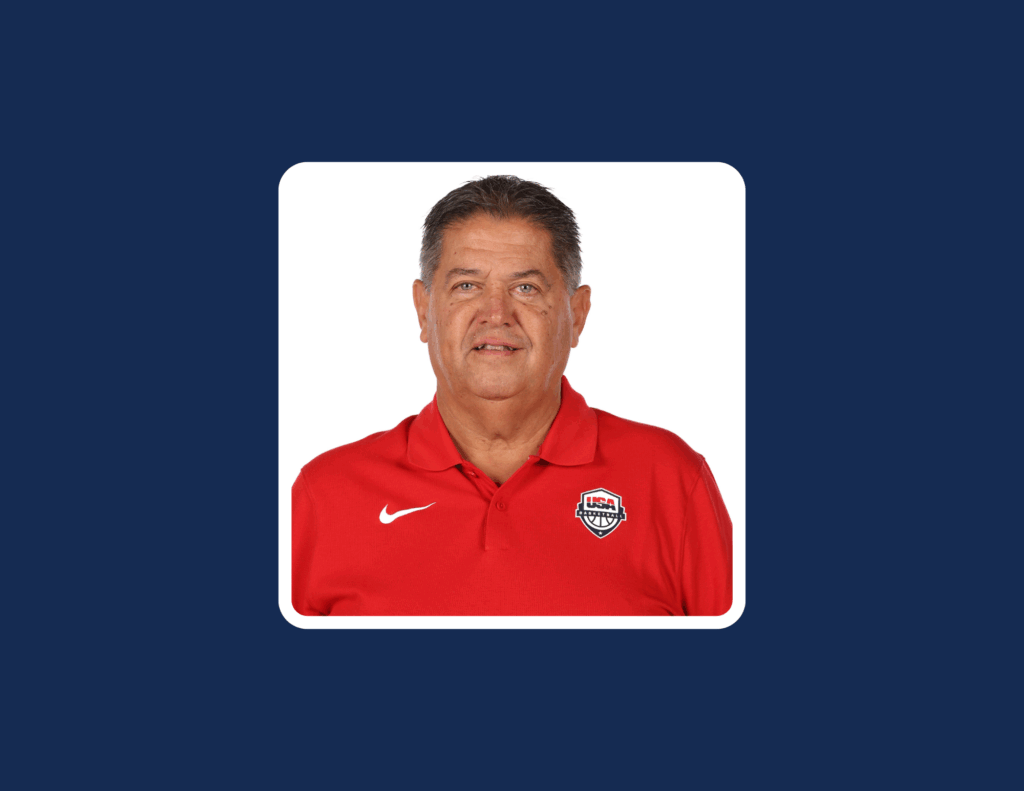
RAS VANDERLOO – USA BASKETBALL COACHING STAFF MEMBER & FORMER SIOUX CITY (IA) EAST HIGH SCHOOL BOYS’ BASKETBALL HEAD COACH- EPISODE 1141
Website – https://www.usab.com/staff-members/ras-vanderloo
Email – [email protected]
Twitter – @CoachRas

If you listen to and love the Hoop Heads Podcast, please consider giving us a small tip that will help in our quest to become the #1 basketball coaching podcast.
Ras Vanderloo recently retired after his 14th season as the Head Boys Basketball Coach at Sioux City East High School in Sioux City, IA. He spent 32 years coaching basketball, 14 as a Head Coach and 18 as an Assistant Coach. Ras is a 5-time district coach of the year and the 2017 State 4A Coach of the Year. He won 314 games as a head coach at East High with 4 State Tournament appearances and a State Runner Up in 2012.
In addition to his run as the Head Coach at East, Ras also runs a large youth league basketball program with over 650 kids annually participating. The league is currently 33 years old and was started by his father.
Ras comes from a large coaching family, his father Rich and brother Jeff (now a Creighton Assistant) are both former Head Coaches at East High in Sioux City. His brothers John and Jim are coaches as well
Ras has worked with USA Basketball in varying capacities, most recently as an assistant coach for the Men’s 3 x 3 Nation’s League that competed this summer in Chile.
On this episode Mike & Ras discuss the vital role that mentorship plays in coaching, urging young coaches to seek out successful programs and learn from seasoned coaches. He reflects on the dedication required to build a winning team, noting that success does not come from mere talent but from hard work and commitment to the craft. His perspective provides valuable guidance for aspiring coaches navigating the complexities of the profession.
The conversation transitions to Vanderloo’s involvement with USA Basketball, where he has taken on a new role in the emerging field of 3×3 basketball. He delves into the nuances of coaching in this fast-paced format, explaining how it contrasts with traditional 5-on-5 play. Vanderloo emphasizes the high-energy nature of 3×3 games, where players must remain constantly engaged and adaptable to the rapidly shifting dynamics of the game. This shift in focus highlights the evolving nature of basketball and the need for coaches to continuously adapt their strategies to stay competitive.
In closing, Vanderloo expresses his ongoing passion for basketball and commitment to mentoring young coaches, illustrating the significance of building a supportive community around the sport. He reflects on the lessons he has learned throughout his career, underscoring that coaching is a lifelong journey of growth and learning. Vanderloo’s story serves as an inspiring reminder of the profound impact that dedicated coaches can have on their players and the communities they serve, encouraging listeners to embrace their roles as educators and leaders in the sport.
Follow us on Twitter and Instagram @hoopheadspod for the latest updates on episodes, guests, and events from the Hoop Heads Pod.
Make sure you’re subscribed to the Hoop Heads Pod on iTunes or wherever you get your podcasts and while you’re there please leave us a 5 star rating and review. Your ratings help your friends and coaching colleagues find the show. If you really love what you’re hearing recommend the Hoop Heads Pod to someone and get them to join you as a part of Hoop Heads Nation.
Get ready to take some notes as you listen to this episode with Ras Vanderloo from Sioux City East High School in the state of Iowa.
What We Discuss with Ras Vanderloo
- His advice for young coaches early in their career
- The required dedication and commitment beyond the regular hours of practice and games
- Learning under experienced mentors who have proven track records
- Engaging with various basketball communities, such as USA Basketball, provides invaluable networking and learning opportunities
- The dynamics of three-on-three basketball differ significantly from traditional five-on-five play, requiring distinct strategies and approaches
- Volunteering as an assistant coach is a valuable way to learn
- Building strong relationships with players and their families is crucial in coaching
- Coaches should prioritize finding supportive administration to foster a successful environment
- Hands-on experience and continuous learning are essential for coaching development
- The importance of adaptability and lifelong learning in the coaching profession
- Maintaining a strong connection with past players and colleagues
- The commitment required for coaching extends beyond the court, necessitating a supportive family dynamic to balance professional responsibilities with personal life
- Coaches must strive to continuously educate themselves, remaining open to new ideas and strategies while sharing insights with younger coaches to contribute to the sport’s growth
Like this show? Please leave us a review here — even one sentence helps! Consider including your Twitter handle so we can thank you personally!

We’re excited to partner with Dr. Dish, the world’s best shooting machine! Mention the Hoop Heads Podcast when you place your order and get $300 off a brand new state of the art Dr. Dish Shooting Machine!
Your first impression is everything when applying for a new coaching job. A professional coaching portfolio is the tool that highlights your coaching achievements and philosophies and, most of all, helps separate you and your abilities from the other applicants.
The key to landing a new coaching job is to demonstrate to the hiring committee your attention to detail, level of preparedness, and your professionalism. Not only does a coaching portfolio allow you to exhibit these qualities, it also allows you to present your personal philosophies on coaching, leadership, and program development in an organized manner.
The Coaching Portfolio Guide is an instructional, membership-based website that helps you develop a personalized portfolio. Each section of the portfolio guide provides detailed instructions on how to organize your portfolio in a professional manner. The guide also provides sample documents for each section of your portfolio that you can copy, modify, and add to your personal portfolio.

Hey coaches — you’ve got a game plan for your team… but do you have one for your money?
That’s where Wealth4Coaches comes in.
Each week, they deliver simple, no-fluff financial tips made just for coaches. Whether you’re getting paid for camps, training sessions, or a full season—Wealth4Coaches helps you track it, save it, and grow it.
It’s time to stop guessing and start building.
Subscribe now at wealth4coaches.beehiiv.com/subscribe
And follow them on Twitter @Wealth4Coaches for daily money wins.
Your money needs a coach.
Start with Wealth4Coaches.
THANKS, RAS VANDERLOO
If you enjoyed this episode with Ras Vanderloo let him know by clicking on the link below and thanking him via Twitter.
Click here to thank Ras Vanderloo via Twitter
Click here to let Mike & Jason know about your number one takeaway from this episode!
And if you want us to answer your questions on one of our upcoming weekly NBA episodes, drop us a line at [email protected].
TRANSCRIPT FOR RAS VANDERLOO – USA BASKETBALL COACHING STAFF MEMBER & FORMER SIOUX CITY (IA) EAST HIGH SCHOOL BOYS’ BASKETBALL HEAD COACH- EPISODE 1141
[00:00:00] Narrator: The Hoop Heads Podcast is brought to you by Head Start Basketball.
[00:00:20] Ras Vanderloo: Go find a school that’s been successful. A school that year in and year out does well. Okay? Even if you have to volunteer, go be an assistant coach. Learn through that system. 22 year olds think they know a lot. I know I did and I didn’t. I mean, I thought I did. I didn’t get with an experienced coach.
Someone who has had success. Watch what they do. There’s a reason people have success. Just doesn’t happen. They’re not just waving a magic wand they have success. They probably work harder than a lot of people. They’re more committed. The time they put in is high. Go learn that.
[00:00:59] Mike Klinzing: Ras Vanderloo recently retired after his 14th season as the head boys basketball coach at Sioux City East High School in Sioux City, Iowa.
He spent 32 years coaching basketball, both as an assistant and head coach. Ras is a five time district coach of the year and the 2017 State four, a coach of the year. He won 314 games as a head coach at East High with four state tournament appearances and a state runner up in 2012.
In addition to his run as the head coach at East Ras also runs a large youth basketball program with over 650 kids annually participating.
The league is currently 33 years old and was started by his father. Ras comes from a large coaching family. His father, rich and brother Jeff, now a Creighton assistant are both former head coaches at East High and Sioux City. His brothers, John and Jim are coaches as well. Ras has worked with USA ba Raz has worked with USA basketball in varying capacities.
Most recently as an assistant coach for the men’s three X three Nations League that competed this summer in Chi.
Hey Hoop Heads! Train smarter and win more this upcoming season with the number one selling shooting machine in America, Dr. Dish. This month grab a certified pre-owned machine for as low as $3,995. You’ll get a three year warranty, 250 plus drills, and quick three to five day shipping from Minnesota.
Inventory moves fast, so don’t miss out on these savings from our partners and friends at Dr. Dish basketball. Learn more at drdishbasketball.com and follow their incredible content @drdishbball on Twitter, Instagram, Facebook and YouTube. Mention the Hoop Heads Podcast and save an extra $300 on the Doctor Dish Rebel, All-Star and CT models. Those are some great deals Hoop Heads. Get your Dr. Dish shooting machine today.
[00:02:46] Kevin Hopkins: Hi, this is Kevin Hopkins, head men’s basketball coach at Muhlenberg College and your’re listening to the Hoop Heads podcast.
[00:02:58] Mike Klinzing: Coaches, you’ve got a game plan for your team, but do you have one for your money? That’s where Wealth4Coaches comes in. Each week, we’ll deliver simple, no fluff financial tips made just for coaches. Whether you’re getting paid for camps, training sessions, or a full season, Wealth4Coaches helps you track it, save it, and grow it.
It’s time to stop guessing and start building. Subscribe now at Wealth4Coaches.beehive.com/subscribe and follow us on Twitter at Wealth4Coaches for daily money wins. Your money needs a coach. Start with Wealth4Coaches, get ready to take some notes as you listen to this episode with Ras Vander from Sioux City East High School and the state of Iowa.
Hello, and welcome to the Hoop Heads podcast. It’s Mike Klinzing here without my co-host Jason sunk tonight. But I am pleased to be joined for the second time after I guess about a six year hiatus, welcoming back Ras Vanderloo, retired former head coach from Sioux City, Iowa East High School, and now doing a lot of work with USA basketball, which we’re going to dive into. But Ras, welcome back man.
[00:04:10] Ras Vanderloo: Hey, I appreciate it. It has been a little while, but it’s funny, I keep up with you all, all the posts that you put out, and I’m watching them and now I’m back.
[00:04:19] Mike Klinzing: Here we are. And yeah, we’re still cranking ’em out at two interviews a week and still doing our NBA stuff.
And yeah, it’s been it’s been quite a ride since we last, since we last talked. And you’ve obviously gone through some, some major changes with the decision to, to retire. So maybe let’s just start there. The last time we talked, you, I believe were, were in or had just finished your eighth year at East High School there in Sioux City, Iowa.
Now you’ve gone a total of 1432 years of teaching decided to step away. Tell me a little bit about the decision when you started thinking about it, and then, and then we can dive into sort of the why behind it.
[00:04:57] Ras Vanderloo: Yeah. We finished the, we finished the season beginning of March shortly after that.
I had some health issues hospitalized for a while, and I’m thinking that whole time, wow. I don’t know what sent me here, if it was just the. Stress, or I’m getting old or something. So I thought about it then I bounced back. Good. I’m thinking, nope, I got for sure one more year left in me. I can do it one more year.
And I loved it, loved every minute of it. Always did, always will. We did our in, in Iowa, the day school’s out till the day school starts. You can practice, you can play summer games, shootouts, whatever. So we, we always go heavy with that. So in, in June, we practiced we played shootouts, we all, all normal.
Got to be after the 4th of July one day, I just was curious how my school retirement was looking how many years. I never had called them. Probably should have never did. So I called one day and they said, well, no, you’re, you’re fully vested. You’re in, you got all your years in.
But you can continue teaching, but it’s not going to add much more to your retirement. A lot of people this time they stop. I thought, oh boy. I thought about it for not very long and got up one morning and told my wife I’m retiring. So it’s kind of unexpected. I feel bad about the timing as far as the school and all that, and I really do.
It all worked out in the end with my replacement and everything. But I will miss it. Absolutely. But I’d done it for a long time, 32 years of coaching. I was actually a head coach for 18 years, 14 at East High. Enjoyed every minute of it. Worked for great people. So there’s no regrets.
But it was probably time for somebody new. you can’t do this stuff forever. We got a pretty good team coming back from what I understand. Is that right? Yeah, we, we do. And that that, that was another thing a lot of, I shouldn’t say this, but a lot of coaches leave when they aren’t going to be as good.
It’s easy to do that. We, I think we’ll have an excellent team coming back. We got some very talented kids. We went the last three seasons, 21 and 3 21 and three 19 and four. And I think they’ll be every bit as good next year. So that’s, that’s an excellent, a chance to be Very, very good. So I, I knew the team was being going to, going to be left in good hands with a chance of winning.
That was part of it. And no, I expected to do very good things and I’ll be their biggest cheerleader.
[00:07:22] Mike Klinzing: What were the biggest factors that when you got the news that, hey, you got enough years in retirement is a possibility, what were some of the factors that in that brief moment of clarity when you’re like, Hey, I never really considered this.
What were some of the things that you thought about that you took into consideration? ’cause I know that there are lots of people out there, coaches, teachers. That listen with us, that are sort of facing that same decision. I’m curious. ’cause I had to make a decision last spring. In March, the Ohio State Teacher’s retirement system pushed the years back from, we had to go 33 previously.
They pushed it back to 32, which suddenly enabled me to be able to retire this coming October. So I’m curious to kind of get your thought process of what the things were that you were thinking about as you were trying to make that decision.
[00:08:10] Ras Vanderloo: I, I, that, that day after I called them I have three brothers who are also teachers and coaches and our old families involved in it.
And I said, just what, what do you think about this? And it, it, it was, it was very quick and unanimous, get out get out on your terms. Right? I think so many people, so many people have great careers and at the end, something maybe goes sour or maybe not have as good a teens as you’ve had. And it just at the end it turns into a kind of a.
Unfortunate deal. They said go out on your terms. And I know it’s kind of a cliche term, but it it’s the truth. had good teams will continue, we’ll have another good team this year. Absolutely not forced out or pressured out or none of that. And that, that weighed into it.
The timing wasn’t great ’cause it was in July. But I knew, I knew there was a staff member and then our, also our girls coach would be viable options, very good options. And they’re in the building. So they wasn’t leaving ’em high and dry. But like I said, the, the family vote was unanimous except for my mother.
She was against it, but everybody else was for it. And they said, what, you may not be here tomorrow. So, what? You had a, you had a great career. And I was very fortunate. I’m not leaving mad I’m leaving happy and supportive. So it’s all, it’s all, it’s all good.
[00:09:30] Mike Klinzing: I think that you make a great point in terms of being able to walk out with good feelings and not feelings of like, oh man, the program’s maybe going in a different direction, or, oh boy, my last couple years of teaching really were miserable and I didn’t enjoy it.
So to be able to, to walk away from something that even on your very final day, you’re still like, I still like, I still like doing this. I’m able to go, as you said on your own terms. I do think that there’s value in that because again, whether it’s two years from now, five years from now, 20 years from now, and you look back on it, you’re not going to have some of the feelings that we know some people have when you either maybe you get fired or you just are at the end of your career and you’re, the last two or three years of teaching, you’re just kind of slogging through to try to get your final years in.
And so for you to be able to walk out knowing that you had good feelings, and then I’m sure for you, again, with as much as you’ve invested. In the basketball program there and the students and just the school district itself, to know that you had some people that were right there waiting in the wings to be able to take the program over a and continue to see it flourish.
I’m sure that gives you a good feeling as you walk out the door without question
[00:10:46] Ras Vanderloo: a Absolutely. Like I said, I, our, our girls coach end up getting the job. Very good. Person works hard, he’ll do great. Like I said, I’ll, I’ll be their biggest fan. I’ve been on the phone with him almost daily about questions, about players equipment, uniforms, everything in between scheduling.
So like, like I said, I’m no longer in, in that seat, but I’m still in touch with the program. And I have, and I have a feeling I will be for some time and I’m here to help. I’m not trying to butt in it’s, it’s now his deal or the school’s deal. But like I said, I’m, I’m here to help.
[00:11:21] Mike Klinzing: How much time. Did you put in thinking about, Hey, what’s next for me?
What do I want to do with the rest of my life? What was that process like for you? Thinking, thinking in those terms?
[00:11:35] Ras Vanderloo: It, it, it was a lot because you spend your whole life, or you spend 30 some years of on the go, you’re, you’re either in season practice games, practice games, you’re out of season, you’re, you’re thinking about next year, you’re, you’re scheduling, you’re doing off season workouts, the summertime or practice, it never ends.
I mean, if you want to be a, a successful program, it’s a year round deal. It times have changed. I mean, you, you’ve have to put the time in in order to the results will show during the season, but if you don’t put that extra time in, you don’t have a chance. So it was always a lot of time that I thought I just can’t stop and do nothing.
I’m very, very lucky and fortunate. I’m, and I’m able to do the USA basketball stuff, so I’m still involved in the game. And that’s been great and unbelievable. I’m helping a little bit in town with, with some, a few things, but I’ll, I’ll find, I mean, I’ll stay busy every day.
[00:12:32] Mike Klinzing: Are you still doing your league, your youth league that you’ve always done?
[00:12:35] Ras Vanderloo: Yeah. Yes. Yeah. So we’ll still do that which is a, it’s big and it, it’ll it’ll go forever. Even after me, somebody else will, I’m sure will do it. So that that that’s another thing that will continue.
[00:12:47] Mike Klinzing: Yeah. It’s great to be able to continue to have your hands in the game, right? So you’re not just stepping away cold Turkey.
You still have some opportunities to be able to interact, not just with your program that you’ve been such an integral part of, but also to be able to continue to touch the youth in the community. And then, as you said, the USA basketball stuff, which we’ll dive into here in a few minutes. But when you think back over the totality of your.
Career, and I don’t want you to pick out your favorite memory or something like that because I’m sure there’s a million of them. But just when you think about the things that have driven your success, what are one or two things that when you look back over the entirety of your career, you feel like have been the most important things that either you’ve done or just that the program has been able to sustain in order to be able to have the kind of success that you guys have had?
[00:13:42] Ras Vanderloo: I mean, it’s, it’s, it’s interesting. One, one thing that I got a lot of enjoyment out of see is seeing guys come back five or 10 years later and they show up at practice maybe over the holidays when they’re back in town or whatever it might be. Or seeing guys have success in their personal lives or business life.
And we’ve had a bunch of those guys having, having former players just come back to practice and watch which I thought that was. Following guys and their families and everything. I probably got more enjoyment out of that than anything. Even, even with all the success we had the little things that people don’t think about probably gave me the most joy.
[00:14:22] Mike Klinzing: Yeah. I think that what’s interesting to me, Ras, is when I think about my basketball career, and I think way back, a long time ago when I was playing, and then I think about all the different teams that I’ve coached from the high school level when I was assistant coach or the teams that I’ve coached with my kids and where I’m coaching a a u or travel basketball or whatever.
And you think about the day to day as a coach, right? And you’re so focused on helping to prepare your team to win a game, for trying to help make your players better for that thrill of competition on the night of the game, for the preparation that goes into practice. And as you said. It feels like you’re going day to day, that motor is constantly running and you’re constantly thinking about, how can I help our team be better?
How can I help my players improve? How can we make sure that we win this game? And all the things that, whether you’re a player or a coach that kind of drive your day-to-day performance and yet your answer, and I think my answer would be exactly the same in terms of what helps you to sustain success.
You kind of look back on it and those individual games, not sure there are some that you remember. You remember the big wins. You remember the big losses. But a lot of the games kind of melt together into just sort of this feeling and sort of the people that you get to do it with and ultimately when you look back upon whether it’s your playing career, your coaching career as an assistant coach, as a head coach.
It becomes much more about the people and the experience that you’ve had as opposed to, I remember every single moment whether or not I called this time out or this coaching great genius move that I made, or this blunder I had in a particular game. Like that stuff kind of fades away. At least it does for me.
I just think about again, yeah, sort of those, the people things, the road trip things, the the off the court things. Whereas in the moment what was most important to me was the day-to-day performance. But when you look back on it, the day-to-day performance becomes less important than the people and just the overall experience that you’ve had.
And I don’t know if that, what I’m saying, I don’t know if that resonates with you at all.
[00:16:44] Ras Vanderloo: A hundred percent. It does. I mean, we, we all remember some highlight moments, a big game, a state tournament deal or, or whatever, or, or a loss or, or maybe a coaching screw up, like you said, should I have called time out?
Should we have followed up three with three seconds left? I mean, those type of things. There’s always things that you’ll always kind of just question a little bit. Maybe I would’ve done it different, but I didn’t. But I still think it comes back to the people the, the, all the players we’ve had assistant coaches, our school administration.
I do want to mention that. I think if you’re a young coach out there trying to get into this crazy business and don’t just take a job to take a job. If you don’t have supportive school administration it’s not going to work. It’s, it really isn’t. and I realize you might have differences of opinion at times with anybody.
But you, you need to have a, a principal, an ad, a superintendent, whomever it might be that is supportive of sports, whatever sports you coach and and support you support the program, the kids. It just makes it a lot easier. I know, I know that
[00:17:51] Mike Klinzing: there is no question that if nothing else, I mean, I learned that in my coaching career for sure when I was an assistant coach and we went through a series of different principles and superintendents and you can just see how when they value athletics in different ways, how easy or difficult they can make your job.
And I think it’s a great piece of advice and it’s something that we’ve talked lots of coaches about that here on the podcast in terms of be discerning in the jobs that you take and try to find out as much as you can about the administration because if you get one that. Is not supportive of what you’re trying to do.
It becomes very difficult for you to stand your ground and to be able to implement and do things that you want to do when somebody can run over your head and suddenly it’s coming back to you from the administration. And conversely, when you have a grade administration, they tend to eliminate a lot of the potential headaches that coaches talk about all the time of, yeah, we can talk to parents and we can hopefully get ’em on board.
And all the things that we try to do to engage parents in a high school basketball program. And yet sometimes if a parent becomes disgruntled and goes to an administrator who lends them an ear that maybe shouldn’t be lent. Then all of a sudden, boom, things go in a different direction than what you would like if, if you had it, a, a supportive administration.
And so I do think that that’s a great piece of advice. It’s one that we’ve reiterated on the podcast numerous times that make sure you have a supportive administration. If you’re thinking about taking a job, try to do as much research and due diligence and background as you can to, to make sure you understand the culture of the school and the administration and what you’re getting yourself into.
’cause sometimes you can take a job and if those things aren’t in place as you well know, it, it, it makes your job so much more difficult as a coach of any sport. That doesn’t matter. It’s not, whether it’s basketball or anything else.
[00:19:54] Ras Vanderloo: No, you, you’re, you’re exactly right. We’re in a, we’re in a era of of society that’s a little different.
I’m not saying it’s bad, I’m just saying it’s different. You, you have moral opinions and there’s ever been from, from parents supporters, fans teachers, administration, whatever. But it, it’s, it’s so important that maybe you pass on a job when what’s, what’s out there not supporting you.
don’t just take that head job because I want to be a head coach. I totally get it. I was an assistant coach for 16 years so I’ve, I’ve, I’ve been on both sides. you’ve been an assistant coach for sure. Don’t just take any job because it could be a short term deal, and then you’ll, you’ll never love coaching again.
So making sure it’s the right one. Don’t just take one to hurry up and take one. So it’s, it’s so important to do your homework. Call around, call opponents, call conference members, call. anybody you can call somebody knows something. So call around before you take that job.
[00:20:53] Mike Klinzing: It’s great advice.
Sometimes we’re in such a hurry to jump up to that head coaching chair that you can put yourself in a position where you said. Maybe it sos you on the whole thing. Maybe you’re in a position where it doesn’t go well and maybe you never get another opportunity. So it’s important to be discerning again and look for, look for the right opportunities.
When you think about where basketball was when you started your career compared to where it is now, what are one or two of the biggest changes from an X’s and o’s? A style of play, just the way the game is played. What do you think are the biggest changes in the game since you first started coaching?
[00:21:38] Ras Vanderloo: I think there are more, there are more athletic kids playing than ever before.
The athleticism anywhere I think is higher than probably ever has been. I think there’s. Less kids that know how to play basketball, because they don’t just go play with their friends in a city park or a gym or, or anywhere. There’s no more of those days where you just, maybe you played against older guys, maybe you played against adults, and you learn, this guy’s bigger than me, stronger than me, quicker than me.
How can I survive? Now, kids, they don’t want to, first of all, the kids don’t want to go to a park because there’s not a fancy scoreboard or a beautiful wood court or hoops with nets on them. Those days are over. They want to play in a, in a beautiful gym that’s lit. Well they’re, they’re and I, and I’m, I’m not complaining about kids.
I’m just saying it’s kids want to have the perfect setting in order to play. Where years ago you just found a hoop and you played regardless if you’re in rural Iowa or in a big city, you just, you just played basketball and you learned how to play. Because like I said, you might be playing against a college player that day.
Now there’s not a lot of that going on, but the athleticism of kids is high. I also think the coaching, this, this might surprise people. I think the coachings went down a notch because we’ve lost so many older coaches. Not that, not because you’re old, you’re good. I’m not saying that, but you’ve been in the game for a long time.
You’ve seen everything. how to react to a box of one, a diamond and two and 1, 3, 1, whatever it might be. Now it’s a ton of younger coaches and they just haven’t coached. Now there’s some excellent young coaches. I’m not, don’t, don’t hang up the podcast here. There’s some excellent ones out there, but there’s a lot of them that just need a little more experience.
But they haven’t seen it all ’cause they’re young. So I, I older people are getting out, replaced by younger people, and I, I think the level of coaching is probably down a little bit, but it’s still there’s still places in the country. It’s really good.
[00:23:37] Mike Klinzing: How do you think about just the learning curve for a young coach today compared to the learning curve for someone who started their career when you and I started their career when we started?
You’re not, there’s no, there’s no YouTube. We’re still probably at that time watching VHS tapes, right? And trying to hit the rewind button and go back and when we’re watching film and all those things. And then you look at today where a coach can go on huddle or synergy and you can watch as much game film as you want, plus all the different breakdowns and things that you can go down as many rabbit holes as you possibly would want on YouTube to be able to learn the game.
And as you were talking about both of those things, ros, what struck me was the idea that players today. Are, as you said, more athletic and probably more skilled than they’ve ever been. And yet at the same time, maybe the basketball IQ isn’t as high ’cause they’re not playing as much. And so I wonder if from a coaching standpoint, if it’s sort of a similar theory in that when you and I were coming up, you could go and go to a Nike clinic or go and and sit in person and connect with other coaches and talk and see things happen on the floor.
And now the information is so accessible that I can sit in my office or sit in my basement or wherever it is that I have access to all that stuff. And I can, I can learn from that. But sometimes I wonder because it’s all sort of disjointed and over here and over there, and is it coherent when I try to pull all that, I’m pulling something from here and something from over there.
It almost seems to me like. A player working on their skills, but not putting ’em in context. Context. I almost wonder if the coaching is similar, and again, I don’t know if that makes sense or not, but it’s just something. Mm-hmm. It was something that struck me as you were talking.
[00:25:38] Ras Vanderloo: No. Yeah. I think you’re exactly right.
Years ago when, when we started this whole deal off, first of all when I started, probably like you, there was very little cell phones. It was VHS tapes. It was, there was, there was no YouTube, there was no internet. I mean, there was no, your options were going to a Nike clinic or a regional clinic, or if there was a college nearby going watching practice taking notes, bringing ’em back to, to your team.
I also think in, in all this stuff, you can, you can find on me, there’s hundreds of thousands of things you can find now on the internet drills and plays and stuff. Very, very few. I’ve thought about this a lot, very few times. Do they ever show you the bad stuff? They only show you the good.
I mean, they might run a drill and it’s always run perfect, but when you get into practice, sometimes that drill’s not run perfect, ? And after they’ve screwed it up five times, your frustration level now is at about 1000. But on the video, they don’t, they don’t tell you how to react to that, ?
So there’s, there’s, there’s good and bad to it. You can find a hundred drills to run. You can do a different drill every day forever. But they don’t ever show you the, okay, now if, if they don’t understand how to do this drill, what do I do next? sometimes you just, you trial and error. You, you learn by experience.
I’ve done this drill five times and it has not worked. either stop doing that drill or learn like, okay, we have to take this part of it out so we can run the drill. Sometimes you just have to run it, run it till you run it, right? But, but, but the learning stuff on the, on the internet is always perfect.
I mean, whatever drill they show, they don’t ever show ’em screwing up. So when you, you’re a young coach, you just think your team’s going to run it and run an, the offense, whatever the offense might be. maybe it’s a dribble drive, a five out a, a flex, I mean, whatever it might be. It’s always perfect on the, on the internet.
But all of a sudden here comes practice and you got little Johnny whose basketball IQ is minus 10 and he doesn’t understand when I pass, I have to a cut. He passes and stands there. Well, come on Johnny, you mean come on. The internet doesn’t tell you what to do there. You just, you have to figure it out.
So the, the fact that there’s more information than ever out there, there, absolutely there is. Yes, you can find anything you want, but there’s very little of the flip side, what do I do? And option A doesn’t work what’s, where’s option B? Where do I find that at? So I think experience is, is option B, it shows you what to do or not to do.
[00:28:12] Mike Klinzing: I think about that in terms of out of bounds plays. ’cause when you go on the internet and you’re on Twitter, you’re on YouTube, and you can see these out of bounds plays that when they work you’re like, wow, that out of bounds play is fantastic. And then you take it and you run it with your team and you realize, yeah, that might’ve been the one time out of 15 that they broke that for an uncontested layup.
And so if we’re not getting an uncontested layup, what else do we have to do? And so I think your point is well taken that there’s an experience piece of, yeah, I have to take this drill, I have to take this offensive system, I have to take this action or this out of bound play. And yeah, it might be something that I can incorporate, but I also have to have the experience behind it to be able to understand if this doesn’t go exactly the way that.
It breaks on the film. What are my counters, what are my things that I can do if a defense is adjusting to what I’m trying to do? And certainly that’s an experience standpoint, and I do think that when you look at the amount of resources that are available for coaches, but also for players today, if you want to learn the game and you want to grow and you want to get better at your craft, whether you’re a player or you’re a coach, there’s really no excuse for not being able to go out there and find things and talk to people.
I think I always feel like this podcast, Ras and all the other basketball great coaching podcasts that are out there, what I, and it doesn’t, it doesn’t amaze me anymore, but it really did for the first probably year, year and a half that we did this in terms of the willingness that the basketball coaching community has to share.
Their knowledge with other people. And I think if you’d have told me that back when we started this in 2018, that guys would be as open and as forthcoming about, Hey, here’s, here’s how we do this. Here’s here’s the secret ingredient to our success, or here’s the way we run our press defense, or whatever it might be.
Not only can you get the information as a coach from the internet, but you can also just reach out to other coaches and find a mentor and go, and as you said, you can go and watch college practices. There are very few college coaches around that. If a high school coach calls up and says, Hey, I want to come in and watch one of your practices, I would say it’s pretty ra.
Pretty rare that somebody’s going to say, no, we don’t want you to be able to come in it. It’s pretty much open season. I think that has a lot to do with something else that we talked about, which is. The film side of it, right? Maybe 30 years ago, you could try to keep something secret, be like, Hey, I’m not going to show anybody because this is now, every game you’ve ever played is available publicly.
Anybody who wants to take the time to be able to, to dissect it and figure out what you’re doing is going to be able to do it. So I’ve just found that if you want to grow as a coach, the, the avenues to be able to do that, there are as many as there ever have been just because of a, the access of stuff on the internet that we talked about, but also just the willingness of the coaching community to pour back into other coaches.
[00:31:30] Ras Vanderloo: The hundred percent I’ve been to hundreds of college practices. I’ve only been turned down once, and that was a, a unique deal. It had to do with something else. But like I said, I my brother’s a college coach in the Midwest. Like I said, you can make a phone call and you could show up in the afternoon.
A lot of times they’d like to have you a day ahead call, but it doesn’t matter. Call ahead. you, you are, are their future. If you have a kid come through your program and they want ’em, and you turn them down coming to practice, how’s that going to work out? I mean, they’re, they’re going to let you come in and watch.
I mean, if they’re stupid, if they don’t but if you go and watch, take notes, bring, bring a, bring paper and a pen with you, take notes. Like I said, I’m, I’m old and washed up, but I always brought Notepad and took notes. The, the only thing I will, I’ll say is when, when you go to these clinics, a, a Nike clinic or a big clinic, and they have college or NBA guys there and they’re drawing up that magic play.
One, one thing that I think they need to kind of preface it with high school coaches is most high schools don’t have a six 11 center and a six nine shooter in the corner and a six three quicker and heck guard at the top. the, the clientele’s a little different now. Plays still work and you can run a lot of them, but I’ve done this for 32 years and I’ve never seen a high school team ever break out the Chicago Bulls Michael Jordan offense.
I’ve never seen it. So, what? Don’t, don’t try to out outsmart your opponent. There’s no secrets, like you mentioned. There’s so much video on every team out there in Iowa. We have to share all of our games in a, in one master pool, and anybody can pull ’em out. So I can watch every team in the state every night.
So there’s, there’s absolutely no secrets. You just have to do what you do and do it well. ? Cut, cut the number of plays down and do it well. don’t try to outsmart everybody outwork them.
[00:33:28] Mike Klinzing: Yeah, that’s a great point. I think that so often, especially with just the amount of stuff that’s available out there, it’s easy to chase and be like, oh, I like that, I like that, I like that.
I like that. As opposed to, Hey, let’s do three things on offense. Let’s do ’em really well. Let’s have three things we do on defense. Let’s do ’em really well, and let’s have three out of bounds plays that maybe each have a counter. Boom, we’re done. Let’s be really good at those things and let’s make our opponent adjust to us.
And I, and I completely understand how coaches can find themselves sort of an information overload and you see things, and again, as you said, stuff always looks great when they put it on YouTube or they put it on Twitter. It always works. It always, it always ends with the six 11 guy getting a lob in the middle of the floor for a dunk, right?
Or the six nine shooter knocking down a three in the deep corner. So yeah, that stuff looks really good, but you have to keep in mind. Who you’re coaching, the level of play that you’re coaching at, the players that you’re coaching. And I always feel like simpler is better and the more you can break down the game and make it easier for your players to do what you want them to do and focus on what you need to do well, I think ultimately that leads to much more success.
So let me ask you this. If you were to sit down, young coach calls you up, guy just graduated from college, got his teaching certificate, is trying to get into the coaching profession, wants to become a high school head coach at some point in his career, he is 22 years old, calls up coach Vander Lu and says, Hey coach, can you gimme some advice about getting my career off to a great start?
What’s one or two pieces of advice you would give to somebody in that situation?
[00:35:09] Ras Vanderloo: I, I would tell ’em all, go find a school that’s been successful. a school that year in and year out does well. Okay. Even if you have to volunteer, go be an assistant coach. Learn, learn through that system. Don’t, like I said, 22 year olds think they know a lot.
I know I did and I didn’t. I mean, I thought I did. I didn’t. Get, get with an experience coach. Some of us had success. Watch what they do. there’s a reason people have success. Just doesn’t happen. They’re not just waving a magic wand they, and they have success. I mean, they most probably work harder than a lot of people.
They’re more committed the, the time they put in is high. Go learn that. you, you get involved with the program. It’s 500 every year and the coach is fishing half the time and not even there. Or he goes on a month long vacation and there are sacrifices to coaching. I mean, family and your wife and all of those things.
And no, you still need to have that time. But, but some people think. It’s all summer long. Well, you can’t, you, you have to be with, you have to teach. I always say it’s not how much it’s how much your players know how much can you teach them? But the gym or the field, or it’s a classroom.
It’s a, it’s a class. you might have some talented guys and you’re trying to run all these things. Well, if you can’t teach them and have them retain it, you got nothing. So that assistant coach, get with an experienced coach, what, and, and that, that amount of success that they have will blend into you and you’ll see how they did it.
So when you’re lucky enough, and don’t be afraid to be an assistant for 5, 6, 7, 8, 9, 10. I was 16 years. 16 years un under my brother of all people. And we had tremendous success. We had, we had a few, we had a few differences of opinion. That’s okay. But unbelievable success with him. And then we just carried over and I was lucky enough to keep it going.
But, but learn from people that are actually getting it done. don’t learn it from the lazy guy at the next town over who’s 500 every year.
[00:37:17] Mike Klinzing: I think the ego piece of it is big, right? Like you said, come outta school. And I know, and I’ve told this story on the pod before, but my first coaching job was coaching a JV basketball team.
And I walked in and just coming off my playing career and thinking that being a good player was going to make me a good coach. And the only thing I knew about coaching basketball was what I had learned from watching and playing underneath my high school coach, who I played for every year when I was in high school.
So I had one high school coach, then I had one college coach. And so any drill, any play, any offense, any defensive principles, everything that I knew came from. Those two guys. And obviously the game of basketball has a much wider spectrum than just the opinions and, and things of, of two, of two coaches.
There’s, there’s a lot more to the game than just what two people the way that they do it. There’s multiple ways to skin a cad. And so I came into it thinking that making myself being a good player was going to make me a good coach. And also thinking that I knew a lot about the game and quickly realizing five minutes into my first practice, like, well, those kids just made 500 mistakes in that first drill.
How am I going to, how am I going to fix all this stuff? Ras, it was crazy. like, I just, I don’t even understand what I’m supposed to do. And so very quickly you learn that if, if you want to be successful, that you have to figure out what it is that you believe in. You’ve have to find multiple people that.
Are successful that you can learn from and then take the things that you like and maybe eliminate some of the things that you disagree with and eventually you get to figuring out who you are as a coach. And then supplement with that, with some of the things that we’ve been talking about by going to college practices, by finding mentors and people that’ll pour into you and all those things that if you do that as a young coach and you kind of check your ego at the door and realize that as much as you think you have so much more to learn, I think that that’s a great, great way for somebody to start their career.
So I think that it’s a tremendous piece of advice that you just share to go out, find somebody who, who’s successful and not just, Hey, I got a teaching job at this school and here’s a program that wins 40% of their games every year. If you want to be a great coach, that’s probably not the place that you want to learn from.
So maybe you need to go down the road and find that coach who’s, as you said, putting in the extra time and doing all the things. it cracks me up that you said right off the top, Ross, that you just can’t, you can’t win anymore without putting in all the time in the summertime. Like the, the baseline for just being competitive is so high in terms of the amount of time that you have to put in.
And then that’s not even talking about that. That’s just to be, that’s just to be in the mix in the conversation, let alone to be able to have the kind of success that you and I are talking about now. And I don’t think the average person, player, and even sometimes young coach, just getting into it, understands at the high school level the amount of time that it takes to really build a good program.
Now you can win, right? You, you can win. One off because you just get good talent through the door in a particular class or whatever, like that can happen. But when you see programs that have won for 10, 15, 20 years, like that doesn’t happen. That doesn’t happen by accident. That happens by all the things that we just talked
[00:40:56] Ras Vanderloo: about.
No, no, you’re exactly right. It’s, it’s I will say another thing. It is this, I, I’m serious when I say this, but also tongue in cheek a little bit. If, number one, don’t be afraid to volunteer. Maybe you call a good school. Hey, we’re full. We have a freshman coach. We got a jv, we got a varsity assistant.
I’m sorry, we’re full. How about if I volunteer? I mean, we’re, we’re talking about a couple thousand dollars, $2,000, maybe a stipend that you would get to maybe coach the freshman team or maybe the jv or maybe it’s 3000, whatever. It’s not a lot of money. Don’t be afraid for a year or two or whatever you can do.
Volunteer. All of a sudden somebody moves on. Now you’re in a paid position there. Now you can start moving up. Like I said, don’t be in a big hurry. Another thing that’s so important in coaching, if you’re young, make sure your wife understands, or maybe your, your Toby wife or if you’re still living for a wife or whatever, it’s make sure they understand how much time I want to be successful.
I want to do everything I can to help these kids in the school, make sure they understand how much, what the time commitment is. Because I’ve seen good friends and many people, they get into coaching, they either leave coaching or leave their wife. So, I mean, it, it happens. And I’m very fortunate to have a wife who’s not a sports person, but she understood, what, if they want to be good, they have to do this.
So I, I credit her for allowing me to do all this forever and knowing the time commitment. So. It’s, but, but that’s very important. you, you, your wife needs to understand that there’s, this isn’t just a little youth league team where you’re going to practice twice a week for an hour.
This, this is, this is real. So and if, and if we don’t do good, the, the wolves are going to start howling. We don’t want that either.
[00:42:46] Mike Klinzing: So
[00:42:47] Ras Vanderloo: you have to do good.
[00:42:49] Mike Klinzing: Those are definitely conversations that you have to have. And anybody that you talk to in the coaching profession who has a spouse that is supportive and that understands what it means to be a coach of a successful program, and then what it means to be the spouse of a coach of a successful program, those people are obviously much, much happier than somebody who goes into it and doesn’t have an understanding.
And as you said, unfortunately, a lot of coaches. You kind of put yourself sometimes in a position where you have to choose one or the other, or maybe the other chooses to go the other direction when you choose to spend more time with, with your team. I’ve often joked Raz that I’m like, if I was an ad, I think the only people I would hire are guys our age, whose kids are long since out of our houses.
Or somebody who is young and doesn’t have any kids or a family. If you’re somebody with three kids and you’re 40 years old and your kids are seven, nine, and 12, whew. It gets real tough when you got a, when you got a family that age, to be able to do all the things that your family needs and to be able to do all the things that, that a basketball program needs.
And I say that kind of tongue in cheek, but I think there’s a little bit of, there’s, there is a little bit of truth to that in terms of, it’s just, it just gets very, very, very difficult and obviously, look we can. And this is a basketball podcast, and we’re talking about coaching, but I mean, ultimately right?
Your family, your family becomes, your family’s, your family’s number one. And it certainly helps, like you said, when you have those conversations, then they understand where you’re coming from and know what it’s all about. Then what you want to try to do in an ideal world is have your kids and your wife be as involved in your program as they possibly can be and not be, not be outsiders.
It, it shouldn’t be, Hey, Ras is at basketball and his family’s over here. It’s those, those two things are, those two things are as interconnected as as possible, and I think those are, those are the coaches who have the healthiest, and I don’t even want to say work-life balance, but they, but they have the healthiest mix of a great situation with their family and a great situation with their team and their program.
When you can, when you can get those two mixed together as much as possible. I’m sure you’ve seen that.
[00:45:05] Ras Vanderloo: Oh, I’ve seen a, I’ve, I’ve seen the good and the bad. I know both sides. also in, in hiring assistants sometimes depending upon your school, you don’t have a choice who you hire. They hired a history teacher and he’s got a coaching license, he’s hired.
You don’t even know it until the principal comes and tells you at the school I’m at, at East High. It was never like that. You, I was always involved in who who we were hiring. So you weren’t stuck with somebody. I shouldn’t say it that way, but you have to be careful. You want to make sure your assistants are loyal.
They want to make sure they’re going to work as hard as you do. they’re going to want to they’re going to need to be a summer practice as well. So you have to get committed people. And sometimes in this day and age, if you’re not the top person why am I putting in all this money? He gets all the credit and I, and I will say this, I’ve had unbelievable help.
I’ve gotten a lot of credit because of the help I’ve had. I, If there’s a way I could divide every little trophy and award I’ve ever gotten and give them a part of it, they deserve it. They really do. My name’s on it, but they, they are a huge part of it. So get people that are supportive, that are loyal that are they, they buy in all that matters.
[00:46:19] Mike Klinzing: Yeah, that’s invaluable when you start talking about putting together a staff that’s loyal and as I’m sure you, well, no, trying to find people who, whether they’re teachers in your building, which then that gives you a limit as to who has the basketball acumen that may be in your district or in your building.
And then you start going outside the district or outside of the school to be able to find people. And now you got somebody that’s have to show up for practice every day at two 30. There are not many people that have the jobs that are that flexible to be able to do that. So it becomes really a challenge.
And then you start talking about trying to find good middle school coaches. And it, it’s putting together a staff as a high school coach, I think is probably one of the most difficult things to do. Well, simply because the pool of available candidates is just very, very small. And so I think the longer you’re at a place and the more success you have, the more you tend to attract people to your program, and it probably makes it at least a little bit easier.
But man, as a young coach, to be able to try to put together a staff in your first job, I can only imagine the challenges. I’ve never had to do that, but I can imagine the challenges of trying to put together a staff.
[00:47:32] Ras Vanderloo: Well, it it, it’s hard. I mean, it’s the, the number years ago when you had a coaching opening, you might get 50 people to apply, and now you’re lucky if you get two.
Right. Some places locally to me, they, they’ve had nobody apply for their jobs. Then they’re, then they’re scrambling and you’re just getting warm bodies then, which really isn’t fair to the kids, ? But that’s, that’s all there is. So it’s, it’s a, I mean, they, we all talk about a reffing shortage, which there is nationwide.
I mean, there’s, we’re short, we’re short on officials. There’s a coaching shortage as well qualified. Everybody thinks they’re a coach. The people sitting in the stands on Friday night all think they’re a coach. But to really do it and to show up to practice and be able to get off work. If you’re not a teacher, like you said at two 30 or three o’clock it’s, I don’t want to say it’s impossible, but it’s hard.
Really hard.
[00:48:22] Mike Klinzing: Yeah, it really is. And I think, as you said, there’s lots of coaches in the stands. Anybody who’s ever sat in the stands of a high school basketball game realizes how many want tobe coaches there are. And yet there are very few people who actually want to do that and will step up to the plate.
Even to coach at the youth level or coach a rec team. Yes. It’s there tho those programs are, are struggling to find people who will, who will volunteer and to, to just to be able to spend their time with their own kids and a group of eight or nine other kids that are trying to learn the game for the first time.
I’m sure you experienced that to some degree with your your youth program. Yes. It’s not, it’s not easy to find good people and even just as much as, Hey, you don’t need to know a ton of basketball, but can you just relate to kids and can you organize a, a practice that keeps ’em all engaged and all those kinds of things.
There’s just so many challenges when you start looking at what it takes to build a successful high school program that most people who are outside of the profession really have no idea of the amount of time and effort and labor it takes to have the success and the longevity of a career. Like the one that, like the one that you’ve had.
Let’s switch gears, talk USA basketball. So let’s work. I want to get up to what you did with them this summer with the three on three, but let’s go back to the first opportunity that you had, which I think we talked about the last time you were on. But tell me a little bit about how you first get connected with USA basketball.
I know you’ve been a court coach, which we’ve talked to a bunch of other guys that have had that opportunity, but just kind of refresh everyone’s memory out there who may be listening, just kind of how you got connected to USA basketball and what are some of the things that you’ve done for them, with them leading up to what happened this summer?
[00:50:09] Ras Vanderloo: Yeah. Probably eight years ago. Don Showalter, I know, he’s, he’s a name known nationwide. He was an unbelievable junior national team coach. 62 and oh all time. Never lost. He called me and I wanted to know if I wanted to get involved. And I was like, yeah, this is great. I’m, I’m thinking they would send me a t-shirt and I’d work at a camp somewhere locally.
Well, it, it kind of started off like that. They did, they did send me a t-shirt, but within time I was all over the country. So working, working at camps, and then it kind of turned into, from that, it went to being a court coach with the junior national team I don’t know how many times. Quite a few times.
In the fall. Always, always a a mini camp in the fall. Normally the first weekend in October, and then at the Final four, in the Final Four City we would have another mini camp. So you’d have two a year. That went on for, I don’t know, quite, quite a few years. I’ve spoke at their academies many times.
I’ve, I’ve worked at their gold camps, which I think they’re up to now having three a year. Pittsburgh, Omaha, and Phoenix. And that those are high level camps. They have boys and girls. So I’ve kind of done all of that every part of the, of the, what I would call high school and below. And then this past year with the, I believe with the with the Olympics in LA in 28, I think there’s going to be an uptick in the popularity of three x three.
And people say, what’s three x three? Well, it’s three on three. They call it three x three. It’s been in the Olympic sport for two, for two years, for two Olympics now. But having it in the US this coming Olympics in 28 in la, I think it’ll maybe even become bigger in the us. It’s I think to learn to play basketball, the best thing to do is to play three on three.
There’s so many more advantages and even, even at a younger age of getting three three on three rather than five on five, I can go into that later, but. So then I, I jumped on with that. Went to the the national team mini camp in Phoenix in the spring. And then they asked me to be part of the Nations league coaching staff, which is we, we went to Chile in South America, a tournament down there.
It was, it was a, a pre-qualifier for the, for the world Cup. So we went down there and did that. We won that tournament and now the World Cup will be in China in September.
[00:52:30] Mike Klinzing: So, te tell us about your role. How, what’s it like coaching a three on three team, which very few of us in the coaching profession have ever done versus coaching a five on five team?
What’s that like in terms of just how you prepare, what your practices look like and how you just went about the process of coaching a three on three team?
[00:52:57] Ras Vanderloo: So I was with the U 23 team. So we, we had college guys and G league guys, so the talent level was high. It was very talented guys. So you suit up four, you suit up four guys per game.
Three obviously play, you have one sub. We, you could have up to six guys on the roster, but two of ’em have to sit out. You suit up four. Here’s the, here’s the biggest difference between five on five and three x three during the game. You can’t coach you, you can’t, you don’t sit on the bench. You sit behind the bench.
Now are you, are you coaching? Yes. I mean, you’re, you’re, you’re not supposed to, but let me tell you, everybody is and was, it’s just you’re not on the sideline, roaming up and down the sideline, calling out play, or four down or head tap or whatever. So your practices are very important. You need to get everything in, in practice, your plays, your opponents sets.
I mean, what we’re playing Argentina and here’s what they like to do. we’re playing Chile or whoever played Canada. They, they had a good team. So the practices are, are huge. They’re very important. In five on five, all practices are important. But in the five on five during the game, you’re coaching, you’re calling time out, you’re drawing up, Hey, we have to stop this.
when they, when they throw the ball to the right, they’re going to have a double screen coming under, well in, in three x three. And a game goes so fast, it’s a 10 minute game. That’s, that’s it. But you people are going, oh, it’s only 10 minutes. You get tireder in a 10 minute game than you do in a five on five 40 minute game.
It’s nonstop. You don’t take the ball out of bounds on a made basket. You get it out of the net and you’re playing. It’s like old school playground ball. Shot clock. Is it 12? So it’s a 12 second chalk clock. You’re playing Feba rules, which is a little, it’s still basketball, but it’s a little different than American rules.
Like the goal tending, once the ball hits the rim, you can go up and knock the ball off the, off of the rim. It’s just, it’s, I think it’s a rougher game because you have international refs and if you ever watch any like Euro Cup or any European basketball, it’s rough. It’s college it’s beyond, it’s, it’s rougher than I think college basketball’s gotten too rough.
But it’s rougher than that. Like I said, it’s a, it’s a, you play with a ball that’s the size of the woman’s ball, a 28.5, but it’s the weight of the men’s ball. So it’s just a little, little different. See, I did not, I did not, I didn’t know that. I did not know that. Yeah. Wow. So it’s a women’s size, men’s weight.
So it’s there’s, there’s not a, there’s not a lot of differences, but there’s enough. You played a 21. 10 at the end of 10 minutes, who’s ever ahead? You’re the winner. If they, if it’s tied and you go to overtime, it’s the first team to two. So it’s you can hit it. Your score, your, your scoring is by ones and twos.
And American three point shot is worth two in three x, three A layup is worth one. If you get to 21, you’re the automatic winner. So it’s, it’s, it’s basketball. There, there are a ton of basketball things you do, but there’s just enough differences where you have to kind of be sharp. And you can take a group of guys that have played a lot of three x three and they can beat a more talented team if they know how to play and they’ve done it.
[00:56:20] Mike Klinzing: What’s the ideal mix of player types for a three on three team? If you’re looking for, Hey, these three, these three kinds of players make the best potential grouping, how would you categorize that?
[00:56:34] Ras Vanderloo: I would say if you could get a group of guys that are 6, 7, 6 8 long arms athletic, can can get it to the rim or shoot in a St.
Jim or ette, a former basketball, great college basketball, great player of the year. He is our managing director of three x three at USA basketball. And he, he had told us when, when they, they’ve, they’ve sta at every game, a thousand games when a team makes four threes or their twos, and when a team makes four or more, their chances of winning are 94%.
So you have to be able to make a few, few threes, twos you have to be able to shoot a little bit. You can’t you can’t just keep getting ones, you have to get a couple twos in there. Also another thing is the falls. You could not fall out, but on your seventh fall. Just a common foul. It’s automatic.
Two shots on the 10th foul. It’s an automatic two shots, and you get the ball back. It’s like a technical, so if you can get teams into early foul trouble and get to that 10th foul, your chances of winning are in the high 90%.
[00:57:43] Mike Klinzing: So those two things, I don’t want to say they’re at odds, but clearly if you want to get up a lot of two slash threes, that happens on the perimeter.
Yes. If you want to get a team in foul trouble, that happens inside on the, on the interior. So from a coaching standpoint, when you’re talking with your players and you’re practicing, you’re trying to put in things to, obviously those are the, those are the two areas. Just like in, just like in the five on five game, right?
You’re trying to get layups, you’re trying to get free throws, you’re trying to get threes. So how do you think about the balance as you’re talking about it with your team in terms of. How much do we try to get the ball inside, get the team in foul trouble, versus how much are we trying to get? Make sure we get some threes up there slash twos
[00:58:30] Ras Vanderloo: and roughly four minutes into the game.
So there’s six minutes left on the clock. That’s when you kind of decide what are we, I mean, are, do they only have two team foul? Well, it’s going to be hard to get to 10 in, in a short amount of time. So now we’re we’re, we’re hitting threes, right? Maybe they got 16 falls at at the six minute mark.
Now we’re trying to pump that thing inside to get two quick ones, get to eight the nine, then 10. So you, it’s kind of determined the clock is, is huge. where are we at on the clock and how many fos do they have that will determine which way we’re going to go. We’re shooting trees or we’re getting it inside.
[00:59:08] Mike Klinzing: Did you have anything to do with the selection of the players and whether you did or you didn’t, what did that process look like?
[00:59:17] Ras Vanderloo: So we, we, we had a mini camp in, in Phoenix. I think there was 20, 24 guys 24 or five guys at that. And there was, it was girls there too. It was men and women, a mini camp.
There was a co there was a committee a a three x three national team committee. they actually pick the team. Now did they ask us, Hey what do you think about him? ? Yeah, this, he can really shoot it. He’s athletic as heck can get to the hoop. He’s a, he knows how to play.
He’s played three x three before. I mean, you can give him input, but at the end of the day, they pick the team and they, and they did a great job because we had an excellent team.
[00:59:56] Mike Klinzing: Where did that pool of players come from? How’s the pool? How’s the pool of Got players that got invited? Where? Where does that come from?
[01:00:03] Ras Vanderloo: I think that, well, I, now, I know the committee and then Jim Fettes heavily involved. And then the committee obviously is heavily involved. One of the committee members is a high ranking G league, fic, I mean a player in the, in the front office of the G League. So he knows all of those guys. So he obviously has, has the huge input.
Jimmer knows the college guys and you, and you have to, it’s kind of a, you have to, it’s a fine line. You have to work with guys. you hope, you hope you get guys that’ll want to stay in the three x three world. I mean, everybody that plays high division one basketball wants to go to the NBA and that’s where the money’s at.
That’s, that’s the goal. But to be realistic, at some point in time in your life, you have to say, okay, I’m pretty good, but I’m not that good. So am I going to play in the G league? Am I going to play in Europe? am I just. Am I going to be done playing? Am I going to start a family? What are you going to do? So you have to kind of find that fine line of I really like this guy, but what, he still thinks he’s going to the NBA, he’s going to go to Europe and play or wherever.
So it’s, it’s interesting. If you’re on an NBA contract, you cannot play. I mean, if you, if you’ve signed with the NBA you, your, your contract says you can’t play in two different leagues at the same time. So those guy, I get, I’ve gotten a million questions, why can’t we get LeBron James Durant Curry?
Well, number one, they probably wouldn’t do it, but even if they did, they can’t because they’re currently under NBA contract. Plus there’s a point system which people in America don’t always understand that FEBA system Feba, by the way, runs the basketball and the whole world except the United States.
So we really don’t know their deal. I. I’ve been fortunate to do some work for feba, so I understand it, but you’ve have to play in so many events and you get points for it, and it’s a point system deal. Well, if you’re playing in the NBA, it’s you, number one. You can’t play in those tournaments to get points.
If you’re playing in the G League, you’re not going to leave your team in, in January and go play in a tournament in Serbia, you’re not. So, it’s hard, it’s hard for us guys to get those points. Our women have, our women don’t have the same problem because of the WNBA season is different than the NBA season.
So our, our Women’s Olympic team has had WNBA players on it and done very well and, and medaled in the Olympics. And I, they’re going to continue to, we, we got some outstanding players, the men, we just have to find a, a mix of guys that are. Super talented that aren’t NBA players. So if you’re in the G League, you can do it.
It’s just hard to get lined up with the points.
[01:02:46] Mike Klinzing: That feba system with points that tracks by individual, right? That’s not correct per team, that’s individual players are those points in. Right. Got it. Yeah. Okay. All right. So talk to me a little bit about the schedule. When you go down to Chile and you’re playing, what does it look like on a day-to-day basis on game day?
Are you playing multiple games in a day? Are you playing a game and then also practicing on the same day? Just what’s your day-to-day schedule look like as you’re going through that whole League of Nations tournament?
[01:03:16] Ras Vanderloo: Most of the league of days, they’re, they’re, they’re all over the world. There’s, there’s two of them in the Americas this year.
Venezuela hosted one and Chile hosted one. Well, the US doesn’t have good political relationships with. Venezuela. So we were not going there. So going to Chile, that’s, that’s fine. And normally there’s six teams in each League of Nations site. We only had five. A team dropped out, so we only had five. So, but when there’s six, you’re put into draw pools of three every day.
So we had a pool of three and a pool of two in Chile. So, but it’s a draw system. I mean, it’s not we don’t like you, so we’re going to put you at the best. No, it’s just a, you might play the same team a lot and we end up kind of doing that down there. We, we, we got fortunate to have good draws.
Argentina Chile, US and Canada were the four best teams there. All four could beat the others at any time. You really had to play. So we were fortunate that, that we were in a pool with the Cayman Islands, just us and them two different times. So you play them once, that’s your pool. We were the champion of the pool.
We do the finals that night. But normally you play three games in a day. Spaced out by a couple hours. You’d play a game, there’d be two, it’d be a girl’s game, another guy’s game. Maybe you’d come back. So you’re, you’re going to play up to three games in, in a day which it does wear you out. You play for three days.
You take a day off and you play for three days. So it’s a, it’s a seven day tournament. You play six of the seven days.
[01:04:47] Mike Klinzing: Yeah. I could see where, when you’re going through that process as a player, right, it, and as you said, playing a 10 minute, three on three game, when you hear that, you’re like, oh yeah, 10 minutes.
That’s, that’s nothing. But when you consider, again, and this goes back to something that you mentioned a little bit earlier, just in terms of in a three on three game, you’re so much more involved in every single action as a player, whereas five on five, there may be trips up and down the floor where. You clearly don’t get the ball.
But not only that, but you may not even be involved in the action three on, just in the corner. Right, exactly. Three on three, whether you’re on offense or defense, you’re engaged that entire time. And then as you said, obviously fibo rules, the ball comes out of the net and boom, you’re right back into playing.
It’s a game that not a lot of Americans are familiar with. And hopefully with the Olympics being in LA coming up in 28, that we’ll, we’ll see we’ll see the, the, the value of three on three takeoff, but you can see where if you played three of those games in a day, playing at a high level, that doesn’t sound like a lot, but that definitely puts some stress and some wear and tear on your body.
So what are the guys doing in between games? What do you do with them in between?
[01:06:01] Ras Vanderloo: it, it depends upon where you’re staying. How far, how far are you away from the playing court? I mean, are you, are you five minutes? Are you a year ago when they were in Mexico City, they were like 45 minutes away.
So they would go and they’d stay the whole day. I mean, they go back and forth, but it wasn’t an option. This, our, our hotel was fairly close. You could go back and forth. Couple of the days our games were just an hour apart. So we stayed a couple of, there were several hours apart. We’d go back after the first day we just watched a lot of film.
We had, we had a shoot around at the, at the main court, but as far as practice, it was probably more important for their bodies to rest. But we watched a lot of film. All, all, all the games are on tv. YouTube TV has a three x three channel, so all of the games throughout the world, there’s games going on this weekend in Africa that will be on, they’re all on.
So once again, it comes back to that video deal. There’s, there’s no secrets because everything’s out there every game. So I, we can go back and find a, if we want to find China or Serbia or Italy or Germany or who, it doesn’t matter. It’s out there. So you watch a lot of film,
[01:07:13] Mike Klinzing: not like at AAU tournament, right?
You’re hanging out if you’re, if your hotel’s close, you can get back to the hotel. If, if you got a couple hours in between games. If you don’t, you’re sitting off on the side just trying to stay loose so you can get back up and play that next game. I guess in some ways the AAU system helps to prepare guys to be able to play in a, in a three decks, three like you guys just just experienced.
Go ahead
[01:07:35] Ras Vanderloo: here. Here’s an interesting point why it’s not like an AAU tournament. You can’t say anything to the ref. Automatic technical, can’t say anything. You can. That’s a good day. That’s a
[01:07:45] Mike Klinzing: great rule. That’s
[01:07:46] Ras Vanderloo: a great rule. I mean, you can’t say, Hey, the score is wrong, or Hey, our guys hurt over here, or his shoe fell off.
Or even if you’re not talking about, if you’re not complaining about a foul you cannot address the officials automatic technical. So that makes, that makes it not be an a u game.
[01:08:03] Mike Klinzing: That is true. That is very true. Hey, you want to fix the referee shortage right there. That’s your answer. That’s your answer.
Now who’s around? That’s who’s around to enforce that? That’s what I want to know. So if we get somebody need a need an officiating czar to come in at every AAU tournament and try to walk around and try to enforce that good good luck with that whole, with that whole process. Yeah. So. It sounds like, obviously the chance to get to travel internationally, to play and build relationships with the guys that you coach and your coaching staff, and then I know your guys are also hanging out with the women’s team and the women’s staff.
As you said, you’re you’re watching and supporting one another as you go down there, so I’m sure just for you professionally, what, what did you take away from it the most? Just as a coach, something that either just helped you grow or something that, when, when you think about the experience, what stands out for you about the opportunity to be a part of that?
Y you
[01:08:57] Ras Vanderloo: know, the, I’m, I’m old and washed up, but the fact that you, you learn something every day. I mean, I’m no longer coaching high school basketball, but just the stuff that I learned the the actions in three x three. There’s some things that, God, I wish I would’ve known that 10 years ago but I’m, I’m now able to share it with other coaches.
Hey, I’m not doing it anymore, but here’s an action that really is good and it works. And our, our girls coach down there was Julia Ford is, she’s great. Like I said, Jim Ette is, is unbelievable offensively obviously played high level college, played in the NBA, played in China. He’s been around professional basketball.
He, he’s also played in the Olympics. I mean, he’s in three X three. So he’s been around just being around people like that. It’s, it’s unbelievable the stuff you, the stuff you learn. Just so little things that you, that are simple that you never thought of. Like, oh my gosh, I can’t believe I didn’t know that.
Little things, how you, the angle that you screen a guy like I said, I thought I knew everything. I mean, I don’t know anything. So, but, but knowing it now, I’ve, I’ve talked to a hundred coaches in the last couple weeks just like, what? If you’re having trouble doing this, try this.
this, this, actually, I think this might work. And it’s ama even college coach. I’ve gotten a couple calls from college coaches, like, Hey, how was that deal? Did you, did you learn anything? Yeah, I actually did. Here’s a couple things. And, and one’s a high level division one head coach. And he said, can you write that up?
Take a picture of it. Send it to me. Yeah. So I drew it up and so I mean, it doesn’t matter if you’re coaching in the big 10 or fifth, fourth grade youth league. You can, you can learn. And I, and I did. It was great.
[01:10:42] Mike Klinzing: Yeah, it’s amazing when you start thinking about just the amount of. Knowledge that is out there in the game of basketball at every single level that you can learn.
And I think about your comment of thinking, you knew it all at age 22. And I think we all, to some degree, feel that way or felt that way when we were that age. And then the older I get, the more I realize that I know very, very, very, very true, very little about the game. I listen to some people talk about a game that I’ve loved for my entire life and played and coached and talked about and there’s stuff that I hear them talking and it’s flying over my head and I have to press rewind.
Or I have to say, Hey, can you say that again? Or Can you show me that Yes again, or, man, I have to diagram that so that when I walk away from here I can remember it so that I can utilize it in whatever way I’m going to do that. And it really is, I think the opportunity to be able to. Continue to grow and continue to learn and for somebody like you, so here you are stepping away, as you said, from high school basketball, and yet you’re still able to find joy and value in learning not only for yourself, but then the ability to pass that on to other people that either reach out to you or you reach out to them.
And I can see when you talk about the opportunities with USA basketball that you’ve had, and then this one that you had this summer, just how it puts you in a completely different environment with a different set of minds, with a different set of players than what you working with at the high school level.
And it just accelerates that whole learning process. And I think for any coach that’s out there, you want to accelerate the learning process as much as you possibly can by putting yourself around as many different situations, different coaches. Great minds that think the game. I just think there’s tremendous value in that, no matter what stage you are in your career.
[01:12:51] Ras Vanderloo: No, you’re, you’re a hundred percent right. I mean, and like I said, just sitting around in a hotel room at night talking about basketball, I mean, people might think, well, that’s weird. I mean, but really it isn’t. I mean it’s it’s, it’s, it’s, I enjoy it. But little things that are so simple that I’m old and I never thought of.
I’m like, how did I miss that in all those years? ? And you write it down, like I said, then I’m, like I said, I’m no longer coaching, but I can share that with young coaches guys in the middle of their career. Anybody, college guys, youth guys. I’m not, I’m nothing special by any means, except I have a big mouth and I like to talk.
So I can, I can help if If I can help this much I get enjoyment out of that.
[01:13:37] Mike Klinzing: Alright, let’s wrap it up by. Talking about what’s next? When you look out into your future over the next year or two, what do you see yourself doing? What’s the plan? How much have you thought it out? How much of it is I’m just kind of flying by the seat of my pants and I’ll figure it out on the fly?
Where are you in the process of figuring out what’s next for you?
[01:14:06] Ras Vanderloo: Well, I’m, I’m going to, I’m obviously going to continue with the USA stuff. probably do a majority. But on the three x three side, a little bit on the five on five side some of the, some of the academies and camps, and I’m actually working the Omaha Gold Camp here in a week or a week and a half, whatever the heck it is.
I know I have some three, three x three stuff coming up. I, I’ve had a college, a division one coach, reach out to me. A couple days ago about if I’d be willing to in, in my little area of the world here be able to go watch a kid or two and tell me what you think about it.
Find, find out what he’s really like. I enjoy that kind of stuff. Lo locally, there’s a business here in town that’s reached out to me that said, here’s, here’s the deal. We want you to work for us. We don’t want you to stop doing your basketball deal. So if you quit that, I’m going to fire you. So when you’re in town, you help me.
And then when you’re doing that stuff, that’s great. So that’s probably the route we’re going to take. Number one, ’cause it provides insurance to me and my wife. That’s a bigger thing than people. If you don’t know look into it people before you retire. And I did, but I’m just thinking that’s a big deal and it’s not cheap anymore.
So that’s a, it’s a huge part of the process. So that, that’s going to cover up that. So there’s a very good chance I’m going to be doing that which is there’s some sports related stuff involved there. So I said, and I, like I said, my, my brother’s an assistant coach at Creighton, which is one hour from me.
I watch and practice, go to a lot of their games. I still enjoy all of that. I’m, I may not be sitting on the bench on Friday night, but I’m not going away. So I’m, I there’s some, there’s some some announcing stuff, some color stuff on TV that they’ve reached out to me about.
So we’ll see. But I’m not going to sit home with a rocking chair.
[01:15:59] Mike Klinzing: I love it. I love it. And it’s really well said. I don’t want to belabor the insurance point ’cause no one tune tuned in here to hear us talk about insurance. Correct. But I will say, I will say if you are a teacher or a coach and you are planning to retire before you are age 65.
Please do yourself a favor and look into what the options are for insurance. First of all, you’ll be shocked by the sticker price and second, and secondly, you’ll have to figure it out. So that’s, it took me after I decided I was going to retire ra, it probably took me another three months of back and forth conversations with my wife and discussions with financial planners and insurance brokers and people who wanted to give us advice to try to figure out, Hey, what are we going to do?
And even then, once we settled on something, I still was like, whew, man, I think I might have to get another job just to be able to get some insurance. ’cause whenever, let’s put it this way, whatever job you get, if, if you get insurance you’re talking about, that’s probably saving you 30 grand a year
[01:16:59] Ras Vanderloo: easily.
[01:17:01] Mike Klinzing: Easily. So,
[01:17:02] Ras Vanderloo: hey, one, one more thing real quick. I, because of my travels and all my basketball stuff, I’ve gotten to be friends with these FEBA guys and they, I actually, last week I was in Nicaragua doing a Feba camp, and I, before I die, whether it’s tomorrow or 30 years from tomorrow, I hope some of those FEBA rules comes into the us.
It’s, it makes the game better. It’s just, there’s a lot of good points to it. If you’re not familiar with a lot of the Feba stuff, go online, look it up. Watch, watch European basketball it’s, it’s a, it’s, there’s a lot of advantages to those feba rules.
[01:17:35] Mike Klinzing: Yeah, for sure. And it also is just the fact that here in the US that we’re the only country in the world that doesn’t play.
Under those rules. It would be great to be able to see us sort of adopt what, yes, what FE’S doing, but we can’t even get everybody to have a shock clock in high school or adopt rule. It’s just, yeah, I, exactly. We can’t even, can’t even figure out any of that out. Alright, before we wrap up, bros, I want to give you a chance, share how people who are listening tonight, how can they reach out to you, get in touch with you, and then after you do that, I’ll jump back in and wrap things up.
[01:18:05] Ras Vanderloo: Absolutely. Do not be ever afraid to call me. Here’s my phone number, giving it out over the airways. People say I’m crazy, I don’t care if I can help one person. I’ll do it. My phone number, cell phone number? 712-253-4504. That’s my phone number. Do not be afraid to call or text me.
I will reply if I don’t answer, leave a message. I will reply. I’m on Instagram. I’m on Facebook, I’m on Twitter or X or whatever we’re calling it nowadays, I’m on everything. You wouldn’t think an old guy like me is into all that stuff, but I’ve evolved with the ages.
I think you have to be, if you want to be in tune with what’s going on and what kids are seeing. So any of those platforms of social media, I’m out there. If you have a question I will answer. Like I said, don’t be afraid. My phone number I just gave if I can help one person, I would get enjoyment out of that.
You cannot give me any question that would offend me. Just don’t call me and tell me I’m I suck or anything ’cause I’m already retired, so it doesn’t matter.
[01:19:10] Mike Klinzing: Ras, I cannot thank you enough for taking the time out of your schedule tonight to jump back on with us. It was a pleasure having the conversation.
Congratulations on your retirement. It’s an exciting time where suddenly all these possibilities. I’ve opened up for you Yeah. To see hey, what’s going to be next on, on your timeline. So I’ll be excited to see where you end up and I’m looking forward to the same decisions on my end of it. So again, thank you.
Really appreciate it. And to everyone out there, thanks for listening and we’ll catch you on our next episode. Thanks.
Your first impression is everything when applying for a new coaching job. A professional coaching portfolio is the tool that highlights your coaching achievements and philosophies, and most of all helps separate you and your abilities from the other applicants. The Coaching Portfolio Guide is an instructional membership based website that helps you develop a personalized portfolio.
Each section of the portfolio guide provides detailed instructions on how to organize your portfolio in a professional manner. The guide also provides sample documents for each section of your portfolio that you can copy, modify, and add to your personal portfolio. As a Hoop Heads Pod listener, you can get your coaching portfolio guide for just $25.
Visit coaching portfolio guide.com/hoopheads to learn more.
[01:20:34] Narrator: Thanks for listening to the Hoop Heads Podcast presented by Head Start Basketball.