KYLE TOLIN – UNIVERSITY OF TEXAS PERMIAN BASIN MEN’S BASKETBALL HEAD COACH – EPISODE 1081

Website – https://utpbfalcons.com/sports/mens-basketball
Email – [email protected]
Twitter/X – @KyleTOLIN

If you listen to and love the Hoop Heads Podcast, please consider giving us a small tip that will help in our quest to become the #1 basketball coaching podcast.
Kyle Tolin is the Head Men’s Basketball Coach at The University of Texas Permian Basin. In his first four seasons at UTPB the Falcons have a 62-54 overall record and made the Lone Star Conference Tournament in 2022.
Prior to UTPB, Tolin spent the last seven seasons at the University of Arkansas – Monticello, where he reached the NCAA Tournament twice, won a pair of regular-season conference championships, and had 108 victories, completely turning around the Boll Weevil program.
Tolin took the reins of the UAM program in 2014 after helping Oklahoma Baptist reach 14 straight NAIA national tournaments during his 10 years as an assistant coach and four years as a student-athlete. The 2010 Bison team won the NAIA national championship, while the 2002 and 2012 teams finished as national runners-up. During that 14-year span, the team’s record in the national tournament was 30-12. The 2010 national championship team finished with an overall record of 34-2.
As a student-athlete at Oklahoma Baptist, Tolin scored over 1,000 points during his four-year career and was a two-time All-SAC honorable mention. He played in every game during his career, and in addition to his scoring, averaged 4.3 assists per game overall. He was named OBU’s Senior Male Athlete of the Year in 2004.
On this episode Mike & Kyle discuss the significance of instilling a winning mentality in players, an ethos that shapes their approach to practice and competition. Kyle shares the importance of cultivating positive habits and fostering a culture of hard work and accountability within the team. Throughout the conversation, we delve into the intricate balance of coaching styles, player development, and the evolving landscape of college basketball, particularly in relation to the transfer portal and NIL dynamics. Ultimately, Tolan’s reflections underscore the commitment required not only to enhance individual player’s skills but also to build a cohesive and resilient team capable of achieving collective success.
Follow us on Twitter and Instagram @hoopheadspod for the latest updates on episodes, guests, and events from the Hoop Heads Pod.
Make sure you’re subscribed to the Hoop Heads Pod on iTunes or wherever you get your podcasts and while you’re there please leave us a 5 star rating and review. Your ratings help your friends and coaching colleagues find the show. If you really love what you’re hearing recommend the Hoop Heads Pod to someone and get them to join you as a part of Hoop Heads Nation.
Get ready to take some notes as you listen to this episode with Kyle Tolin, Head Men’s Basketball Coach at The University of Texas Permian Basin.
What We Discuss with Kyle Tolin
- Growing up in a basketball family, influenced by his father’s coaching career
- Playing for his father for seven consecutive years, both in high school and college
- How his father instilled a strong work ethic and passion for the game in him
- The importance of building positive habits in young athletes and how it shapes their character and performance
- Adapting coaching strategies to fit the personnel available is essential in achieving competitive performance
- Effective recruiting entails identifying players who demonstrate passion and resilience
- Why effective communication with players about expectations is crucial for fostering team unity and success
- Utilizing technology and video analysis significantly enhances practice effectiveness and player development
- Leadership development among players can be cultivated through intentional mentoring and structured team dynamics
- Fostering a competitive environment during practice
- The evolving landscape of college basketball and the impact of the transfer portal
- The necessity of patience in building a successful program
- How handling losses as a new head coach taught him valuable lessons about resilience
- Good assistant coach are loyal, hardworking, and focused on the program’s success
Like this show? Please leave us a review here — even one sentence helps! Consider including your Twitter handle so we can thank you personally!

We’re excited to partner with Dr. Dish, the world’s best shooting machine! Mention the Hoop Heads Podcast when you place your order and get $300 off a brand new state of the art Dr. Dish Shooting Machine!
Your first impression is everything when applying for a new coaching job. A professional coaching portfolio is the tool that highlights your coaching achievements and philosophies and, most of all, helps separate you and your abilities from the other applicants.
The key to landing a new coaching job is to demonstrate to the hiring committee your attention to detail, level of preparedness, and your professionalism. Not only does a coaching portfolio allow you to exhibit these qualities, it also allows you to present your personal philosophies on coaching, leadership, and program development in an organized manner.
The Coaching Portfolio Guide is an instructional, membership-based website that helps you develop a personalized portfolio. Each section of the portfolio guide provides detailed instructions on how to organize your portfolio in a professional manner. The guide also provides sample documents for each section of your portfolio that you can copy, modify, and add to your personal portfolio.
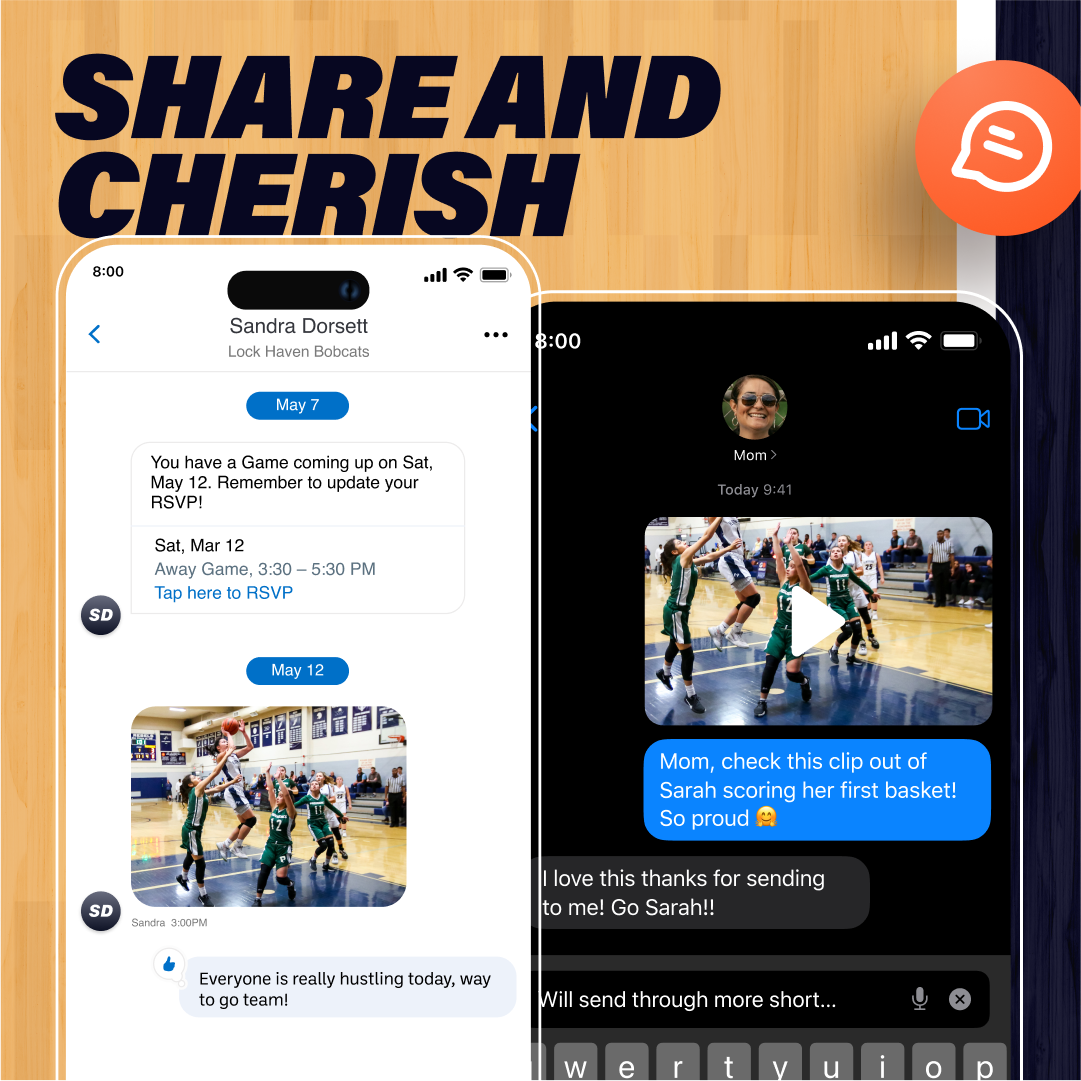
Hey, coach! Want to take your team to the next level this season? Introducing GameChanger, the ultimate game-day assistant with tools to give you a winning advantage. With GameChanger, you can track stats, keep score, and even live stream games, all for free! Get the stats and crucial game video you need to lead your team to victory, all from the palm of your hand. Coach smarter this season with GameChanger. Download GameChanger today on iOS or Android and make this season one to remember. GameChanger. Stream. Score. Connect. Learn more at GC.com/HoopHeads

High school and middle school basketball program directors, listen closely. Coaches are expected to do far more than just coach. You know this. It doesn’t matter if you’re doing the coaching yourself, or you have a full staff of coaches with you. You know very well that coaches handle scheduling, academic issues, parent communication, leadership development, and even mental health concerns for athletes. A lot to deal with, and they haven’t even gone home yet to balance those responsibilities.
No matter the passion for the game, and burning desire to help athletes develop, this level of responsibility can lead to burnout, inefficiency, and less time spent on actual coaching. You know it’s true.
When coaches are stretched too thin, it impacts the development of athletes, team morale, and the overall success of the program. Now here comes the outsiders throwing their two cents in about what’s happening. Then come the parents complaining about how you’re running things, as if they know what they’re talking about. When’s the last time you went to their place of work chiming in from outside their window?
Before you let that fire fizzle out, know that it doesn’t have to be that complicated. There are several ways to prevent you or your coaches from feeling overwhelmed. However, I’ll tell you one of our favorite ways to keep coaches firing on all cylinders, and that’s athlete-driven accountability and organization.
Instead of coaches constantly reminding players about assignments, grades, and practice schedules, our programs at Playmaker Planner puts the responsibility back on the athletes. By tracking their own academics, goals, and commitments, student-athletes become more self-sufficient, which of course allows the coach to put their babysitter hat in the closet, and put their coaching hat back on, allowing them to focus on what they love doing.
Are we offering planners that you can get at the dollar store as a solution? Of course not, but we are starting a conversation with you to see if our programs can be a compliment to what you’re already doing. Let’s find out. To learn more visit https://playmakerplanner.com/stop-is-this-for-you
THANKS, KYLE TOLIN
If you enjoyed this episode with Kyle Tolin let him know by clicking on the link below and thanking him via Twitter.
Click here to thank Kyle Tolin via Twitter
Click here to let Mike & Jason know about your number one takeaway from this episode!
And if you want us to answer your questions on one of our upcoming weekly NBA episodes, drop us a line at [email protected].
TRANSCRIPT FOR KYLE TOLIN – UNIVERSITY OF TEXAS PERMIAN BASIN MEN’S BASKETBALL HEAD COACH – EPISODE 1081
[00:00:00] Mike Klinzing: Hello and welcome to the Hoop Heads Podcast. It’s Mike Klinzing here without my co-host Jason Sunkle tonight. But I am pleased to be joined by Kyle Tolin, the men’s basketball head coach at the University of Texas Permian Basin. Kyle, welcome to the Hoop Heads Pod.
[00:00:15] Kyle Tolin: I appreciate you having me. I’m looking forward to visiting with you here.
[00:00:19] Mike Klinzing: Very excited to have you on, Kyle. Looking forward to diving into all the things you’ve been able to do in your career. Let’s start by going back in time to when you were a kid. Tell me a little bit about the first experience that you had with the game of basketball. I know your dad was a long time basketball coach and where to dive into that relationship, but just gimme, gimme an idea of where it all started for you.
[00:00:39] Kyle Tolin: Yeah, so I probably unique story, maybe one or more unique stories just within basketball. obviously from the time I was little was in, in basketball with my dad being a coach, I was fortunate to, to be a coach’s kid. My dad was a high school coach for 24 years and then got a college job and was in college basketball for 17, 18 years.
So coached over 40 years. So kind of right, right when I was little was thrust into a coach’s family and a coach’s kid.
Early on, I knew that, hey, I wanted to coach, this is what I wanted to do. And a lot of kids want to do that because that’s what their dad does. So that’s probably why when I was younger that I wanted to do it. But as I continued to grow, and again, this is kind of where the uniqueness comes, he was, I, he was my high school basketball coach at Norman High School in Norman, Oklahoma.
So I played for him in high school. We were fortunate my junior year in high school, we won a state championship at the six A level. My senior year in 2000, we got beat in the state championship game. So played in three state tournaments with him and, and we were able to play in back to back state finals, winning one of them.
So at that point I had signed with another institution I’d signed with Oklahoma Christian basketball there for Coach Hayes, legendary hall of fame coach, and my dads up getting the job at Oklahoma Baptist University. And Baptist recruited me and obviously knew a lot about that university.
And was interested in them at the time. And then obviously my dad gets a job and at that point it came pretty easy. Hey, I’d, I’d like to continue to play for my dad. So I played for him for four years in college as well. So that’s kind of where the uniqueness comes from. I don’t know how many kids can say that they played seven straight years for their dad.
So but I did that, played for him three years in high school and then played for him for four years at Oklahoma Baptist and had a great experience playing there as well. And won three conference championships, played in four national tournaments, played in three elite eights and, and played in the national championship game in 2002.
So was very fortunate. Played with a lot of good players and, and obviously got to play for my dad for seven years. So that’s kind of how I came into basketball. Then obviously got into coaching after that.
[00:02:37] Mike Klinzing: I think I can answer your question for you. The answer is almost no one has played for their dad for seven years going from high school and then on following him to, to college.
So when you think about the influence, let’s start with the influence of your dad, first of all on you as. A player, player. What do you think was the biggest influence that he had on you in terms of your playing career? And then we’ll get into the coaching side of it in a minute. I,
[00:03:03] Kyle Tolin: I think the work ethic.
You just, I mean, he was at the gym all the time. He had a passion. He was always watching basketball. He was always thinking two steps ahead of people. And, and I, I think I kind of got that a little bit, just kind of playing was I tell recruits all the time, like, I’m five 10 and white and I scored over a thousand points of college.
Part of it was because I could shoot it and I had a work ethic at it. So I think that’s kind of where the playing came in. The biggest thing I got from him was just his work ethic, how hard he worked. how, how he treated people too. Just how he kind of was day to day with the consistency and the energy and the, the passion that he brought for the game of basketball.
So kind as a player, I felt like those are attributes that, that I had and, and, and tried to lead those out on the court playing all the time.
[00:03:44] Mike Klinzing: Was he directly involved with you off the floor in terms of. Not necessarily the practice floor for your team, but when you’re working out in the summertime or you’re trying to get better, how much was your dad involved in that process?
Was that you going out and doing it on your own with your dad more in a consultant role? Was that your dad kind of overseeing it? What was the, that dynamic of sort of your off-season routine with your dad?
[00:04:11] Kyle Tolin: Probably a little bit of both. A lot of it was just me going in there and working on my own. I mean, it was, Hey, there’s specific things that you need to get better at.
And, and hey, that was, I was gonna go do it. I was gonna go work at it. I liked it enough. I liked being in the gym. A lot of times, hey, we needed a break from each other too. I mean, there were times where there’s nothing better than getting in the gym by yourself. So there was a little bit of both where.
And I tried to go get in there by myself and, and just continue to work and, and do those things. I was competitive enough that you enjoyed winning and was on good enough teams and felt like I, I was one that gotta play on teams and contributed to those teams. So just again I think it was a little bit of both to, to your question, there was, there was some consulting stuff and there was some helping, but there also was some just, hey, leading back and hey, that’s my son and you just like, I’ve got a son now.
Hey, you, you want to be good at something, you’re gonna have to work at it, so.
[00:05:06] Mike Klinzing: Right. Absolutely. Where did you guys fall on the dad coaches? Harder on the son than the other players Scale.
[00:05:16] Kyle Tolin: I mean, I think you probably you, I laugh about it now, but he was definitely harder on me than he was on everybody else.
And, and I think you appreciate that just kind of looking at other dynamics and, and I’ve talked to several guy coaches who have coached their son. He, he didn’t want to look a certain way and, and it didn’t or times where I didn’t start and felt like, why am I not starting? But you understood it too.
He didn’t want it to look her a certain way and probably was harder on me. I was fortunate that I had a mother that, that would always stick out for me and two sisters, one older and one younger. So a lot of times he, when he was the bad guy when things weren’t going well or he was treating me a certain way.
But again, I thought he was always fair to me just as a player. Felt like he coached me, but, but again, there was gonna be times where he was gonna be harder on me than my teammates as well.
[00:06:03] Mike Klinzing: What was your favorite part of having your dad as a coach? Obviously. You go through your high school career and as you said, then you follow him to college.
So clearly you’re talking about the vast majority of what you experienced with your dad was a huge positive. But when you think about it, what’s the one thing that stands out that you think made it work?
[00:06:24] Kyle Tolin: I think just being around even having a certain amount of respect. I mean, obviously a, as you get older, boy, you really respect your parents, how hard they worked, who they are as people, how they treated people how they worked every day I mean, I, my mom was a teacher and my dad was a coach, so I didn’t grow up with everything.
you had to work for a lot of things. And so I think you appreciated that. Just kind of from that relationship standpoint obviously you think about the, the, the winning was fun and we’d be able to win championships. that was a neat, neat aspect and seeing your teammates. I, I think for me too, this is kind of twofold though.
I think the first thing is my sophomore year in college, one of my teammates who I played with in four years in college and then actually coached his brother when, when I was at Oklahoma Baptist on the national championship team, but his dad had passed away right around Thanksgiving. And I think at that point it kind of really gave you appreciation.
Like, I’m gonna enjoy. I mean, not everybody gets to do that. I’m the only, I’m the only player in the locker room who gets to see their dad every day. So I think for me, that really made me appreciate that, especially in my last two and a half years of college. Like, hey, I’m gonna make sure that I enjoy getting a chance to walk in that locker room and seeing him every day.
I think the other thing that, that you enjoy that maybe been the neatest thing about playing for your dad was, man, there are a lot of different guys from a lot of different backgrounds. people from all over that you played with and you just saw the way that he treated those kids kind of became a father figure to them.
Just the way they talked about him and the way they appreciated him for helping them. And I thought he’s doing the same thing as he is for me as he’s then. So that was kind of a cool moment for me as well, just as a player to see like, man, he’s impacting a lot of people the same way he’s impacted me in a positive way.
[00:08:08] Mike Klinzing: How has that relationship that you had with your dad through sports and specifically through basketball, how has that impacted the way that you approach. Your children’s experience with sports in general? Basketball specifically?
[00:08:23] Kyle Tolin: Yeah, I think, I mean, I’ve got two kids. So I’ve got a daughter who’s a freshman in high school, and then a son who’s a, a sixth grader.
And I think, I think I’ve tried to lead the same way. I mean, he was never pushy, he didn’t push me to do those things. he played college basketball and coach, but he, he didn’t do those things. So I’ve tried to do the same thing with our kids. Just, hey, I mean, I hope that we’ve taught you a work ethic that your mom and I have.
I hope that, that you enjoy sports and playing because that’s, that’s fun. sports and athletics are playing. So I’ve tried to do that. I’ve tried to handle a lot of different things. Like he handled it as well. He was great about like, Hey, the game was over. We weren’t gonna sit.
Brought it, tried, tried,
[00:09:06] Mike Klinzing: do.
[00:09:08] Kyle Tolin: It’s, it’s hard at times to do I think, yeah. Yeah it’s, people say it’s easy and, and, and I’ve told our kids every parent wants their kid. I mean, it’s, we’re in the generation now where everybody wants their, their kid to be successful and things like that. But mean, there were a lot of times where, where I failed or we failed as a team or whatever.
And, and you’ve gotta learn from that as well. So those are sometimes the best, the best lessons. So we all want our kids to be successful, but as I tell ours, like, yeah, I got, I got, I got, I had a great experience of playing college basketball. I played with good teams and I’m coaching, and I don’t need satisfaction of you being successful for me to feel like I’m successful.
Like, you do this because this is what you want to do,
[00:09:50] Mike Klinzing: advice. And it’s hard. I think sometimes even when the pitfalls and you’ve been through it yourself, it’s sometimes hard in the moment to remember that. My kid is my kid and my way of doing things may not always mesh exactly with the way they are.
And eventually I found, at least in my own experiences, that they get there or they don’t get there on their own and you’re just kind of there as the support and to give them what they need and not to push that, like you said. Where you could definitely, it, it’s definitely easy to walk close to that line.
And sometimes it sounds like you experienced the same thing. Like there were times where with my own kids that I’m like, oh, I, I just want to push ’em a little bit more. I want to drag them to the gym on this day because I’m going there, or whatever. And I just learned over time that as difficult as that was for me, I had to let them come to the game on their own terms.
And then if they do great, and then they take it and they run with it. And if they don’t, then you’ve got a whole nother thing and they go in a different direction with their interests. And so, being a parent, as you well know, just like being a coach every day, it’s a learning experience. And none of us, none of us ever really know what we’re doing.
We’re all just kind of flying by the seat of our pants, trying to make it trying to make it work in one way or another. So
[00:11:09] Kyle Tolin: yeah, you’re exactly right. Yeah.
[00:11:11] Mike Klinzing: Alright. Tell me about the idea that you mentioned right off the top of knowing that you wanted to coach. From an early age. ’cause what I found, Kyle, in our conversations is that most of the time coaches come to coaching in one of two ways.
One, they’re playing, they’re not really thinking about being a coach. At some point, their playing career comes to an end, whether that be in high school or college, or players who are lucky enough to play professionally. And then all of a sudden they look around, they’re like, I, I want to be involved in basketball and now my playing career is over.
How do I do that? And then they go to coaching. And then there’s other guys, which it sounds like the path that you took, which obviously the influence of your dad, I’m sure was a big part of this, is from the time they’re young, they know that, yeah, right now I’m playing, but I can see my future that when I’m done playing, I want to go and I want to coach.
So obviously part of that is the influence of your dad, but what do you remember in terms of maybe just you thinking the game differently maybe than some of your teammates did? If that makes any sense.
[00:12:14] Kyle Tolin: Yeah. I mean, I, I think probably I, I, I paid more attention to other games. I’d want to go watch other people play.
I wanted to scout games. I liked watching film and trying to figure out what other people were doing. So I, I think probably I thought a little bit more different. I kind of always knew what I wanted to coach. And then as I got into college, I, I, I I just wanted to coach. It didn’t matter where it was at, whether it was middle school or high school or college.
At that point, it really didn’t matter. And as my dad gotta be college coach, I thought, I think this is what I want to do. So that’s, that’s kind of point as I, as I’m turning and I’m getting older in college and, and, and I was a, I was a, I was a decent player. I mean, I wasn’t great, but I thought, well, my, my career’s gonna end at some point and, and I feel like I want to coach.
So at that point I started sending out at that point and things like that. All these coaches and few responded, coach side things.
I was a senior in college and, and was fortunate ’cause I, I mentioned, I was from Norman earlier and, and Coach s Samson was the head coach at Oklahoma University. And I went to high school with his daughter Lauren. We were the same age. And his son, Kellen, was a couple years younger than me and, and was fortunate.
Coach Samson picked up the phone and said, come sit in my office. Let’s talk about coaching. My, so this is my senior year in college, and boy I got a chance to go in there and sit down with him and why do you want to coach? And he started talking about his dad was a coach and that’s kind of why he wanted to coach.
And if his dad was a carpenter, he probably would’ve wanted be a carpenter. And, and we talked about that. And then he started breaking down like, well, this is what coaching is and this is what you do every day. And I thought, I’m.
The coach is up there early and he’s doing this and the academic side of things and the weights and all those kind of things. So at that point I kind of really, really had a realistic situation of, okay, here’s what coaching’s gonna look like. I had another coach tell me during that time, there’s just not enough hours in the day coaching, and I thought there’s 24 hours a day.
That’s a lot of time. I mean, I work hard as a player. I get up early and, and shoot and out and lift weights and run and practice and shoot again. But then as you get into coaching, you realize, I understand what he means now, especially as a head coach, there’s not enough hours in the day. So it’s kind of a longwinded answer to how, how I got into coaching when I thought, but really kind of knew that I always wanted to do it, but I don’t think I necessarily knew exactly what coaching entailed either.
I think as I became a coach, it gave you more of appreciation for your dad and, and everybody else coaching like, oh, this is what it entails and this is what goes into it on a daily basis.
[00:14:48] Mike Klinzing: There’s no question even for somebody like you who had experience of somebody in your family who was living that life, I, I still think as a player you don’t necessarily have a sense of all the behind the scenes things that coaches have to do again, that are beyond basketball.
I know when I was in play was I, when I was playing in college, I always felt like, now here I am, I’m at practice from three to six or whatever it is, and coaches probably roll in there at two 30 and by six 10 I’m, I’m showered and back at the dorm or the dining hall eating and they’re probably on their way home.
And then obviously as you get older and you have an understanding of what the job really is all about, you realize that a practice and the basketball part of it is probably a much smaller part of it than coaches would, would like it to be. And there’s just so many other, there’s just so many other things that you have to do as the head of a program, certainly.
And then even as an assistant coach, just the responsibilities that you have. So. Tell me about getting that first job back with your dad at Oklahoma Baptist. How, how do you got, how do you go about making that happen? What’s the conversation between the two of you and then what’s it like to go from being a player in a program to going stepping behind that curtain and, and getting to be a part of the coaching staff?
[00:16:04] Kyle Tolin: Yeah, I mean, again, I think at, at that point as, as I’m sitting there and I’d, I’d had those conversations with just other coaches and, and Coach Sampson I mentioned that a lot of ’em encouraged me, like, you need to work for your dad. He’s really good that it’s gonna be a good experience for you to learn how a program looks and the success of a program and things like that.
So we had talked and, and wasn’t for sure exactly what I.
Try to figure out this coaching deal. how, how does it work, what do you do? And, and again, just like any young coach, I probably wasn’t great. I remember my first scouting report my dad said, if I was Kelvin Sams self today, I would fire you. It looks this bad. So I, I, I hope I come a long way since then.
But, but again, I think that’s a, a deal that, hey, I, you don’t know what you don’t know. At that point, I didn’t know what coaching, I didn’t know the details that went into a scouting report. I didn’t know how to recruit. I, I didn’t know how to teach something. I knew how to do it playing, but I didn’t know how to teach it to make sure that somebody that didn’t understand it, teach them how to do it.
So, as we had conversation hey, I wanted to coach. And then, and then I did that for, for two years and felt like I really grew during being a graduate assistant. I got a job early in the morning ’cause obviously you’re not making anything as a GA and I rode a school bus, a monitor, a school bus at 6:00 AM and I did that every day so I could be in the office at eight o’clock.
So I could watch the assistant and watch my dad work and figure out, oh, there’s a lot more to this and this is really what I want to do. And the recruiting aspect on it. Hey, lemme go watch high school kids and JUCO kids and, and be on the phone with guys and let me figure out how to do this. So that’s kind of how I became when I, when I started coaching.
It was just learning different things like that.
[00:17:44] Mike Klinzing: What do you think you brought to the table in that first year or two that you were pretty naturally good at? I know there’s always a huge learning curve whenever I ask that question, coaches always say, man, I needed to know everything. But usually they’re able to come up with one or two things that they were.
Pretty good at, right, initially out of the gate, whether that be player development or just building relationships with guys. Where were you in that first year or two?
[00:18:07] Kyle Tolin: I, I think one thing was, I, obviously it was, it was, it’s interesting ’cause I played with some of those guys, right? I mean, I was graduated in 2004 and there were some guys that I played with and started with that were back in 2005 that were seniors.
So I felt like I could talk to those guys maybe more, a little more blunt than the head coach and the assistant could at that point because we were friends and some of them were roommates at, at points before. So I think that’s, that’s, that’s one thing I brought to the table. I think that you, you don’t have to be, I figured this, you don’t have to be a great player to be a great coach.
They’re completely separate deals. But I did think that guys appreciated the fact that, especially the ones were turning how hard I worked. I tried to be consistent the way I practice. I was in the gym all the time. So guys, when you talk to them, they, they respected that. I think the other thing that I brought to the table early on the first year or two was just the relationship with the players, like you’re talking about.
I feel like I can relate to anybody. I care about people. one of our core values in pro, in our program is servanthood leadership. I did feel like that. I brought that every day, like I was a point guard and I was willing to, to give up an open shot for me to try to get you a shot. And I think people always respected that.
And I’ve tried to bring that same philosophy into coaching. So I think that those are intangibles that, that, early on I felt like the relationships with the players the, the work ethic. They saw that I, that I did care about them that I didn’t want to see them be successful.
[00:19:30] Mike Klinzing: Where was the learning curve, the steepest? What was the area? When you look back, you think, whew, I really didn’t know a whole lot about that aspect of coaching and that was an area I really had to grow in.
[00:19:41] Kyle Tolin: I think forming a team, I mean, is an assistant. I felt like, hey, it’s my job to go get as talented players as I can.
And then as I got a little bit older, the learning curve was you’re trying to fit a team together. I mean, it’s a puzzle. You gotta have guys who are willing to pass and guys who are willing to, and guys who are willing to screen, and guys who can make shots and guys can score around the rim. You’re trying to fit it all together.
So that probably for me was the, was the biggest you learning curve and then, and then running an organization. I think that’s the, the hardest part. I mean, at the highest levels, those guys are probably like CEOs of Fortune 500 companies at small college. Were not necessarily, but you’re dealing with a lot of different people that have a lot of different ideas.
And, and one thing that always stood out to me was I remember when I was in college and I was student teaching and the, the teacher of the class told me, Hey, draw your favorite Playup on the board. And so I drew it up there and he said, okay, now explain that to an eighth grader. And I thought, huh, I never really thought about that.
Just kind of naturally, basketball came to me. If you showed me something, I was gonna be able to do it and execute it like you wanted to. Well, that’s not the case for everybody. Some guys are visual learners, they need to see it on the floor, some guys need to see it on film, some guys need you to physically walk through that.
And I thought, okay, so I’ve tried to use that teaching as I’ve become a coach. But it’s, it’s, there’s a lot of different things that you don’t think about when you coach and you just feel like, oh, somebody should get that really quick. Well, they may not, you may need to continue to tell them.
You tell ’em a thousand times and you you tell ’em one more. You continue to try to show them how it, how it should look. So I think that probably for me was the biggest learning curve of hey I’m gonna show up and work hard every day ’cause that’s who I am. But this guy may be going through something too that I’d never experienced in my life.
I realized that was just building relationships with players early on in my career was. You sit there and talk, talk to them in deep conversations and some of the things they’ve been through, like, Hey, I’m fortunate I, I didn’t go through those things, but I’m learning too from them that there’s a lot of hard days out there for a lot of people
[00:21:48] Mike Klinzing: and you gotta figure out different ways, as you said, to be able to reach different guys.
And not everybody learns in the same way. Not everybody exactly is, has, has a strength or an affinity for one particular area of the game versus another. And so it’s a matter of, right, your job as a coach, or whether you’re a teacher in the classroom, you gotta figure out different methodologies to be able to reach the players that you need to reach.
And I think that’s clearly a big part of what it means to have success. Tell me about developing a basketball philosophy. Obviously a lot of the influence of how you coached, at least early on in your career was from your dad in terms of style of play and what you like to do offensively and defensively.
But just talk to me a little bit about the genesis of. You as a head coach and we’ll talk and, and get to your, the, the transition to Arkansas Monticello in just a second. But just when you think about the totality of you putting together your offensive defensive basketball philosophy, how did that process work for you?
When did you feel like you had a pretty good handle on, in an ideal world, how you’d like to play the game?
[00:22:54] Kyle Tolin: Yeah, I felt like I was fortunate. I was at Oklahoma Baptist for 10 years eight or two as a ga and then eight as an assistant and associate head coach. So we had obviously wanted a high level and won a national championship.
So I felt like I had a basketball understanding of how I’d look like it to look and how we wanted to play. we ran North Carolina Secondary Break and, and defensively kind of had a philosophy what we’re doing and how to do that. And as I transitioned to be head coach, I thought, okay this, I’m gonna have it look the.
Became a head coach. He didn’t look the same way. So probably in year two of being a head coach, I mean, I think that’s where I finally figured out like, okay, here’s how I need to coach this and here’s how I need to teach it, and I’m gonna, and, and we are, we’re still running the same type of stuff as I was when I was an assistant.
But I think there’s tweaks too, just with my personality and the way the games change too. I mean, back in 2000, we played a lot of mid two thousands, we’d have two bigs on the floor that could soar with their back in their basket. Well, that’s not necessarily the way that, that players play all the time.
So you’re, you’re having to, to adjust a little bit with who your personnel is. with us, you’re trying to find guys that, yeah, there’s, you could go find 15 really talented guys and try to get ’em bought in, but those guys may not want to come to University of Texas permanent basin either. You’re trying to find the niche of who you can get and how, and then fit ’em together of how we’re gonna do so, so your, your thought on how you want to play may end up being different than Right.
Absolutely. Exactly. Based off of personnel. So and I’m sure all coaches are the same way. So, and I think obviously the good coaches can coach and, and I’ve had to figure that out. Like, I mean, I really had to figure it out. I feel like after my second year of how to coach and how to try to lead a team and how to play and make adjustments offensively and defensively, what.
[00:24:41] Mike Klinzing: At what point during your tenure at Oklahoma Baptist did you start feeling like, Hey, I think I might be ready to start looking around for head coaching jobs. And what was the conversation like between you and your dad as you were starting to have those thoughts?
[00:24:59] Kyle Tolin: I was interested because I had a, a quote in front right above my computer in my office, and it was by Bill Snyder, the Kansas State football coach, and it said, be where you are.
And I kind of always held to that. I mean, I kind of was old school and obviously I was loyal to fact ’cause it was my dad, but I also felt like we were at an institution where we legit had a chance to win a national championship every season. So I mean, I felt like, why do I want to leave and go somewhere else?
I like it here. My parents are here, I’m comfortable here. I. I knew how to recruit there. We weren’t told very no very often on recruits because we had facilities and we were close to Oklahoma City and we had won. So it kind of felt like, I mean, I was, didn’t really look for several years to be honest with you.
Didn’t talk to anybody as, as I got kind of toward the end of my tenure at Oklahoma Baptist. one thing with sitting down with my dad talking about, I mean, he’s, Hey, you’re ready to be a head coach. And I was like, I just, I dunno if that’s what I want to do yet, and I’m okay with still being the assistant, but it kind of came a point where he was getting close to retiring too, so it was like.
I felt like I was always gonna be at Oklahoma Baptist that’s, I was gonna spend my whole career there. But it’s one of those deals where he’s the all time winningest coach at, at Oklahoma Baptist, and I kind of need to go prove that I could coach on my own too, that, that I wasn’t just his son.
I could go take a program and try to flip it in a positive way. So I think that’s the conversations kind of at the end of my tenure at Oklahoma Baptist where he was getting close to where he was getting ready to retire. He’d done this for a long time at a high level. And, and again, I felt like from my standpoint, it was, Hey, I need to go, I need to go figure out what program it is and where to go and I need to really figure out how to coach.
So and I, and I felt like I made a good decision in that.
[00:26:45] Mike Klinzing: How many jobs did you apply for? And what do you remember just about the process of searching for a head coaching job that eventually landed you at University of Arkansas? Monticello.
[00:26:57] Kyle Tolin: So I, I legit really didn’t apply for any in 10 years.
There was one in our league that had called me in year nine, after year nine. And I went over there and interviewed and they offered me the job and I just didn’t feel right about it. This felt like, man, I, I’m at a place where we’re the best team in the league and this team’s mid pack. I I, I feel like I probably need to to be here another year and, and I stayed there for another year and then the next year one thing I think that I’ve done a pretty good job of in my career is just forming relationships with administrators too.
Just getting to know people who are athletic directors. Obviously those are the people that are hiring people. So there was an athletic director at a division.
And said, Hey, there’s a job open at the University of of Arkansas Monticello. Do you have interest in it? I, I didn’t know anything about University of Arkansas Monticello. It’s division two and there’s really good people there. So at that point, that was kind of the first job that I applied for and was able to go through the interview process.
And then again, that was my first job and, and they hired me and, and I was a young, young, early thirties and, and felt like I knew everything and learned pretty quick that I didn’t. And so, but, but I think that that gave me an opportunity to really learn how to coach and, and kind of go through lots of different scenarios and figure some things out as well.
[00:28:21] Mike Klinzing: What was the most surprising part of becoming a head coach in terms of something that you had kind of watched your dad do, or maybe you sort of took for granted some things that your dad did while you were his assistant, but what was the toughest part of that transition from being an assistant coach to being a head coach for you?
[00:28:38] Kyle Tolin: everyone talks about the chair moving over and, and, and I think that was probably the biggest was there were a lot of times, and I laugh about it with my dad now, where I was like, I’m the one checking on academics and I’m the one making sure they’re in housing and I’m the one making sure they’re doing skill development.
I’m doing the scattering reports and I’m on the phone recruiting and I’m bringing them in. Like, you’re doing all kind. What’s the head coach do? And I, and as I got there, I was like, oh, okay. The, the first month I was like, oh, this is what the head coach does. So I, I need to take back everything I said on that.
I think that that just becoming the head coach and, and figuring out everything you do, I think the other thing gave you appreciation how good he was. I. I mean, you deal with stuff that’s stressful all the time with coaching on a daily basis and being like, how did he handle the stress so well?
How did he handle this situation so well? We at Oklahoma Baptist in 10 years, I bet there weren’t more than five times that we were told no. By recruit. I became the head coach at Arkansas Monticello, and I bet I was told no 20 times in the first week of being the head coach there. I mean, it was, so, you’re like, how do I react to this?
We won seven games my first year as a head coach. We’d averaged 24 or five wins a year at Oklahoma Baptist. Well, I, I, I thought this coaching deal was easy and it’s not. So I think there were a lot of, a lot of adjustments and a lot of things that really made you appreciate about especially programs that win.
Like there’s a lot that goes into it. Winnings hard at any level, anywhere. And there’s a lot.
[00:30:07] Mike Klinzing: How did you handle that? Losing from a mental standpoint that first year? ’cause as you said, you come from a place where you had done basically nothing but win and now suddenly you are the guy in charge, it’s your name that goes with the record and you’re only putting up seven wins that first year.
Just from a mental standpoint, because I think there are a lot of coaches, right, that a lot of times you get your first head coaching job and it’s not, you’re not taking over a winning program. A lot of cases you’re taking over a program that maybe has a couple losing records in a row, which is why the previous coach isn’t around anymore.
How did you handle that and what advice would you have for a coach who’s taken over a program that maybe isn’t winning as much as that coach is used to?
[00:30:50] Kyle Tolin: Yeah, that’s a good question and, and I don’t know if, even if my age right now, if I figured that out I still take classes pretty hard and, and one thing is, I think you were in, you are at a program where that’s kind of the expectation.
Every day is like, Hey, we expect you to win at this level, and it’s not happening. And you’re putting in the work. It’s not necessarily like, well, my work ethic’s not any good, but you question everything. You’re questioning, what am I doing offensively, defensively, the recruiting philosophy, if I hired the right staff and I, I think that’s, and that’s, and that’s fair.
I mean, and we still do that even today after, after you lose trying to get things fixed. I think as a young coach walking into that situation like that, I think I would tell them, just continue to, to trust the people that they trust. Lean on them. I, I didn’t really, I I I, my dad at that point, as we lost one day, he says to me Huey Brown says that every coach needs to lose when they first start coaching.
And I thought, this is terrible advice. You’re telling me that it’s that I need to lose to figure out how to coach. But to be honest with you, I think it didn’t make me learn more. I had to try to create a better culture. What’s our program about every day? Who am I, who’s my personality? my dad wasn’t gonna jump up and down in the locker room or go dive in the pond across the street after wind.
Hey, that’s me. I’m gonna do that. So that needs to be who we are. What’s the niche of recruiting? How am I gonna get guys here to believe in me? what’s important in this pro, in this program every day? What’s important me in recruiting? So I think those an questions I answered. So as a young coach, I just think that, hey, trust the people you trust, continue to work.
Have a philosophy believe in what you’re doing every day. I mean, you don’t, you’re gonna question things and you try to fix things and make things better, but you’ve got something, you’ve been around a program that’s had success. Now you’re different. Just like anybody who takes over a job, like I was different than my dad does to some extent.
And I mean, assistants are different than the guy who was the head coach. Like, you have to take your parts and, and figure out how to make it work. But, but also I think just guys who will. At a place where they’re working for a good head coach, if you’ll just sit back and learn. I tried to do that for 10 years.
I didn’t question what we were doing offensively or defensively, or why we were warming up this way or whatever the case may be. I just kind of sat there and reserved and said, okay, I’ve seen this way be successful now. If I can figure out how to teach this better, I think we can do the same thing
[00:33:14] Mike Klinzing: for a good assistant coach in your mind, obviously you spent a good deal of time at Oklahoma Baptist under your dad as an assistant, and then you’ve been the head coach now for two different programs, probably had a lot of assistants that have worked for you.
What makes a good assistant coach?
[00:33:29] Kyle Tolin: I think that’s a great question because. That’s, that’s a deal you try to strike. And I look back on and think I, I feel like I did a good job as an assistant as I became in the coaching business. Again, I was fortunate because my dad was a coach and when he first started coaching, he coached with Joe Holiday, who was the top assistant at Kansas, North Carolina.
And as I was talking to Joe about becoming an assistant and working my dad one thing he said was, tried make coach. That was his goal, to try to make him look good, try to make him in the program look good every day. And I really tried to do that for 10 years. I had goals. I wanted to be National Coach of the year.
I wanted to try to get him to win a national championship. I wanted to have a national player of the year for him. Like I wanted to try to do all these things. So, so that taking things off of the head coaches played and being able to handle situations, having relationships with the player. I’ve kind of got a funny story about that.
When I was at Arkansas Monticello, we had a year, we were really good and won the league. And my dad, I convinced him to come down and help Justin Newton. At that point, Justin was with me. He was unbelievable talking about really good assistance. He was really good at a lot of different things and was really good for us on the program.
But my dad came down and one day after our game, we had won and one of the, one of the moms of our players was at the game and walked by and said, Hey coach, we just appreciate everything you’re doing for him. Thank you. And she looked at my dad and said, he really loves you. And so we laughed about it afterwards, I said, for 10 years they all came and talked about how much they like me.
And now they’re in here talking about how much they like you as the assistant. So you’ve gotta have a good relationship. But, but I think the loyalty part of being an assistant, I mean, that’s huge. Do you have the head coaches back every day? Do you have do you have the programs back? I mean, it’s not nec for me.
It’s not about me. It’s about our program and trying to make our program look good, do and doing right by the program. So are you loyal? Do you work hard? Are your feet in there? if, if, if our program’s gonna have success, hey you’re gonna have a chance to, to be a head coach or move on or, or whatever the case may be.
But it’s gotta be about these players in this program every day. And again, as an assistant, I felt like I tried to do that. I was loyal. There wasn’t a day I wouldn’t walk in there and thought, I don’t know whether what he’s talking about or why he is doing this way. And again, I think the good assistants like Justin New and Chris Johnson that I’ve had guys like that.
They were that way. I never had to wonder, are they in the foxhole with me? As the head coach, you show up to work every day or wake up or go to bed and you’re thinking about the program. I mean, when I go to bed tonight, I’m gonna be thinking about our program and how to make it better. When I wake up tomorrow, that’s gonna be the first thought in my head.
And I think good assistants kind of have that same philosophy is, Hey, it’s not what’s my next job or guy, I have to show up in the office, or I have to make these recruiting phone calls, or whatever the case may be. It’s, Hey, I’m in this deal every day. I want the program to be successful and I’m gonna do my part.
And you can have a huge impact. I mean, I look at the programs in our conference and part of the, the, the most successful ones have got some continuity within their assistance. You can tell they’re invested in what’s going on in those programs every day.
[00:36:32] Mike Klinzing: What’s your process for helping your assistant coaches to understand what it is that you want your program to be about, what you want them to teach on the floor?
The terminology that you use just when you hire a new guy, what does the process look like for helping them to understand how you want your program to look on the practice floor, off the floor when you’re traveling, all those things. Because obviously, again, you have the idea of what your program’s all about.
You bring somebody new in as an assistant coach, how do you get them up to speed on what you need them to be teaching and to do all that support work that you just described?
[00:37:18] Kyle Tolin: I, I think early on in the, in the interview process and I don’t know, I mean, this may be an area that I feel like I, I can get better at for sure as early on in the interview process.
Try to lay a lot of that out. I mean, same thing with the recruiting process with players. I try to make sure when they walk into our program, they have an understanding of how I would like it to look and what my expectations are before they step foot on campus. Can you meet these expectations? Here’s my standard of how I think things should look.
And again, it’s, there’s a lot of different places and a lot of different places that do things different way. But, but for me, it’s, Hey, we’re gonna do things this way. ? I, I, I want to hire assistants that have good ideas and stuff, but I also think I have an understanding of what it takes.
Should look in play. So I, I try to be upfront during the interview process of, Hey, here’s how it looks. I meet a lot with our guys. I, I’ve had assistants before where we never really met. I mean, they come in the office and, Hey, here’s what’s going on, and here’s what we’re doing, and here’s what I’m doing today.
I I, one thing that I really like, when I, when I hired Justin Newton at Arkansas Ello, he’d walk in every day and say, Hey, what’d we accomplish today? I mean, so we, Hey, here’s what I accomplished. Here’s how I think I’ve made our program better. Here’s what I did to make our program better today. So you felt like you were kind of on the same page just with communication and, and, hey, we both know that we’re trying to do all we can do to help our program get better.
So I, I think just upfront as I’m trying to hire somebody and I’m, I’m going through that process now. I’m, Hey, I want somebody who’s gonna be loyal. I want somebody who’s gonna come in and work. And, and again, I, it’s like our, our athletic director right now, or the athletic director I’ve worked for, Hey, they know I’m doing my job.
They don’t have to walk into my office and wonder whether I’m in the office or not. They don’t have to wonder whether our guys are working out or whether we’re practicing hard or whatever. And they know I’m doing my job and I’m doing right by the university every day. And that’s kind of the same thing I’m looking for an assistant is hey, I, I can talk to you and show you every, every day how it should look, but you also want some people that are gonna walk in and be like, Hey, I’m, I’m gonna do my job every day too.
To where I don’t, you don’t, micro I don’t
expectations.
[00:39:29] Mike Klinzing: Here to do that today as a more experienced head coach than it was in your first year or two at Arkansas? Monticello?
[00:39:35] Kyle Tolin: Probably, yeah. I mean, it’s, it’s obviously you were young at that point, so it’s probably easier today. And, and, and I don’t, I mean, my expectations are probably, as I’ve gotten older and gotten a little bit wiser, my expectations probably are a little bit higher.
I mean, a lot of guys you’re hiring now just would, based off of resources and things like that are gonna be younger guys. So that makes it harder because you think it should look a certain way. And, and it doesn’t yet. So but it, but I think as you get older, I mean, every year you coach, it seems like you get a little bit smarter.
You go through something else different than you hadn’t gone through, you can think things through a little bit differently. So I think, I think right now it is easier than it was 10 years ago.
[00:40:19] Mike Klinzing: Tell me about the opportunity at. Texas Permian Basin, why you felt like it was a good opportunity for you to move on from Arkansas, Monticello?
[00:40:27] Kyle Tolin: Yeah, so I mean, we went to Arkansas, Monticello and, and I was there for seven seasons and, and if you look at my resume, I’m not one who bounces around. I mean, I was at Oklahoma Baptist for four years as a student athlete and then 10 years and as a assistant coach and then had an opportunity to be a head coach and was there seven seasons at the University of Arkansas Monticello.
And, and one thing that I appreciate about there that we were able to do is you Baptist, you, you tell recruits like, you can’t do something that hadn’t been done here before. I mean, they’d had a guy, Al Tucker played in the NBA was on the all BA rookie team. They won national championships. They had national of the guys who played professionally, like you’re doing something that’s been done before when went won one conference championship in 1956.
That was it. And so I thought, I, I think we can get to the point where we can do this and was fortunate that in 2017 and 2021, both that we won conference championships and gotta play in the NCAA tournament and represent that university. So at that point it was you’re looking around and, and I felt like, man, I don’t know how much more we can do here.
And I felt like when the athletic director called me from the University of Texas Permian Basin, it was right before school started in 2021 and started kind of spilling out what they had and the league that they were in. And his expectations for the program and his philosophy really fit with mine.
He wanted to be competitive. He wanted it to look a certain way. He was willing to work and come up with resources to try to help us. Kind of felt like at that point, like, Hey Arkansas, Monticello, we can make it to the NCAA tournament, but I think we can win at a pretty high level at University of Texas Sperm Basin.
That’s part of the reason why that I did choose to come here.
[00:42:08] Mike Klinzing: I think that the supportive administration is always something that is maybe overlooked from the outside, that people don’t always understand how important a supportive administration is in your ability to build a winning program.
Whether that support is financial, whether it’s just support of an interest, right, by the administration, because I know that there are plenty of coaches that coach in places where the administration maybe doesn’t have as much interest in the athletic side of it, or maybe specifically the basketball side of it.
And as you said, to be able to have the resources in place that you felt like could allow you to compete for a national championship. Obviously that’s a spot where you want to be, where that you. If you do the things that you’re supposed to do, that the people who are above you are gonna give you the support that is necessary for you to have that kind of success.
So when you walk into the job on day one, what are one or two things that, as you’re looking at the program and thinking about where it is at the moment, where you took it over and thinking about where you want to take it, what were a couple of keys that you felt like were gonna be really important to get the program where you wanted to go?
[00:43:28] Kyle Tolin: I think you kind of hit it on the head. You’re talking about building a program and, and, and I don’t know if I’ve a great coach or do a great job, but one thing I think I’ve done with the two division two programs that I’ve taken over is we’ve been able to flip them from, not losers necessarily, but flip them into winning programs.
And I think there’s a lot pieces involved in on. Do they care? Do, are they invested in you? Are they invested in the program? Are they invested in the student athletes? That’s one the community piece of it. Can we get people involved? And there’s a lot of things that go into a winning program. are you getting the right personnel and the right culture?
I mean, I was fortunate when I took over the job at UTPB, I mean, they’ve had kind of three straight losing seasons. And that’s one thing. The ad was like, we need to flip this around where we’re, we’re having winning seasons here. And I was fortunate that I got to bring some guys with me that played for me at Arkansas, Monticello.
Those guys were invested and bought into what was going on. So we were able to flip it pretty quick and have a winner in the first year. A lot of it because of those guys, but trying to find the right niche. And every programs recruiting is different. I mean, it takes a little bit to figure out what’s the niche here and what guys can we get here.
And Monticello I figured out pretty quick, well, we can get Mississippi and Alabama and, and Florida kids because we’re close enough to there because we’re on east side of Arkansas. where, where I was at first trying to get the kids from here and here and here and it didn’t really make sense.
And then all a sudden we figured out we get these guys here and come and, and, and be successful. I think the other thing to question getting the right. Players in players that are bought into to you? I, as a head coach, I think that’s the number one important deal. I’ve told recruits a lot, I could sit you in a room for 30 minutes and show you this guy I coached was National Player of the year and this guy was a pro, and look at this guy and look what we’ve done and look at these rings and things like that.
But if those kids generally don’t want to be in the program and play for you every day, then they’re not gonna get all out of their ability as they want. And our team’s not gonna be as good as we want either. So finding the right players that want to be there and are invested in that university and in you, and then the program, I think that’s, that may be the biggest key.
That’s probably the first key is getting the right staff members in place and then as well getting the right players that really want to be there and are invested in playing for you,
[00:45:53] Mike Klinzing: how do you figure that out on the recruiting trail? Because that’s something that I’m always fascinated by.
’cause obviously. Any coach wants to bring in a player who’s their type of player, right? Who they feel is gonna be able to thrive underneath their coaching style and be bought in. But I’m always curious, when you’re out on the recruiting trail and you’re talking to players, you’re talking to parents, you’re talking to people around the player, what are some of the signs or some of the things that you look for, maybe some intangibles that let that, Hey, this kid is my type of player.
He’s the type of player who I think can thrive in our program at our institution underneath my tutelage. What are those keys that you look for in a recruit when you’re out on the recruiting trail? And
[00:46:34] Kyle Tolin: I think guys that like to play, I mean that’s one of our other core values is passion. Guys that like to play.
I think that’s important. I mean, when I recruit, I tell guys all the time I, I’m, I’m obviously older, but man, when I was younger we, I always you wore sweatpants, but you always had shorts under there. ’cause you never knew when you gonna get all to play. And I want guys with that kind of same mentality of like, hey, I really like to play.
Like I’m, I’m passionate the game basketball, I enjoy being in the gym. I enjoy competing. So we don’t have the resources where I can go watch. He may be able to watch him once or maybe on the phone. So trying to trust people that you, that you do trust. But as you’re sitting there watching a kid, like is he passionate?
Does he, does he play hard? I think that’s an important piece. Does he play hard? Will he guard? I mean, I think that’s kind of how you build your program is on the defensive end. You build your toughness through, through your defensive end. So will they guard? I think it’s an important piece how they react, how they respond to their teammates, how they respond when, when things don’t go well.
he’s in foul trouble. How’s he acting on the bench? What’s his body language like? you try not to recruit guys who are moody. we’ve got guys this year that are some of my favorite guys that I’ve coached. And one thing is, man, they were consistent with who they were every day.
They weren’t moody. They came into prs heart every day. You didn’t have to worry about their academics. They took care of their selves. they were grown men and, and you’re looking for guys like that every day. And I know if there’s a perfect science to it. Tried finding the right guys. But those are, try specific things that when I’m out and looking for, and obviously there’s gotta be somewhat of a skillset can he shoot it?
Is he a good rebound or is he good defender? how hard does he play? There’s gotta be specific skillset that goes with it. But, but those other things are important too. We’re trying to put the right pieces of guys together
[00:48:23] Mike Klinzing: when you’re looking at a high school player and obviously with the portal and just the way that things have changed in the recruiting aspect.
High school players that it’s, it, it’s the recruit, the recruiting level of high school players is the same as it used to be. But when you think about recruiting a high school kid and you’re looking at a player with their a a U team versus with their high school team. Do you, how do you evaluate a kid in each of those two environments?
What do you maybe take from one that you don’t take from the other, or vice versa? What do you look for in one environment versus the other? I’m just curious, compare and contrast, kind of recruiting a kid and looking at what they do with their high school team and with their a a U team.
[00:49:02] Kyle Tolin: Yeah, I think they’re both equally important because you’ll watch some kids and you think he’s really invested in what’s going on as an a, like on his AAU team, he’s willing to be coached and he practices, he plays hard and you watching the next game and it’s the same thing.
is he, is he picking up stuff? Is he, is he willing to guard there’s a more talented guy out there that he’s guarding here in this AU game high. How does he compare? Is he out? In the a a U that he whiz on his high school team. So I think that that those things with an A A A U on the high school, I, I think it’s similar in the fact of how bo in is he how, how, how good a teammate is he what’s his skillset?
But on the a a u, you also, there’s some things that you can find out watching a guy play AAU that maybe you can’t find out during a high school game and vice versa. So I think it’s important to be able to, to be able to evaluate both of those things.
[00:50:01] Mike Klinzing: Yeah, I think there’s value in both environments and it’s always, I think you think back to probably 20 years ago and as AU was just starting to get off the ground, high school recruiting.
Probably more significant than it is today in terms of going and watching a player and evaluating them in high school. What I’ve found, at least in my experience, is that a lot of times players are sort of identified in aau and then once you kind of know, Hey, this is the kid that I want, then you, you show up to their high school game to let ’em know, Hey, we’re we’re really interested in you.
And that’s how you kind of sort of cement that, cement that relationship with the kid and, and let ’em know that, hey, we’re we’re really on you. We’d like you to be, come, come and be a part of our program. And when you take over a new place, obviously you inherit a roster. And then again, if you want to turn it around quickly, you gotta quickly get your your players, get the guys who are on the roster that are returning to buy into what you’re doing.
And obviously you’re a new head coach that didn’t recruit ’em. And so that’s a piece of it. And then bringing in your guys to get them to get them going and, and doing the things that, that they need to be able to do. So once you have the players in the door and. You’ve got the guys that you feel like are, are a good fit.
What’s, what’s the player development look like for you at the division two level in that first year as you get, as you get guys and you take over the job, what are you doing from a player development standpoint to, to help get your guys ready for a, for, for the first season?
[00:51:27] Kyle Tolin: Yeah. I think, I mean, we get x number of hours on the floor with them.
So, I mean, at that point you’re, you’re trying to do individual stuff with them of here’s tendencies within our offense or how we, how you’re gonna get shots within our offense. You’re working on specific things like that, and then you’re trying to build, when you’re with the team, you’re trying to build the, the team aspect of it with here’s what we’re gonna do, offense, let’s break it down, and then let’s start breaking down.
how we’re gonna guard. Here’s, you start from the, from the ground floor and you build it all the way up. So I think both things, the individual development is that, is that way. I think that’s one good thing that we’ve done over my 11 years as a head coach is you take guys who like basketball and have shot it at whatever clip of 32% or whatever, and they’ve come to us and, and a lot of it is the kids that they’re willing to work.
You’re just showing ’em how to work or how to do it. And they all kind of progress with their, with their three point shooting. And, and again, I don’t think it’s anything necessarily we’re doing, we’re just trying to put ’em in a position where they can develop and get better. And a lot of it is just them willing to be saying, yeah, I want to get in.
But, but trying to do that, trying to get ’em to be positioned in position where they can be successful. if you can make shots, we need you to come off screens and you’re gonna get shots this way, and we’re gonna work at those things as we’re doing the individual skill development stuff with you.
And then again, with the team aspect of it, a lot of it is trying to get ’em on the floor and get ’em bought into, Hey, you’re, we gotta do this. You gotta be, this is our stance. Here’s how it looks. This is how we’re covering ball screens this is how we’re gonna help. This is how we’re gonna rotate.
This is how we’re gonna help the helper. Hey, you’re not playing hard enough. You gotta play this hard. Hey, you gotta move the ball one more time here. And, and then showing ’em too. So spending a lot of time. So I, I, as I’ve taken over two programs, the first time I took over at Monticello, there was one guy on the roster in July, and that was it.
And as I took this one over, it was the same way. There was a couple more, but there wasn’t very many. So that first year you’re really trying to implement a lot of things and, and people say it takes a couple years to get it implemented. Now with the portal and the way things are, it’s, it’s becoming quicker it seems like.
And that’s the challenge, is trying to get a team it’s almost like a one year deal every year. Now you’re trying to get this team in, in a six or seven month period to play at the level that you think it should be at where eight or nine years ago it was like, Hey, you got this guy who’s been with you for five years that understands he could coach the practice today, right?
Yeah. So that’s the challenge. Now.
[00:53:57] Mike Klinzing: So what does the planning process then look like as you’re preparing for a season in terms of. Going through and sort of creating an outline of when you want to have this accomplished, when you want to have that accomplished, what does that process look like for you, for your staff?
How do you go about thinking about, Hey, I got this whole new team, right? I don’t have all these veteran guys that I can count on that are gonna be able to teach the younger guys. It’s kind of like, I gotta go and as you said, it’s year to year. So what does the planning process look like? I,
[00:54:30] Kyle Tolin: I think a lot of that happens over the summer.
I mean, a lot of people think, well, coaches don’t work over the summer. I’m in the office every day during the summer. that’s one. My dad was in there every day and I’m in there. So at that point, I think it’s, it’s kind of three prongs that you’re trying to do. I think the first piece is your roster.
How does it look? You’re evaluating your roster still, how does he fit in? How’s this gonna fit in? How are we gonna play? What do you want to, what do you want to do from that standpoint? So the roster, and then you get the culture piece of it. Like, Hey, here’s, here’s the, the culture piece of here’s what needs to happen.
Let’s start getting ’em on zooms. Let’s make sure that so and so is calling so and so when they’re talking today and they’re starting to form relationships where when they walk in on campus, there’s some familiarity to what’s going on. Hey, I’ve talked to him before and we’ve already kind of got a chemistry built.
I zoom guys a lot. I like to see ’em face to face. I like to read their body language. I feel like you can get to know him better. Same thing, kind of recruiting a.
Hey, I want to spend five hours with you in the car so I can really get to know you here, whether you’re gonna fit or not. So trying to get that culture piece of it set as well. And then I think the third thing is trying to figure out, I’ll watch every game. So we played 28 games this year. I will watch every game that we play and take notes off of every game.
Here’s things that I thought worked against this team. Here’s what didn’t work. Here’s what we need to improve on this coach did this out of a timeout. I really don’t like the inbounds. I want to change it this year. Start thinking in terms of that just within the season. And then at that point, you’re taking those three things and you’re trying to lay out a plan.
Hey, I would like to have within the first 10 days of the the preseason, I would like to make sure that we’ve covered everything defensively. You can see how are we gonna guard a ball screen? How are we gonna guard a side ball screen? How are we gonna, how are we gonna, he help? How are we, how are we gonna rotate?
How are we gonna cover flare screen, curl screen, whatever the case may be. Hey, I’d like to have this done within X number of days. Hey, I’d like to have our offense put in. And we’re at this point as you start practicing, Hey, how’s our, how’s our chemistry? Have we done community service? How much time have the hours that you guys spend together?
I want to meet with them X number of times early on. So, yeah, I think there’s a plan in place. You kind of put that in the summer and obviously it adjusts. There’s different things that go on, just like when you walk in the office at eight o’clock, I think I’m gonna get this and this and this done today.
And then somebody walks in and, and it totally changes. So that can happen as well. But, but I think having a plan in place of, of, Hey, I want to get X number of things accomplished and here’s where we need to be at. And, and again, you’re taking notes off of last year too. Hey, here’s where we were at on preseason 10.
Like, we need to try to be here or. I need to slow this down a little bit. Like next year I think, Hey, I need to slow our offense down. I may change some things offensively, like we may not be as far along as I would like to be because it needs to be taught and I need to break it down where we’re not rushing through things.
So I think, yeah, there’s a, there’s a, there’s a, the plan and there’s a top process in trying to get to where you want to go.
[00:57:36] Mike Klinzing: What does the daily practice planning process look like for you? Are you sitting down by yourself, creating the practice plan? Are you doing that in a staff meeting with your assistant coach?
What, what do you do day to day to put together a great practice plan?
[00:57:51] Kyle Tolin: A lot of times both things. I mean, there’s a lot of times where you’ll meet at whatever time and, and we film almost all of our practices and, and generally after practice I will, I will try to watch it and take notes or clip it or whatever where we’ve got clips to show the staff and, and our guys or whatever.
I’ll have assistant like, why don’t you watch this here, watch him on this, or, or whatever the case may be. And a lot of times we would meet the next day and say, alright, like what do, what do you think? What’s the next step with the practice? I didn’t like this today. Let’s go back to it. Can you teach this?
I’ll teach this. So a lot of times that, and then there’s a lot of times where there’s the got things going on too where, hey, this kid’s got this academic or they’re doing an individual development with the kid and I’m the going and, and so I bit of both, I of trying to figure out the right, right formula in practice.
I think it changes year to year. Sometimes I’ll go back to a year. There was times I was going back to practice plans in 2009 and 10 saying, Hey, we hit this rough patch and I remember we did something this week. And okay, this really helped. And, and then also trying to have goals with it too. Like, Hey, here’s what we’re trying to accomplish this week or this today.
And, and just bouncing that off of of guys and stuff like that. And then meeting with the players too, saying, Hey, here’s, here’s what needs to change. And then I, I’ll clip a lot too of here’s 15 clips of practice and here’s what needs to be corrected, or, this was really good.
This is the way it should look
[00:59:20] Mike Klinzing: like to have the same general outline of practice. So just as an example, we always go defense first, then offense, then special situations, or do you just kind of mix it up based on sort of the day to day of what’s necessary for your team?
[00:59:35] Kyle Tolin: Yeah, I think necessary for the team.
I, I like what you’re saying, and I’ve done that this year. I didn’t feel like it worked as well with our team, so I got to where, like we’d walk out of film and we walk on the court and you’ve put 10 minutes on the clock and, Hey, we’re going live, we’re gonna compete right now. Yeah. And I thought that helped our team.
There’s a lot of times early on, I think you try to get ’em loose and going and with some energy and stuff like that. And then, and then we’ll start four on four where we got guys, I mean, we really try to get them to compete playing four on four and really work on defense. And then there’s spots where we’re working on offense.
So that’s generally how I’ve done it. But, but again, I think it kind of depends on your team and the year too, because again, I, I did some different things this year that I hadn’t done before, just ’cause I felt like there was too many spurts within our team that we didn’t play for enough time.
They needed to compete and, and try to do that in practice just to get ’em to where they were consistent.
[01:00:28] Mike Klinzing: So you feel like if you’re gonna try to ratchet up the competitiveness, you’re trying to make every drill as live as you possibly can is what I, is what I’m hearing.
[01:00:36] Kyle Tolin: Yeah. Yeah. I mean, we, we tried to do that and, and, and again, I think, I think when you recruit, you’re trying to find guys that want to compete and there are enough kids that want to compete kids want to win.
And, and I feel like that, that all that brings a different element to practice. And we did a lot of one-on-one or three on three or four on four, Hey, we have a winner and a loser every time you’re the winner and you’re losing, just trying to get that engraved into their head. And then within what we’re trying to do every day is you’re trying to build positive habits too.
And, and again, hey, you’re trying to win the game at the end of the day. So yeah, I feel like that that’s helped us just kind of throughout the years
[01:01:12] Mike Klinzing: with what we talked about before in terms of just the way that the rhythm of college basketball is different than it may have been five or 10 years ago in terms of the guys staying in a program for four years.
How do you think about developing leaders amongst your team? Right? We always hear that the player led team is better than the coach led team, but when you only have a guy for a year or two years and then maybe they’re going somewhere else and you’re bringing in a whole new group of guys, how do you develop that leadership that maybe could have developed naturally over the course of a player’s four years in the past, whereas now you kind of get to get that going a little bit quicker?
[01:01:50] Kyle Tolin: Yeah, that’s a great question. And, and you, and I’d be making way more money if we had the right answer to that one. I think so. You’re exactly right. I had not done it before, and this year I did it where I kind of had a leadership team. I tried to pick some guys out seniors and I met with them weekly.
And it may be, Hey, I read this book, or I listened to this podcast or this quote, or Hey, what do you think? you talk to me. How can I help you become a better leader? What do you want me to do? How can I help you be successful? that that was pretty often, in fact, I met with them once or twice a week just trying to, trying to help them develop some leadership habits and to get them to understand, I mean, everybody, especially players, they all want to be liked and that’s hard.
Same thing with the head coach. I mean, there’s a lot of tough days where there’s people that don’t like you, but you’re trying to make a decision based on the whole group and what’s best for them, and trying to get the players to understand that too, of, hey, you’re trying to, you’re trying to do what’s best for our team every day.
This is a team game. So a lot of that, I, I did a lot of that throughout the year just trying to help, because you’re right, it is hard. and, and kids are different, but one of the best teams that I coached in 2017, we had one returner and that was it. And we set the school record for wins and winning percentage and won the league.
Well, that group really bought into each other every day. We didn’t necessarily have a guy who was a, a leader that was back. Those guys kind of just gravitated towards that. So trying to get that and trying to get them to trust you and, and, and you to trust them too. I mean, I think it, it works both ways.
You want to have kids that trust and bought in, but we need to do the same thing when they talk. I need to listen to what they’re saying and what they think about teams and how our team’s gonna lead. But, but I think that, especially going forward, boy, that’s gonna be a huge piece of, of basketball in.
Cultures, I mean, that’s culture’s such a big word in the, in the game of basketball, but trying to build your team is, well, you’re gonna have to have some leadership. And you’re right, naturally you had some guys develop, or this guy’s back that has played for us three years and understands me and what we want every day.
And now you’ve got guys who hadn’t been in the program before that are, you’re, you’re needing to lead immediately. So that’s an area that I think that all coaches are gonna have to work harder at going forward.
[01:04:05] Mike Klinzing: What’s the best part of these changes in college basketball? So often I feel like the conversation skews negative in terms of the portal and NIL and all these different things and just people sort of lamenting the fact that it’s changed.
But in your mind and what you’ve experienced, what’s a positive change that you’ve seen, whether it’s from your coaching perspective, player perspective, just the general landscape. What’s a positive from sort of where we are in college basketball right now?
[01:04:35] Kyle Tolin: I think you’re right. It, it really has changed, but I think the positive is, boy, I mean, players are getting better, coaches are getting better.
The game of basketball is getting better. I mean, last night I’m sitting there watching an NIT game and hey, I really like that inbounds, and I’m, I’m still in it and I’m watching the Division two Elite Eight, and hey, I really like that set, that team ran. I’m still in it. And boy, I think it’s just, there’s so much video and so much development and I think kids still, I mean, they, they want to compete and they want to have some structure.
And I still think that the, there is, I mean, some people say, well, the relationship part of it, well two of our best players this year that we had were, ’cause of relationships that were built is why they came to us. So I still think that that’s, that’s an important piece of it. But I mean, I think basketball’s trending in the right direction.
As far as, as far as, as far as the development of players and the work ethic’s still there, I’m fortunate. We have a lot of guys who are in the NBA that come in and work out in our facility throughout the summer and early fall, and you watch those guys work and you may, it gives you an appreciation just of where the game of basketball’s at, how hard those guys work, what they’re doing the way they go about themselves, the professional approach of it.
So I I, I think there’s a lot of positive things, and I get, you’re right. There’s the, the, a negative of, hey, it’s the portal and, and the, the recruiting aspect of it and the NLI aspect of it and different things like that. But I’m not one who’s gonna sit here and say it’s all negative because I, I don’t think it is.
I think there’s a lot of positive things to it too. I mean, you’re watching the NCAA tournament right now, and there are a lot of kids trying to help their team and their program win. Now it may look different, but right now they’re really competing and they’re trying to help their team win. And I think, I think that’s, that’s still the case in, in, in basketball.
[01:06:19] Mike Klinzing: A great point. I think winning ultimately, whether you’re a player or a coach, that drive to win doesn’t just evaporate because we’re in a different era. And I think that’s a really good point. And then I like the other thing that you said, it just about the, the skill level and the talent of the players.
And I, I say this all the time, but you look at the skill level of a kid, let’s say on a high school team, back 25, 30 years ago, the 10th, 11th, 12th player on a high school team was probably a football player that just went out there and banged people around and set screens. And now you look at the 12th player on a high school team and that kid is more than likely a very skilled basketball player.
And and then you talk at the top end of it, just the amount of shooting that we see in the game today is just incredible. If you go back. 20 years ago, and think about the number of guys that could shoot the ball the way that players today can shoot it. It’s just not comparable in any way, shape, or form.
And so, to your point, I think basketball is moving in a really, really positive direction from that standpoint. And I just, whenever I hear the discussion, it’s always framed around the negative. So it’s always good to be able to, to share some of the positive things that we’re seeing about the game. And you also talked about just the innovative coaches that we have out there.
And you can watch a game or go on social media and just grab a ton of good things that are interesting and again, may not fit into exactly what you’re trying to do as a coach. But certainly there are things out there that coaches are doing and tweaking and creating all the time that we all, we all borrow and steal from each other, right?
That nobody, nobody really necessarily invents anything. We’re all just kind of borrowing and tweaking from other people. And I think that’s gonna continue to have the game in good hands. Before we wrap up, Kyle, I want to give you a chance to answer one final two part question. And the two part question goes as follows.
Part one, when you think about the next year or two, what do you see as being your biggest challenge? And then the second part of the question, when you think about what you get to do every day, what brings you the most joy? So your biggest challenge, then your biggest joy.
[01:08:33] Kyle Tolin: I think that the biggest challenge is, is I, I’ve still, I’ve gotta hire a good, good staff.
I mean, that’s, we’re at a spot where that’s gonna be a challenge is trying to get the right person and, and then just fitting the personnel being patient. I mean, everybody wants to. To look a certain way or be a certain way, but you’re gonna have to be patient to put your roster together and to get the right people in here.
So that’s gonna be kind of the biggest challenge just within today, within our program is, Hey, I’m gonna have to be patient. That’s the first thing, and I’m gonna have to make sure that we get the right people in here. I think those, those are gonna be the biggest things. So.
Have the same kind of, Hey, I’m gonna show up every day. I’m gonna work as hard as I can. I’m gonna try to help people. ? So I, I think that’s the way that you’ve gotta kind of look at it every day. I mean, there’s a, there’s a lot of people, and when you hear positive things, former players or whatever that’s, that’s always a cool thing.
And it makes you feel good. Like, Hey, this is why I, I do this. ? So you’ve got people that are invested and, and supportive of you. I mean, I’ve got a, a great family who cares? I’ve got two great kids that care. I mean, it’s, I’ve told people this story the other, the other day, and it’s funny and assistant leave and I’m at the office making phone calls late, and all of a sudden my phone starts buzzing and I’m getting text messages from my wife’s cell phone and there’s all these random players and text, what, what is this?
Well, my sixth grade son had sent my wife or got my wife’s phone and was looking up available players. He knew that I needed some help recruiting, so he was trying to find some guys for me. So I kind laughed about it, but I thought, man, there’s, there’s a lot of people that do care. there’s a lot of times as a coach that you feel like you’re on an island by yourself.
I mean, there’s many a times this year where I felt like. I’m on an island by myself. I’m the only one that cares. Well, that, that’s not true. There’s your family cares. There’s a lot of players that care what’s going on. There’s a lot of times you got assistant coaches that care what’s going on. You’ve got administrators that care that’s what’s going on once everybody be successful.
So I, I think that’s, for me, that’s one of the things that’s cool. And, and does bring joy is I’ve been fortunate now been being in three good programs where there were a lot of people, whether it was people at the university or people in the community or players or former players, they really cared.
They really cared about, I. Not only me, but but our players and our program. So, and that brings me joy every day and makes, makes me want to continue to continue to work harder and, and, and move, move our program going forward and see if I continue to build this thing and, and, and grow and get better. And, and, and again, I think as a coach I’ve done that.
I’m, I’m in, in a really good league with some of the best coaches in the country and I feel like I’ve really developed over the last couple years and hey, we need to try to help our players continue to get better and, and bring the right people in here. And, and again, I think that that’s what brings you joy though, is, is trying to continue to, to, to help people and, and know that you’re around a lot of good people.
I think that’s important for me is trying to be at a program where, where there are people that you’re working with that are good people every day. They enjoy being around every day because end the day you’re around your players and your assistants a lot of times more than you’re your own family during the trying to be around people like that.
They enjoy being around every day.
[01:11:44] Mike Klinzing: Absolutely. That’s very well said. I want you to share how people can get in touch with you, whether you want to share email, social media, website, whatever you feel comfortable with. And then after you do that, I’ll jump back in and wrap things up.
[01:11:57] Kyle Tolin: Yeah, I mean, I love talking basketball. I love trying to help people. There’s been a lot of people that have helped me throughout the way. I don’t think I have all the answers by any means. But love to connect UTPBAthletics, that’s our website. [email protected] is my email.
Would love anybody to call or text. again, there’s been a lot of good coaches that that I’ve competed against in the same league or really respected that I’ve called them and said, how have you done this? Or Why did you do this? Or, what’s your thoughts here? Or, I’m struggling with this, that have picked up the phone and, and called me back when they didn’t have to that have helped me. So I’d love to help anybody in any way and, and, and love to talk basketball and share ideas and, and we’ll probably pick your brain too on trying to, to help our program get better.
[01:12:51] Mike Klinzing: Absolutely. Kyle, I cannot thank you enough for taking the time out of your schedule tonight to join us.
Really appreciate it. And to everyone out there, thanks for listening and we will catch you on our next episode. Thanks.