
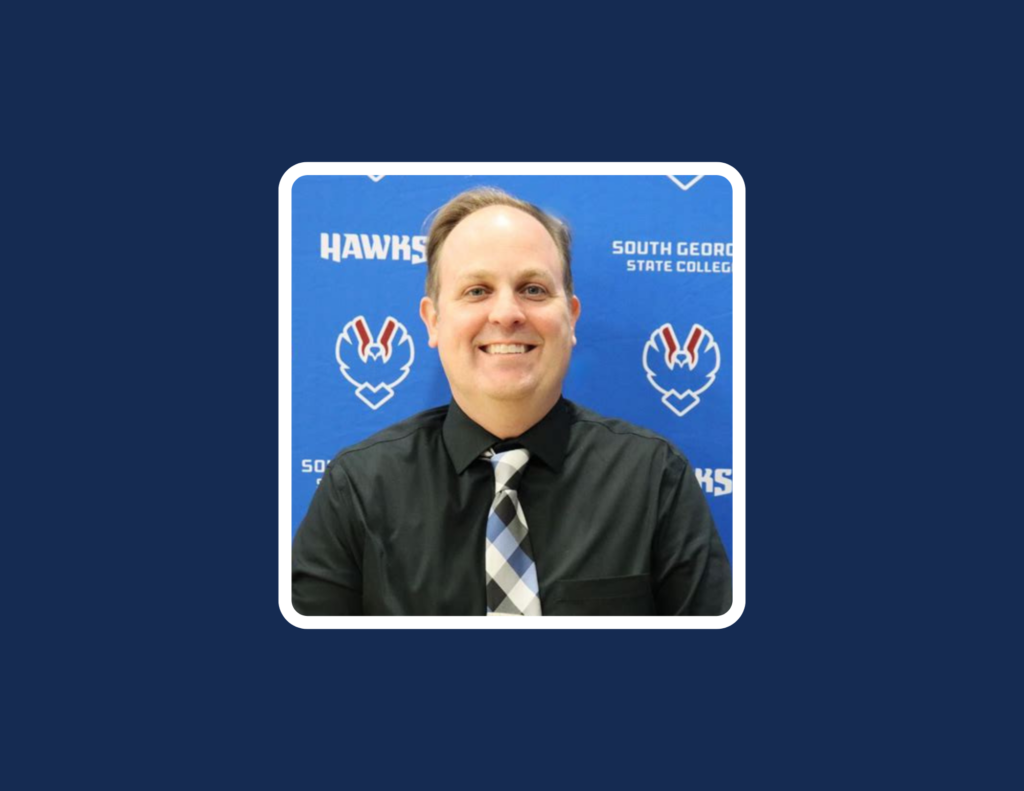
CORY BALDWIN – SOUTH GEORGIA STATE COLLEGE MEN’S BASKETBALL HEAD COACH – EPISODE 1059
Website – https://sgsc.edu/life-at-sgsc/mens-basketball
Email – [email protected]
Twitter/X – @CoachBaldwinWC

If you listen to and love the Hoop Heads Podcast, please consider giving us a small tip that will help in our quest to become the #1 basketball coaching podcast.
Cory Baldwin is the Head Men’s Basketball Coach at South Georgia State College. During his tenure, which began in 2009, the Hawks have won more than 340 games, won three conference tournaments, and played in the NJCAA National Tournament in 2023, 2021, and 2011.
110 student-athletes have moved on to continue their education at four-year institutions while playing basketball at the four-year level. Also, over the past 14 years, 94% of Baldwin’s basketball players have graduated with an Associate degree before moving on. In addition, they have had 7 NJCAA All-Americans (3 in a row 2 separate times) in just 15 seasons of competition and 14 NJCAA Academic All-Americans.
Baldwin previously served as the Head Coach at Truett-McConnell College for three seasons from 2006-2009 and as an assistant coach at Clayton State University for 7 seasons where he also played his college basketball.
On this episode Mike and Cory discuss the intricacies of coaching at the junior college level and the profound impact of team cohesion on individual player success. Coach Baldwin articulates the challenges of fostering a unified team dynamic among players who often have aspirations to advance to higher levels of competition. He emphasizes the importance of teaching players that winning requires personal sacrifices and collective effort, detailing the strategies he employs to instill this mindset. Additionally, Mike and Cory explore the evolving landscape of junior college basketball and the significance of building a supportive culture that encourages both individual growth and team achievement. Through his extensive experience, Coach Baldwin provides invaluable insights into the art of coaching and the responsibilities that come with shaping young athletes’ lives.
Follow us on Twitter and Instagram @hoopheadspod for the latest updates on episodes, guests, and events from the Hoop Heads Pod.
Make sure you’re subscribed to the Hoop Heads Pod on iTunes or wherever you get your podcasts and while you’re there please leave us a 5 star rating and review. Your ratings help your friends and coaching colleagues find the show. If you really love what you’re hearing recommend the Hoop Heads Pod to someone and get them to join you as a part of Hoop Heads Nation.
You’ll want to take some notes as you listen to this episode with Cory Baldwin, Head Men’s Basketball Coach at South Georgia State College.
What We Discuss with Cory Baldwin
- Sacrifices are necessary to achieve a common goal
- Why coaches must effectively communicate the importance of teamwork over individual accolades to cultivate a winning culture within the program
- The challenges of leading a junior college team include managing diverse player aspirations while maintaining a strong team dynamic
- Success in basketball is often linked to the ability to adapt and grow, both as a coach and as a team, in response to new challenges and opportunities
- Fostering a cohesive team environment despite individual aspirations for advancement
- Understanding player motivations and aspirations
- Adapting to the ever-changing landscape of college athletics, particularly with the prevalence of transfers and the need for rapid team bonding
- Commitment to player development, both on and off the court, emphasizing the significance of education and personal growth
- The day-to-day responsibilities of coaching extend beyond basketball
- The importance of seizing opportunities
- “Always remember what it’s like when you don’t know.”
- “No job is beneath you as an assistant coach.”
- Keys to building a program from scratch
Like this show? Please leave us a review here — even one sentence helps! Consider including your Twitter handle so we can thank you personally!

We’re excited to partner with Dr. Dish, the world’s best shooting machine! Mention the Hoop Heads Podcast when you place your order and get $300 off a brand new state of the art Dr. Dish Shooting Machine!

Prepare like the pros with the all new FastDraw and FastScout. FastDraw has been the number one play diagramming software for coaches for years, and now with it’s integrated web platform, coaches have the ability to add video to plays and share them directly to their players Android and iPhones via their mobile app. Coaches can also create customized scouting reports, upload and send game and practice film straight to the mobile app. Your players and staff have never been as prepared for games as they will after using FastDraw & FastScout. You’ll see quickly why FastModel Sports has the most compelling and intuitive basketball software out there! In addition to a great product, they also provide basketball coaching content and resources through their blog and playbank, which features over 8,000 free plays and drills from their online coaching community. For access to these plays and more information, visit fastmodelsports.com or follow them on Twitter @FastModel. Use Promo code HHP15 to save 15%

Your first impression is everything when applying for a new coaching job. A professional coaching portfolio is the tool that highlights your coaching achievements and philosophies and, most of all, helps separate you and your abilities from the other applicants.
The key to landing a new coaching job is to demonstrate to the hiring committee your attention to detail, level of preparedness, and your professionalism. Not only does a coaching portfolio allow you to exhibit these qualities, it also allows you to present your personal philosophies on coaching, leadership, and program development in an organized manner.
The Coaching Portfolio Guide is an instructional, membership-based website that helps you develop a personalized portfolio. Each section of the portfolio guide provides detailed instructions on how to organize your portfolio in a professional manner. The guide also provides sample documents for each section of your portfolio that you can copy, modify, and add to your personal portfolio.
Hey, coach! Want to take your team to the next level this season? Introducing GameChanger, the ultimate game-day assistant with tools to give you a winning advantage. With GameChanger, you can track stats, keep score, and even live stream games, all for free! Get the stats and crucial game video you need to lead your team to victory, all from the palm of your hand. Coach smarter this season with GameChanger. Download GameChanger today on iOS or Android and make this season one to remember. GameChanger. Stream. Score. Connect. Learn more at GC.com/HoopHeads
THANKS, CORY BALDWIN
If you enjoyed this episode with Cory Baldwin let him know by clicking on the link below and thanking him via Twitter.
Click here to thank Cory Baldwin via Twitter
Click here to let Mike & Jason know about your number one takeaway from this episode!
And if you want us to answer your questions on one of our upcoming weekly NBA episodes, drop us a line at [email protected].
TRANSCRIPT FOR CORY BALDWIN – SOUTH GEORGIA STATE COLLEGE MEN’S BASKETBALL HEAD COACH – EPISODE 1059
[00:00:00] Mike Klinzing: Hello, and welcome to the Hoop Heads Podcast. It’s Mike Klinzing here without my co-host, Jason Sunkle tonight. But I am pleased to be joined by Cory Baldwin, head men’s basketball coach at South Georgia State College. Cory, welcome to the Hoop Heads Pod.
[00:00:15] Cory Baldwin: Oh, I’m glad to be here, man. Thanks for having me.
[00:00:18] Mike Klinzing: Absolutely thrilled to have you on, looking forward to diving into all the things that you’ve been able to do in your career, let’s start by going back in time to when you were a kid. Tell me a little bit about your first experiences with the game of basketball. What made you fall in love with it? How’d you get involved?
[00:00:33] Cory Baldwin: Well, I was kind of lucky I did not grow up in a coach’s house like a lot of other coaches do getting the family business, but my mom was the youngest of eight and all of her brothers and sisters had kids. So I was the youngest of the next generation for the cousins. So all the cousins played ball all the time.
And in order to keep up with the older ones that that’s what I had to learn to do was hit an open jump shot, right. Couldn’t drive and playing out in the front yard or wherever Thanksgiving games were always a competitive and just really fell in love with it. I had a, a sister and an older brother and my older brother was a real good athlete, played everything, but my sister was, player at Georgia tech. She ended up being a Miss Georgia basketball. She played at Georgia tech and played all four years was a three year starter and still in the top five or 10 and some categories and she could really shoot it. So I had to get good fast cause I was always known as you’re not as good as your sister.
So that, that, that’ll make you go. And a pretty funny story. It’s not as good as the Reggie Miller, Cheryl Miller story, but it’s very similar. We had a rival in middle school that if you’re from where I’m from, South Atlanta area, Clayton County I grew up in Riverdale and Jonesboro area.
And that’s right south of the airport. There was a middle school in Monday’s mills where I went and our arrival was point South and would make no sense to anyone listening, but stay with me. I had 20 or 22 as a, as a seventh grader in the eighth grade game and against the big rival.
And I couldn’t wait and call and tell my sister and me and my dad got on the phone to tell her and we’re bragging. And I was like, I didn’t even, I didn’t even think to ask you, how’d you do y’all right, Alabama tonight. And she had 42. So that, that kind of squashed my 22. But anyway, those were, those were I just love basketball.
I love being competitive. I played football a lot. I was spread option quarterback back before that was popular a little, little scat back running around throwing it. And so always love sports. Football helped me a lot, honestly, in coaching you deal with so many different people and, and different things, but that was where my love came, like every, like most I wanted to play that was what I wanted.
And when I got to middle school, I played for a real good middle school coach, and I decided in about seventh grade, I was going to. Coach middle school baseball and football and wear shorts every day and teach health or something. And that was my goal all the way up until about my first two weeks of practicing at Clayton State as a freshman.
And I realized, man, I want to coach college. And the rest, and the rest is history as they like to say. Alright, so
[00:03:15] Mike Klinzing: tell me a little bit about You as a player thinking the game as a coach, because I think a lot of times what you’ll see is you’ll have the people who write, they play and they’re completely focused on being a player.
Then you have other people who they’re playing, but they’re already starting to think about, Hey, I might want to coach. So when you think about yourself as a player, let’s say at the high school level, were you still thinking of yourself? Strictly as I’m looking at the game through my own lens as a player, or were you starting to look at the game from a coaching perspective in addition to what you were doing as a player?
[00:03:53] Cory Baldwin: I think I always had a little bit of that wanting to be a coach in me. And I had some uncles that had coached travel ball, mainly softball and baseball, but. they kind of got me that bug and, and, and like a lot of older men sitting around watching sports or that played sports they’re, they’re all what they would have done Bobby Cox or, or Jerry Glanville or the Falcons back then they should have done this, that, and the other.
And you, you kind of start thinking those things in your head and challenging yourself. And then when you start playing, you realize sometimes it’s a little different than the old armchair quarterback stuff. And of course you really realize it when you found a coach, but. But, but I definitely did some I, I would always think think about diff different things, different perspective, like man, I wonder why coach said that or did that.
And I was always trying to kind of figure it out from his side, not just from my side.
[00:04:51] Mike Klinzing: You think about your high school coach and then you think about yourself and the type of coach that you are and the personality that you bring to the table. What’s something from your high school coach that. You feel like still influences you today.
That’s a part of your coaching style or what you believe that you learned from him back in the day. Man,
[00:05:08] Cory Baldwin: I, I took a lot from a lot of coaches tidbits and personalities and drills and everything from ones I played through my whole life and ones I worked for and ones you scouted and recruit all that stuff, but, but with the last high school coach I had, I played for three different ones, but the last high school coach I had.
His name was David Justice and it was not the outfielder for the Atlanta Braves, but he, he was a very, I think the neatest thing about him was he, he had a way of getting on guys and, and still being able to be your guy he, he never belittled you to the point that you, you just didn’t.
Some, how it can be sometimes I’ll play for other guys and I, even I’ve done it sometimes and wish I haven’t where you, but he was, he was great you always wanted to play for him. You always want to do good for him because. He just had that great personality. And he had just a way of carrying himself.
I would like to think I took some of that. I don’t know if I did, but I definitely tried to, and he could be a good, a good smarty britches, lack of a better term as well. he, he was, he was very witty and he would get, get, get you pretty good and he was fun to play for the middle school coach I played for was very Fiery and competitive and really love teaching individuals.
And I’d like to think I had coach Toler was his name. I’d like to think I took a lot from him as well. And I think the world of him and I was, I was lucky. I played for Jimmy Hebron in college at a Clayton state. He was a long time assistant for Bobby Cremins at Georgia tech. And he was, he was just a different guy, kind of odd, peculiar guy.
We’re probably more opposite than, than than anyone else. But at the same time, I have some similarities. He was a New Yorker or, or definitely our accidents wasn’t the same, but he, he, he was, he was a New York city guy, ? And I learned a lot from him and he loved basketball and he loved telling stories about basketball.
When I worked for him, my favorite time of the day was lunch because about three days a week we’d go eat together. And I just knew I was just going to get them going on stories about somebody eating, what I mean? That was going to be the whole day. Oh yeah. Absolutely. Yeah. Couldn’t wait for it.
? That’s it. So last one, the guy I worked for Gordon give, I worked for Hebron for two years and I worked for Gordon Gibbons for five. And he’s kind of a, a division two legend. He he’s, he’s also coached the CBA a long time and, and some of the other. Smaller pro basketball leagues. And he, he kind of a Florida legend and he came into his career up to Atlanta and he was such an intense into detail guy, never really been around somebody like that.
you almost felt like you were working for somebody that was a Senator or something at times how he approached the everyday practice and game, and I really loved working with him and he was probably one of the funniest guys I’ve ever been around, great sense of humor
[00:08:10] Mike Klinzing: and being able to pull from.
All the different influences that you’ve had, both the guys you played for, and then obviously coaches you worked with and under, I think that’s a huge piece of developing yourself and figuring out who you are as a coach, because a lot of times again, it depends on how much experience you have in terms of both as a player and then eventually as a coach, who you can, who you can draw from, I often give the example, Corey, that like when I was my first coaching job, I had basically played for, unlike you, I played for one high school coach.
And then I played for the same college coach for four years. And so when I got my first coaching job, that what those guys had done was pretty much all I knew. I mean, I thought I, I thought I knew a lot cause I thought I was a good player and I thought basketball was an important part of my life. But when you look back at it, you’re like, yeah, I don’t really know anything except what those two guys had done.
And if there was anything outside of the realm of drills or philosophy or the way they approach things, I really had no idea because those were the only two basketball experiences. I really had from that standpoint. And so it’s just interesting, again, the more people that you have that pour into you that you’re able to draw from, then again, it just expands your knowledge and allows you to figure out like, Hey, what do I like about this?
What do I not like about that? What am I going to take? How am I going to incorporate that into what I’m going to do? And I think that’s all part of a progression that everybody goes through in their, in their career. You mentioned that two weeks into. Your college career that that was kind of where you’re like, okay, I want to coach college, but let’s work back from that.
Tell me about the process of choosing a school and going through and, and, and being recruited to whatever degree you were recruited. And just what that experience was like for you and ultimately what made you make your decision that you did? I really wanted
[00:09:59] Cory Baldwin: to play football, I thought going into 11th grade cause I’d had some success and was able to play a little bit of varsity at quarterback.
And obviously quarterback, if you play that you get a lot of attention. And, and I thought that was kind of what I was, even though I wasn’t tall, I’m five 10, so I didn’t. I knew that was a challenge nowadays, every quarterback’s five, 10, but back when I was doing it, most of them were six, four or bigger.
And so since I couldn’t do it in my mind, I started kind of seeing that and I really delved in more to basketball, which doesn’t make a lot of sense either. Cause everybody in basketball is way taller, but, but anyway glad no one told me that part, right. But I, I really got a lot, a lot more serious in 11th grade and started getting some, some attention for that as well.
AAU was, was getting big, but it still wasn’t like it is now by any stretch of the imagination. And I had played some with team Georgia without outlaw, but off and on, because again, I played football, so I couldn’t play it a lot. So I was, I, I’m kind of lucky though. my sister again was being such a, a good player, even though it was on the women’s side.
She knew some coaches and I was getting some attention and we’d had, I’d had a very good senior year. And I ended up visiting Tennessee temple Kennesaw state and Clayton state. And I really wanted to go to Lee university and they, they named it, I couldn’t never visit them though.
They did. They didn’t want me to go there. So that was where I thought I fit. how it is. Sometimes you’re trying to fit a square in a circle and it didn’t, that wasn’t it. And Kennedy temple offered me Kennesaw ended up not offering me. I thought I had a pretty good visit, kind of thought it was coming.
It didn’t. And which is funny that that was Clayton state’s big rival my whole time there as a player and coach. So it was kind of funny that. they didn’t offer that added, I guess, more, more to the rivalry. If anybody needed any more, I could throw that in there. Right. And but at Clayton state ended up offering me kind of a recruited walk on spot.
And because I was in Clayton County where I live it worked out and it made a lot of sense, so I did it. And and that was the, the current was a long time AD, not a current one anymore, but. Long time AD at the time was the basketball coach. He offered me that spot, got me on, and then he ended up moving to just athletic director.
And then he hired Jimmy Hebron, who I played for. So it was kind of. Weird that I didn’t get that opportunity with Hebron initially. But that was who I ended up playing for. And again, those first two weeks, I was just amazed at how much stuff college basketball was. I really was naive, even though I had a sister who played playing and, and playing yourself for two different things and I just couldn’t believe it.
And I couldn’t believe we, we had an assistant coach at a time, Dennis Walsh, who if anybody if anybody listens to this and you don’t know who that is, look it up. I’m sure he’s got a Wikipedia. He was an assistant at about seven or eight different division ones, and he had worked Billy Tubbs and been with a lot of different staffs.
And I just, man, if he was driving, we used to drive two separate vans to games back then. I always got in the front seat of his van just so I could hear all the stories. He coached Reggie Lewis. He was, he was on that staff at Northeastern and man, just had great stories, man, story after story, name drop after name drop.
And some of that probably made me want to get in it too. just the way he had glorified everything he had done.
[00:13:36] Mike Klinzing: That makes a lot of sense. I mean, I think when you just. Drop yourself into that, especially when you’re surrounded by good people, right? You already had in your mind that coaching was a direction that you thought you wanted to go.
And now all of a sudden you’re surrounded by these guys who have had all these career experiences and are able to relate those to you and share them with you. And I think I’m sure that looking back that that had a big influence on just your decision to, Hey, I think maybe I’ll forego the middle school teaching route and get right into having an opportunity to coach at the college level.
When you think about the time at Clayton State as a player, and now you’re starting to think about coaching at the college level, were you, were you talking to the coaches about, Hey, I think I want to get into coaching someday. Were you kind of trying to, I don’t know if get behind the scenes is the right word, but were you trying to.
Ask them maybe more questions from a coaching perspective, in addition to trying to maximize what you, what you were as a player. I was really got into it probably
[00:14:38] Cory Baldwin: my junior year of college deciding to kind of do some background work and, and let people know, Hey, I’m, I want to coach college.
And we had the staff expanded that year to a third, a second assistant, so a third coach. So it was coach Hebron, coach Walsh, and then they added Brandon Johnson and I’d never been around a younger just so energetic and just everything he did was about moving up and coaching. And he had eventually became an associated coach for a while at Auburn under Jeff Lebow, and he’d kind of been around some other staffs in division one after Clayton, but this was when he was first getting started.
And when we were in study hall and when I was supposed to be studying, I would usually be picking his brain nonstop. That was my study. And I would just, I mean, I think sometimes he wanted to like, come on, man, they all call me CB. I think he’s like, CB, can, can you just pretend you’re studying something for a minute?
I mean, but I would just nonstop, like. What would you do here? What camps would you work? Should I coach an AAU team? Should I just throwing stuff at them non stop? And that was the time when camps were probably wasn’t in the biggest A day, but it was still pretty big 90. Yep. 98, 97, 98, 99.
I worked so many camps, 2000, 2001. During those era, during that time, I worked so many camps. I mean, met so many people and you’re able to just practice coaching with kids where nobody knows you and then you’re able to network and do coaching. Clinic type things at night and
[00:16:21] Mike Klinzing: what was your favorite camp you were
[00:16:23] Cory Baldwin: probably Louisville.
I was able to work that the first two years Rick Patino was there and loved it. And the last year I was the commissioner of of of a whole age. And man, that was pretty cool. I’d never done that. Probably second would be but I Georgia tech guy, I love Georgia tech. Worked Bobby Tremond’s camps all the time, loved his and then Cliff Ellis had real good camps at Auburn.
I used to really enjoy working those as well.
[00:16:48] Mike Klinzing: It’s amazing how, again, this is a shift and we’ve had this conversation before a bunch of times on the podcast, but just when you think about the way that Youth basketball slash the way that just the summertime ritual of basketball for high school, middle school players has changed from the era when you and I grew up or even this era that we’re talking about in the late nineties, where you had.
Much more of sort of the quote unquote, old school, traditional camps, especially on college campuses. You think about five star and what that used to be back in the day and playing outside tennis courts and yes, 95, 95 degrees. And now you look at the way that players who are, again, especially you’re talking about the top players around the country, just the way that they’re playing all the time and air conditioned gyms and the number of games they’re playing.
And the idea of playing basketball outside is. Is lost to this whole generation. And so it’s really, it is interesting to go back and think about sort of the path that you took, which is one that was pretty common of guys that are our age to be out on the camp circuit and network and get to know people and all that kind of thing.
And that, those connections that lead you to the opportunity to be employed or be hired by somebody that you’ve made a connection with. And a lot of that stuff, not that it’s completely disappeared, but it certainly isn’t nearly as important. In starting your career as a coach, a number of people that I’ve talked to that again, are of our age that went the route that you did with working camp and making those connections and all that, I mean, that was a really, really, really important pathway.
And now, unfortunately that’s been diminished because I think I know I wouldn’t trade. Experiences that I had at camp, both as a player and the times that I went and worked at various camps. I mean, I wouldn’t trade those for the world. I’m sure you feel the same way. Well,
[00:18:42] Cory Baldwin: it’s, it’s unbelievable when you say it, I’m sitting here thinking in my head, there’s so many guys I remember Florida, Wake Forest university of Georgia, or three to come to mind with guys that, and and Auburn that I mentioned already guys that I still talk to today that work those camps and the first time I met them was working those camps.
and just, just a different world. And some of those guys were smaller level college coaches. Some of them were high school coaches. And again, now it’s just not the same. A lot of four year schools don’t even do them like they used to do them. it’s not, everyone doesn’t do them anymore, which is crazy to think if you’re in our generation.
So
[00:19:24] Mike Klinzing: absolutely. I remember I worked university of Michigan’s camp. When, when the fab five was there, when I was still, when I was in college and, and the thing that the, the memory that sticks out for me more than anything from that camp. And actually I had started doing the camps that I do. I still, the best idea I stole from that camp was blow the whistle and everybody in the camp gets in triple threat.
And of course now my little day camps. here in Cleveland, Ohio, or maybe when I’ve started, I might’ve had 30 kids. Pretty impressive. on the first day you teach the kids that and the second day the parents come in, you blow the whistle and they all jumpstop and they’re all frozen, ready to listen.
It was pretty cool. But when you think about it at the university of Michigan, when they had 500 or 600 kids and the whistle, the whistle blows and boom, it’s like instantaneous, everybody’s in triple threat and silent. And then like, I’m an Ohio guy, but they would sing. They’d sing hail to the victors all 500 kids at times during the camp.
And those are just things that you remember that you’re just like, I mean, to have that stuff kind of go away it’s, it’s good that it lives on in memories of old guys like you and me,
[00:20:31] Cory Baldwin: like the the neat thing I like at Tino’s camp in Louisville. He allowed you to press, which no camp ever allows you to press in games, right?
For sure. And he allowed you to press if you wanted to put in a breath. I was like coaching at 12 you and we were pressing the whole time. So I’d never seen that. And I’ll tell you a neat one. John Freemans, who’s an assistant now at Vanderbilt. I coached his, this shows you how old I am. I coached his Maybe 10 U, I’m going to say it was 12 U, it sounds better team.
And we, we won the camp championship which was his uncle’s camp Bobby Cremins Georgia Tech on the, on the big Coliseum floor. he’ll, he’ll still make some jokes about that today. Like, yeah. Yeah. Stevie Coach Amp. Can you believe that
[00:21:25] Mike Klinzing: got that tr got that trophy, you got that trophy still up on the mantle . Yeah. Well, and the, the, the, the Patino, the patino thing’s funny to me. ’cause again, when you think about what Pati like I, when, when you say Rick Pitino in press, what’s funny is I don’t necessarily even think about any of his college teams.
I just think about him pressing with the Celtics when he, when he was the coach at when he was the coach for Boston, that it was one of those conversations that sometimes you’ll have with other people like, man, in the NBA, like, why doesn’t anybody, why doesn’t anybody ever try to press? it seems like that it’s so prevalent at every other level of basketball.
There’s always a party that’s like, man, why wouldn’t, why doesn’t the team try that? And of course, Patino tried it and then was. roundly, roundly dismissed as this guy’s an idiot, doesn’t know what he’s doing at the, at the pro level. But it’s funny that he had teams pressing, pressing it, pressing at camp because obviously that’s something that was a trademark throughout his career without question.
That was awesome. And another
[00:22:21] Cory Baldwin: neat one that I saw a ball before the camp, so in a way that was neat for guys that are younger than us might enjoy it. Is I remember working camps and the players would work them and they would play pickup at night. And if you were at a good place, like I’ve heard unbelievable stories about Carolina and Duke.
I never worked their camps, but I know at Wake forest Tim Duncan would come and work play at night and, and Georgia tech. Cause it was in a lamb and you, you would Kevin Garnett, Dominique Wilkins, Stefan Marbury. And then the whole list of Georgia tech guys with Marbury would be there’d be unbelievable runs.
But the neat part was. That evolved into the, when the guys started doing European tours and their team would practice real early before camp, and they would allow you as coaches to come in and take notes and watch it. And I did that at Florida. They had just lost in the championship game to Cleves, Michigan state team.
[00:23:19] Mike Klinzing: Yep.
[00:23:19] Cory Baldwin: And they were going on a year, a European tour that summer. And I can remember is it Bonner? Was that his name? The real good shooter ready? Yeah, yeah,
[00:23:26] Mike Klinzing: yeah, yeah, yep. And Matt Bonner, Matt Bonner.
[00:23:29] Cory Baldwin: Yeah. So what we would get there, it’s about five 30 in the morning. They would practice at six and he would already be just drenched with sweat.
He would do a whole shooting workout from like five, 15, five o’clock till, till practice started. And man, it was awesome. Like that was. I was better in a coaching clinic, watching Billy Donovan run a practice. And then you work then you stay up all night and told stories you have about
[00:23:55] Mike Klinzing: two hours, but Hey, it was, it was worth it, man.
It was fun. Isn’t that the truth? Here’s what’s I’ll give you. I’ll give you another funny one from my perspective. So when I was a kid. I always went to Ohio State’s basketball camp. So when I first started, I think it was Eldon Miller and that eventually Gary Williams and Randy Ayers ran it because he was the assistant there and you go to camp and obviously whatever you get the 7 a.
m. wake up call or the 7 30 a. m. wake up call whatever and you come in and you’re getting your day started out on the court and whatever and sometimes coaches are looking a little bedraggled there at 7 30 in the morning. But you kind of have no idea really what’s going on behind the scenes.
Because again, as a kid, you just you go back to the dorm room and you go to sleep and you’re not really thinking about what the coaches are doing. And then when I was in college, I worked Ohio State’s camp and so as soon as. She was all the campers in the dorm. Everybody’s like, all right, where are we going?
what are we doing? Where are we going? And what’s what’s gonna what’s gonna happen in the last night at Ohio State’s camp? They had this tradition of they would all all the coaches was going neat now Like, pizza and beer at the at the varsity club and they made everybody who was a new coach Had to stand up and you had to tell a joke in at this, whatever, this, this gathering, this get together.
And of course, all all the new people would they’d catch you off guard because you didn’t know you were gonna do it. So they’d all have these people would come up with these terrible whatever, knock, knock jokes or stupid things. And then the guys who had been there for a long time.
Those coaches, those coaches would be there and they would, they’d come up, I mean, they would just go, I mean you’re talking, it’s like two, three in the morning. And then, like you said, you get like two hours of sleep. And as a kid, you have no idea that any of that stuff’s going on while you’re, while you’re, while you’re asleep in the dorm.
Plastic.
[00:25:47] Cory Baldwin: I, I, another lap when Matthew Driscoll was the assistant Clemson now the head coach, North Florida, and they would run this huge team camp and I would They would give me one gym to run and they would let me hire three or four refs players usually, or, or buddies or whatever.
And so we’d have four guys in a gym and we’d rotate, keeping score, rest in a game and you’d ref with two guys. So you rest two games, you, you do a clock one game, rest the game, and then you rotate again. And he, they would always give me the gym with no AC. So Tristan and them would give me a hard time.
Like, man, Why do you keep coming back? Yada, yada, yada. it’s just, it was, but anyway, in Clemson, there’s everything closes pretty early. That’s a rare, like, that’s not, it’s a different college town. it’s very small. And then the summer it’s hardly anything open. And so guys would get pretty creative for those coaching nights out.
I can tell you, they would go, some of them run to Atlanta and you’re like, what are you doing, man? But anyway, got a funny out those, some of those guys, that’s their spring break, some of those guys that work those camps.
[00:26:58] Mike Klinzing: Oh yeah, absolutely. I mean, you figure they’re like, Hey, it’s a week, it’s a week free to head out to head out to the bar at night after you get everybody to sleep.
And yeah, it was a, it’s a whole, that was, that was eyeopening for me when I was 19 years old and went to Ohio state for the, I think that was the first, that was the first camp I ever worked. And I just remember it being completely like I had no, no idea whatsoever that anything even remotely close to that went on.
So that was definitely an eye opener for, for me. All right, let’s get back to your story. As you’re getting ready to graduate, obviously you’ve sort of selected, Hey, this is my career path. I want to coach college basketball. So you obviously end up back at Clayton State, but what’s the, what’s the process for starting to look for a job and, and just where, where’s your mindset as you’re getting ready to graduate?
[00:27:47] Cory Baldwin: I, I really didn’t know. I kind of was hoping I might could stay there. We didn’t have graduate school. I was still, I think I still had about eight classes left to graduate cause I’d changed major a couple of times. And I, and I was trying to figure out coach Hebron had talked to me about maybe going to a couple of schools in state and, and finish it and helping being more of a student assistant.
And there was just a lot of balls in the air. I didn’t know what was going to happen. He wanted me to run our camps cause I’d worked camps all four years there as well, and he said, you’re going to run them this year and they were interviewing for another assistant coach Johnson Brandon Johnson had left.
We had another guy in between. I don’t, I can’t remember he had left. He wasn’t there very long. And so anyway, I was just kind of filling in and I was might stay and be a student assistant. And about after the second, I think we had three camps after the second when he told me, you’re definitely going to stay here and be a student assistant.
Let’s get you graduated here. We’ll cover those classes. Everything will work out. I was so excited. And then he interviewed two guys. And after they left, I was there for both interviews. He wanted me to be there. And then he looked at me and coach Walsh and he said, I, I just don’t really like either one.
It was he goes, I coach, he goes, I CB, here’s the deal. He goes, when I was at Georgia tech, they hired a bill Curry to coach football. And when they offered him the job, they, they, someone later asked him, were you ready for it? And he said, No, but if I would have waited till I was ready, I, that wasn’t when they offered it.
And he said I think that’s gonna be you right now. You’re not ready for this, but we’re gonna go ahead, you’ll technically be a student assistant, but you’re gonna do, we’re not gonna hire another assistant. We’re gonna roll with you, and I’m gonna put a lot of stuff on you. And at the time yeah, let’s go, man.
But I had no idea what that meant, but I was excited. I knew that coach Hebbern had trusted me felt like coach Walsh was trusting me and the journey began and it was very eyeopening at times, but I wouldn’t be anything close to where I am or what I am without that year, that year was unbelievable.
And growth and just learning basketball and what coaching was, I didn’t even know you roll the balls out, you pump them up, blow the whistle what else do we do? I don’t, I didn’t really know I learned a lot.
[00:30:16] Mike Klinzing: Let me tell you. What was the most eyeopening thing or things that you were like, man, I had no idea that these guys were doing this while I was playing.
I didn’t think that the day
[00:30:27] Cory Baldwin: to day grind of non basketball stuff. And I don’t even know if my, me and my wife have been married 20 years, been together 21, and she knows everything about me and what we do and dah, dah, dah, but she probably doesn’t even know, like, You do so much stuff sometimes that, and again, it’s not hard.
I’m not I be sticking, my dad would work on cars his whole life body man painting them and fixing wrecked cars that’s way harder, but like you do the day to day stuff academically with guys, when you don’t have a quote, quote, academic person make sure, and you got a couple of red flag guys when you’re at a division two, or probably when you’re anywhere and you have to make sure they’re in class and they’re not oversleeping.
I know, I know a study all you finished this, but did you turn this in? It’s two and 30 minutes and you didn’t. Okay. Do how to turn it in? Okay. At this point, I feel like I’m babysitting you, but if you don’t do it, then you’re not playing. So let’s, let’s look at it. You’re going to turn it in, but I’m going to be here while you turn it in.
just little things like that. guy gets injured in, in D2 and in AI and even Juco how’s he getting to the doctor who’s taking them? Can you take them? What’s the rules what, what do we do with insurance? all those things that the higher levels you go, you may not worry about, but obviously in all the levels I’ve been, you got to worry about it it’s just so many things.
And then just, I never knew how much went into a practice plan. some, I didn’t even know what the practice plan was when I played. he would post them on the door, but I never really thought about that. He went through and thought that out and there was reason to it. All
[00:32:13] Mike Klinzing: right. It was like, what I mean?
Picking drills out of a hat, right? I remember, I remember we did this one two weeks ago. It looks like he’s cycling that one back in. Yeah. Yeah. Yeah. I wonder why, you
[00:32:24] Cory Baldwin: know, and the amount of film which I enjoyed, you learn so much doing film. And he let me do a lot of film. Those first. Two years and man, you learn a lot, learn what other people do.
And sometimes you like what other people do. And but anyway, man, there’s so many things. I mean, go on and on about it. And I see it as a I’ve been coaching now 26 years in college. I always tell my guys I’m 30 years in college basketball counting the four I played. So 26 years in, been a head coach, 19.
I’ve had a lot of assistance being a smaller level. They’re going to be with you two or three years max probably and move on. And It, I remember those days clearly because I go through it about every two or three years with them. they have no idea when they first start with me and I try to keep that in mind and I’ll, I’ll say this, I don’t want to get too long winded, but I would ask anybody in coaching or teaching to always remember what it’s like when you don’t know.
I just think I see it in college a lot when someone comes to, to register and they know nothing. You mean I got to have a transcript? Like how do I get a transcript? It has to be official. So what does that mean? And when you’re hearing that, sometimes you’re like, Oh my goodness, they don’t know anything, but why should they why should they it’s their first time.
And sometimes you have to take a deep breath and not be frustrated because it and be able to teach it to them so they can know it. that’s what helps everybody and coaching. I think a lot of times, not, not a lot of guys, but a lot of times it does happen where we. Man, you got to know that, but why does he got to know that?
Why should he have known that? you got to teach him, man,
[00:34:05] Mike Klinzing: right? Yeah. Yeah. No question about that. I mean, I think as right as a head coach, I’m sure that you as an assistant and I can hear it coming through in the stories that you’ve told that how much appreciation you have for what the guys that you worked for were able to do for you, right?
What they were able to share with you to be able to give you responsibility to be able to teach you. And then conversely, when you look at, well, what do I do as a head coach, right? One of my responsibilities to prepare my assistants for their next opportunity, whether that’s moving up to a a different level, whether that’s getting a head coaching job, whatever it is to try to prepare those assistants to, to be at their best in whatever their next opportunity can be.
And I think the best, the best head coaches do a really good job of that. And I don’t want to say they do it with almost without. almost without thinking because that probably discredits it. But I think it just comes naturally to, to really good head coaches to, to pour into their assistants and, and help them to continue to grow and, and their career.
So along sort of that line of thinking, what in your mind, what makes, what are some of the characteristics of a good assistant coach, both when you think of Yourself back, not in your first year, but as, as you worked your way through it and got better at being an assistant coach, and then just the assistant coaches that you’ve been fortunate enough to have.
Work for you. As you said that the, the, the timeframe of them coming and working for you is very short, but just what, what characteristics do you think are important for someone who wants to be a great assistant coach? I do think you have to be a hard worker.
[00:35:45] Cory Baldwin: I do think you have to not be prideful. I think you have to be humble.
The term humble, so overused, but I do think as an assistant, it, it, it’s the perfect word. Like you have to be okay. Sweeping the floor on Tuesday and maybe you have to drive like both assist head coaches that I worked for were older gentlemen, so I would drive anywhere and everywhere.
They never drove and that, I mean, that can’t be an issue. I don’t think for some people it may would be, well, why don’t they drive, ? I just think no job is beneath you. And I think we ask our players to play roles and, and star in them, I think, I think assistant has to be willing to star in whatever role he has.
And a lot of times as an assistant, you go unappreciated in a lot of ways, unfortunately, but you don’t, you don’t need to seek praise. And I know sometimes I was bad at that, especially early. And I, and I hope I got better at it. I really worked on it cause I knew I was bad at it. I guess I was the youngest child, so I needed everybody to tell me when I do something good, but I would have that problem sometimes like, man, I did this, this, and this by the way.
Okay. Well, good. I think you were supposed to but but anyway just little things like that. And I think another characteristic another one would be learning how to not. Without sounding corny, but learning what, what you can do to help the head coach’s job easier, because every head coach is different and there’s some guys that they, they, they need more help with this area and there’s some that need no help in that area and you if they don’t define it for you you like that assistant to be able to recognize it and try to try to work in those areas so it makes a ton of sense.
[00:37:44] Mike Klinzing: Tell me about the opportunity to move on to Truett McConnell as their head coach. Are you, at that point, you’d obviously been working at Clayton where you had played, so you had been there as a player and as a coach for 11 years. Were you actively looking for head coaching jobs at that time? Was it something that popped up that you were kind of like, Oh, man, maybe I’ll try to go after that.
Or just where were you at in terms of just planning out your career and thinking about being a head coach when that opportunity comes to you?
[00:38:18] Cory Baldwin: It’s a little backstory. I was fortunate enough to stay at Clayton after Hebron retired. And Gordon Gibbons kept me on and I’m forever grateful to him and learned so much more in that five year span that I, that I kind of thought I knew a lot after two years which is silly when you say that out loud, but I did think I did at least, and, I realized I didn’t, there was so much I didn’t know. And Hebron and, and coach G are both similar in a lot of ways, but they’re also both completely different in their philosophies of how to coach and how to deal with players and heads gave so much more freedom and coach Givens was just so much more not a control freak that would sound terrible.
He wasn’t, but he did a good job of. You you were going to do what he wanted you to do type thing as players. And, and he had unbelievable relationship with players just like Hebron, but in a different way. And I learned so much for him. So after the third year with him, I did five with him after the third I started kind of looking for some jobs cause I’d finished my master’s.
I was teaching at Clayton as well as coaching. I did some work at a, they had a, like a curves type workout place on campus. I would work it and I’d kind of maxed out what I could do and what I could make. And not that money should, should make what you do, but. You only have so many hours in the day and I was starting to really burn both ends to be able to make enough to live on.
And so at that third year, I thought, well, let, let me test the waters. I had a couple of interviews and things didn’t happen the fourth year. And I’d never really thought about kind of thinking maybe D1 or as an assistant that whole time. And my fourth year finished and Truett McConnell came open and I, we had signed a very good player from there in the year before junior college, all American.
And the current head coach had told me, you probably should apply. I’m leaving. I’m taking this other job. And talked to the AD. We had great talks. And he said, look, we’re going to interview you. I’ll get back with you. Calls me about a day or two later and says, look, the president is going to make a hire with Ian.
And they’re not going to do any interviews. And I’m sorry I lied to you. But I didn’t know I lied to you. I really did want to interview you. And Okay. So fast forward during that whole year, every now and then I would kind of just hit that, that ad every now and then with something, and I don’t know why I did it when nobody told me to, I just kind of thought, I don’t know, I guess it was an ad I knew, I don’t really know any ads, so I’m just kind of hit them.
Hey man, we won a big game last night. Al’s thing’s going to Truett, whatever. look forward to hearing from you and he might hit me with something here and there. Well, they ended up having a situation where that, that coach left after one year and he called and he said, would you still. I want to do that interview.
I promised you. And so I went and interviewed, they offered me the job at the interview, which I was not ready for.
[00:41:20] Mike Klinzing: I
[00:41:20] Cory Baldwin: was kind of kind of
[00:41:22] Mike Klinzing: a Did you say yes immediately or did you have to stop and think?
[00:41:25] Cory Baldwin: No, I mean, I probably said yes before he finished asking. I was so excited. And two things on that.
It was late it was late July when it happened. Which, which was Rough because I knew clay state, we were going to have our best year ever the next year, we had kind of kept knocking on the door and they went to the sweet 16 the next year and probably would have went to the final four. They had a, they’re all American first team, all American got hurt in overtime and they lost in double overtime and the sweet 16.
And that was the team I, I left, I didn’t get to be a part of that with, and I’d recruited almost every guy on that team, or at least had something to do with everyone for sure, but personally had recruited probably 12 to 15. And so that was, that was hard to leave that team and where I’d been for 11 years.
Four is a player. And then the other, the other neat part about it, I was starting that job so late and just having to get thrown into the fire coach Gibbons, who I was working for a time gave me the best advice ever. And I tell every coach when they get a job, I tell them the story. Some might roll their eyes, but I think some appreciate it.
And at the time I thought he was a little like almost going senile. When he told me, I was like, what’s coach G talking about? But he he called me that night. Congratulated me. And he said, look, man, I want you to listen to me for a minute and he’s kind of like, when your dad says that you could tell the seriousness was there.
So it was like, yes, sir. yes, sir. What do you need me to listen to? And he just remember you’ve been at Clayton where you played and you’ve been the assistant and you’re good old CB, everybody loves you. You rarely ever have to bring the bad news. And he goes, now you’re going to be coach Baldwin.
And there’s going to be people that hate you that don’t even have a reason to hate you and you got to be okay with it. And I remember thinking like, what’s he talking about? people gonna hate me. Nobody hates me. What’s he talking about? And boy, is that so true? Like, I mean, I don’t know if you had seen that in your experiences, but oh, for sure.
Unbelievable advice. Like that’s like, this is very wise, ? And I didn’t understand it. And every year I think back to it, like, man, here it is. Yeah. cause there is a lot of situations, whether you’re, you’re dealing with other, other coaches opponents, other players, parents administrate you just never know other people have for whatever reason things they decisions we make sometimes make other people upset and we’re not doing it for that reason, but.
you have to learn to live with it.
[00:44:03] Mike Klinzing: Well, everybody loves an assistant coach. I think that there’s no question about that. And then as a head coach, you have to make decisions and as a head coach, right? You’re in position to make decisions that you feel are the best for your team as an entire group.
And oftentimes that decision that’s made in the best interest of the entire group doesn’t always fit with the goals and aspirations of the individual or the people around that individual. And so I think that the honest truth probably Corey is that if everybody likes you and you’re a head coach, you’re probably not very successful because you’re not really making any decisions and you’re not really doing the things that need to be done in order to get your team where it needs to go.
And so I think that’s a. That’s really is a great piece of advice to be able to, to share with young coaches is just look, I mean, you have to, you have to understand that you’re going to make decisions that are unpopular. And I once had a guy that I had him on, he’s a coach here in the Cleveland area, and he said that he always kind of looked at the framework of his decision making was that I have to be able to make a decision.
And when I go to bed at night, put my head down on the pillow. I have to be good with my decision. I have to know that I made the right decision for the way that I want to run my program. No matter how many people out there might criticize that decision or not like it, I’ve got to be able to go to sleep at night.
And if I find myself not making those kinds of decisions, then it’s probably time for me to get out of that job. And go look for something else to do. And I think that’s, it’s really true, right? You have to, you have to stay true to what you believe and, and make the decisions that you feel are best for,
[00:45:51] Cory Baldwin: again, for your team.
Correct. Correct. And, and my time at Truett, it was the only private school that was in the Georgia junior college conference and, and they were in the process of going four year. And they couldn’t decide when and what. So I was there for three years. I had three different presidents and three different ADs.
And it was a very tough situation. We made the semis all, all three years and had a real good team. My second year had a kid was all American. He later was newcomer of the year in the OVC at Moorhead state for Donnie Tyndall. And had some good players and had some learned a lot, man learned so much they had won seven total games the year before I got there and we started seven and oh, so I, I was, I pretty much decided I was Bobby Knight and then we lost five in a row and then I pretty much decided I needed to retire.
So I had a lot of roller coaster ride while I was at Truett and, and I think it taught me a lot about trying to just the old, the old joke some people like the roller coaster, I’d rather be on the merry go round, it’s more steady, it’s calm and so true in coaching, you got to try your best.
And I mean, I lived and died with every play and with every decision made. And and I, I, I think I learned that there for sure that that was not the those exact science, the way to do it. But also was able to work with some great. Coaches in that department that I learned from. I had three, I was had a different assistant each year.
They all moved on somewhere. They were great. I learned from them some and I outlasting memories love living in North Georgia. I’m not, that’s cold to me. For you, that would not be cold for me. That’s true. That would not
[00:47:48] Mike Klinzing: be cold. That would not, yeah,
[00:47:49] Cory Baldwin: that would not, that would not be cold for us.
But yeah, I get it. , that was cold for me. And then, and anyway, they decided to go in AI, they, they, the president was going to go in a little different direction on how he wanted recruitment to be, and they were going to get a little stricter in their Baptist beliefs. And I, I just didn’t feel like that.
That was what I wanted to do. And I did a summer with the WBA, which was like a. Sent kind of a wannabe pro league. A lot of guys who played overseas would play in it and they would pay them per game and practice. And I did that while I was in between jobs and ended up getting lucky and came down here at the time, way across college and started a program from scratch, which was a whole nother adventure and came to the weather I like.
I’m in South Georgia, so that’s the weather I like. Although we did have hurricane come through here
[00:48:39] Mike Klinzing: this year. I didn’t like that,
[00:48:40] Cory Baldwin: but.
[00:48:41] Mike Klinzing: Yeah, I can imagine that was not, that was not a pleasant that was not a pleasant experience. So tell me about starting a program from scratch. I think I’ve only talked to one other guy and that was at the high school level.
That started a program from scratch and he and I kind of talked about the positives and the, I don’t want to say the negatives, but let’s just put it, the challenges. So maybe just throw a couple of positives at me and throw a couple of challenges at me in terms of starting a program from, from nowhere.
Well,
[00:49:08] Cory Baldwin: you’re way nicer than me. I would probably call big time negatives, but man, a lot of things when I got the job. It’s not so much what I’m prepared for, it’s what the people starting the program are prepared for. And I don’t mean that by a cut down to them at all, I don’t know how they would know.
But there’s so many things we, we, we didn’t have an ice machine, . And, and when I was getting offered the job, one of my questions was not, do you have an ice machine? It might be for my next job because I learned that that’s something you need. they just didn’t know. They didn’t know you got to have an ice machine.
What, what for? Y’all going to drink cold drinks or what? No you need ice ankles. You got coolers. I mean, a lot of stuff go on. we didn’t have a full time trainer. We just had a trainer for games. There was so many things they, we just weren’t prepared for it. You mean you have people that do stats in the games?
I did. I thought it’d be like a high school game. You just need somebody on the book. Well, it’s a little different. so a lot of those things got just wasn’t ready for it. And that first year I got hired again in late July and they wanted to do it that year. And we did. And the first year we, we could not qualify for the tournament.
We actually ended with a winning record, which I some of that was scheduling more so than other, but had some good, had four guys come away from Truett that definitely helped that had played junior college already. And that group set the tone. And our first year eligible for the tournament, we made the national tournament and won a tournament game in Hutch, which was definitely not part of the plan.
I never thought that would happen. And I think we got an ice machine the next year. So by year three, we had an ice machine. So that was a big deal. And the community really adopted us and became it, it wasn’t as hard then, but the positives were you got to start it from scratch.
There was. a lot of times you get jobs, like you hate when guys get jobs or just like when guys get jobs and it’s everything, we’re going to be different than the last people or the way the last people did it was terrible or, or sometimes even the other way you feel a little intimidated because the way the last people did it was so good.
And you’re like, well, there was none of that. There was none of that pressure or resentment or any, what I mean? There was no last people. So that was very refreshing to me. He just. Not having any of that like whatever we do, it’s us we’re starting the groundwork and it was five great years at Waycross College.
I’m still here, but it’s no longer Waycross College. It merged with South Georgia College and became South Georgia State. And I’ve now been here, this is my 16th season. I’ve had 10 different ADs. Six different presidents three mascots, three school names changed colors two different times and a partridge in a pear tree.
So it’s been a very, a very a lot of change. So even though I’ve been at the same place, I always tell everybody, how do they all how do you stay at a place so long? I’m like, it’s never been the same place. So I don’t feel like I’ve stayed at the same place, if that makes any
[00:52:27] Mike Klinzing: sense. No, it does change without change, right?
That’s what it’s, that’s, that’s what it, that’s what it comes down to. All right. So let me ask you this. After your experience at Truett McConnell, and then you get to Waycross and I know the answer to this question is probably that your answer is probably going to be never. When did you feel like you had a feel for who you were as a head coach?
Did you get that feel at Truett McConnell? Was it at some point? At Waycross, I know it’s obviously you’re still always developing, always adapting, always changing, but, but when did you feel like, okay, I’m no longer just kind of trying to swim and keep my head above water. I’ve kind of got an idea of who I am as a coach, what I want my program to look like.
How long did it take you to get to that point in the process?
[00:53:20] Cory Baldwin: I don’t think anyone’s ever asked me that and to sit here and think of that is neat to me. I think it was fake at Truett. I think I was trying to, to be a coach and I wasn’t a head coach. I was, I think the one thing that no matter how good the young upcoming guy is, and there always is one, that’s unbelievable.
I think experience is still unbeaten. I don’t think there’s anything that you can get to replace experience other than experience. I think you can still be very successful and great and unbelievable with no experience for sure. To answer what you’re asking, there’s no way to get that without experience.
So every year I feel more comfortable with myself and how I do things every year. But definitely those first three or four, I, at Truett, I definitely never felt. All the way there. I think when I came here, because it was a second place wanting me, and it was kind of like I was starting it, it was mine.
It just felt different and and that and confidence level was definitely higher, which sometimes can be a, a bad thing too, but I, I think in that instance, almost like a shooter, it was a good thing. I just felt way more confident here, felt more confident who I was and what I was trying to do and what, how I was trying to do it, even if it wasn’t some things, obviously, like you said, evolve every year and change you evolve or die in this business.
So you have to, but man definitely more comfortable so I would probably stay around probably after that, going to the national tournament that year in the first year eligible. definitely made you made myself think a little more of myself and a little more confident and just like, Hey man, we, we can get this going, and then we go to the next three years, we lose in the first round of conference tournament and we, that’s the only three years we’ve ever lost in the first round of conference tournament in the whole time I’ve coached in this league, even at the Truett days.
So got humble pretty quick again, but something happened right after that. And again, felt more comfortable. Again, we, we went on a. We’ve had two four year runs here where we’ve won 97 games in four years two different four years and It’s kind of neat like I’m not saying that to brag listen to this stat with it.
So in the first four year run We lost in the finals once in the semifinals, three times the last four year runs, we went to the national tournament, two of the four years and finished in sweet 16 and, and one, it’d be the number one team in the country and one it was just so much like kind of got over the hump in that second floor and but I don’t know if anything was different different things going on, but evolving in different things, but What I’m saying is a confidence level and being comfortable in my own skin was very similar in the two.
It’s just in the second one, you got a lot, a lot better result with what, what happened. Yep.
[00:56:37] Mike Klinzing: Oh, that makes, that makes sense completely. Obviously again, as you, as you build and as you learn and as you grow and you get to the point where you feel, if you feel more confident, I think that confidence eventually gets translated to your program and to your kids and to your team.
you just, you just become more comfortable in your own skin and with what you need to do in order to have success. And obviously, even though that, as we said, you’ve changed without changing Coaching at the JUCO level. Tell me what you like about it. Tell me some maybe misconceptions about the JUCO level of basketball and maybe just what makes it so special and what you enjoy the most about it.
[00:57:17] Cory Baldwin: The neat thing about basketball is it’s in a weird place now that’s totally different than when it’s ever been. Yeah, for sure. all colleges have a lot of transfers now and I think the neat part about watching teams is they have to bond. And grow and get together very fast. And I think because they have to do that, you really see a lot of emotion in the games, maybe more as weird as that may sound.
You will know coach got been there four years. That would be more emotional probably in the long haul. Yes. Looking back. Yes. Going through memories. Yes. But at one year, if you’re putting your whole heart and soul to learn this group and do the, it just makes it more. more in that, that, in that moment.
And I think that’s what junior college has always been, because most guys are on one year contracts because a lot of times if you’re, especially when you deal with a lot of qualifiers, which is a misconception that no qualifiers go to junior college, but when you deal with a lot of them, they possibly could leave after year one for what they’re trying to get.
And you have to be open to that. So you’re always in the free agent market per se. And because of that, if you’re really trying to run a program where everybody’s doing it for each other you deal with a lot of Philly touchy stuff because of that, because you can’t just say, hey play for the next level.
And that’s it, because if you do that, then you’re going to have 15 guys trying to average 30. They think that’s how you get to the next level. So you have to sell them. Look, we go to Hutch. that’s the goal. That’s the Disney world of junior college. You make it there. All dreams come true for everybody.
And when you sell that, you always run the risk when you sell short, how’s everybody going to handle it, but it does bring everybody together. And you, you, you’re living for, for one goal, one dream and all that stuff. And that’s neat. And I think all of basketball is kind of moving towards that now in a, in a weird way I try to look at things at glass ass fools, glass ass fool.
So I know some people might be rolling their eyes right now that I’m only saying the positive part, but I do think that’s a positive of basketball right now. And I think it’s neat that guys With a team one year and have ownership within that year it’s pretty neat. And obviously if I was coaching that team and the guy left, I might not enjoy it that much either.
But again, I think that’s a cool part of it. And, and you’re able to do it again the next year with a whole, whole new crew, more than likely. We’ve always tried to have returners. I think your best recruiting is your returners, but there’s some years like this year, if you would have told me we were going to be good, we’re 19 and 2, 23rd in the country right now.
But. We only had two returners. I, I kind of thought this year would be a year we might take a dip, but we had happen what I’m talking about. These guys, I feel like they’ve been with me for 20 years, the way they act together and the way they play for each other. And that’s a neat thing. The misconceptions are mainly academically.
And some behavioral a lot of people, man, it irks me. I listened to a lot of podcasts and yours I listened to, and yours is not one that would say this. Some of these coaching podcasts, they’ll say things like, well, that coach just takes a bunch of transfers or a bunch of Juco guys. So you already know what his program is about.
And I want to be like, well, what is it about? What does that mean? And then people say, well, we only take high school guys. Well, I thought transfers, didn’t they go to high school before they were transferred? I mean, we’re all high school guys. Those things irk me because that, to me, that’s, that’s very biased comments, very to me, just wrong.
You’re putting a blanket over the whole group. and are there bad apples in junior college? Yes. And there are bad apples in division one, division two, division three, and in AI as well, right? Come on, come on, man. Like you can’t say that stuff, if you I did, I, that, that, that probably gets me going the most, but I think great kids in junior college programs.
And a lot of times they’re more eager and more appreciative of the things they get at the higher level. Because they didn’t get it in junior college. you do have some lesser travel issues and things like that. Now there are some junior colleges that have it better than division ones. I haven’t been at those yet, unfortunately, as a coach.
But so my guys they’ll call me all the time when they go to different places and brag about gear or travel or, how they go to games or what they eat. when my guys go D1, it’s amazing some of the stuff they eat on practices and stuff. And you’re like, that wasn’t a pregame meal.
You don’t want to but anyway so, so those things some people don’t think of that. And I think you go. With some of these rules possibly changing, I know everything’s not done and in stone yet, but it sounds like you’re going to probably get one year for division one and maybe end up getting both if that happens that would be unbelievable for junior college, not just for the coaches and winning and getting better players, but it would just be great for the kids that do some of the work I’m talking about and for, for quote, quote, less.
less appreciation, and then they, they’ll really appreciate it when they get it, ?
[01:02:41] Mike Klinzing: Yeah, absolutely. I mean, I think that with the potential of those rule changes and being able to get that extra eligibility, if that’s the direction that it ends up going, obviously it, it makes the JUCO route a lot more attractive to more players in terms of the opportunities that it could end up opening up for players.
And you touched on it a little bit, but I want to ask you maybe a follow up question on the point of trying to mold together a cohesive team out of a group of guys who obviously have, in most cases, aspirations to go on and play at a higher level when they’re done playing in your program. And in order, at least in the player’s mind, I’m sure.
They feel like in order to be able to do that, I have to do X, Y, and Z as an individual in order to reach that goal of getting to the next level. And yet your job as the coach, obviously, is to develop them as individuals. But more importantly is to put together a cohesive team that can win that plays for each other.
And any coach knows that you can’t have seven dudes who all think they’re the star and want the ball in their hands for 40 minutes a night. What are the conversations like that you have with players to help them to understand that by playing a role on this team and by, again, as you said, reaching team goals, how that helps them as individuals?
I’m just curious what those conversations are like, both maybe in the recruiting process, but also once you have them on campus and you’re talking to them. What are those conversations sound like
[01:04:25] Cory Baldwin: for some of those I’m, I’m a firm believer in, I really try to talk to guys about winning that, that should, if that’s really what you want is winning really what you want.
I try to get them to tell me that without me telling them that. And then once it is, then we, we talk about what people do to win and, and everybody has to sacrifice to win. And everybody’s sacrifice is different. And we, we constantly talk here about everyone’s journey is different in this room, but we’re all going hopefully to the same path.
That’s our plan. Like the end of the same place, we’re just going to take different routes to get there. And for some of us, it may you may not play, you may red shirt, or you may not play a lot as a freshman, or you may start, but be in a minimal role, or you may be. A very significant role as a freshman, but all of you are hopefully going to keep working forward to be better and reach the highest level you can reach.
And everybody feeling we hope is real high, but where we started to reach whatever that ceiling is might be different than the other guy. We talk about those things a lot. And again, it sometimes it can be noise, but I think our guys eventually. Really get into it and they start seeing things, Carolina forever.
Now, of course, some of this is changing with all this transfer, but the big blues, Carolina, Kentucky, UCLA, Duke, Kansas. Going through all those they’re always going to be in the lottery picks, but yet their numbers are not going to be as good as the guy that was the leading scorer at Rutgers or wherever.
why is that? We talk a lot about that. why is the MVP always on a winning team? Why wasn’t it the guy that was the leading scorer in the league? and those are just things we try to talk about because I think even though that might be, well, come on coach, that’s common sense. I don’t think it is.
I don’t think a lot of guys realize that. And they say it out loud and they go, okay, yeah, you are right. I never really thought of that Carolina’s third guys in the lottery the one year. And again, I’m dating myself. I got to get a little more updated sometimes, but the one year Marvin Williams went third in the draft of the Hawks people, six, six, man,
[01:06:46] Mike Klinzing: six,
[01:06:47] Cory Baldwin: man, six man.
Right. the one year Corey McGanney from Duke was, I think 11th or 12th pick. He was a lottery pick. He was a six man and was able to leave as a freshman. Think about that. Both of those guys and they didn’t start Kentucky, of course, would be the more recent one where they were their whole starting five.
And first two guys off the bench are in the draft, how in the world does that happen? when the leading score at, Wake Forest didn’t in the draft, why ain’t he in a draft or whatever just a random school throwing out, but. And those are some of the things you talked to him about.
Now there is some other, other things behind that. Yeah. There are five stars. I did it. I got you, but they were sacrificing themselves. They didn’t go and average the most points they could average. They went to a place to try to win and be seen. And that’s, and that’s what we try to sell. And it’s hard because again, we’re not Northwest Florida.
We’re not Chipola. we’re, we’re not Salt Lake even though we beat them out there in the tournament one time, we might, somebody might say we are, but we’re not we’re not, we don’t have the same scenarios. We don’t have the same tradition, but we have our own tradition and that helps a lot too.
We sell that I’m able to show them guys that didn’t start as freshmen and then we’re all Americans as sophomores and division one players and play overseas for a little while, or a guy that read Sheridan. Didn’t play a lot as a freshman, started as a sophomore plays in a son division one league and ends up playing overseas for a while.
Those are guys, when you can show them the stories and it’s right in their own backyard, he’s sitting the same study hall classroom you’re sitting in, he’s watched film with the same coach you’re watching film with. Those things resonate real well too, . Cause it’s, you can show from example, you’re not just making up some Michael Jordan did this.
Oh yeah, that’s great. That’s Michael Jordan. you’re saying though Cody Eglin that played here in 2000, 15 did this. Okay, well now I can
[01:08:46] Mike Klinzing: relate a
[01:08:47] Cory Baldwin: little
[01:08:47] Mike Klinzing: bit. No, that makes total sense. I think that there’s a ton of value in that, that once you’ve been able to have that track record of success and you’ve had guys that have moved on and had success that you can point to and be like, yeah, that dude was sitting.
Yeah. Right there in the same classroom. He was practicing on the same practice floor and he was working on the same skill level and skill things that, that you’re working on. And yeah, look what he was able to achieve. I mean, I think that is, I’m sure invaluable both as a recruiting tool. And then once you’re, once you got guys in the fold to be able to talk to him about that and say, look, this is, this is why you want to buy in because the success that these guys have had in the past, you’re going to be able to follow that up with your own success.
Again, I would add this
[01:09:31] Cory Baldwin: real, real quick. I would add this and I don’t want to go too long with it, but the returners going back to when I said your returners are more important than who you recruit, the returners are the one that, that when you’re there back in the dorm. playing cards or dominoes or video games, emphasizing, Hey, coaching ain’t selling you a bunch of bull, man, this is real.
he’s going to help your, if you can do it, it’ll work in your advantage. And that’s when you get them. I think more than the stories I can tell them, I think it’s the guys telling them is, what I mean?
[01:10:02] Mike Klinzing: No, absolutely. I mean, I think your returners, right. They. They set the culture and they’re able to, to pass along things that you might want to pass along, but probably have a bigger impact coming from guys who have been through it and guys that know what the landscape looks like.
I think that again is invaluable. If you’re talking about building the program, your, your current players and your former players are, are your best salesmen. If you’re doing it right. Those guys are your best salesmen without question. We’re out. We’re out of that. Before we, before we wrap up, Corey, I want to ask you a two part question to finish it.
When you look ahead over the next year or two, what do you see as being your biggest challenge? And then second part of the question, when you think about what you get to do every single day, what brings you the most joy? So your biggest challenge and then your biggest joy. I think big,
[01:10:51] Cory Baldwin: biggest challenge, I think anytime you’ve been at a place a long time, like, like I have, and we’ve had some success you, you, you worry about that term I said earlier, ceiling, you, you hope we hadn’t hit it I’m, I’m still thriving to get us better than, than, than, than we were yesterday type thing and keep pushing forward and, and I think that’s the biggest challenge because obviously, way with resources, money, things like that.
Sometimes you are hitting the ceiling, so you got to come up with more avenues and, and, and think out of the box a little bit more that, that would be number one, and then I think with the the joy, I think probably I love competing I do, I love competing. I love being challenged and I, and I love the day to day interaction with players, assistant coaches, other coaches, guys like you, just the joy of people who love the sport and love being around people like I do.
And we all got in this because we love basketball. We love helping kids and sometimes we forget that, but that’s the, that’s what’s great. And that’s my joy. I really do enjoy that. I love seeing guys reach goals that they didn’t know they even had.
[01:12:01] Mike Klinzing: That’s well said. I mean, I think the love of the game and I’ve said it so many times on the podcast, but.
It’s probably worth repeating again that when I look at my life and all the good things that have come in my life, almost all of them are somehow directly or indirectly related to basketball. That’s people, jobs experiences. again, I can, I can never, I can never even come close to giving back to the game.
What, what the game has, has given me. And I think, as you said, the, the love of basketball is what gets us all into this. for your attention. That you just hope that we can make whatever impact we can use in a game that we love. And so I think that was really well said. Before we wrap up, Corey, I want to give you a chance to share how people can connect with you, find out more about your program. So whether you want to share email, social media, website, whatever you feel comfortable with. And then after you do that, I’ll jump back in and wrap things up.
[01:12:58] Cory Baldwin: All right. @CoachBaldwinWC is my Twitter. @CoachBaldwin is my Instagram and it’s [email protected].
You can email me anytime and really just like you, just trying to just to spread the game and the love for the game, but also always looking to learn from other people and talk to other people. So anybody wants to reach out, please do it.
[01:13:31] Mike Klinzing: Cory, I cannot thank you enough for taking the time out of your schedule tonight? Really appreciate it. And to everyone out there, thanks for listening and we will catch you on our next episode. Thanks.