
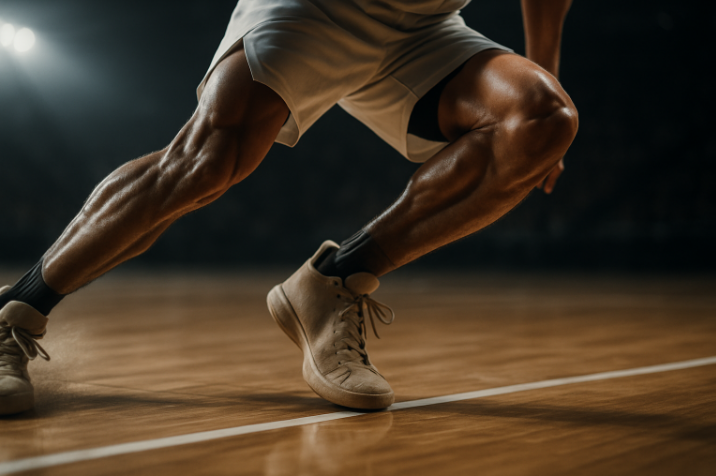
Three surprising ways to boost basketball muscle recovery include utilizing professional-grade massage tables for post-game soft-tissue flushing, deploying percussive massage guns for rapid tissue activation, and performing targeted foam rolling to release chronically tight hip flexors and calves.
These evidence-based methods significantly reduce inflammation and restore mobility after heavy court minutes. Implementing a structured routine with these tools prevents the cumulative trauma of explosive jumping and lateral cutting from turning into season-ending lower-extremity injuries.
Why Recovery Changes the Game in Basketball
Basketball is one of the most physically demanding team sports in existence, and injury data reflects this reality. The lower extremity was the most frequently injured body area, accounting for 62.4% of all injuries and 57.8% of all game-related injuries. Fatigue-related performance decline becomes highly measurable in the late stages of back-to-back games. This directly links inadequate recovery to injury risk and reduced competitive output.
During a high-intensity basketball game, athletes experience significant cumulative trauma. Repeated jumping creates micro-stress in soft tissues, while lateral cuts load the hip flexors and knee ligaments heavily.
Research shows the overall injury rate was 7.28 per 1000 athlete exposures, with competition rates twice those of practices (injury rate ratio = 2.07; 95% CI = 1.93, 2.22). Without proper intervention, this cumulative load compounds, increasing inflammation and narrowing the range of motion.
1. Secret Weapon of Professional Massage Tables
Hands-on soft-tissue work performed on a proper treatment surface is a highly effective recovery intervention. Establishing a clinical standard in collegiate programs and private practices requires the right structural foundation.
Commercial-grade tables are built to higher weight capacities, accommodating heavy athlete bodyweight and the downward force of deep tissue work. Their surface materials utilize durable, easily sanitized vinyl that maintains clinical hygiene standards without degrading over time.
Electric lift massage tables take this standard further by offering foot-pedal height adjustments. This ergonomic flexibility allows practitioners to position the working surface perfectly for each specific treatment style.
Exploring Massage Tools’ massage tables for recovery provides therapists working in athletic programs with the heavy-duty infrastructure they need. This protects the practitioner from postural strain over an eight-hour treatment day.
Targeted soft-tissue flush massage performed 30 to 90 minutes post-game helps clear metabolic byproducts. Pre-game activation sessions lasting 15 to 20 minutes can improve range of motion in the hip flexors, hamstrings, and thoracic spine before tip-off.
For the rehabilitation of nagging conditions, a stable treatment surface is mandatory for executing precise therapeutic techniques. Additionally, portable commercial-grade tables offer a practical travel solution.
2. Complementary Muscle Recovery Tools for Court-Side
While a stable treatment surface anchors a recovery room, complementary tools give athletes practical options for daily self-care. Massage sticks are highly portable tools that require no power source, making them ideal for locker rooms and team buses.
Long-stroke rolling on the quadriceps and IT band supports venous return and reduces post-game heaviness. Trigger-point compression applied to the calves and glutes provides relief for the posterior chain.
Percussive therapy has shown promising outcomes for reducing delayed-onset muscle soreness and improving short-term range of motion. Professional-grade percussive devices are particularly useful for rapid pre-game tissue activation. They excel at immediate post-game flushing of the lower extremities. High-quality devices offer superior amplitude, stall force, and motor durability compared to consumer models.
Self-myofascial release remains widely accessible and highly effective. Athletes should prioritize chronically shortened structures like the hip flexors, high-stress tissues like the Achilles tendon, and the thoracic spine.
3. Building a Team Recovery Protocol Around Equipment
Effective recovery requires consistent timing and strategic implementation throughout the season. Injury rates are higher in the pre-season for both practice and games. Immediate post-game windows should focus on hydration and light compression. The following 24 hours can include targeted treatment for soreness hotspots using percussive devices.
Mobile trainers and private therapists must balance portability with clinical quality. Portable tables from commercial-grade manufacturers ensure structural integrity and proper surface hygiene outside the traditional clinic.
Paired with manual tools and percussive devices, this creates a fully functional mobile recovery system. This flexibility guarantees that athletes receive continuous care regardless of their location.
For dedicated training rooms, scalability is the absolute priority. High-quality electric lift tables support multiple practitioners working in shifts safely. Programs outfitting multi-station rooms benefit from sourcing durable equipment that aligns with institutional procurement cycles. Treating recovery infrastructure with the same budgetary seriousness as court equipment ensures long-term viability.
The Bottom Line
Basketball recovery is not a passive process. It is a structured, strategic approach that pays dividends through reduced injury rates, consistent athletic explosiveness, and prolonged careers.
Whether an individual player is building a personal toolkit or a coaching staff is outfitting a comprehensive training facility, utilizing professional-grade equipment ensures success. Emphasizing high-quality tools and consistent protocols represents one of the most reliable ways to sustain peak basketball performance.