
TY LAWSON – WILDE LAKE (MD) HIGH SCHOOL BOYS’ BASKETBALL HEAD COACH – EPISODE 1092
Website – https://wlhs.hcpss.org/athletics
Email – [email protected]
Twitter/X – @coachty0

If you listen to and love the Hoop Heads Podcast, please consider giving us a small tip that will help in our quest to become the #1 basketball coaching podcast.
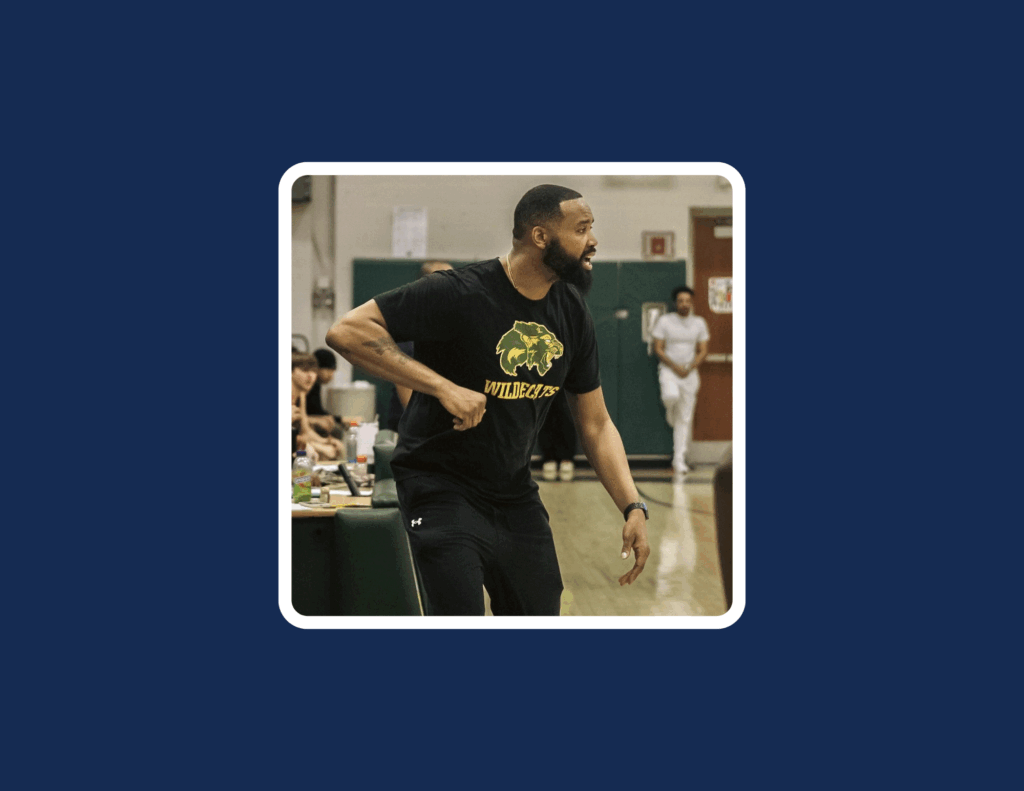
Ty Lawson is the Boys’ Basketball Varsity Head Coach at Wilde Lake High School in Columbia, Maryland. Lawson was born and raised in Baltimore. He played 2 seasons of college basketball at Bowie State University before beginning his career as a coach. He loves the game of basketball and has a passion for giving back and teaching the game to the next generation. Coach Lawson’s basketball journey has allowed him to learn a lot about himself and the world around him, and how the game of basketball connects people from all walks of life.
This episode of the Hoop Heads Podcast features an in-depth conversation with Ty Lawson, the head coach at Wild Lake High School, who shares his profound insights into the world of high school basketball coaching. The discussion initiates with Lawson’s personal narrative, tracing his journey from a young player in Baltimore to a dedicated coach. He reflects on his motivations for coaching, which stem from a desire to give back to the community and nurture the next generation of players. Lawson elaborates on the importance of fostering a love for the game among his athletes, focusing on the development of character and teamwork over mere athletic prowess. He candidly addresses the challenges faced by coaches in today’s dynamic sports environment, including the necessity of adapting coaching methods to the evolving needs of players. The episode concludes with Lawson sharing his joy in witnessing players grasp complex concepts and apply them successfully on the court, encapsulating the rewarding nature of coaching. This conversation is not only a testament to Lawson’s dedication to basketball but also offers valuable lessons for coaches at all levels.
Follow us on Twitter and Instagram @hoopheadspod for the latest updates on episodes, guests, and events from the Hoop Heads Pod.
Make sure you’re subscribed to the Hoop Heads Pod on iTunes or wherever you get your podcasts and while you’re there please leave us a 5 star rating and review. Your ratings help your friends and coaching colleagues find the show. If you really love what you’re hearing recommend the Hoop Heads Pod to someone and get them to join you as a part of Hoop Heads Nation.
Grab your notebook and a pen before you listen to this episode with Ty Lawson, Boys’ Basketball Head Coach at Wilde Lake High School in Columbia, Maryland.
What We Discuss with Ty Lawson
- Falling in love with basketball at a young age and the ways his father was a significant influence in his basketball journey
- His college experience as a walk-on at Bowie State taught him valuable lessons
- Why the foundation of effective coaching lies in establishing a clear philosophy that guides early season practices and defines the desired team identity
- Building meaningful relationships with players and their families is critical for fostering a supportive team environment
- The importance of teamwork and making the extra pass
- Coaches must adapt their strategies based on the unique strengths and weaknesses of their players
- Consistency in practice routines can significantly enhance player focus and preparation for games throughout the season
- Effective communication with parents and stakeholders is vital to maintaining trust and support for the coaching staff
- Understanding player comfort zones
- Why working in the school allows for deeper connections with players through daily interactions
- The need for open and honest communication about a player’s development and expectations
- Strategies for reflecting on practice effectiveness through video analysis that can enhance both coaching tactics and player development
- Managing a program involves responsibilities beyond just coaching
Like this show? Please leave us a review here — even one sentence helps! Consider including your Twitter handle so we can thank you personally!

We’re excited to partner with Dr. Dish, the world’s best shooting machine! Mention the Hoop Heads Podcast when you place your order and get $300 off a brand new state of the art Dr. Dish Shooting Machine!
Your first impression is everything when applying for a new coaching job. A professional coaching portfolio is the tool that highlights your coaching achievements and philosophies and, most of all, helps separate you and your abilities from the other applicants.
The key to landing a new coaching job is to demonstrate to the hiring committee your attention to detail, level of preparedness, and your professionalism. Not only does a coaching portfolio allow you to exhibit these qualities, it also allows you to present your personal philosophies on coaching, leadership, and program development in an organized manner.
The Coaching Portfolio Guide is an instructional, membership-based website that helps you develop a personalized portfolio. Each section of the portfolio guide provides detailed instructions on how to organize your portfolio in a professional manner. The guide also provides sample documents for each section of your portfolio that you can copy, modify, and add to your personal portfolio.
Hey, coach! Want to take your team to the next level this season? Introducing GameChanger, the ultimate game-day assistant with tools to give you a winning advantage. With GameChanger, you can track stats, keep score, and even live stream games, all for free! Get the stats and crucial game video you need to lead your team to victory, all from the palm of your hand. Coach smarter this season with GameChanger. Download GameChanger today on iOS or Android and make this season one to remember. GameChanger. Stream. Score. Connect. Learn more at GC.com/HoopHeads

High school and middle school basketball program directors, listen closely. Coaches are expected to do far more than just coach. You know this. It doesn’t matter if you’re doing the coaching yourself, or you have a full staff of coaches with you. You know very well that coaches handle scheduling, academic issues, parent communication, leadership development, and even mental health concerns for athletes. A lot to deal with, and they haven’t even gone home yet to balance those responsibilities.
No matter the passion for the game, and burning desire to help athletes develop, this level of responsibility can lead to burnout, inefficiency, and less time spent on actual coaching. You know it’s true.
When coaches are stretched too thin, it impacts the development of athletes, team morale, and the overall success of the program. Now here comes the outsiders throwing their two cents in about what’s happening. Then come the parents complaining about how you’re running things, as if they know what they’re talking about. When’s the last time you went to their place of work chiming in from outside their window?
Before you let that fire fizzle out, know that it doesn’t have to be that complicated. There are several ways to prevent you or your coaches from feeling overwhelmed. However, I’ll tell you one of our favorite ways to keep coaches firing on all cylinders, and that’s athlete-driven accountability and organization.
Instead of coaches constantly reminding players about assignments, grades, and practice schedules, our programs at Playmaker Planner puts the responsibility back on the athletes. By tracking their own academics, goals, and commitments, student-athletes become more self-sufficient, which of course allows the coach to put their babysitter hat in the closet, and put their coaching hat back on, allowing them to focus on what they love doing.
Are we offering planners that you can get at the dollar store as a solution? Of course not, but we are starting a conversation with you to see if our programs can be a compliment to what you’re already doing. Let’s find out. To learn more visit https://playmakerplanner.com/stop-is-this-for-you
THANKS, TY LAWSON
If you enjoyed this episode with Ty Lawson let him know by clicking on the link below and thanking him via Twitter.
Click here to thank Ty Lawson via Twitter
Click here to let Mike & Jason know about your number one takeaway from this episode!
And if you want us to answer your questions on one of our upcoming weekly NBA episodes, drop us a line at [email protected].
TRANSCRIPT FOR TY LAWSON – WILDE LAKE (MD) HIGH SCHOOL BOYS’ BASKETBALL HEAD COACH – EPISODE 1092
[00:00:00] Mike Klinzing: Hello, and welcome to the Hoop Heads Podcast. It’s Mike Klinzing here without my co-host Jason Sunkle tonight. But I am pleased to be joined by the head boys, basketball coach at Wild Lakes High School in the state of Maryland. Coach Ty Lawson. Ty, welcome to the Hoop Heads Pod.
[00:00:15] Ty Lawson: Thanks, coach for having me on. I appreciate being here.
[00:00:18] Mike Klinzing: Excited to have you on. Looking forward to diving into how you built your program there at Wilde Lake, going into your background. Let’s start by going back in time to when you were a kid. Tell me a little bit about some of your first experiences with the game of basketball. What made you fall in love with it?
[00:00:33] Ty Lawson: Okay. So I’m in my thirties, early thirties. So I fell in love with the game around age four or five. just started playing young. Grew up playing locally, recreational teams au the whole nine. Played in school elementary, middle school, high school.
Obviously being in the DMV a lot of people know the competition is, is heavy here so. I feel like I grew up in a great basketball environment, so the love for the game was always there from an early age and just playing into high school, I was afforded the opportunity to play college basketball, not scholarship wise, but I was a walk-on, so I, I think I had a unique experience just from playing and then getting into coaching kind of seeing all sides of the game.
[00:01:23] Mike Klinzing: Who was your biggest influence as a young kid that got you involved in sports and basketball?
[00:01:31] Ty Lawson: I’m a junior, I’m Ty junior, so my dad, big Ty he was I wouldn’t say like a local legend or, or anything like that, but a very involved dad. a lot of kids grew up looking up to him he was a role model for not just me, but a lot of other kids in the area.
He introduced me to the game, got me playing. He was my coach throughout my youth going all the way up into high school. So he really did a good job of preparing me and introducing me to the game.
[00:02:00] Mike Klinzing: When you think of yourself and the way that you coach your coaching style, the way you go about things, what’s something that you feel like is a part of you that you got from your dad in terms of his style of coaching and something that you still take with you from him that you’re passing along to the guys that you coach today?
I’m,
[00:02:23] Ty Lawson: I’m, I’m, I’m cracking a smile. ’cause I’m thinking about my mom. She’s always reminding me like, yeah, you, you act just like him on the sideline, ? The intensity for sure. just the passion for the game. my dad had a heart for helping people and I believe that’s like the same thing that he, he passed along to me just outside of the game.
Just genuinely helping people making sure that the players and their families are doing well on a day to day basis. that’s really something that he instilled in me. there’s basketball is, is just a game, but there’s things outside of basketball way more important.
[00:03:00] Mike Klinzing: Absolutely. So you kind of came of age in a time before all the trainers and the culture that we have today. So when you think about yourself as, let’s say a middle school, junior high, high school player. What were some of the things beyond playing on your teams and playing a a u basketball, how were you working on your game?
What were you doing to get better back in the time when you were a young kid?
[00:03:26] Ty Lawson: Well speaking of my, my, my dad, I was fortunate enough to grow up with a basketball hoop, right? So I was always outside on driveway or a, a neighbor they would pull their, their, their basketball hoop out.
And the way our neighborhood was set up, sometimes we would take the courts and set up like a little mini full court. So the neighborhood kids would get involved and just always working on my game like you said, I didn’t have the luxury of, of having a trainer, trainer. So I relied on my passion and just my drive to really improve myself.
And I would, I just remember a lot of early mornings on the driveway, late nights just getting shots up, working on my game and that eventually gave me the confidence that I, I needed to perform.
[00:04:14] Mike Klinzing: You remember as a kid putting together a plan of, hey, this is what I want to work on on a given day, or was it more just I’m hitting the courts and when I’m out there I’m just kind of improvising as I go through?
[00:04:26] Ty Lawson: It was a lot of improvising because I was a huge NBA fan growing up. So I watched NBA on Sundays was a big thing in my house so always watching the great players and trying to go out on the driveway and do the same thing that they were doing, ?
So that’s where the, a lot of the creativity started for me. Just emulating a lot of the greats that I saw. Who was your guy when you were growing up? Who was your favorite? Magic Johnson for sure. Magic Johnson gave me the confidence as a bigger player to get that rebound and push and a lot of coaches growing up would give me that compliment.
And I always felt like this was my biggest compliment when coaches would talk about my passing. I love getting my teammates involved and creating for others. So that was always something that I liked to do on the court.
[00:05:17] Mike Klinzing: That’s awesome because I always think about this was maybe, and, and I always knew this about myself, but it crystallized for me like three years ago.
I was sitting in the stands watching a game with my daughter, and we were at a high school game and some kid out on the floor threw a great pass. And I was like, oh man, that’s a great pass. And my daughter, my daughter who was like 12 at the time, she turns to me and she looks, and she goes, dad. The only thing you ever get excited about when you’re watching a basketball game is a great pass.
You don’t get excited about anything else. It’s only a pass. I’m like, yeah, you’re right. You’re a hundred percent right. And I think that kind of reflects who I think I am as a basketball coach and what I was as a basketball player. And I’m guessing when you’re coaching your team that one of those things that you’re always preaching, just again from listening to you talk and telling that story is Let’s make the extra pass.
Let’s play together as a team. I, I’m guessing that that’s something that is really important to you as a coach.
[00:06:18] Ty Lawson: Absolutely. Absolutely. that’s one of our staple drills that we do it while late I’m sure a lot of coaches out there, know about it. One more passing some type of passing and shooting drill where we’re really emphasizing making the next pass, really just emphasizing getting your teammates in involved.
So yeah, that’s, that’s, that’s definitely something that I try to emphasize on a daily basis.
[00:06:44] Mike Klinzing: Tell me a little bit about your high school playing experience and maybe share your favorite memory or just what you remember from that time of your life. Sure, sure. So,
[00:06:53] Ty Lawson: I played at a school called Western Tech in Baltimore County.
We weren’t really that known for our sports or anything. We were more academic school. So the basketball, I wouldn’t say that we were the best team. We definitely weren’t that bad, but my playing experience it was, it was more fun in high school like I was all about playing with my friends playing with guys.
I mean, some of those guys, they don’t play now. And so thinking about like, that was my only opportunity to play with some of those guys. And we make good memories. I’m still in contact with a few of them. So I believe that’s what high school basketball is. truly you.
Especially when you’re not as competitive as some of the schools or some of the teams that you’re going against really making those memories and bonding with guys. So my, my high school experience was, was, was really good. I, I actually I shared a story.
I’m not Michael Jordan by any stretch of imagination, but I also got cut my, my freshman year so as a high school coach that has to make cuts that’s one thing that I share with kids don’t get discouraged. when we tell you that you didn’t necessarily do enough to make the team this year just stay working and anything can happen in the future.
So I did end up playing three years and then ended up playing at the college level. But as you said, I’m sure we’ll get into that.
[00:08:25] Mike Klinzing: Well, it’s a great lesson. I think whenever you can have something that. You can share, right as a coach, an experience that you went through at a similar age to the players that you’re coaching, and then you can say, Hey, I understand what you’re going through.
I understand what you’re feeling. I went through this exact same thing. Especially let’s, let’s put it this way, especially when it’s a negative, right? Nobody wants to hear about the good old days and the coach talking about, ah, our team back in the day, we did this and that. Yeah. So everybody, players will tune, players will tune you out fast when you’re talking about how great things were and how good your teams were and all that stuff.
But on the other hand, when you’re talking about something that was in the moment, a negative or a tough situation or a challenge, I think players, at least in my experience, I’ve found them to be much more open to listening to those kinds of stories. And I’m sure that when you’re talking to a kid who you’ve had to cut, which we all know, look right as a coach, that’s one of the most difficult parts of being a high school coach, is telling a kid, Hey, this year.
Your dream’s going to have to be postponed another year. You’re not going to be making, nobody likes to have those conversations. But when you have that personal story that you can share with the kid that’s impactful because now they can look at you as an example of, Hey, this happened to me and I was able to bounce back and put some work in.
And now look, I ended up making the team for the next three years. And so that’s something that, I’m sure when those kids hear that from you, I’m sure they feel value in that.
[00:09:51] Ty Lawson: Oh yeah, absolutely. I’m, I’m thinking of a kid right now last year he didn’t make the team as a freshman. But he worked on his game and he made it as a sophomore.
And I remember I was the one that had the conversation with him because here in Maryland and Howard County in particular we don’t really do lists. When we cut kids, we have conversations with them. So I told him that he didn’t do enough to make the team last year, but we also give positive.
Feedback in terms of these are the things you need to work on that we think that you can improve in order to improve your chances of making the team. And it was a good thing that he didn’t take anything personal in terms of, oh, I’m not liking the coach’s feedback, I’m not going to listen to what they’re saying.
He actually took what we told him, he worked on it and he made the team. So I was really proud of him. And to your point that’s a kid taking what we’re telling them, applying it, it’s actual relatable information. It’s not like I’m telling them all the glorious things.
I was, I, I told him I had the same conversation told to me when I was your age. So it’s definitely a good thing when the kids can relate to a lot of the experiences.
[00:11:12] Mike Klinzing: Absolutely. When you were playing as a high school player, was. Coaching at all on your radar while you were playing, or was it something that came about later on as your basketball career as a player started to come to an end?
In other words, I always say that there was two, there’s two paths, right to coaching. One is the kid who’s eight years old and is drawn, plays up on a napkin and coaching his, coaching his buddies, and always kind of has been a coach. And then there’s the other guy who is just a player, a player, a player, a player, a player.
And all of a sudden their career ends. They look around, they’re like, what? Basketball’s over? Well, now what am I getting now? I gotta coach. So I don’t know if either one of those scenarios fits you better than the other one.
[00:11:54] Ty Lawson: Oh yeah, that was definitely me. The latter, ? I didn’t grow up thinking that I would ever be a coach.
My, my dream was to always stay on the playing side. Even when I first got into coaching, I kind of wanted to tailor my demographic towards the training side because I saw that that’s kind of where the game was going. And I also thought that that was like my way of staying connected to the game, like staying on the floor.
But I just naturally got into coaching you mentioned coach Julian Allen. He introduced me to his AAU team here in, in, in Baltimore. So I started helping him on the AAU side for a few summers and got into the school side of things once I actually started working on going back to school myself.
So
[00:12:38] Mike Klinzing: you start coaching while you, you mentioned that, we’ll talk about your college experience here in a second, but did you start working a, a u like in the summers while you were in college? Or was this this after you were done with college? That
[00:12:47] Ty Lawson: was after I was done with college. When I was still playing in college.
The plan was to still play. we had a few guys from our team that ended up landing a few nice deals with some agents and ended up playing overseas. That wasn’t my path. But similar to what you were saying just when I looked around and saw like, wow, this is the, this is the end of the playing side but I’m not personally done with my basketball journey I had to find something to do.
So coaching to me, like kind of was the next best thing to still keep me in involved, but not necessarily like as involved as I was obviously, when I was playing.
[00:13:29] Mike Klinzing: Understood. All right. Let’s walk it back to your college experience. Tell me a little bit about how you get to that walk-on experience and then what it’s like for you.
I know that there’s guys, depending upon the program. I’ve heard great things from guys who have been walk-ons, and I’ve heard horror stories from guys who have been walk-ons, depending upon what your program’s like. Yeah. Depending upon what the guys on your team are like. Yeah. So just walk me through your experience, how you got the opportunity, and then what it was like for you.
[00:14:03] Ty Lawson: Yeah. I, yeah. So, and, and, and high school, I wasn’t the best player on our team by any stretch. Right. We had a guy who ended up playing division two. We actually ended up playing in the same conference when I was a walk on, and he, he was in the same conference as me, so we ended up playing against each other in, in college.
But he was like the main guy on our high school team that was like featured and the coach, like, ran a lot of the stuff through him. I mean, and no shade whatsoever because he was a great player and he’s still probably good to this day. But my experience as far as like networking and recruiting and all of that stuff.
I didn’t have any of that. My dad also, like, he wasn’t really exposed to that world, so he didn’t necessarily know outside of what the school was doing for me, how to network and do all those things kind of in the background. So, graduating high school as a senior, like my, my playing career could have been over at that time, so I ended up applying to a few schools locally.
As I’ve mentioned, I’m from Baltimore, so I applied to Bowie State University. It was really important for me at the time to get away from Baltimore, but not necessarily go somewhere too far that would like a financial on. So State was a great option for me. I had heard good things about the school, so when I visited the school and then the campus I just kind of liked what I saw and thought I, I saw myself on the campus and that’s what I tell a lot of my guys when they’re going on visits and stuff.
You have to visualize yourself in these places, and if you don’t feel comfortable, then that tells you a lot. So I felt comfortable at buoy, ended up making a decision to go there, not like signing or anything, obviously, because I I didn’t have any scholarships. So my story is pretty unique.
People that know me personally, know about my connection to music. I’ve always had a love for music and make, produce beats and songs and. My plan if basketball didn’t work out I always had dreams of working in the music industry as a music producer.
So Bowie State had a degree program for music technology. They were one of the only schools in Maryland at the time that had that as a degree program. So me as a music lover, I’m like, that’s, that’s a no brainer. I want to work in the music industry and I can get a college degree in it.
Like, that’s sounds kind of cool. Right. ? So that was my path. I had a few friends when I would, when I would come back home to Baltimore for the summer kind of nudge me and, hey, like, what’s up with the ball though? Like, what’s like, what you doing? I’m six nine by the way, so like a, a lot of people like, you just going to waste that height.
You just going to waste that. You going to waste that size, like, whatcha doing? ? So when I graduated high school, I was only six six, but I had another growth spurt my freshman year of college. I went from six six to six eight. So. Coming home for the summers. My my guys are like, what are doing?
So that workout process started with a few of my friends that were just kind of encouraging me, like, Ty, right? There’s, there’s no way you can just not do anything basketball related ever again. ? So I give a lot of my friends that credit to for, for pushing me and kind of getting me back in the weight room.
And the summer of 2010 was when they really just started helping me out. A lot of my guys just would, would come to the gym with me and we had 5:00 AM sessions in, in the summertime, . So to your point earlier about just going out, working on my game by myself, no trainer my, my trainer, you.
I remember calling the assistant coach from Bowie State because schools have the phone numbers and all of that stuff on, on their website. So I go on Bowie’s athletic website. I called the assistant coach didn’t get an answer. Left my voicemail, told him my name’s Ty Lawson, I want to try for the team.
And by the way, I’m, I’m six eight so
[00:18:22] Mike Klinzing: that always helps. That always helps. Oh yeah, for sure. So you
[00:18:25] Ty Lawson: know, didn’t call me back immediately, but, but he did call me back and I remember like it was yesterday, he was like, is this Ty Lawson? I’m like, yes, sir. I was like, are you really? Six eight?
I said, yes, sir. So, it gave me an opportunity to come try out, and the rest was history. I played my way onto the team through a series of workouts and open runs. And by the end of that summer, the coach they, they told me we don’t have a scholarship for you.
We don’t have any type of. We have for you. I said that’s good enough. so my experience as a walk on was amazing. I played my way onto a team with a group of guys that accepted me. some of the guys were on scholarships, some of the guys were just students just, just like me who played high school basketball.
But were good enough to play at the division two level. Bowie State is in a CIA conference. For those that don’t know, that is a very talented conference. And on the division two level, on a lot of east coast schools Bowie State and Lincoln University are actually like schools.
So it was a great experience traveling and just being a being able to say, I’m, I’m a college basketball player. that was always my dream growing up so being able to have that experience and earning that experience was a really unique opportunity for me and something that I don’t take for granted to this day
[00:20:02] Mike Klinzing: story.
And I think it’s one that when you hear guys like yourself talk about, just the fact that you get done playing as a high school player and your opportunities. Are limited, not necessarily because of your ability, but simply because of the opportunity. I, I think it was interesting to hear you say that your father didn’t know a ton about what that recruiting process was like, and maybe your high school coach didn’t know a ton about it.
I, I think now look, I’m a lot, I’m a lot older than you. You, so you’re in your early thirties, man. I’m in my mid fifties. So back when I was going to school we knew, we knew nothing about the recruiting process. And so I made a ton of mistakes and ended up getting lucky and getting an opportunity to play college basketball.
But to your point, my parents didn’t really know much about the recruiting process. My high school coach didn’t. So consequently, back in the day, pre-internet, there’s no real way to find out anything the way that you can find it out today. And so you kind of end up sometimes in this world of, well, I think I might be able to have an opportunity, or I think I’m good enough to deserve an opportunity somewhere, but how do I find and make that connection?
So I always find stories like yours to be. Inspiring that somebody just didn’t, you just didn’t give up and you just kept looking for a way, how can I stay involved in the game? And then to hear you talk about the fact that you’re looking back so fondly on your experience with the program, the guys that were playing, scholarship guys, non-scholarship guys, your coaching staff, what’s the relationship like?
Or what was it like at the time? What does it continue to be like with those guys that coached you at Bowie State? Obviously as you get into coaching, you probably look back on that relationship and just the way that they did things a little bit differently. ’cause now I’m sure you’re trying to take some coaching knowledge from that experience, whereas in the moment you were just trying to play.
[00:21:56] Ty Lawson: Oh yeah. Oh yeah. It’s, it’s so funny you mentioned that because I think back to the early days of my coaching experience, a lot of the things that I did literally mirrored the things that I received when I was playing at buoy. I felt like that was like my closest experience to high level basketball, right.
So a lot of the things that we did on a day-to-day basis, I carried over into the way I run the program at Wild Lake because we had success, in the two years that I played on the team, we went to our conference tournament, which was huge. I, this was before the cs.
Arena like that. Like that’s once in a lifetime experience, ? So that was really cool. And then we ended up, not a lot of people know that the NCAA division two national tournament is set up similarly to the Division one tournament. So we had a selection Sunday process sitting down trying to figure out where we’re going and again, like that was, that was a really cool experience.
My coaches to this day, I’m still connected to them. The head coach, Darryl Brooks is still the head coach of Bowie State. One of my former players or teammates is his associate head coach now. So we still have that connection. So yes, I’m definitely still connected to a, a lot of my teammates because that was a really good experience and at that age you’re, a lot of the experiences that you’re having you’re going through similar things just in life in general.
So. Those guys and those relationships and those friendships really carried over into adulthood now, which I’m very fortunate for.
[00:23:43] Mike Klinzing: How soon after that experience when you leave Bowie State and graduate, how soon after that did you start getting involved with a a u, with Julian and get involved on the coaching side of it?
How long after it was that? So
[00:23:58] Ty Lawson: after, ’cause I, I as I mentioned I try to work in the music industry, so doing the music thing for about two years before that that love for the game just doesn’t go away no matter like how closely connected you are to it, ?
So. Absolutely. I’m kind of knee deep into the music thing, but I’m still itch. Like I’m, I’m still playing myself, like playing pickup locally things like that. So that’s actually how I met Julian. Playing one day at a gym. I noticed he had on a pair of shorts that said Bowie State University.
And I’m thinking to myself like, where’d he get those shorts from? Like, I didn’t see, I just graduated from there. I didn’t see this guy on campus and he was pretty good in the pickup game like Julian could play. So we were on opposite teams and just through small talk we had mutual friends at Bowie and just the connection was genuine from day one.
Julian’s one of my brothers I, I talked to him every other week still to this day. He’s the one that kind of got me into coaching on the a u side. Again I had no thoughts about coaching I was still in play mode and being into the music side of things, I, I, I wasn’t coaching at all.
But when Julian opportunity. I just developed a love for leading and teaching, and I really got into the Xs and Os side of the game. Like, I think like, like just drawing up plays and just different concepts and different philosophies. That’s what really got me into the coaching side of things.
So it was a really cool experience.
[00:25:40] Mike Klinzing: It’s funny how when you look at basketball from a player standpoint, right? So often you’re looking at what do I have to do? What, what does my performance have to look like? What do I have to do to earn more minutes? Or what do I have to do to be able to play a bigger role?
And yeah, you also are focused on helping your team win. But there is a lot of, and I don’t think selfish is the right word, but there is a lot of you looking at your own performance. And then when you start thinking about, okay, now when you become a coach, all of a sudden. Everything flips in that, not that you’re not trying to develop individual players, ’cause certainly you are, but ultimately every decision you make is no longer based on what’s good for me as a player.
It’s what’s good for the team. And I think it’s interesting to hear you just talk about sort of that mindset flip, and then also thinking about like the Xs and O side of it, where again, as a player you’re kind of focused in on what’s my role, what do I have to do, as opposed to as a coach, you’re seeing that whole picture.
So as you started to dive into Xs and Os, where did you go or who did you talk to? What kind of information were you looking at? Were you watching YouTube videos? Are you going to, trying to get to coaches, clinics? Are you grabbing the old the old DVDs? How, how were you getting Xs and how you, how you grabbing that xs and o knowledge at that time?
Yeah.
[00:27:08] Ty Lawson: I’ve always been like somewhat of like a basketball hoarder, right? So like anything that I feel like is like good or like just resourceful. Anything that I think is positive and, and I can use again in the future. I’m going to sta it somewhere and I’m going to keep it right. So, fortunately for me had kept my, because, and now I’m, I’m, I’m going to kind of age myself.
I know you said you’ll go older, but you’re not a coach. You’re not a But, so the paper playbook of my plays from Bowie State that I kept, they gave us a binder. So at the beginning of the season they had a binder for us. And it had all of our plays, like different concepts, different things. Obviously we were we built on it as a season grew.
But I still had that. So just going through all of the stuff that I used to go through as a player. And to your point about the Xs and those, it was interesting because as a player. you’re sitting on the sideline and you’re in the huddle and the coach is drawing up the play. You may be looking at the whole board, but you’re looking at your ex, like what you’re doing, like what you’re supposed to be doing.
So you’re not worried about all the other exes and those like you, okay, coach told me to cut here, he told me to do this. Like that’s what I’m going to do. Right? So seeing those old plays, but then now that I’m a coach and I’m not just focused on my ex looking at those things and it’s like, oh man, like we used to do some slick stuff.
Like we used to do some cool things like offensively, like this double screen or this that dark. Like just really thinking about man, like. And, and to think a lot of that was based on because of the personnel we had. So then that was another connection, like, oh, coach chose these offensive concepts because of the players that he had.
And it made sense thinking about some of my teammates, like, oh, okay, I see why he had this double stagger play in for him because he’s going to knock that shot down every time. ? So just things like that and really thinking about how I wanted coach. This is around like 20 15, 20 16, where a lot of the basketball world had fell in love with the spurs and the way that they were playing.
So team basketball was like a really big thing at the time just motion offense and just fluid movement and flow. And you hear the, you hear that buzzword pace all the time, right? Just the, the efficiency that they were playing with A lot of coaches and a lot of teams try to mimic that.
And as a coach that just always loved motion and all of that kind of things. that’s something that I really tried to model my coaching after so that’s kind of where it started. Yeah.
[00:29:52] Mike Klinzing: I think we all start right with the coaches that we played for. I always tell the story that I played for one high school coach and I played for one college coach.
So when I started coaching, I. My entire repertoire of drills and plays and offense and defense. It was just, it was what those two guys did. That was all, that was all I knew. I I didn’t know anything else. And so as you go on and you, you become more experienced, you start to realize that, yeah, those guys are pretty good, but there’s a lot more basketball out there and many different ways to do the same thing.
And so you start to expand your knowledge. But I think anybody who plays you oftentimes just start out with, well, this is what we did when I was playing, and so this is what my teams are going to do. Until you start to really dive into some of the stuff and, and, and, and expand your own knowledge of what of what you’re doing.
Yeah. So let’s, let’s, let’s talk, let’s talk a little bit about the experience with, ’cause obviously a big part of the coaching is what we just talked about, the X’s and O’s and building your knowledge base and all those things. But another huge part of coaching is. You gotta love your players and you gotta love the kids, and you gotta love that interaction.
So clearly on the a a u side of things, when you get started with Julian, tell me a little bit about your experiences, forget about the Xs and Os and the basketball learning piece of it, but just what was it like for you initially going from, Hey, I don’t know if this coaching thing, what it’s all about to all of a sudden, boom, you’re standing in front of a group of 10 kids and you gotta start coaching ’em.
What’s, what are those interactions like? What did you love about just working with the kids? Oh man, that was,
[00:31:27] Ty Lawson: I think that was the thing that actually made me fall in love with the coaching side of it, right? I mean, aside from my passion for basketball, I like to think I have a passion for people and I’m just really big on relationships.
I’m, I’m no Einstein I’m not a genius by any stretch. I’m, I don’t call myself a, I don’t like to think of myself as a know-it-all. So when it comes to actual, like, like skills. Relationship building is one thing that I’m very confident that I have the ability to do. So when it just comes of connecting the people just building those relationships, those connections it was just a genuine experience because I’m putting myself back into those kids’ shoes just remembering what it was like to have a coach that cared the au side of things.
not, not a lot of people know just the financial impact that it has on certain programs and certain organizations and communities. It’s really, IM important for the coaches to have those relationships with the families and coming from the area that we were.
It was really important for Julian and I to just really just throw ourselves into the whole experience. And I’ll give Julian a lot of credit because he was already doing it. So to see him and the level of commitment that he had to those kids and the genuine connection that he had, those kids would run through a wall for him and that’s the type of player that any coach would love to have and he a whole program of kids like that.
So it inspiring.
[00:33:10] Mike Klinzing: What do you think when you consider your relationships and how you build them, whether you’re talking about back in the day with your A a U kids, or you’re talking about the kids that you’re coaching now, what do you think are the keys for you to build a good relationship with the kids?
I know one of the things that you talked about is commitment, and I always think that that’s a huge part of a kid having respect for a coach and knowing that, hey, this coach, like he wants me to be there, but guess what? He’s there even more than I am. And I think that’s a big piece of it. So beyond that, you can maybe expound on that if you want to, but just what do you think are the keys for you to build a good relationship with a kid?
[00:33:48] Ty Lawson: Yeah, absolutely. I would say. To your point about the commitment those kids saw Julian every day. So that was inspiring for me, the fact that he gave his word and he was committed to being there and it was, it was really important for those kids to see that because there were some people in their family that weren’t as committed to them as Julian was.
Right. So to see him showing up consistently for them time after time a lot of experiences. Some of them traveling for the first time out of the state of Maryland their families trusting us to do that, for them to be those role models for them. So the commitment part is definitely important, but I would say like to the point we were mentioned earlier, just those genuine experiences, right?
I, like, I, I, I’m not like a gatekeeper when it comes to information or my experiences. So I’m very open and honest with the kids about things that I’ve been through because I’m, I’m, I’m not a perfect person, right? So when they see that, oh, coach isn’t talking down to me, like he’s just talking about things that he’s been through because he’s relating the same experiences I’m going through as a kid that’s where those connections start.
And when the kids see that you genuinely care and it’s not talk I think that goes with them as well.
[00:35:13] Mike Klinzing: How long into that AAU experience with Julian were you, when you started to look around and go. Man, I think this coaching thing might be something that I want to do on a more, I don’t know, serious is maybe the wrong word, but on a more permanent basis for your career as opposed to, I’m just going to kind of dabble in AAU coaching.
Do you, was there a, was there a light bulb moment or was this a slow burn to get to that point?
[00:35:40] Ty Lawson: It was, it was a slow burn that turned into a light bulb moment, if that makes sense. Right. It does, it does. So like the slow burn was me still figuring out if this was something that I personally wanted to take serious.
So we had a summer where we were pretty successful. We had some good teams and we had some good kids and there was a tournament that we went to where there was a gentleman that saw us playing and he was just, he just fell in love with us and our program and our coaching style and just how committed we were to the kids.
That opportunity allowed Julian to get into some other things. So it was kind of like just a, that was the light bulb moment. Like, like people actually believe in us and think that like, like not just me, but like the whole thing. Like, so that was me really thinking like, oh man, like what if I had an opportunity to do something like this?
So it also, like Julian, again he kind of introduced me to the school side of things because he was already doing it at a high school in Howard County, which is the rock of the school, of the, the school that I coach at now, funny enough. So but yeah, that, that’s, that’s what kind of introduced me to, to that process.
And I do have a child, so getting into that. Getting into the school side of things when I became a parent I was looking for a job so the school side of things becoming a teacher allowed me to get into the school side and coaching. So I actually do work at Wild Lake High School as well.
And I think that definitely helps. to your point about the relationships, the kids see me every day I’m in the hallways I’m with them at events and things like that. So I think that’s definitely a huge part of allowing me to build those connections because the kids see me all the time.
[00:37:39] Mike Klinzing: Yeah. Being in the school, I always feel like is a huge advantage. And I know there are a lot of high school coaches that do a great job that aren’t in the school, but I do know that when you’re in the school, it does afford you the opportunity to do what you just described, right? You can have these touch points with kids all through the day.
You can pop into their lunch period, they can stop by. Stick their head in the door and all those things. I know for me, at the beginning of my career, I started out and I was an assistant varsity basketball coach, and I taught at the elementary school and our elementary school. And our elementary school was literally across the parking lot.
So yeah, it was like, it was like a, it was like a one minute walk. Yeah. And at the same time, our high school varsity coach and our JV coach both taught at the high school. And so there would be times where, and again, literally. 75 yards away maybe from the building, but I was always the last person to know if there was a practice change or the bus was coming a little bit earlier, or a kid was absent or whatever, and I’m right.
And I’m right there. I’m, I’m not working, like, I’m not working some other job and having to drive in. I’m, I’m, I’m literally right there. And I still felt like there were times where I was, where I was disconnected. And so I’ve always felt that the opportunity to be in the building just gives you such it, it just allows you to be so much more connected to your players on a day-to-day basis.
’cause because Right, we always talk about when you’re building a relationship with a kid that, yeah, you build it through basketball and you see ’em on the practice floor and you see ’em at games, but so much of that relationship is also built in the time that you see ’em off the floor. And so when you’re in the building, you just, you just get so many more opportunities to be able to, to be able to share that time with those kids.
So. Let me ask you a question to go jump back just for a second. When you realized, hey, I, I, I might want to start going the school route, and obviously you’re been working and doing your music and you’re coaching AAU and, and that kind of thing, so, so what steps did you have to take to bridge that connection to allow you to get back and, and to be able to work in a school setting?
[00:39:54] Ty Lawson: So, it’s funny enough, like, and I’m sure a lot of guys, and you coaches have similar experiences, especially when they get into the school side. So before I got my actual teaching job, I started as a substitute teacher, right? So just started as a sub and just being in the building. I’ll never forget the first day I was a JV coach.
I, I, I, that’s how I got started on the school side. So started as a JV coach and this is when I didn’t work in the building. So I didn’t work in the building. And at the end of the season. They were I was afforded the opportunity to start working in the building after the season.
So I started the building and the guys were coach Whatcha doing here? I’m like, I work here now. ? Yeah. It was experience on both sides because Right. I honestly early on that is something that I took for granted. just me being me and my belief and my confidence in myself. I do believe that I have the ability to connect regardless of where I’m at.
Right. But when I started working in the building and seeing how the kids behaviors and just how their responses started to change going from texting them and, and calling them every other day to seeing them on a daily basis, the interactions are different now. and that’s not something that I thought about going into it, but.
It’s something that I use to my advantage early on in my career, as you mentioned. And that’s something that now to this day, I’m going to take for granted. And I see a lot of schools prefer their coaches to work in the buildings, if that’s a a possibility.
Because to your point that doesn’t have to be like a necessary thing because there are a lot of coaches that are successful without working in the buildings that they coach at. But for me personally, being able to see my players every day it helps, right? Because if I weren’t, if I wasn’t working in the building, and if a young man walks into practice and he has his head down and he’s all he’s looking like he’s not ready to practice.
If I didn’t work in the building, it would be harder for me to figure out why. That’s happening. But when my, when my players walk into practice, I know exactly why they’re acting the way they’re acting. I can go talk to the teacher down the hall, or I probably already received the email about it. Right.
definitely advantages to being in the building that I coach at for
[00:42:28] Mike Klinzing: coach. Alright. Take us through the chronology of the jobs that you’ve had on the school side that led you to the opportunity at Wild Lakes.
[00:42:40] Ty Lawson: Okay. For me, I it’s, it’s, it’s been pretty straightforward.
Fortunate enough for me, my teaching experience has only been on the special in the special ed world. So becoming a special ed teacher allowed me to get a job in the building right away. And I started working at Wild Late in 2022. So my first year working in the building as a teacher, I wasn’t involved with the basketball program at all.
They had a former coach who was a, a, a player at Wild Lake. And he stepped down, he stepped out of the role and they were looking to who to pass the mantle onto. And it was just a timing thing. And I was very blessed. that was a clear example of right place, right time I was in the right opportunity and when they asked me to come on board and it was a no brainer for me.
at the time there some things going on outside of the building just outside of basketball that I was still trying to get straight. But once those things happened and the situation was still there for me to coach. I starting as a JV coach and the trajectory going upward, that was the next step becoming a varsity coach.
So that was something that I definitely didn’t want to let the opportunity slip by. So took that and here we’re two years later.
[00:44:10] Mike Klinzing: Alright, so when you take the job and you think back from where you are today to the day you got the job or the days leading up to the job, when you think about what your vision was for the program and how you were going to get it to where you wanted to go, how has that been similar or different to what’s actually happened?
So in other words, your vision, your plan, what did that look like? And then how is what’s actually transpired been different from what you maybe thought it was going into it?
[00:44:44] Ty Lawson: Okay. So I mentioned earlier that I. I personally, I work and coach at the rival school that I started at. So when Julian was still here in Maryland he was coaching at that same school and when he was the JV coach and I was just helping him out, it it a lot of that was just me just figuring out, alright, if I ever get this opportunity, what would I do?
Right? That came quick because Julian accepted another job, and so when I became JV head coach. That was really my first time leading and having to do a lot of things making adjustments to your point about having a plan, okay, I have a plan, now this plan is not working right, we gotta do something else.
? So and when I was in that role, being the JD head coach, I was a varsity assistant coach. So sitting on the sidelines during varsity games and at the time our school was, was, was, was known for, for having some, some really good talent. So those games are always exciting and being able to see why the coach made certain decisions and certain calls and the rotations for the substitutions.
just all of those things. And when I got the opportunity to become a head coach at Wild Lake, fortunate enough for me, I was already a coach in the county for the last few years in various roles. So being a head coach now. I was kind, I, I, I wouldn’t say I was prepared, but I had a general idea of how I wanted to start and and, and yeah, that definitely did not go how I had
[00:46:29] Mike Klinzing: it in, in my head for sure.
Alright, so give one thing that you thought, Hey, I’m going to be able to do it this way. This is what it’s going to look like. I know that this is going to go smoothly, and it ended up going a completely different direction than maybe what you thought.
[00:46:45] Ty Lawson: Oh man. So to, to the point that we were making earlier about what did we take into our coaching career at Bowie.
We were a fast paced team, right? We played up and down we were a transition team. So when I first started coaching with Julian, it was the same thing. we pride ourselves everything starts in transition with us. We like to play fast if, if possible. So that was my first philosophy.
Like, regardless of what team I have, I’m going to get them in shape. We’re going to play fast, we’re going to get up and down. And that wasn’t the case when we first started. And I, I, I learned pretty early, like you have to adjust to the style and play of your team if you want to be successful. some every coach has different philosophies, right?
But me personally I don’t like to think of myself as a system coach. I don’t have a system, my system adapts year to year based on the players that I have, right? So one year we may not have the talent to play up and down, and then the next year we may be able to do that a little bit more.
Not necessarily that being our main style. But I do think that my system and my style of play definitely adapts And I. Try to meet the figure out what my players do best and then bring that out to the best of their abilities if possible.
[00:48:15] Mike Klinzing: What time of year did you get the job? Did you get it in the spring where you had an entire off season to prepare? Did you get the job? You got the, you got the job in the fall right before it, before you started? Yeah. Yeah, of course.
[00:48:26] Ty Lawson: It’s crazy like I didn’t have any time to prepare, like I got the job.
So tryouts, I’m not sure like how it is in other states, but in Maryland, November 15th, that’s the start of the winter season. So I got hired maybe the last week of October, and I had a few weeks to get ready for tryout, to get like, just all of that. So going back to me being that hoarder I had to go into my, had to go into my stash and figure out like, what, what am I going to pull out?
Like, what are we going to do, ? But. Thankfully had coaches who previously were involved in the program who helped my transition into it wasn’t a smooth seamless transition. Definitely was some bumps in, but they helped me bridge that gap, so I’m definitely thankful for them as well.
[00:49:22] Mike Klinzing: What do you remember about your first conversations with the guys on the team as you take over? Did you have individual meetings with guys? Did you get together as a whole team? How’d you sort of introduce a, here’s what, here’s what I’m going to be all about, here’s what our program’s going to be all about.
[00:49:40] Ty Lawson: So it’s, man, just, just thinking back to on all this, it, it’s just crazy thinking how like, I, I got here now because it wasn’t that long ago and, and, and it, it feels like yesterday.
So the team that I took over, they had just went to the regional. Finals, the, the year before I took over. So there were extremely high expectations for that team and that group. And I just came in telling the guys I’m the type of coach where I really don’t try to change players, right?
If that makes sense. I try to do my best to encourage them and give them feedback based on what I think they need to improve on. But I’m not a forceful, pushy coach, if that makes sense. So what I try to do with the guys when it comes to relationship building, it’s just honesty. like when I’m having those individual meetings, here’s what I see for you, here’s how I plan on using.
But, but also, what are things that you’re comfortable doing? What are things that you aren’t comfortable doing? That way I know when I’m game planning and we’re putting these strategies together to use you based on two way conversation, right? It’s not just me talking to them and telling them what I want them to do.
I want their feedback as well. I want to know what they’re comfortable doing, what they have experienced doing. Right. Film doesn’t lie though, so I can always just watch and see like, oh, oh, well you say you’re a great corner shooter, but you’re 20. Right? Right. So going to use you in that role. Right.
But I do think it is important to get that feedback from the players because to your point about the commitment and just the connection, I do think that that’s important for players. when you’re getting that feedback from them, when they know that you actually care, or coach is actually going to apply this.
Like he’s asking me and I’m, he’s actually going to put me in that position. That’s when the genuine connection grows from there.
[00:51:46] Mike Klinzing: Absolutely. Getting a feel for your players, especially as a first year ahead coach. Right? Yeah. And when you’re getting the job so, so late, you’re trying to get an idea of, okay, can I go back and watch film of these guys playing in previous years?
Can I talk to them and figure things out? And then obviously as you get out on the floor with them a little bit, you start to get a feel for what they’re all about. Talk to me a little bit about your practice planning process. So when you’re sitting down and you’re trying to plan a practice, what does that look like for you?
Are you doing it pen and paper? Are you on the computer? Are you, what? What’s just, what’s your process for planning a practice
[00:52:23] Ty Lawson: or the place? Coach? I’m all over the place. Like I, it may start with a pen and a paper. It may start that, that might transfer over to the computer and I’m typing some stuff. But by, by the time practice starts.
A print out that I typed up. It’s, it’s finally organized and all of that. But it’s, that’s an interesting question because it’s changed in my short time being a head varsity coach, that is right. Because this was my first time in that role of actually planning practices.
That is one of the, the most, if not the most important part of coaching that I tell younger coaches that reach out to me now and talk to other coaches. Your practice plan is everything and for me, not, I mean, plans. So I’ll be honest as a, as a JV head coach, that was me when I was close more closely connected to my plan experience.
So I’m coming into practice, like, we’re just going to do practice the same way I did as, as a player, right? Like just from, from memory and all of the things. I remember the first time I ever did the she draft, and I’m getting mad at the kids because they don’t know how to do it. Teaching them how to do it.
I’m just remembering it from my, from my playing experience. And somebody had to like, you’re the coach. You gotta teach them how to do it. I’m like, oh yeah, that, that, that is true. So, getting into the varsity side of things, everything starts with your philosophy as a coach, what you want to teach those early season practices where we’re trying to get drill home, what we want to accomp, what do we want to look like by the first or by the first game what do we want to be able to do ly it’s not going to look the same come later in the season come play all time.
But what is our foundation? What is our base? So a lot of those early practices or those, those plans are related to just the building blocks that we’re trying to emphasize as a program. And that changes throughout the season based on the opponents that we’re playing and the things that we’re trying to slowly teach them.
we don’t just pile on everything on day one and expect them to know it and just roll the balls out and just, we slowly, gradually progressively build on the.
[00:54:45] Mike Klinzing: Assuming from year one to year two that now you’re starting to get a feel for the calendar, right, of, Hey, I know we gotta have, I know we gotta have this in by, by such in practice, and I know we gotta have this done because in year one I can only imagine that you’re like, all right, I got all this stuff.
We’re going to try to get all this stuff in, and man, trying to figure out how long it’s going to take to be able to install this or that. And now I’m sure you’re getting a better, I’m sure you’re getting a better feel for it now.
[00:55:11] Ty Lawson: Yeah, for sure. That’s, I’m just thinking about like the mistakes that I made in year one versus year two.
A lot of that was. Okay. You might think of a drill or see a drill that you want to do, but you’re not thinking about how long it’s going to take to teach them. And then, okay, you gotta count for, it may not be perfect the first time you run it, so they may make some mistakes. So a 10 minute drill can easily turn into a 20 minute drill, and then that 20 minute drill can easily turn into a 30 minute segment.
And now you spent 30 minutes doing something that you only planned on doing for 10 minutes. And you feel like, oh man, now, now my whole plan is thrown off. There’s been plenty of times where we’re doing certain drills or we’re in certain segments of practice and it’s taken a little longer than I expected and now the whole plan is thrown off.
But I’ve gotten better as a coach and my staff has helped me with staying course. Right. Okay. We may be off track a little bit, but what are the most important things that we still want to hit? Those are things that I try to make sure that I have on the plan. what are things that we absolutely must do today?
And those are the things that, okay, if we don’t do anything else, we gotta do these things.
[00:56:26] Mike Klinzing: It’s that fine line, right? So you have some coaches that they’ve got their practice plan and this drill’s 10 minutes, this drill’s 12 minutes, this drill’s eight minutes, whatever. And you get to 10 minutes. And some coaches are like, boom, we’re moving on.
It doesn’t matter where we’re at in the drill. 10 minutes we’re gone. And then there’s other coaches who are like, no, we’re going to stick with this until we get it. Right. It sounds like you’re kind of in the middle of those two where, yeah, maybe if we gotta go a couple extra minutes to figure this out, we’re good.
But then I gotta make some adjustments moving on in the practice plan.
[00:56:55] Ty Lawson: Yeah, for sure. And, and that also it depends on what time of year we’re in too. If we’re in January, like if we’re in the thick of it, like we’re in the middle of the season. Okay. We might have only planned for this defensive drill to be 15 minutes or this defensive segment to be 15 minutes, but we’re about to play a team that shoots the lights out of the ball.
So we have to like, so we have to stay in this like it, it doesn’t matter what else we have planned. We have to make sure that we have this down and, and ready to go. So,
[00:57:27] Mike Klinzing: yeah, that makes a lot of sense. All right. So I asked you about how you plan the practice. Now I want to ask you about after practice.
How do you reflect on how practice went? And then I guess again, then preparing for the next one. So when a practice ends, what are you doing to kind of sit down and self-reflect and look at, okay, well, how’d that practice go? Hey, I like this drill. Or Man, I found this drill and we just did it, man, that thing’s terrible.
We’re never using that again. Just what’s the process for looking back at what you just did in practice to kind of get yourself moving forward?
[00:58:01] Ty Lawson: Me for me I, I, I work in coach in a county where we have a system called Huddle. Not sure if you’re familiar with that, but For sure. Absolutely. I’ll turn the huddle camera on for practice.
so we record practices, not every single one ’cause we, we just don’t have the time to give to watching all of that. But if I do have the time, especially those, those early season, those, those foundational practices, those are definitely the ones that we’re recording and and, and not just for me, myself, but I, I, I’ll sit down with some players and I’ll say when we were doing this drill why weren’t you going so hard?
Or why just really just self-reflecting, but also just figuring out, okay. This didn’t look that good in, in practice, so maybe we need to, maybe instead of five minutes, we need to spend 15 on this. really cleaning it up and making sure everybody understands and knows what they’re doing so a lot of self-reflecting comes from just really
[00:59:03] Mike Klinzing: you like to have a set plan for practice.
I shouldn’t say plan a set routine, A set schedule where like we always start out, we’re going to start out with defense, or we’re going to start out with a shooting drill and then orders. It vary day to day, just depending on the needs of your team.
[00:59:20] Ty Lawson: So this year I did something different and my players responded to it well.
So I think I’m going to kind of do it moving forward and coaches feel free to do this as well. When we finally developed our pre-game routine, every game we we have 20 minutes before we get on the floor. So we have a routine of drills that we go through and, .
That became our pre-practice routine. So getting later into the season around January and then getting into the playoffs, our pre-game routine became our pre-practice routine. So the first 20 minutes of practice, we’re doing all our pre-game drills, and that’s offense, defense just touching all the both sides of the game.
So we we, if let’s say we have two hours of practice, if we spend 20 minutes doing our pre-game routine, now we have an hour and 40 minutes of doing anything we want basketball related. So that became like a thing that we did later in the season. And it allowed us to spend more time doing other things to stay prepared for our opponents or just just skill development, getting shots up ball.
[01:00:36] Mike Klinzing: Also a mindset thing, right? So they know as they go through that routine, they’re getting ready for a game or they’re getting ready for practice, they’re getting ready. I can see the value in that a hundred percent that it just takes kids especially, I think people forget, right? And it, it’s, it’s this way in college to some degree, but it’s even more so in high school where you have kids who their class day ends.
You talked earlier about the kid who comes in with their head down or whatever and maybe is a little bit, had something going on. Maybe they had a tough test or the girlfriend broke up with them or whatever. Yeah. And so to be able to kind of have that transition time, right, to go from, okay, here’s something that we do every day.
We’re still attention to detail, we’re still doing all those things, but it’s familiar. Kids know that this is what’s coming, and then that helps them to kind of shift from, Hey, I’m in my day as a high school student to now I’m here. I’m a basketball player and I’m getting into the practice. I’m sure it helps from that standpoint too.
Yeah.
[01:01:31] Ty Lawson: Absolutely. Absolutely. And again like we mentioned working in the building seeing the kids some of the kids and being a teacher and then some of their clients is so like, like actually seeing what they go through before they get to the court is definitely important.
[01:01:52] Mike Klinzing: What are some, some things that when you took over as the varsity head coach that you didn’t realize that varsity coaches had to do outside of the basketball responsibilities? Because I think that’s one of the things that, and I know that. I spent like 12 years as a varsity assistant coach, and by the time I was done being a varsity assistant coach, I was like, I’m not sure I ever want to be a varsity head coach when I look at all the stuff that my head coach had to do.
So just gimme, give, give somebody out there who’s, who’s getting into coaching, who maybe is a young assistant coach and is thinking, Hey, someday I want to be in the varsity coach. At that level, what’s, what are a few things that you have to do to manage your program to make sure that the program’s running on all cylinders that has nothing to do with on the court coaching basketball?
[01:02:40] Ty Lawson: Man, that is a great question, and I’ll give you what I feel is the, the, the best piece of advice that the former coach gave me. Because when we, when I came into this role me, me and him we have a good relationship. So you.
More than anything else that he told me. The, the biggest thing that sticks with me is no matter what happens with this program, good or bad, your name is the first name that they’re going to think of. Your name is, is the name of this program. So you have to be comfortable with whatever decision you make, knowing that whether it’s a good decision or a bad decision, you’re going to be looked at as the person that made the decision.
So that’s something that I really think about when I’m making decisions, right? Like regardless if this is something on the court or off the court varsity or jv and I think a lot of varsity or, or young coaches don’t realize when you’re the varsity coach, you, you run the whole program.
You, you, you’re not just the varsity coach the JV coach essentially reports to you. The JV players eventually are. You, you coach your team. Yes. But you run the entire program. So not just the basketball side of things, but little things like fundraising ordering uniforms.
Like we had a young man who unfortunately got like a bad cut during the game, and he bled on his jersey. We didn’t have any backups at the time. so like little things like that, like just knowing the just all, all of the things that you need a lot of coaches take for granted and think that it’s just basketball, but it’s, it’s so much more, so much more.
[01:04:34] Mike Klinzing: That piece of advice that you got in terms of that your name is always on the decision brings to mind something That was one of our very first interviews. A guy who, he was a long time head coach here in the Cleveland area, and I remember he told me that when he was making decisions about his program, he said that no matter what decision I make.
Someone out there is going to like it and someone out there is going to dislike it. It doesn’t matter what the decision is. And he said, what I always came back to is when I put my head down on the pillow at night to go to sleep, I wanted to make the decision that I thought was right and not worry about an outside influence, or not worry about what this parent was going to say or what this player was going to be upset because I had to do what I thought was best for the program and the team.
And as long as I made that decision, yeah, maybe somebody was going to be upset about it. But I always think that if you’re doing your job correctly as a coach, if everybody’s happy when you’re a coach, then you’re probably not doing a great job. ’cause you’re not making the tough decisions that are required as a leader.
And so it’s, and that’s a fine, that’s a fine line to walk and I think sometimes. As a young coach, I know that I sometimes struggled with having those difficult conversations with whether it was players or parents. ’cause sometimes you want to just kind of, you want to kind of dance around the edges, right?
You don’t want to give them that harsh truth. Yeah. But I think as you get older, you come to realize that. You gotta have the conversation to give them the harsh truth. Because if you don’t, you end up with this nebulous area of miscommunication and then that’s when your real, that’s when your real problems can, can start.
So I’m sure that sounds like that rings truth. You, so to go along with that, I, I know I just kind of about it on, did not ask you a question, so lemme ask a question about That’s great. Yeah. Lemme ask you a question about parents. So tell me about how you and I want to spin this positive. How do you engage parents in your program so that you have them as advocates for what you’re doing instead of, in so many cases we see the adversarial, right?
We see the bad stories of the parent coach relationship that goes south. So let’s focus on the positive. What do you try to do to get the parents of your players engaged in your program so that when they’re sitting in the stands, they’re the people that saying, Hey man, coach Ty, he’s doing, he’s doing right by, he’s doing right by this program.
He’s doing right by my kid. How do you engage ’em in that way?
[01:07:04] Ty Lawson: well to speak to something that you just mentioned with what you were just talking about. I think a lot of coaches, they don’t really consider how important connecting to the parents and just you, you really engaging with them is.
But I do think for me I had a great coach that I learned from outside of Julian when I was at the former school. And he used to tell the parents on parent night, like very first night, right? Like he, he would lay, he, he would lay the ground, he would lay the law, right? And he would essentially say, we have your son’s best interest at heart.
he was, he, he had already been a coach and in, in, in the area for 15 plus years. So he also had the ability and kind of like the like the, the background to, to have these type of conversations with them. Like they were familiar with them for sure. They would tell us, he would tell them early, like, this is not the type of program where no parents are going to be overly involved in decision making.
So to, to the point that you were just making, like, he was comfortable giving. He started with the harsh truth, right? He didn’t dance around. He started with the harsh truth and then will start to build on that, but we’re not going to dance around it. We’re going to start with the harsh truth so that what you’re getting yourself into, right?
So that has always kind of been my philosophy. Like, I admire that because of the response and the respect that he got from that. I, I, I feel like parents they appreciate when coaches. With them. Right? So I don’t lie to parents. Like if I, if there’s a child that’s not that gray, right? But the parent thinks that they’re the next LeBron James, I don’t mind being the person that has to tell them like, what dad or mom, like, let’s, let’s ease on back a little bit with those expectations and those comparisons, right?
Because at the end of the day, you shouldn’t want your child to be the next anybody. You should want them to be the first dad and the best version of them, right? So that’s what I encourage all of the parents with. Like when you bring your child here to us and you allow. It’s a, it’s, it, it’s a two way thing.
I’m not just telling you guys to trust us and just get out of the way. We have to trust you that you’re going to believe in us and buy into the things that we’re trying do for your child, because we’re trying to do right by your child and put them in the best position possible. You may not agree with everything that we do, because to your point earlier, if, if everybody’s happy with what a coach is doing, there’s too much people pleasing going on, right?
Yep. Right. And, and, and you have to have those uncomfortable conversations. Now, they don’t have to be uncomfortable because it’s not like the intent is negative. Like we’re, we’re trying to positively, like, like you just said when it comes to parents, like every conversation doesn’t have to be a, oh, well, I feel like this, and you feel like, and this, and, and it’s a lot of clashing, right?
It, it doesn’t have to be a clashing conversation. We can agree to disagree, but at the end of the day. I’m thankful that I do have the opportunity where parents respect my decisions and they allow me to coach their children. And that relationship and that conversation has had early in the season. It’s had throughout the season if need be, but, but thankfully it been in a situation where it hasn’t had to happen consistently throughout the season hasn’t had to be a lot of reiterating.
[01:10:51] Mike Klinzing: I think proactive is what I always like to say is you try to build that relationship so that it’s positive, so that if you ever do get into a situation where you do have to have a conversation that maybe is a difficult one to tell somebody, something that they may not want to hear, you’re much better off with that conversation when you’ve already established.
A relationship with that parent? Absolutely. If the only time the parent hears from you is when they’re complaining about playing time, and that’s the first time the two of you have ever spoken, well, the odds of that going well probably aren’t very high. But if you’ve already established a relationship and a conversation, a dialogue, and you’re communicating with your parents on a regular basis, then when situations arise that maybe there is a disagreement, it makes that conversation easier to be had because there’s already that previous relationship.
I think I’ve found with the situations that I’ve personally been in and ones that I’ve seen with players and coaches, that I know that when there’s a previous relationship, it just makes things go a lot smoother.
[01:11:56] Ty Lawson: Oh yeah, for sure. And fortunately for me, my assistant coach, that helps me out. he went to school with some of the parents, so just the timing of everything, ?
Yep. They, they really trust us as a staff because they’re familiar with a lot of the faces and a lot of the, the, the people that they see, so, yeah. That’s, that’s helpful as well.
[01:12:20] Mike Klinzing: Absolutely. All right. Before we get out, I want to ask you a final two part question. So, part one is when you look ahead over the next year or two, obviously you’re a couple years into building the program, what do you see as being your biggest challenge over the next year or two?
And then the second part of the question is, when you think about what you get to do every day, what brings you the most joy? So first, your biggest challenge, second your biggest joy.
[01:12:47] Ty Lawson: Well, I mean, I’m, I’m just going to be honest and straightforward. I would say the biggest challenge is just. The landscape of basketball is changing in terms of just players and their willingness to stay committed to programs on the public and private side of schools.
? Absolutely. You see a lot of movement. You see a lot of players starting at one school, finishing at another school. So I would say my biggest challenge is just figuring out how to navigate that space and just making sure that I’m doing things at Wild Lake that players want to be a part of and just continue to build a brand of just, just, just hard, hard nosed hardworking basketball players that just, just appreciate the game.
And that’s something that I that I see as challenging. we have a lot of guys that are playing and, and just, just chasing things that aren’t necessarily, . play for, so just, just trying to build that genuine love for the game back into a lot of my players, ?
And that kind of goes into the second part like, that’s, that’s joy, ? I think the biggest thing for me that I fell in love with as a coach. As a coach, right? When you’re teaching Xs and os, when you see a kid have that, oh, that’s what you mean. That’s, that’s like, yes, yes, yes, you did.
? So those are definitely the best homework for me, seeing a kid teaching a concept, seeing a kid, figuring out, and then going and applying it. Yeah. Brings joy to my.
[01:14:38] Mike Klinzing: That’s awesome. I mean, I think any coach can relate to that moment, right? Because we’ve all been in that experience where a kid or a team, they don’t get it.
They don’t get it, they don’t get it, they can’t get it, they’re just struggling, and then all of a sudden, boom, they figure it out. And then the smile that came across your face when you told that story, man, like, I recognize, I recognize that smile from myself and from coaches that I know of. Like, man, like all of a sudden they’re figuring it out.
Like that’s, that’s what I’ve been teaching. And all of a sudden it goes from what’s, it goes from, you’ve had this vision in your head of what your team or what that player’s supposed to look like, and all of a sudden you’re like, there it is, man. It’s, it’s incredible. And that’s, that’s a, that’s a great, that’s a great feeling.
[01:15:23] Ty Lawson: Figuring out and, and, and, and seeing the kids when they have that, when they have that moment, it’s like, that’s the vision that I had in my head when I, when I first started, ? Yeah.
[01:15:33] Mike Klinzing: So, no question. No question. All right. Last thing before we finish, I want you to share how can people reach out to you?
How can they find out more about you and your program? So whether you want to share social media, email, website, whatever you feel comfortable with, and then after you do that Yeah, for sure. I’ll jump back in and wrap things up for sure.
[01:15:51] Ty Lawson: I’m very fortunate to be in a position that I’m in working with these young men, because I’m not going to lie, there was a time in my life where social media wasn’t really my thing. I wasn’t really into that world and that that side of things. But people can find me. My main platform right now is Instagram. I’m @coachty0 on Instagram. That’s like my main platform. So I’m getting back out there on the social media side of things.
If anybody wants to interact or connect with me, my email is [email protected]. That’s probably the best way to reach me directly again trying to build my network back up. I know the younger generation they love the tiktoks and the Instagram, so reels and all of that stuff.
But I’m not really like, I do tell people I pride myself on being a real life coach, right? So I may not be on Instagram, I may not be on TikTok, but you can find me in a gym working with kids and giving my knowledge to the game. So that’s what I’m about. It may not be cameras around it and posting it, but the work is there though, for sure.
[01:17:08] Mike Klinzing: That’s well said, Ty. And I just want to thank you for taking the time out of your schedule tonight to join us. I really appreciate it. And to everyone out there, thanks for listening and we will catch you on our next episode. Thanks.