
TIM HARDAWAY – NBA HALL OF FAMER & AUTHOR OF THE NEW BOOK “KILLER CROSSOVER” PLUS HIS CO-AUTHOR JASON UITTI – EPISODE 1174
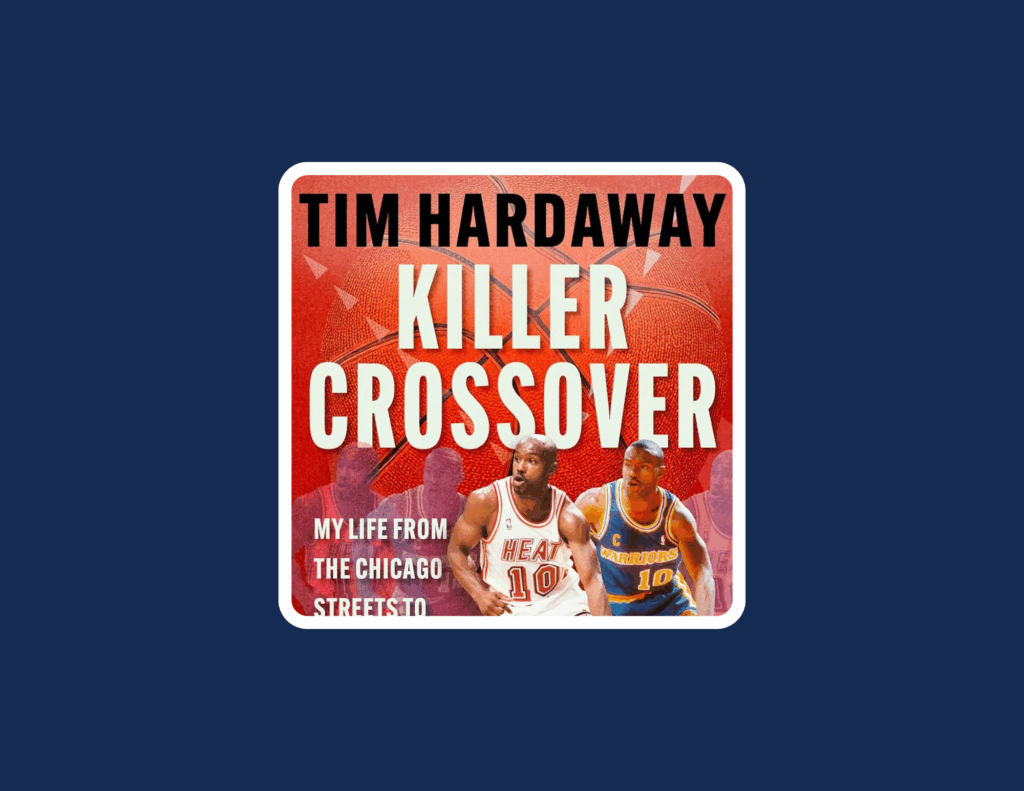
Website – https://www.amazon.com/Killer-Crossover-Chicago-Streets-Basketball/dp/1683585062
Email – [email protected]
Twitter/X – @jakeuitti

If you listen to and love the Hoop Heads Podcast, please consider giving us a small tip that will help in our quest to become the #1 basketball coaching podcast.
NBA Hall of Famer Tim Hardaway is considered one of the best point guards of his generation. On this episode we discuss Tim’s new book, Killer Crossover with him and his co-author Jake Uitti. We delve into Hardaway’s ascent from a challenging upbringing in Chicago to becoming one of the premier point guards of his era. The narrative unfolds to reveal not only his personal triumphs but also the profound sense of camaraderie and teamwork that characterized his time with legendary teammates like Mitch Richmond and Chris Mullin. Emphasizing the significance of persistence, Hardaway articulates the invaluable lessons gleaned from both his trials and his successes on the court. Ultimately, this episode serves as an exploration of Hardaway’s legacy, illustrating how his experiences have shaped both his professional career and his role as the father of current NBA player, Tim Hardaway, Jr.
In Killer Crossover, Hardaway shares stories from his tough upbringing in Chicago through his collegiate career and to the NBA. As a part of “Run TMC” (with fellow Warriors Mitch Richmond and Chris Mullin), he immediately established himself as one of the top players in the league. Joining the Miami Heat in 1996, and along with teammates Alonzo Mourning, Dan Majerle, and Jamal Mashburn (to name a few), he would become a main protagonist in one of the most contentious rivalries in all of basketball with the New York Knicks.
Killer Crossover is the story of a man who worked his way from humble beginnings to becoming an All-Star at the highest level—not to mention a father to a future NBA standout—as well as all the trials and tribulations that come along with being one of the best in the game.
Follow us on Twitter and Instagram @hoopheadspod for the latest updates on episodes, guests, and events from the Hoop Heads Pod.
Make sure you’re subscribed to the Hoop Heads Pod on iTunes or wherever you get your podcasts and while you’re there please leave us a 5 star rating and review. Your ratings help your friends and coaching colleagues find the show. If you really love what you’re hearing recommend the Hoop Heads Pod to someone and get them to join you as a part of Hoop Heads Nation.
Be sure to grab a notebook before you listen to this entertaining episode with NBA Hall of Famer Tim Hardaway and Jake Uitti the co-author Tim’s new book Killer Crossover.
What We Discuss with Tim Hardaway & Jake Uitti
- Tim’s challenging upbringing in Chicago and how the environment a person grows up in can fundamentally shape their character
- His time as a college player at UTEP
- The camaraderie and professional relationships formed during Tim’s time with the Golden State Warriors and Miami Heat
- A great Manute Bol story
- The rivalry between the Heat and the Knicks
- The importance of hard work, patience, and listening skills in both basketball and life
- What made Alonzo Mourning such a great teammate
- Valuable lessons for young athletes and their parents, emphasizing the need for independence and personal growth in sports
- The breakup of Run TMC
- Overcoming injuries as professional athlete
- The impact of coaching legends Don Nelson and Pat Riley on Tim’s playing style and career development
- His induction into the Basketball Hall of Fame, a moment made even more special by the presence of his family
Like this show? Please leave us a review here — even one sentence helps! Consider including your Twitter handle so we can thank you personally!

We’re excited to partner with Dr. Dish, the world’s best shooting machine! Mention the Hoop Heads Podcast when you place your order and get $300 off a brand new state of the art Dr. Dish Shooting Machine!

Your first impression is everything when applying for a new coaching job. A professional coaching portfolio is the tool that highlights your coaching achievements and philosophies and, most of all, helps separate you and your abilities from the other applicants.
The key to landing a new coaching job is to demonstrate to the hiring committee your attention to detail, level of preparedness, and your professionalism. Not only does a coaching portfolio allow you to exhibit these qualities, it also allows you to present your personal philosophies on coaching, leadership, and program development in an organized manner.
The Coaching Portfolio Guide is an instructional, membership-based website that helps you develop a personalized portfolio. Each section of the portfolio guide provides detailed instructions on how to organize your portfolio in a professional manner. The guide also provides sample documents for each section of your portfolio that you can copy, modify, and add to your personal portfolio.

Hey coaches — you’ve got a game plan for your team… but do you have one for your money?
That’s where Wealth4Coaches comes in.
Each week, they deliver simple, no-fluff financial tips made just for coaches. Whether you’re getting paid for camps, training sessions, or a full season—Wealth4Coaches helps you track it, save it, and grow it.
It’s time to stop guessing and start building.
Subscribe now at wealth4coaches.beehiiv.com/subscribe
And follow them on Twitter @Wealth4Coaches for daily money wins.
Your money needs a coach.
Start with Wealth4Coaches.
THANKS, TIM HARDAWAY & JAKE UITTI
If you enjoyed this episode with Tim Hardaway & Jake Uitti let them know by clicking on the link below and thanking them via Twitter.
Click here to thank Tim Hardaway & Jake Uitti via Twitter
Click here to let Mike & Jason know about your number one takeaway from this episode!
And if you want us to answer your questions on one of our upcoming weekly NBA episodes, drop us a line at [email protected].
TRANSCRIPT FOR TIM HARDAWAY – NBA HALL OF FAMER & AUTHOR OF THE NEW BOOK KILLER CROSSOVER PLUS HIS CO-AUTHOR JASON UITTI – EPISODE 1174
[00:00:00] Narrator: The Hoop Heads Podcast is brought to you by Head Start. Basketball
[00:00:20] Tim Hardaway: It just started from day one. When I got there, Chris Mullein said, what you want to do, man? I said, man, I haven’t played basketball in three, four days. I’m fending to play basketball. If I don’t play basketball, I’m about to pass out. I’m going to just go into Confo. They gave me some stuff. We went to go play, man. We played for about three, three and a half hours, and that’s where the comradery started.
Mitch, Mully, myself, Rod Higgins, and we just went and played. I think Sarunas was there too, and we just went and played, man. But that’s where the bond started.
[00:00:53] Mike Klinzing: NBA Hall of Famer, Tim Hardaway, is considered one of the best point guards of his generation. On this episode, we discuss Tim’s new book, Killer Crossover with him and his co-author, Jake Uitti.
Following Tim’s distinguished college career at UTEP, he was selected in the first round of the 1989 NBA draft by the Golden State Warriors. He soon became a household name. In Killer Crossover, Hardaway shares stories from his tough upbringing in Chicago through his collegiate career and onto the NBA as a part of run TMC with fellow Warriors, Mitch Richmond and Chris Mullen.
He immediately established himself as one of the top players in the league joining the Miami Heat in 1996. And along with teammates Alonzo Mourning, Dan Marley and Jamal Mashburn, he would become a main protagonist in one of the most contentious rivalries in all of basketball with the New York Knicks.
Killer crossover is the story of a man who worked his way from humble beginnings to becoming an all-star at the highest level, not to mention a father to a future NBA standout, as well as all the trials and tribulations that come along with being one of the best in the game.
Hey Hoop Heads. Imagine having your team’s entire development, training, and analytics in one place. That’s the Dr. Dish training management system, TMS, the ultimate coaching platform that transforms your shooting machine into a complete player development engine. Track every rep, drill, and player assign custom workouts.
Use shooting maps, leaderboards, and progress across your entire roster, all in one dashboard. Build accountability. Unlock smarter reps and take full control of your team’s growth. Need your fire at doctordishbasketball.com.
[00:02:39] Scott Morrison: Hey, this is Scott Morrison, Utah Jazz Assistant coach, and you’re listening to the Hoop Heads podcast
[00:02:47] Mike Klinzing: Coaches. You’ve got a game plan for your team, but you have one for your money. That’s where Wealth4Coaches comes in. Each week, we’ll deliver simple, no fluff financial tips made just for coaches. Whether you’re getting paid for camps, training sessions, or a full season, Wealth4Coaches helps you track it, save it, and grow it.
It’s time to stop guessing and start building. Subscribe now at Wealth4Coaches.beehive.com/subscribe and follow us on Twitter at Wealth4Coaches for daily money wins. Your money needs a coach. Start with Wealth4Coaches.
Be sure to grab a notebook before you listen to this entertaining episode with NBA Hall of Famer, Tim Hardaway and Jake Udi, the co-author of Tim’s new book, killer Crossover. Hello and welcome to the Hoop Heads podcast. It’s Mike Klinzing here without my co-host Jason sunk tonight. But I am pleased to be joined by Jake Udi and basketball Hall of Famer, Tim Hardaway.
The co-authors of the new book, killer Crossover. Gentlemen, welcome to the Hoop Heads Pod.
[00:03:56] Tim Hardaway: Hey, thanks for having us.
[00:03:57] Mike Klinzing: Hello. Thrilled to have you guys on. Want to start with a question for you about how the idea for the book came to be, and then how the two of you got connected to make this project a reality.
So Tim, was it something that you had been thinking about putting your, putting your career down on paper or, or where did the idea come from originally?
[00:04:19] Tim Hardaway: Well, thanks for having us on. I appreciate it. And you know, I, you know, I love talking about the book. I love talking about, you know, where I come from and, and what made Tim Hardaway, who Tim Hardaway was on the basketball court and off the court.
And I’ve been, I, people have been telling me 10, 15 years, man, you need to write a book. You need to write a book. You need to write a book. And I was thinking, tim Donovan. I was just thinking about it. Tim Donovan, media guy from for the Miami Heat. He was with the New York Knicks for a while, you know, with Pat Rally.
Then he came to Miami Heat and he said, Hey, Tim this guy called me Jake. And he said, I know. He said, Tim, I know you’ve been wanting to write a book. I, you’ve been, you’ve been talking about it. I hear the rumbles, you know, between me and you when we was talking, and I always told you to write a book.
And I feel, I feel very, very confident and comfortable with Tim and his decisions. And we became, you know, very, very good friends and almost family, me and Tim Donovan. And he said, you, you need to call Jake. And I said, all right. I called Jake and we started. Talking. And I like what he was talking about.
He was telling me some books that he wrote for different people in the NBA and you know, retired players in NBA Michael Cooper. And I was like all right, lemme check him out. So I looked around, looked, looked him up. I called him back. I was like, alright, yeah, let’s do it. And I’m going to tell you this, there’s been probably five or six guys that come to me and was writers and wanted to write my book.
But, you know, I know people, I, you know, you, you have to feel comfortable. You have to feel comfortable. And I just felt comfortable with Jake, you know, and we just started talking and talking and one day he said, next week, let’s start doing it. Let’s start, let’s start writing a book. Every Tuesday or every Monday, I think Every Monday at the same time.
Mm-hmm. We just was talking for about two hours, just talking, just talking, just talking about, you know, what I wanted in there, how I wanted it. We went chapter by chapter. He kept sending me, sending it to me. Right. You know, every month just write, I mean, just reading, reading, reading. So that’s how it started, man.
That’s how it started. And Jake, you know, kudos to him.
[00:07:05] Jake Uitti: Wow. That was such an in depth answer. Wow. I did not expect anything like that. I thought you were just like, ah, this guy’s okay. Let’s see what we got going. True, true. But that’s, that’s great, Tim. Thank you. True, true. Yeah. I appreciate that. That makes me feel good.
Thank you.
[00:07:18] Mike Klinzing: So, Jake, how’d you get started? A, just in your writing career and then B, working with former NBA players, what was your process for getting to this point in your career?
[00:07:29] Jake Uitti: Yeah, I, you know, I’ve been a writer for, I don’t know, 20 years or something like that, working at small newspapers in New Jersey and then moving out here to Seattle and working for the Seattle Times and then more national publications.
But I’ve always loved the N-B-A-N-B-A has been a thing in my life that has been a steady, comforting thing throughout my entire life. And I’m born in 1983, so the nineties is like, mid nineties is right there. And Tim Hardaway is at the center of the nineties. You can’t talk about the nineties without talking about Tim, about Tim Hardaway.
And so I’d actually just finished a book with Michael Cooper. And of course he’s connected closely to Pat Riley through the Lakers, and then Pat went to Miami. And I was speaking with Tim, with Tim Donovan the person that Tim Haraway just mentioned about getting a quote for the Michael Cooper book with pat Riley.
And I, and I asked Tim about Tim and I, because obviously Tim Hardaway is one of the greatest players in the nineties, and that I had seen that he didn’t have a book and it seemed like it was darn time for that. And I didn’t know this backstory. You know, I emailed Tim Donovan. Tim Donovan said, yeah, here’s Tim Haraway’s cell phone.
Let you guys can get in touch. And, but the backstory is really cool that you guy that you checked it out and had, had con had had conversations about that Tim, about wanting to write a book and stuff. It’s just sometimes these work, these things work out with really good timing. And like Tim said, we just felt really comfortable and it was, these books go so well when it’s like, you know, we didn’t know each other before, but it sort of turns into a friendship and we can just ask each other questions and build it.
And then, and then before you know it, you have a book, like you kind of, the book almost happens by accident. If it’s done well between two people like this, and then that’s exactly how it was.
[00:09:05] Mike Klinzing: Did you guys have an idea? As you started to talk early on, did you have a feel for kind of how you wanted it to play itself out?
What were going to be the key points? In other words, how soon into the process did you have an outline of what you wanted the book to look like? Obviously, Tim, you’re telling your story and you’re going back to your childhood, and we’ll dive into some of that. But just going through the whole process, how did you come up with the outline for the book and sort of the way you wanted it to flow?
How did that process work?
[00:09:32] Tim Hardaway: I’ll tell you this, Jake, after every conversation he ended with, all right, next week we going to get into your family, you know, high school growing up as a baby, how far you can go grammar school, high school you know, college. If we get to like, you know say I get to like from as far as I know.
When I was, you know, five years old, six years old, seven years old, whatever it is, all the way up to probably midway through high school. Then he’d come back. I mean, that date right after that, he’d say, okay, we going to, we going to go into something else. And then we come back to that. Or he might say, Hey, you know I forgot to ask you this question, so let me ask you this question.
Then we go and start another, you know, around the questions, stuff like that. And I tell him about, you know, he, he’ll say, well, what about your mom and dad, your parents, you know, how did you know they bring you up? What was that about? This and that? And I tell him, as far as I can remember, how I was brought up, what my parents was about.
And you know, and, and he was, I mean, he was prepared. He was structural. He was and like he said, he’s been a writer for 20 years. So they, he knows what to ask, when to ask, what to think about next week. because this is what I’m going to ask you next week. So I want you to, you know, think about in depth what you going to say and how you going to say it.
because this is going to be in a book. So, and I mean that’s what you’re supposed to do. You’re supposed to prepare a person, get them ready, right? Almost like a coach. Get them ready to un to to know what he’s going to, what I’m going to talk about, how I go, going to talk about, and how I’m going to present it in the book.
[00:11:28] Jake Uitti: And if, if there are other writers listening, like the, the book and the theme and the core sometimes jumps out halfway through or towards the end. And sometimes it’s the most obvious thing, but you weren’t thinking about it anyway. Like Tim Hardaway, killer crossover. Like those are synonymous, right.
And so if you go into the book saying, I’m going to structure the book around the killer crossover, you’re, you’re not going to get it. Right? But if the book comes out and you are understanding the world and understanding the story, and then it clicks into this motif for this, you know way to do it. I don’t know.
You rubric then. Oh, okay. And then, and then so, but you see with, with Tim’s life, you know, he grows up with such harsh conditions and then he comes and he is like a celebrity, you know, he’s, he is always sort of crossing over. And going from one side to the other. And it’s a really beautiful way to live.
And Tim, you know, if you, when you read the book and when you talk to him, he’s always willing to learn and always willing to get better. And always willing to go the other side if he needs to, you know? And so this killer crossover motif by accident, but, but, but obviously start to sort of present itself.
And that’s why we titled it. And it’s also, you know, Tim practically invented it for the modern world. So that that’s how, that’s how it grew. And it, and it grew as the book was coming along. Lemme piggyback
[00:12:42] Tim Hardaway: off that, you know, and I, and I, I should have said this first. You know, I didn’t want it to just be about the crossover.
I didn’t want it to be just about how you invented the crossover. I wanted it to be on the work ethic. That what made Tim Hardaway, what, what made, yeah, what, how did I think, how, why did I think this way? Why did I grow up this way? How did I become this person, not only a basketball player, but a father, you know, as I grew up as a kid, what was the, you know, the the ups and downs, the negative stuff, the positive stuff, you know, that that’s, I, that’s what people need to understand in a book.
How a person really, truly grew up to become this basketball player or this man
[00:13:38] Jake Uitti: that he has become. How do you make a point guard, you know, how, how has a point guard become a point guard? Like there’s so many breadcrumbs from Tim’s early life that now that you know it, you go, oh my God. Of course he’s this floor general.
Of course, he’s this type of person on the court, but you wouldn’t know that obviously, unless you go sort of in depth into it.
[00:13:58] Mike Klinzing: Ter, I felt like as I read through the book, one of the things that jumped out at me was the fact that the city of Chicago almost became a character. In the book in terms of the way that the city shaped you, but also shaped your mother, shaped, your father, shaped your interactions with your coaches as you’re growing up and your high school coach and the fact that your grammar school coach coached you and then came with you to Carver High School and then left and then you still stayed, which you think about how basketball is today.
Tim, you definitely wouldn’t have stayed. You definitely would not have stayed if you’d have been there now in two, in 2025, the way that, the way that the basketball landscape is. But just talk about the city of Chicago and how that shaped everything around you growing up. because I just felt like that was something that jumped out at me as I’m reading the book.
[00:14:52] Tim Hardaway: Well, when it, I’m not going to give a a lot of stuff out, but when you read the book, you’ll see why I didn’t transfer with. My, with Donald Pitman. You have to, you have to read the book and it, it’ll tell you why. Don’t think I didn’t try it, but it’ll tell you why it didn’t come. And you know Chicago was hard, man.
Chicago was hard. I mean, verbally you know, it was horrible. I mean physically it was hard. You had to have tough, tough skin. You know, this a old cliche, you know, and I always remember this, sticks and stones may break my bones, but names will never hurt me. My mom always taught me that. And when you growing up, and I, and I tell kids today, listening is a skill.
It’s not a heart, it’s a skill. And if you listen, if you be quiet and listen, you can retain stuff, what people has told you, and it’ll help you out. Life. That’s if you want to listen now. If you don’t want to listen, then you fall in these tribulations and you can’t get out. You can’t do this, you can’t do this.
See, I was the type of person that I knew how to deescalate a lot of things. You know, even though people, you know, wanted to escalate stuff, I knew how to deescalate a lot of stuff. You know, I knew how to navigate around stuff I watched, and I, I paid attention to a lot of things that was happening to folks that didn’t know how to get out of situations or that, that made the situation more difficult for everybody.
So. Like I said, I paid attention. I listen, I read the room. Every time I come into place, I read the room, I read the court, I, I come in the gym, I’m watching the game. Even though I might be talking to you, I’m listening. I’m, I’m looking at this game, I’m looking, I’m, I’m, I’m scouting. I’m scouting. See who I’m playing, see who we playing, see what we need to do.
And that’s the way Chicago brought you up. And, and that’s how I was brought up. My dad always told me, when you walk in the room, survey the room, look at the room, make sure you understand the room and understand people. And that’s, that’s, that’s what Chicago is. If you don’t understand people and if you don’t understand a room and if you can’t take constructive, I call it constructive criticism.
Some people call it hating. Some people call it other stuff. But you have to take constructive criticism or criticism to work on your game to get it better.
[00:17:37] Jake Uitti: I was just going to ask, I. Yeah, you answered it with your father, but I, how much of that is innate and how much of that is learned this reading the room, you know, are you do you think that’s something born in you or did you develop that, you know, quickly
[00:17:51] Tim Hardaway: over time?
I developed it quickly over time. because my dad always taught, taught me that my dad, I mean, your parents have to teach you things too. You just can’t come in and, and you have to listen to your friends and how they talk and how they act. And if you don’t want to be that way, you have to be another way.
You know, because sometimes, mm-hmm. Your, your friends could be rude, your friends could be obnoxious. Your rude, your friends could be some assholes and you have to know how to deal with them accordingly too. And I could be an asshole and they have to know how to deal with me according. But I have some great friends in my life and my career that, you know, they told me and talked to me, and that’s in the book too.
You have to have friends that you can listen to, but you have to have friends that will tell you the truth. And always had friends that was around me that told me the truth. And never, never, never lied to me and was in my face like, Tim, no, I don’t. No, no, no, you, no, no, you, no. And I’m like, okay, cool. I understood that and I listened.
I, and I went about my merry way. But you know, it, it is just about, you know, learning and understand it and but it comes from your parents. You got, somebody has to tell you how to, you know, learn and deal with stuff so you could, so you could remember it. Go and let it sink in. When you out or when you walking around, when you at a basketball court by yourself and somebody trying to pick on you, somebody getting up in your face.
You have to know how to, you know, handle yourself accordingly. And if it need, you have to know if they got friends there, you have to know that you by yourself. It’s just a lot of things that go into it, and I knew how to, I understood that.
[00:19:27] Jake Uitti: Mm-hmm.
[00:19:30] Mike Klinzing: Thank you.
[00:19:30] Tim Hardaway: That’s
[00:19:30] Mike Klinzing: great. Do you think kids today miss out on some of those lessons because of the way the youth basketball environment is structured today for you?
Right. You’re g you’re growing up, you’re going to courts, you bring your own net in some cases, and you’re stringing the net up so that you can work on your game by yourself, but you’re playing lots of pickup basketball, you’re going all over the city. And kids growing up today, they don’t do that. Now.
They have more access to gyms and maybe they have more access to coaching in a lot of cases, but they don’t get that sort of hard scrabble. You’re a 15-year-old kid playing against grown men and having to figure out and navigate that and all the little social things that you just talked about, right.
Of understanding and being able to read the room and know, hey, in this game I’m the best player so I can do this. But maybe in this game I’m, I’m only a 14-year-old that I’m playing with guys who are playing in college or playing the pros or whatever it might be. And you have to figure out how to navigate and do your roles and all those things.
So just how do you think that the way you grew up in the game with playground basketball and working on your game and in that environment versus the way kids come up in the game today? I’m just curious to get your thoughts.
[00:20:40] Tim Hardaway: I grew up playing against grown men every day. So I played and people picked me on their team right away.
I got Tim, I’m the first one picked. because they want to have a guard that can control stuff, that can make plays, that can make ha stuff happen and give them the ball. So when I, when I came, when I came to play, I knew I was, I. To me, I was the best one out there. That’s how I felt. I probably wasn’t athletically at that particular time, but I knew that I could compete and go out there and, and do what I need to do to win games.
But that was in, outside, outside, outside with grown men. But that was instilled in me with my, my, my dad, because he was a playground legend and Donald Pitman at an early age. To put that confidence in me to don’t fear nobody to go out there and play against anybody and do well, or conquer or bust their ass, whatever you wanted to call what, whatever you want to call it.
So, so my confidence came from, from them, you know, instilling in me and being tough. I was always short, always short. So I always had to. I always had to be tough. I always had to be gritty. I always had to be up in your face. I always had to make things happen. I always had to show people that I could do it, you know?
You know he not going to be able to go to the hole. He not going to be able to make a play around folks in the lane floaters. He not, he, he not going to be able to do that. So when a kid tells me that he can’t go and work out by himself, that’s insult insulting to me. That’s very insulting to me because, like you said, I went and did it by myself on concrete.
When put nets up on the rim, had to climb up poles to, to, to, you had to get the sweat and then you had to grab the pole and then you had to go up there and get up there and hang on, you know? And be on the rim, sit on a rim, put it up on nets, on both ends. I, and I was playing one-on-one on one by myself with I imaginary people that I want to go against.
And I was playing hard. And that’s in the book. And I tell kids, you have to have work ethic. You have to want it, you have to believe in yourself. You got, you got, you have to work on your game. You know, stop, you know, being on these phones and you got access to gyms and some of these gyms, you, you in there by yourself.
If I, when I got in the gym by myself for one hour, I was like, oh my God, I got the whole gym. Oh my, oh. It was like I was playing against 20 people, whole court, me by myself. That’s how excited I was to have in the gym by myself to work on my game. So when the kids tell me, yo yeah, right. It’s insulting to me.
I can’t, I need somebody to shag the ball. I need somebody to go get the ball. It’s a net up there. Make the basket, when it come down, you go get it, go down to the other end. That’s what that, you have to, you have to concentrate on making baskets. You have to concentrate on making shots. Floaters left, and I’m talking about, I’m on, I’m outside on a half moon steel basket, you know a half moon playing by myself, half Moon working on my game.
So, yeah, it, it, it, it, so it, it, it, it, it is just determination. It’s just determination. Yeah. And, and it came from, that’s the word from listening to my, my dad. If you want something, you have to go out there and get it. You have to go out there and show people that you’re the best. And that’s what I did each and every time I stepped on that court.
[00:24:26] Mike Klinzing: Tell me about your experience at utep, and just when you think about Coach Haskins and the influence that he had on you, what’s something that you learned from him? That you carried with you throughout the rest of your career?
[00:24:41] Tim Hardaway: Patience from, from Don Haskins, but Bob Walter is my, my high school coach.
And, and Don Haskins is about patience. All right. I so I’m in high school and I was listening. I’m listening to Chris Paul. He was talking to some kids the other day and he said something that’s totally true. A friend of mine, a couple of friend of mines was playing on varsity as freshmen, and I knew I could play on varsity and they put me on varsity, but I didn’t play as much.
And I caused dissension on the team because. As a, as a, as a junior and a senior, it’s their turn to go out there and play. And as a freshman coming in thinking that, and I’m knowing that I’m better than them, but I should be playing when I’m taking away, you know, their scholarships, their time to shine, their you know their confidence and everything.
And I was, and, and my coach, he was like, you know what? I have to bring you off the bench. I know you better than them, but I have to bring you off the bench. And sometimes you going to play, sometimes you’re not going to play. And my grammar school coach was a fos off coach. He was like, yo, well let him play on a Foss off team.
Then he was like, no, because if he does, then he going to be tired. Because back then Foss off played first, and then varsity played second. So if I was too tired to play, it would, it would take away from na varsity. So I was on a VAR seats, just sitting on a bench waiting, waiting my turn. So, but, but I learned a lot.
I really did learn a lot. I learned about being patient. I learned about how to play high school basketball because coming from grammar school to college is totally different. Coming from high school to college is totally different and coaches are different. And you go into another coach with his philosophy and I understand his philosophy, his game plan plan and what he wants you to do and how he wants you to do it.
And it was the same thing at utep. I went there and a guy named G Jackson, guy rest his soul. He he it was his turn to start at point Guard. He was going into his junior year and it was his turn to start at, at, at the point guard. And I had to wait my turn, even though I was, my skills was better than him.
He, he, he proved that he was ready to take over the reigns as point guard at that particular time. So I understood that. So I went there and I played my role. I only played sometimes 10 minutes game. Sometimes I played 24 minutes game. Sometimes I played 30 minutes a game if I had to understand patience and, and Don Nelson, Don Haskins taught me patience.
And he, and, you know, and when you, when you, I always knew how to take care of players. I knew all how to run, run plays, how to throw the ball in and, you know, and, and make, make things happen. But you, you have to know how to do it in a setting as a coach wants you to do it. And you have to implement your own stuff.
So how I, how I got better was playing defense, stealing the ball, making layups, making things happen on the defensive end, on the offensive end for me. And that’s what Don Haskins taught to be patient. Bob Walters. Don Haskins taught me to be patient and, and work on your game and always be ready.
But I was always ready, always worked on my game. And, but I knew I belonged. But them other guys, it was their turn. And when my turn happened, my sophomore year, I took off and I showed the coach that I was ready as a freshman. But he said, I knew that. I knew that. And he said, you know who you remind me of?
I said, who? He said, I, and back then I heard some rumblings, but he said, you know. Nate Archie Ball. I said, get out of here. I said, you, I didn’t know you coached Nate Archie Ball. He said, yeah, Nate came here after his Ju Juco years at in Juco. He came in and played two years for me. I was like, wow. And then Nate Archie Ball ended up being my assistant coach, my junior, senior year.
So, yeah. You know, and that really, really, really helped me out, propelled me to get to the NBA.
[00:29:12] Mike Klinzing: That’s a case of being able to read the room, right? It’s another example of being able to understand, looking at what your coach wants. I think this is something, when I talk to players today, Tim, so many people, right?
They want some bigger role. They think they want to have this, or they, they, they, they’re going after that and they don’t always understand like, Hey, sometimes you have to do what your coach wants you to do, what your coach needs you to do. And that’s how you work your way into. A lineup or that’s how you get the opportunity to have a bigger role or that’s how you get the opportunity to become a starter on your team is by understanding what your coach wants.
So many guys fight against what their coach wants instead of figuring out, Hey, this guy needs me right now to play defense and to get to the rim. He doesn’t need me shooting threes. And some guys just push back against that and they never figure it out and then they never get what they want. And it sounds like you, again, all through your career, there’s, there’s a whole bunch of examples of you being able to understand that and figure out and navigate situations to be able to get yourself into position to be able to achieve the things that you want.
Absolutely correct. Alright, so obviously your UTEP career, you guys go to the NCAA tournament four times. You have a tremendous amount of success there. It looks like you’re going to be heading to the NBA, you get an opportunity to go to Golden State Play for Don Nelson, run TMC. I can honestly say I was surprised that.
Run TMC. There it is right there. That run TMC only lasted I I was, I was stunned that you guys are really only played together. It was a little over two seasons, right? That you guys were, that the three of you were together. But the thing that was interesting to me is that, as I read it, I could just feel and sense from the book the love that you had for those two guys, not just as human beings, but also just the way you guys meshed on the floor.
And clearly as you were doing it and experience it, it was tremendous. And then you could just sense the disappointment when Mitch got traded and then you, you would’ve loved to have been able to see what you guys were going to be able to do together. So just talk about what made that pairing, that grouping so special just from a basketball standpoint, but also just how you looked at those guys as people and as friends.
[00:31:33] Tim Hardaway: Wanting to win, man. We just wanted to win. And we would do anything to win, you know, practice harder play harder, come in a few hours early to work and to understand, you know, what we like to run, how we like to run it. I’m a point guard. I knew how to get the ball to Chris. I knew how to get the ball to anybody, Mitch, I knew what he liked it in the pocket right here.
The only thing they had to do was catch and shoot LOBs, whatever it was. But it started, you know, the first date, very first date. because I love, first of all, we all three of us loved to play basketball. We loved to be in the gym. We were gym rats. That’s the first thing you know, when you got three guys that love to be in the gym.
Gym rats love to, don’t, don’t like going home. We want, if we could stay in the gym 24 7, we’d stay in gym 24 7. So. That’s how we was. But we always wanted to learn. We always wanted to get better. We always, you know, wanted our teammates to get better. We always wanted, you know, our teammates always wanted to, to make us better.
But it, it just started from day one. When I got there, Chris Mullen said, what you want to do, man? I said, man, I haven’t played basketball in three, four days. I’m fending to play basketball. If I don’t play basketball, I’m about to pass out. I’m going to just go into convection. Because, you know, I had to go to I suppose had so, so, so right before the draft I supposed to had draft was like that Thursday.
So that Sunday I was like, I was supposed to go to Golden State and yeah, to the Bay Area, and it was a typhoon at O’Hare Airport in Chicago. I couldn’t get out, so we tried to get out. I stayed there from 8:00 PM until two in the morning. They finally canceled. They said, you know, hey, we are not going to be able to get out time ran out for the pilots and everything.
So I had to get a ride. I had somebody drop me off. I had to get a cab all the way home from O’Hare Airport to the south side of Chicago. That was a hundred dollars, alright, that I didn’t have at that particular time. But I tell you this man then we went to New York, my mom and and I and my brother and my age.
And Henry Thomas, the great Henry Thomas man. And we went there and and I still haven’t played, you know, my agent was like, nah, you need to chill out. You don’t need to play. My mom was like, nah, you don’t need to play my brother. Same way. Nah, you don’t need to play until you get drafted. So in four days I’m like, man, I haven’t picked up a basketball.
What are y’all talking about folks? So when I get to Golden State the next day after the draft. It was like, what, three, four o’clock. Chris Mul was like, what you want to do? I said, man, I need to play basketball. They gave me some stuff. We went to go play, man. We played for about three, three and a half hours.
And we, and that’s where the comradery started. You know, Mitch Mulley, myself, rod Higgins, and we just went and played. I think Sharun was there too. And we just went and played, man, and, and we, and you know, that’s where the bond started. But you know, it it, when he got traded, it was the beginning to the end.
We thought that we was going to be. Together throughout our careers, at least six, seven years there and try to make it happen and put some pieces around us to, to, to try to contend for a championship. Us three. We had to us three was the core and only you had to do is put pieces around us that we had to make things happen.
And once, you know, Mitch got traded, that was the beginning to the end. And it, it, it was kind of tough, man. It was tough. It was tough for him. It was tough for Mitch Muller. And it was tough for myself and man, you know, we, we never recovered from there. It took us a while to took and the warriors to recover from there.
And man, I’m, I’m, you know, but we still are friends. We still, our family, our family’s, our families. You know, I, you know, we, we talk all the time. Like I talked to Mitch today. You know, I, when I saw Chris Mulley, y’all saw him in the wheelchair shooting because he had Achilles surgery. I’m like, ma, you you, you just can’t leave it alone.
Huh? You got to move around. He got to move around. I’m like, man, you ain’t got to move around like that all the time and you showing us up because you 60 something years old, you in a wheelchair shooting and shooting it clean like you normally do. So he was busting up at that. Yeah, man. That’s, that’s, that’s how we are, man.
That’s how we are. And we love getting together and we love hanging out together. And we, and once we get together, it, it, we just, we, it’s like a comic view. It’s just like comic view. So you know that, that friendship will last forever.
[00:36:23] Mike Klinzing: Yeah. That love for those guys came through in the book loud and clear.
I mean, there was no question as you read. The section about the run TMC time, that the affection that you guys had for one another was crystal, crystal clear and fun to, obviously just from a, from a fan perspective, just a fun, a fun team to watch the way you guys played. Each of you had your unique style and things that you guys brought to the table.
Just made it a fun group to, to, to play. That was probably your first introduction to the business of, of basketball. Kind of in, in terms of understanding that, hey, it’s not always going to be, it’s not always going to go exactly the way that you think it’s going to go. because there’s other forces outside of what you think within, within the team as players.
There’s other factors that go into it. And I’m obviously that was your, that was your welcome to the NBA business
[00:37:15] Tim Hardaway: world and world and like you going through parts and bits and pieces and stuff. That’s how Jake did it. You know, Jake. Like I said, he’d like, okay, we going to get into nuts and bolts of this and I want you to tell me exactly what happened this year.
Exactly that year. Exactly. You know, do you remember this game? You know do you remember that day when he got traded? Do you and you know, we, and I’m, I’m, I’m listening to him as he, we going through chapters and as we going through my career, my life and everything. I’m like, after we hang up, I’m like, damn, I like that.
You know? I like, I like how he did that today. I like, I like how he, he, he, he actually told a story, but I was telling in my words, but he was, he was, you know, getting it out of me. Exactly What I, I, I need to say, and that, I guess that’s what writers do, but he, I mean, he, to me, he done a beautiful job.
[00:38:22] Mike Klinzing: Thank you, sir. Are you a photographic Me? Are you a photographic memory guy when it comes to games? Like, can you remember? Okay, this series we’re playing the Knicks, it’s game four, there’s three minutes to go. I remember this exact play. Or, or, or just how do you, how do you recollect games, obviously having played so many games in your career, some are more memorable than others, but just how did you go about remembering those things and how vivid are your memories of each of those games?
I
[00:38:45] Tim Hardaway: think Jake was amazed at that when he was asking me those questions and I was like, yeah, I remember that. And so and so, and so and so, yeah, and this is how, this is what we was thinking. This is what we did in the locker room. This is how we was at that shooter around and all this and all that. And Jake was like, for real?
How do you remember that? I was like, you know, I know you, you’ve been through so many games, but, but when you, when you played in the NBA, every game was special. It wasn’t like one game was special than the other May. Maybe it was, you know, Eastern Conference or against the Ns, or I needed this game here, we got to have this game, you know?
But I’m talking about if you don’t sa savor that those memories in the NBA, why the hell was you playing, man? You have to savior those memories. You have to, you have to, you have to, you have to love those memories, those battles. Just going out there, having that NBA logo on you, you know, playing in different arenas.
You know, you, you, you have to remember that stuff, man. You got to remember that stuff. And if you don’t, then I think that, you know, you, you really, you didn’t care or you, you, you just was playing for a check. I played to have fun, man. I enjoyed the game.
[00:40:04] Jake Uitti: That’s what separates you, Tim. Like, I, you know, I didn’t know you very well, like as a person before doing this book, but that’s what separates you, is that.
Of course you made a living and made a good living, but like you would’ve done it for free on some level, right? Like you loved the game so much and wanted to play, like you’re saying, the stuff with Chris Molen, you were fending for it, you know? And I, and I, yeah, that’s what stuck out to me so, so much when we were talking.
[00:40:27] Mike Klinzing: It’s just interesting when you think back to, again, the sheer volume of the number of games that you participated in, Jake, how long did it take you before you trusted his memory and say, when he was telling you, Hey, the score was 74 to 70 with five minutes to go in the third quarter, did you trust him right away or did quickly you have to fact check him a few times?
Okay.
[00:40:44] Jake Uitti: Well I certainly did. I fact checked this because that’s the process. But no, very quickly, you know, you could tell the confidence in someone’s voice and then you can tell if it’s a shaky confidence or a real confidence. And Tim knew what he was talking about and. Even when we were going back months later, editing the book and editing stories, I could, you know, because when you’re in, in the process of it, maybe it’s like in front of your memory, but like even going back like three months later after we’re editing it, he still, he still recounted it, very crystal clears.
It is. And I wonder too, if that’s from being a point guard, you know, you’re like, you’re taking these snapshots of the game and so maybe you had that filing cabinet of all those snapshots and you know, to some degree,
[00:41:22] Mike Klinzing: yeah, I think some guys just have that and some guys don’t. For whatever, whatever that reason is, the ability to recall.
I got a guy that I coach with that he has a photographic memory like that he’ll tell me, Hey, you remember that game in 1997 when we were up by 10 at halftime and then we gave this halftime speech and our guys came out and did X, y, or z. I’m like, I’m like, well, I might remember we won that game or we lost it.
You know what I mean? But he’s got like all this, he’ll just keep going and going and going with stories. I think some guys just have that. Some and some don’t. You had an opportunity in Golden State to play with Manu Bowl, a guy who, a very interesting character, and I got an interesting, funny story about Manu Bowl from my life.
So what’s the best Manu Bowl story that didn’t make it into the book that you can tell us
[00:42:09] Tim Hardaway: Attitude. I don’t know that say about the, that the, when I went and tried to drive his car Jake. Okay. I don’t think so. So, so it’s amazing. He had a Bronco, right? The seat was in the back. The seat was in the back.
I’m like, how in the hell is this guy? And, and, and you don’t see minute, you see him through the back window. You see his knees in the front window. Alright? So I was like, he’s like, minute man. Truck is trying to come and get into the arena and you park right there in the, in the spot where the truck is.
I said, Manu, let me go. Lemme, lemme move your car, man. Lemme move your car. And everybody’s like, why? Why do he want to move? I said, I just want to see how this man drive this car. Why, what his seat is back here? And I, so I sat down, I I, the steering wheel was like another two feet in front of me. I couldn’t even get to it.
So I, I was standing up driving the car. I was standing up driving the car, and I, and I slowed down. I had to stop. I was, and I got there. I got back in there into the arena. I was like, man, if, if it was social media, if it was social media back then, oh my God, people would’ve been dying laughing, dying, laughing.
But there was no social media. Nobody took a picture. Nothing. But I was like. That was, that was well worth me going out there driving this car. I had, I enjoyed that. I was like, man, he, we have to stop the presses, man. We have to put that story in the book, man, man. Like, that’s a manu boy, Manu, you got a lot of stories.
You know, you, you say, I’m sorry, Manu. He is like, yes, I know you are. That it’s not like he know you, you, you are sorry for about what you did. No, you, sorry, person. Remorseful. Right. You’re right.
[00:44:14] Jake Uitti: Yeah.
[00:44:15] Mike Klinzing: I got you. Because he is a king, right?
[00:44:16] Jake Uitti: He was a king. Yeah. Yeah.
[00:44:18] Mike Klinzing: Manu was, so my father was a professor at Cleveland State.
Oh. And so when Manu first came to the United States, he came to Cleveland State. And so my dad comes home from work one day and he’s like, Mike, you have to come down to work and see this. It’s amazing. It was. He’s like, yeah. He’s like, but he is like, I’m not going to tell you. He goes, I’m not going to tell you what you’re going to see.
You just have to see it for yourself. You’re not going to believe what you’re about to see. And so we drive down and the gym at Cleveland State has like a, kind of like a balcony that goes around, around the court. So we’re standing on this balcony, which is like at about the, maybe the top of the backboard level.
And so we’re standing there and there’s guys kind of wandering into the gym and all of a sudden from out, from underneath this balcony out, walks Minot. And like everyone knows how skinny Minot was for the majority of his career, but we’re talking about Manute had maybe been in the United States for like three days when I saw him, but he walks out in his head, you know, I mean, again, we’d all know how tall he is, but literally his leg was just like his leg.
His leg. His leg, yeah. And then his knee
[00:45:33] Tim Hardaway: Yeah. Was
[00:45:33] Mike Klinzing: like this. And then his thigh was no bigger than his calves. And just my dad’s like, yeah, this guy just, they brought him over from, they brought him over from Africa. They think he’s going to. Play or whatever. I’m just like, you could, you could not fathom the combination of so of, of height and skinness of a guy.
It was just incredible. And the only thing you could say was ball. He just walked around and he’d be like, ball, ball, ball to everybody. It was, it was crazy. It was unbelievable.
[00:46:03] Jake Uitti: Did you play against George Muhan? Yeah. I didn’t ask you this. Yeah, yeah, yeah. Did who’s the, who’s the best giant that you ever played against?
Like, does Sean Bradley’s in there? Maybe you played against Mark Eaton.
[00:46:15] Tim Hardaway: Marken. Oh man. You, so, so it was no way you could set a pick on Musan or, or, or, or or e there’s no way. You just, you, you, you had to really, really watch yourself because if they fall, if they fall on you, you was in serious, serious trouble.
Okay. And, but, but minute, you know, you, you just had to watch out for minute elbows in his knees. Because, you know, he, it, they all, if he falls, then you, Hey, hey. It’s tough. So Manu used to go like this. So he used to get a rebound and he used to, so he’d get a rebound and he’d hold it up on the backboard like this, just hold it up there.
And he say, why not you? Why aren’t you going down court? You’re not going to get it. You know, and you just run down court and he’ll just pass it on to the point guard and let’s go. But I mean, he was just that funny, like that he’ll block somebody shot. Mm-hmm. And just hold it and just look around. What are you doing?
What are you doing? Are you serious right now? And he’ll get out. Just go. But I mean, he is just that funny man. And I tell you this, so you watched it. If you, you watched him shoot the ball all, I watched him shoot the ball and it’s just, you know, like that. But in a game. When he started making them. It is not only effective, but you start looking at the other team’s face.
They be like, get the fuck out of here. This seven, seven guy is making three like that. I mean, it’s like he just slinging it in there, just throwing it in there and it be going in all that. And he practiced that and Don Nelson wanted him to practice. Mm-hmm. That jump shot because he said once he hit that he make two or three of those, he opens the game wide open and the big man has to step out.
So yeah, it knew was a great guy, man. He was a great guy. Yeah.
[00:48:17] Mike Klinzing: Don Nelson way before his time in so many, in so many ways. Right? I mean, just thinking about the small ball and multi positional and just everything that Nelly kind of stood for and you in your career were fortunate enough to play for Don Nelson and also play for Pat Riley.
Two Hall of Fame, legendary. Coaches, coaches. So when you think about those two guys, maybe compare and contrast a little bit of their coaching style, what you picked up from each one of them, and just what it was like to play for two guys that are obviously at the upper echelon of NBA coaches all the time.
Well, you know, you
[00:48:53] Tim Hardaway: got two coaches that played in NBA that played against some good, good guys. I mean, some Hall of Fame guys played with some Hall of Fame guys played with, with some great coaches, and they was no nonsense coaches. You know, Don Nelson and Pat Rally, always prepared, always prepared, wanted you to be prepared.
But you know, Nelly always was an innovator. He wanted to, he wanted to innovate the game in a way where other teams could adapt, or if they did adapt to your game, then we got him. You know, we, we, they, they, they, they not used to playing this way. So when we went small ball and had Mario, Ellie sticker small, a big guy.
Then we come down and double team, they like, you know, they come down so quick. Yeah, we come right on the, on soon as you they throw the ball, we right there. So it was like we took people out of they rhythm. It only, you know, maybe for a quarter, maybe for three minutes, maybe for two minutes, you know, but it was very innovative playing small ball, moving pass and cut, passing, cut back screen on a big, you know, small didn’t ever switch back then.
So his innovation of the game revolution to today’s game. And that’s why I, and I say this in my book, if I was there, because I hurt myself, I hurt my ACL. If I was there when we got Chris Weber, I think Weber the team would’ve took off again after we lo lost Mitch. They didn’t see eye to eye, and I wasn’t there to, to talk to Webb or, or talk to Nelly and to try to get them to see eye to eye and make sure that, you know, whoever this is how we need for you to play this going to make you better, this going to make you this way.
And he found out at the end of his career with the Sacramento Kings that this is the way Nelly wanted you to play and you thriving at it. If you would’ve understood that. And if I could’ve made him understood that back then, oh man, he would’ve never left Golden State, you know? So, but yeah, that, you know, that that’s another instance in the book where I talk about.
But man, you know, Nelly, his, his, his, his mind was always trying to just innovate and, and make opposing teams really, and coaches really, really, really, really think about what we going to do and how we going to do it. So we might add four different things that we could have pulled out in the game, and you better be ready for those four different things.
If you wasn’t ready for those four different things, then you was in trouble. All right. Then I go to a guy that Pat Rowley. Oh man. Oh man. This, how we going do it? No switching this. How we going to play? We going to get over picks. We going to double team pick and roll, we going to get back, we’re going to do this and this and that.
And now it’s every day, every day, two and a half hours every day. Nellie might be a hour, Nellie might be two hours, Nellie might be five minutes. Now, pat Riley was every day, every day. Same thing, every day. And you went out there and played that way, which I love. I love both styles. I played both styles. I knew I could play both styles coming from Chicago and dealing with the people and the and the coach that I dealt with in, in Chicago and with Don Haston.
So, you know, it, it, it was, it was great for me and I loved both coaches and I, and I thrived in both offenses and both defenses and you know, and I, and they both gave me the keys to the engine and I ran their team.
[00:52:17] Mike Klinzing: How much of the con, how much conversation were you able to have with those two guys day to day?
Whether. During practice, outside of practice, sitting down with them, talking about what the team needed, what you were seeing, how was that relationship in terms of being able to. To have a conversation about with them, about what went on on the floor. Was that something that was common with you and them or was that something that didn’t really happen that often?
[00:52:45] Tim Hardaway: Common, you have to be on a point with a point guard. You have to understand what the coach wants, how he wants it, and what you want to do and what you think about it. Because you out there on the court and you talk about it, you look at film, you you go out there and execute it, you know, and you have to relay it to your teammates too about what you, you know, what, what you seeing as a point guard this, how they going to play.
So I’m going to pass it to you here. This how they going to play, pick and roll. So most of the time it’s going to be bounce pass because they got great hands. And if It might be a deflection, so I have to get your ball. So it might be late, so be expecting it late, you know, and you have to communicate with your team.
In practice, you have to communicate with your coach and you have to understand, you know different stuff. That, that you and your coaches. You and your coach have a point guarding coach has to be on the same page. So it was a lot of communication and it was a lot of talking, and it was a lot of understanding about what I need to do, what I wanted to do, and, and, and how I could do it on, in both instances with Don Nelson and Pat Rowdy.
[00:53:50] Mike Klinzing: Tell me about your relationship with Alonso morning and what that meant to you while you were playing with the heat. Obviously you go through all those wars, him with the Knicks, you win a gold medal with him. Just talk about that relationship.
[00:54:01] Tim Hardaway: Great friend great person. I’ll tell you this on the court don’t bother him.
He, he, he, he, he, he, he, he’s a beast on the court. He don’t want to hit it. He just competitive. He just go, ain’t there’s no fun in game. There’s basketball. I’m coming down here. I’m going to do what I take to need to do to win this game no matter what. All right, but off the court. Loving guy. You could approach him, you could talk to him.
You know, we had to work on that a little bit because some kids, you know, he, some kids really thought he was mean and stuff. And I said, man, he’s a gentle giant. You just, you just can’t rush up to Zoe and be like, Hey, yeah. You know, gimme autograph. No, no, no. It’s a way to do things. You know, I tell people it’s a way to do things.
You know, I, hello Mr. Morning. How you doing? Or you know, Alonzo, how you doing? Great game, or whatever, whatever. Can I have autograph? Just don’t rush up to them and say, can I have autograph? You going to say no all the time, you know, you have to be polite and, and you have to, and you have to you know, make sure you come off in a, in a way where he, he’s not going to be mad at you.
And that, and that. Good advice. In general. Just be polite, right? Be polite to people. Polite and that, and
[00:55:15] Jake Uitti: that usually works.
[00:55:16] Tim Hardaway: Did that. He was all right. If you come up and not polite to him, you know, he was like, nah, leave me alone. And kept on walking. But great guy though. Great guy.
[00:55:28] Mike Klinzing: He’s in the news these days.
He was the, yeah, absolutely. How special was the Olympic experience winning the gold medal? What were your emotions when you guys win the medal and you’re standing on the platform and the Anthems playing?
[00:55:43] Tim Hardaway: Sure. Joy. Just, just, just pure joy. Just being you know, just, just pure joy. We hugging each other, we, we laughing, you know, we like, do you believe this?
Do you believe that we a gold medalist? You know? And I was like, man, and both of us at the same time said, we worked so hard for this. Of course, of course, of course. And then you know, we, we, we and then at the end. It was cool, but it wasn’t cool because, you know, we, we saw something that me, him and the doctor saw something, and that’s when that happened at that particular time.
And we was worried all the way home. We was worried, you know, we
[00:56:32] Jake Uitti: can’t give too much of the book away. Mike, I you’re doing a good job here. Yeah, I understand. But we can’t give too much away.
[00:56:36] Mike Klinzing: I understand. I got it. I’m trying to dance around topics, so Yeah, for sure.
I completely understand and I, again, like I said, with the relationship that you had with the, with Chris Mullen and Mitch Richmond and Golden State that came through, and then again, your affection for Alonzo Mourning and that relationship through, through everything that you guys. Battled through with the heat and those four series against the Knicks and going back and forth and all that, and anybody who remembers nineties basketball, if you read the book, you’re going to go back and you’re going to take a trip down memory lane with those series and just how emotional and physical and everything that went into those series back in the day.
This book will transport you back into nineties Nick’s heat, Eastern conference basketball, and you’ll, you’ll get a, a real good sense of what that was like from the inside for sure. Then the next thing I want to ask you about is just as a dad and your son makes it all the way to the NBA and in the book you kind of detail the way that goes back to your theme, Jake, that you talked about with the crossover, right?
This is another example of, as a parent, you started out one way kind of handling his basketball career and then you crossed over and went a different direction. So maybe just. For anybody who’s out there, and there’s lots of coaches who are listening to the podcast who are parents that probably have kids that are playing basketball.
But if you had one piece of advice to give to basketball parents, and obviously your son’s made it to the highest level possible, what piece of advice would you give to parents of young basketball players or a high school basketball player that can make the experience better for the kid and also for you as a parent?
[00:58:22] Tim Hardaway: I always tell parents, let your kid be a kid. The kid didn’t grow up the way you grew up. You made the, you made it possible for the kid to grow up the way he’s supposed to grow up now. And be a parent, you know, go out there, watch him play, have fun watching him play. But he has to learn. He has to learn.
You can’t like force it upon him because you going to force it and he not going. Be able to respond to it and he’s going to quit and you might, you might mess up something that he loved to do. So I tell parents, yo, calm down. Be cool. Chill out and let them learn on their own. They, if they want it, they will go out and get it.
They will go out and get it if they want it. But you have to check yourself and don’t be over there screaming and hollering at them. Yo, you shoot the ball and you shoot the ball every time. Because if you shoot the ball every time, then you just being selfish and you just doing what they want you to do.
And that might not make help. You make it to where you want to be. So I tell them, let them be, let them learn on their own, because if they want it, they going to get it.
[00:59:47] Jake Uitti: Don’t climb up and put the net on the,
[00:59:49] Tim Hardaway: on the well go to a gym because they’re accessible. Demonstrate, yeah. They’re accessible to gyms. Now, only thing they have to do is just drop them off and let them go do what they need to.
Yeah. You know, but a lot of, lot of these parents fing them. They, you know, pass some ball. You need to do this, you need No, just let them be, they’ll figure it out.
[01:00:11] Mike Klinzing: Well said. I think every parent, when they are signing up for their kid’s first basketball team, you should just hand them a piece of paper with what you said.
Calm down two words, hand them the paper, calm down. And if we could get parents to just step back and understand what you just described in terms of, I always tell people, look, if your kid loves it enough, then they’re going to do, they’re going to climb the pole and put the net up. They’re going to go and find a gym.
They’re going to work by themselves. They’re going to love it. And what you do as the parent, yeah. In some cases you have to, as you said, drop them off. You have to provide them opportunities. You see so many people that just go completely overboard. And I think if you could sum it up when I, when I heard you say calm down, it’s perfect because I’ve said that to so many people, just like, look, it’s going to work out and it has nothing to do with you as the parent.
What, what you want is irrelevant, man. It’s like, it’s about what your kid is or isn’t going to do to get to where they want to go. They leave the
[01:01:05] Tim Hardaway: coaches alone. Leave the coaches alone. They, they, they have to deal with 10 different personalities. They have to deal with 10 guys that they trying to help each and every day get better and better and better.
Not only as a athlete, but as a person. And you are hampering the coach from doing that from high school to college. You are hampering your coach and your son from getting better.
[01:01:36] Mike Klinzing: All right, last question, Tim. You get elected to the basketball Hall of Fame. What’s been. The coolest part about being a basketball hall of famer, what has it meant to you?
What’s been the most meaningful part of being a member of the Hall of Fame? So it
[01:01:55] Tim Hardaway: is, it is not only being in the Hall of Fame most important, but my parents was there to witness it and put that jacket on me and to be a part of it. You know, my parents mean so much to me, even though when y’all read the book, y’all going to see a lot of things that evolve and what happened and stuff, and this and that.
I still only got one dad. I only, I still got one mom, and for them to be there with me and to see the, the joy on they face. The hard work that they helped me go through that was satisfying right there. That was glorifying. Just to have my parents there to watch me and to say my speech, you know, that man, I, yeah, that was it.
That was the whole weekend that they was there.
[01:03:11] Mike Klinzing: It’s a full circle. A full circle moment, right. You go back to when you’re a kid. We started out the conversation talking about Chicago and the impact that it had on you, and obviously that it had on your mom, your dad, your family, and then we take it all the way to making it to the Hall of Fame, and we’re kind of right back where we started with the influence of your mom, your dad, and how they shaped you into who you became, not only as a basketball player, but as a person.
Yes. And I’ll say. Just the book is outstanding. I loved reading it. It took me back to a ton of memories of watching you play, of watching basketball during the era that you played. You’re only a couple years older than me, so I remember clearly just a lot of the things that went on in the book, and then to be able to get your perspective and to hear from somebody who went through some of the trials and tribulations that you went through throughout your career and in your childhood, and then for you to make it and have it culminate and making the basketball Hall of fame.
It’s just a great story. It’s really well done. I would highly recommend anybody out there. Please pick up the book. Jake and Tim did a great job of collaborating called Killer Crossover. Jake, I’ll give you one more opportunity. Give us the elevator pitch on the book. Why should people go out and buy it?
You’re the, you’re the co-author. Tell us why we need to get out there. Obviously I read it and I couldn’t recommend it anymore, but let’s hear from, let’s hear from you on, on what makes the book so special.
[01:04:41] Jake Uitti: It’s the greatest book ever written.
[01:04:43] Mike Klinzing: Perfect. Perfect. Perfect.
[01:04:46] Jake Uitti: There you go. There you go. I love it.
And, and Tim’s amazing. And his story’s incredible, and there’s all twists and turns and crossovers and everything else, but it, it, it’s the subject that makes the book. And Tim is a great, yeah, it’s
[01:04:59] Tim Hardaway: a must read. It’s a must read. Everybody want to know what, what made me, why I’m this way and, and the book will tell you everything, why I’m this way and why I was like that on the court and off the court.
[01:05:15] Mike Klinzing: It’s a great read. Please pick it up. Absolutely guys. Tim, Jake cannot thank you enough for taking the time out of your schedule tonight to join us. Really appreciate it. To everyone who’s in our audience, please go out, pick up Killer Crossover, read it, enjoy it. I guarantee basketball, fan basketball, coach basketball, anything you’re going to love the book, please go out and pick it up.
And we appreciate you listening tonight, and we will catch you on our next episode. Thanks. Your first impression is everything when applying for a new coaching job. A professional coaching portfolio is the tool that highlights your coaching achievements and philosophies, and most of all helps separate you and your abilities from the other applicants.
The Coaching Portfolio Guide is an instructional membership based website that helps you develop a personalized portfolio. Each section of the portfolio guide provides detailed instructions on how to organize your portfolio in a professional manner. The guide also provides sample documents for each section of your portfolio that you can copy, modify, and add to your personal portfolio.
As a Hoop Heads Pod listener, you can get your coaching portfolio guide for just $25. Visit coaching portfolio guide.com/hoopheads to learn more.
[01:06:35] Narrator: Thanks for listening to the Hoop Heads Podcast presented by Head Start Basketball.