
PAUL KNEPPER – AUTHOR OF THE BOOK “MOSES MALONE: THE LIFE OF A BASKETBALL PROPHET” – EPISODE 1181
Website – https://pauljknepper.com/
Email – [email protected]
Twitter/X – @paulieknep

If you listen to and love the Hoop Heads Podcast, please consider giving us a small tip that will help in our quest to become the #1 basketball coaching podcast.
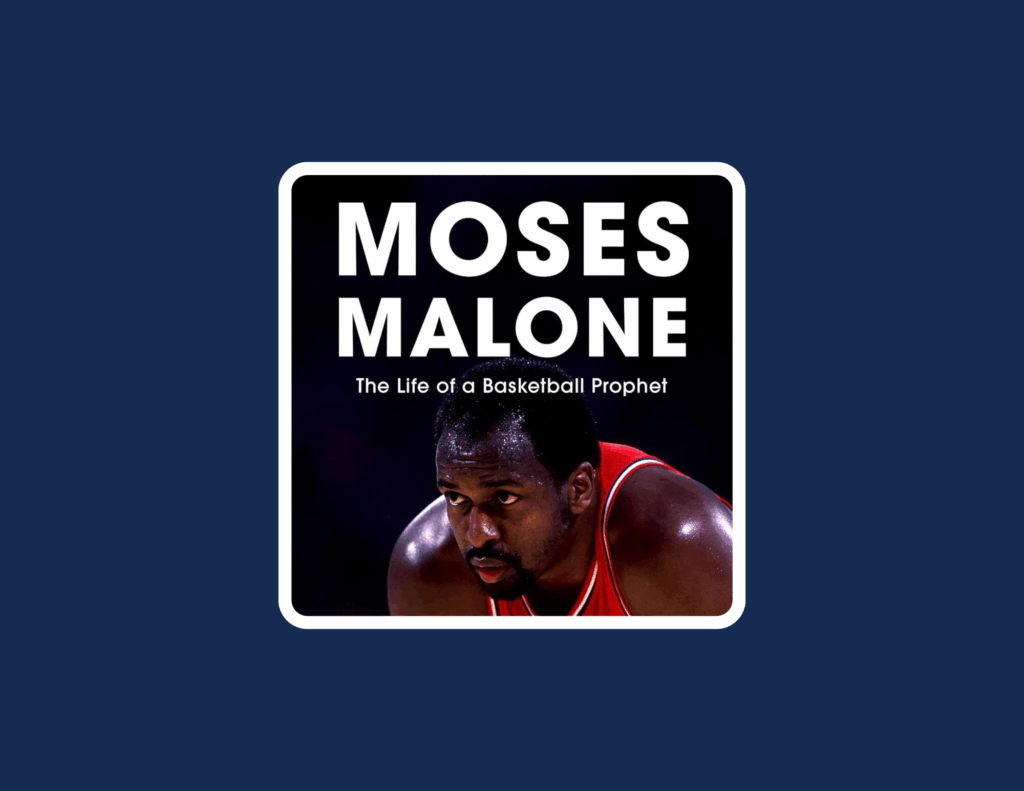
Paul Knepper is the author of the new book, Moses Malone: The Life of a Basketball Prophet which tells the story of Moses Malone, the first modern-day player to jump from high school basketball to the pros, paving a path for future star players like Kobe Bryant, Kevin Garnett, and LeBron James to follow.
Paul’s first book was The Knicks of the Nineties: Ewing, Oakley, Starks, and the Brawlers That Almost Won It All. He covered the New York Knicks as a featured columnist for Bleacher Report. Prior to that, he wrote for the defunct website Love of Sports.
On this episode Mike & Paul explore Moses Malone’s significant yet often overlooked impact on the landscape of professional basketball, particularly as the first modern player to transition directly from high school to the NBA. Knepper shares the challenges and triumphs faced by Malone throughout his illustrious career. We delve into the intense recruitment process that surrounded Malone, illustrating how coaches resorted to various illicit tactics to secure his commitment. Moreover, the discussion encompasses Malone’s transformative presence on the Philadelphia 76ers during their 1983 championship season, highlighting his pivotal role in their success. Through personal anecdotes and historical context, this episode aims to shed light on Malone’s legacy, affirming his rightful place among basketball’s greatest figures, a narrative that has been largely forgotten by contemporary NBA fans.
Follow us on Twitter and Instagram @hoopheadspod for the latest updates on episodes, guests, and events from the Hoop Heads Pod.
Make sure you’re subscribed to the Hoop Heads Pod on iTunes or wherever you get your podcasts and while you’re there please leave us a 5 star rating and review. Your ratings help your friends and coaching colleagues find the show. If you really love what you’re hearing recommend the Hoop Heads Pod to someone and get them to join you as a part of Hoop Heads Nation.
Listen and learn on this episode with Paul Knepper, author of the new book, Moses Malone: The Life of a Basketball Prophet.
What We Discuss with Paul Knepper
- Moses Malone was the first modern player to transition directly from high school basketball to the professional leagues, paving the way for future stars like Kobe Bryant and LeBron James
- His remarkable career included three MVP awards, which places him alongside only a select few players in NBA history who have achieved such a distinction
- The intense recruitment process surrounding Malone included numerous illicit offers to his family and friends
- Throughout his career, Malone demonstrated an unparalleled work ethic that stemmed from his challenging upbringing, which instilled in him a sense of resilience and determination
- Despite facing challenges in his early ABA career, including being traded multiple times, Malone ultimately found success and stability with the Houston Rockets
- In addition to his on-court achievements, Malone was known for his humility and supportive nature towards teammates, often mentoring younger players and emphasizing collective success over individual accolades
- The legend of Fo, Fo, Fo and the 83 Sixers
- The retirement of Moses Malone’s jersey included the names of all his teammates, reflecting his humility and recognition of their collective contributions to his success
- The camaraderie and mentorship Moses provided to teammates, particularly to Charles Barkley, reveal a side of him often misunderstood by the public
- Moses’s impact on Nike basketball, as their first major athlete, paved the way for a new era in sports marketing and sneaker culture
Like this show? Please leave us a review here — even one sentence helps! Consider including your Twitter handle so we can thank you personally!

We’re excited to partner with Dr. Dish, the world’s best shooting machine! Mention the Hoop Heads Podcast when you place your order and get $300 off a brand new state of the art Dr. Dish Shooting Machine!

Your first impression is everything when applying for a new coaching job. A professional coaching portfolio is the tool that highlights your coaching achievements and philosophies and, most of all, helps separate you and your abilities from the other applicants.
The key to landing a new coaching job is to demonstrate to the hiring committee your attention to detail, level of preparedness, and your professionalism. Not only does a coaching portfolio allow you to exhibit these qualities, it also allows you to present your personal philosophies on coaching, leadership, and program development in an organized manner.
The Coaching Portfolio Guide is an instructional, membership-based website that helps you develop a personalized portfolio. Each section of the portfolio guide provides detailed instructions on how to organize your portfolio in a professional manner. The guide also provides sample documents for each section of your portfolio that you can copy, modify, and add to your personal portfolio.

Hey coaches — you’ve got a game plan for your team… but do you have one for your money?
That’s where Wealth4Coaches comes in.
Each week, they deliver simple, no-fluff financial tips made just for coaches. Whether you’re getting paid for camps, training sessions, or a full season—Wealth4Coaches helps you track it, save it, and grow it.
It’s time to stop guessing and start building.
Subscribe now at wealth4coaches.beehiiv.com/subscribe
And follow them on Twitter @Wealth4Coaches for daily money wins.
Your money needs a coach.
Start with Wealth4Coaches.
THANKS, PAUL KNEPPER
If you enjoyed this episode with Paul Knepper let him know by clicking on the link below and thanking them via Twitter.
Click here to thank Paul Knepper via Twitter
Click here to let Mike & Jason know about your number one takeaway from this episode!
And if you want us to answer your questions on one of our upcoming weekly NBA episodes, drop us a line at [email protected].
TRANSCRIPT FOR PAUL KNEPPER – AUTHOR OF THE BOOK “MOSES MALONE: THE LIFE OF A BASKETBALL PROPHET” – EPISODE 1181
[00:00:00] Narrator: The Hoop Heads Podcast is brought to you by Head Start Basketball.
[00:00:20] Paul Knepper: If you got Moses Malone, it completely changed your program. It changed your career. There was a lot of illicit offers for him, for his family, for his coaches, for his friends. Friends were offered scholarships if they were able to get him to come to the school.
One coach came down and lived in a hotel, Howard Johnson in Petersburg for several months. All these college coaches are groveling over this player and willing to do anything to get him to their school, harassing this man to the point that he feels he has to lie down on the floor of his bedroom to pretend he’s not home.
[00:00:54] Mike Klinzing: Paul Knepper is the author of the new book, Moses Malone, the Life of a Basketball Prophet, which tells the story of Moses Malone, the first modern day player to jump from high school basketball to the pros, paving a path for future star players like Kobe Bryant, Kevin Garnet, and LeBron James. To follow.
Paul’s first book was The Knicks of the Nineties, Ewing, Oakley, Starks, and the Brawlers that Almost Won It All. He covered the New York Knicks as a featured columnist for Bleacher Report. Prior to that, he wrote for the now defunct website, love of sports.
Hey, Hoop Heads. Imagine having your team’s entire development, training, and analytics in one place. That’s the Dr. Dish training management system, TMS, the ultimate coaching platform that transforms your shooting machine into a complete player development engine. Track every rep, drill, and player, assign custom workouts, use shooting maps, leaderboards, and progress across your entire roster, all in one.
Dashboard, build accountability. Unlock smarter reps and take full control of your team’s growth. Feed your fire drdishbasketball.com.
[00:02:10] Rob Senderoff: Hi, this is Rob Senderoff head men’s basketball coach at Kent State University, and you’re listening to the Hoop Heads Podcast
[00:02:21] Mike Klinzing: Coaches. You’ve got a game plan for your team, but do you have one for your money? That’s where Wealth4Coaches comes in. Each week, we’ll deliver simple, no fluff financial tips made just for coaches. Whether you’re getting paid for camps, training sessions, or a full season, Wealth4Coaches helps you track it, save it, and grow it.
It’s time to stop guessing and start building. Subscribe now at Wealth4Coaches Bee. Dot com slash subscribe and follow us on Twitter at Wealth4Coaches for daily money wins. Your money needs a coach. Start with Wealth4Coaches,
listen and learn on this episode of Paul Knepper, author of the new book, Moses Malone, the Life of a Basketball Prophet. Hello and welcome to the Hoop Heads podcast. It’s Mike Klinzing here without my co-host Jason sunk this afternoon. I am
pleased to be joined by Paul Knepper, author of the book, O Malone, the Life of a Basketball Prophet Paul, welcome to the Hoop Heads Pod.
[00:03:25] Paul Knepper: Thanks, Mike. I really appreciate you having me on.
[00:03:29] Mike Klinzing: Excited to have you on. Had an opportunity over the last couple days to get through the entire book and really enjoyed it. As I told you on our pre our, our little talk before we actually went live here, there were a lot of stories and little things that.
As I was reading it, I’m like, oh yeah, I remember that. But if you’d have just asked me without reading the book, there wouldn’t been a lot of things that I probably would not have remembered about Moses Malone’s career. So go back in time and tell me about just the why behind the book and, and where people can find it.
And just give us the idea of what people pick up this book. What are they going to find out? What are they going to read about?
[00:04:05] Paul Knepper: I mean, the why is a big part of, it’s just that I feel like Moses is just not talked about enough. when people talk about the greats of the game, he, he often gets overlooked and I think he’s such an important figure in the history of the game.
Beginning with, in 1974, he was the first modern day player to go straight from high school to pros. There’s just a lot of interfa interesting things that happened around that decision. And then over a four or five year period, I think he was the best player in the world. He won. He won 3M VP awards.
He is one of only nine guys to win three or more NBA of VP awards, a very prestigious list. He was the best player on one of the best teams ever, the 19 82, 83 76 ERs, and he is by far the greatest. Offensive rebounder of all times statistically. And so that, that was really a lot of it, that, that, the impetus behind it was that he, he, here’s this incredible player, this trailblazer, and nobody’s written a book about him and nobody really talks about him very much.
And so I wanted to get his story out there, especially I think for younger generations who don’t really know anything about Moses Malone.
Find the book. The
[00:05:10] Paul Knepper: last part, I’m sorry. You get the book. It’s in bookstores now. . amazon.com, Barnes and noble.com. On, on my publisher’s website, it’s University of Nebraska Press, so most of the places books are sold.
[00:05:23] Mike Klinzing: Alright, let’s dive into some of the stories in the book and we’ll kind of try to go chronologically. And first of all, I’ll tell you that when I think about Moses Malone. There are two things that come to mind with him as a basketball player. One, I can still remember my friends and I. Joking that whenever he was at the free throw line, that you would just see the sweat literally pouring off of his face down his chin and literally just dripping like a faucet.
And so whenever we were playing and there was somebody that was all sweaty, that person was always Moses, right? Because Moses was just constantly drenched in sweat whenever he was playing. And I can still remember with the goggles on his head at various times after he had the, after he suffered the orbital injury, that he’d have the goggles up on his head and he’d be sweating.
So the sweat was one thing that I remembered. Clearly about Moses. Then the other thing is, as you mentioned, the offensive rebounding. So anytime again, when I’m a kid and when the Sixers win the title in 83, I’m 13 years old, so Doc was always my favorite player. So I love those Sixers teams and the.
Whenever somebody would miss a shot, get their own rebound, put it in automatically, everybody’s yelling, Moses, that’s Moses. Just Moses is tossing the ball off the backboard and going up and getting the rebound. I know there was a point in the book where he talked about, Hey, when you get the ball in from Andrew, Tony, right, why don’t you kick it back out?
And he’s like, Hey, he’s not going to give it back to me. I’m much more likely to get it when I just toss it off the backboard to myself and be able to keep the ball. So those are the two things. Before I kind of dive into what’s in the book, when I think Moses Malone, those are the two things that. Come to mind again, just me and my friends, 12, 13, 14 years old, just kind of his legacy with us as as, as a young kid back in, back in the early eighties.
But for Moses himself, as you mentioned, growing up in Petersburg, Virginia, growing up in a household with out his father, with his mother kind of looking out for him and tough circumstances and yet. He started out, he wasn’t even a basketball player. He played a lot of football and a lot of baseball, and he came to basketball a little bit later.
So just talk a little bit about how you feel like his upbringing ultimately impacted who he became later on in his basketball career.
[00:07:36] Paul Knepper: it’s fascinating because it’s, it’s always, there’s a real, there’s that battle between nature and nurture, right? There are a lot of people who grew up in Moses environment.
It was a very difficult environment. It was a rough neighborhood. He didn’t have any siblings. He didn’t even a father. It was, it was seg. I mean, for his early years, it was, it was still a segregated city. Racial segregation. And a lot of people crumble in that environment, right? Or they just kind of develop bad habits or make bad decisions, and they don’t get out of it, or they don’t persevere.
But Moses did, and I think he internalized some of the toughness of the neighborhood. he grew up playing on, on the playground as, as kids tended to do back then. And I think that instilled toughness in him. He used to play, as I talk about in the book, when he was in high school, he would go play in the local prison.
He’d play against the inmates in prison, which I think, I would think that would toughen you up a little bit too. I mean, you have to be, you have to be tough to play in that environment. So I think, I think he, some people it swallows up and some people use it as fuel. And I think for him it was fuel, it, it, the, his surroundings taught him how to be tough.
And also I think gave him a some direction. it, it was, it drove him to want to do better, do better for himself, do better for his mother, and, and, and get out of that, that sense of poverty in that difficult situation.
[00:08:52] Mike Klinzing: I think that’s a theme that runs through his entire career.
Right? There’s lots of anecdotes in the book about Moses being in the gym at 12 midnight, Moses being in the gym here, Moses being the first guy to be working out Moses just as a guy who had a relentless work ethic. And it seems like that was driven from his upbringing in Petersburg. And when you go ahead and you look at Moses’ early life, right, as a basketball player.
There’s two things that stand out to me that are no longer a part of our basketball culture at the youth and the high school level. And one of those is just being on the playground, playing outside, all the things that go along with that part of it. And then the second one is, there’s a whole chapter in there about his experience at Five Star Basketball and how he was not.
Well known outside of regionally because again, there was no social media, there was no YouTube. Nobody was checking out Moses Malone clips to see, Hey, there’s this kid out of Petersburg, Virginia. How good is he? And so going to Five Star was kind of his national coming out party. And obviously anybody who is in the basketball space knows Howard Garfinkel.
And the whole thing with with Five Star and just, again, I always tell people it’s completely unique. I was fortunate enough to go and. Participate in Five Star Once at Robert Morris College and now you think, goes back to what I said a second ago about playing outdoors. You had the best high school players in the country.
Playing outdoors on converted tennis courts. And now if you look at what these guys have, they’d all, if they said, Hey, you’re going to go play on these outdoor courts, and they’re converted tennis courts. The guys would look at you like they were crazy. So there’s two I think, themes there, the outdoor basketball and then just five star and Howard Garfinkel.
So talk a little bit about how that particular, just getting to five star, how that impacted sort of where, what the trajectory of his life was from there.
[00:10:50] Paul Knepper: Yeah, I think first playing on the, on the playgrounds, it’s I don’t know. I lament the loss of that just because that’s, that’s what I did, growing up and there was a certain.
Spontaneity to that you just kind of showed, showed up and, and guys would, and you’d get in the game and run, and there was a whole culture around that. That does seem to be disappearing, and there are pluses and minuses to that. I think one plus is, I think it’s better for your knees, especially long term to be playing in a gym than it is out on the asphalt. So I think that’s good. And I think some of these kids are getting, they’re getting coached more. that’s debatable of the AAU scene and how much they’re getting coached, but some of them are, and know some of them get trainers from young age and, and some, they’re getting more skill development.
But I think the thing that they’re missing out on is, I think there’s a certain. Grittiness that comes from playing on the playground without, without coaches around and, and other adults around and, and all the rules and all that. And you just, you make up your own rules and I think there’s a toughness that develops from that.
I think that was certainly the case with Moses. As far as Five Star, you’re exactly right. I talked to they, they were broken up and put on different teams at Five Star. They had like a draft, and Tom Macquarie was a coach who he coached at the high school level and the college level and. He, he had Moses on his team.
He got first pick and, and, and Garel told him he had to take Moses and Macquarie told, I talked to him, Corey, he said, I never heard of the kid. And in in today’s in 2025 world, like how could you have never heard it? This guy was like the biggest prospect he hadn’t quite blown up nationally yet, but in a, a year later, he was going to be the biggest prospect in, in to come out of high school in years.
Here’s a guy at coaching college. I never heard of him. And so, you’re right. It was very regional at the time. It just and, and you, and they weren’t, they weren’t recruiting kids from the time they were 14 years old or monitoring kids from the time they were 14 years old. So, yeah, no no one outside the kind of, or, or very limited people outside of the kind of Virginia, Maryland, DC area at heard of Moses.
A number of people at Five Star didn’t, and then, and then he comes there and he just destroys everyone. I mean, to the point that as I know in the book, Garf says he was the only player in the history of the camp that was too good for the camp. And that camp has Michael Jordan and LeBron James and the list goes on, Patrick Ewing, the list goes on and on and on of great players who came through that camp.
And Garf Swar, he was better than any of them. And I talked to a number of coaches who were at that camp. Huey Brown being one of, I mean, Huey was just going on and on, and as Huey does that, it was, it was like a, just a pleasure to sit back and listen to Huey talk basketball. But Huey was going on about, about the specifics his ability to block shots and then get up and down the floor so quick, and all these seasoned college coaches were just kind of in.
Of Moses and, and after Five Star, it was, he was not a, he was not a regional secret anymore. He was the most, the most highly sought after player in the country and, and all the coaches just kind of descended on Petersburg trying to get him to come to their school.
[00:13:55] Mike Klinzing: It’s funny too, when you look at photos of.
Early Moses, and especially him in high school and his body and just the way it changed when he became a pro. I mean, as a high school kid and early in his pro career, he’s really long and lean. And then I feel like when even when he was in his, in his heyday, right, with the rockets and Sixers, he was more.
Just physically filled out. But when he was young, he was just long and lean. beacause when I think of Moses, I don’t necessarily think of the shop blocking and the running the floor. You think more of just the gritty, hard work underneath the basket and the post ups, and you don’t think of him running the floor and blocking shots and being that super athlete like we oftentimes associate with NBA players.
But young Moses, from everything that you put in the book and all the people that you talk to, it sounds like that athleticism that. We’re talking about now was something that Moses had, which I’m not sure that people necessarily remember him for that once he got into the prime of his career.
[00:14:52] Paul Knepper: Yeah, it’s, it’s, I mean, physically, hi.
His body changed significantly over the course of his career. But he was, I mean, you see pictures of him when he, when, like when he started in the a, BA. I mean, I don’t know. I don’t know if I’ve ever seen anybody that, that like with such a thin waist incredibly thin, and, and and he was, he was more springy and, and kind of light on his feet.
And I think Moses was only six 10 and I think he felt early in his, early in his career, he’s played forward a lot. I think he thought in order to play center he needed to beef up a little bit. He ended up beefing up a lot. And I think that the weight I don’t want to, I don’t know if I’d say slowed him down.
I mean, he was, he was still Moses, but he wasn’t quite as, as springy as hoppy. He didn’t get up, up and down the floor quite as fast.
[00:15:37] Mike Klinzing: Sure. After Five Star, as you said, now all the coaches know about him and what’s interesting, again with the backdrop of college basketball as it is today, and the way things have changed with NIL and the transfer portal and.
Someone who’s our age, who looks back on college basketball, quote scandals of the past, where Chris Mills gets the package from Kentucky and it has what, $750 in it, or just these, the things that we now look at in this era of NIL. And we could look back and say, God, it was ridiculous how big of a deal it was.
But it was a big deal. And with Moses, you kind of detail sort of. Not the specific illicit things that were going on in attempting to recruit Moses, but just talk a little bit about how so many coaches were trying to get to Moses. I know there’s the story of him laying down in his house with the lights off so that coaches wouldn’t know that he was home.
So just talk about some of the, the the surrounding circumstances of, of Moses’ recruiting by college coaches.
[00:16:45] Paul Knepper: Yeah. I mean, the problem is, this in itself isn’t a problem. But Moses was, was, he was shy, he was introverted, he was self-conscious about a speeched impediment. I think he was pretty suspicious of people he didn’t know, and he really didn’t like talking about himself.
So you put that all together and when you’re, the, the, the most sought after recruit in the country. That’s a problem because all these coaches are coming and they’re trying to engage you and talk to you and, and all that. And, and Moses wanted no part of it. He would literally run away when he saw them come in.
And if they got, they cornered him, he’d give one word answers. And all these coaches were desperate. beacause if you got Moses Malone, it, it changed completely. Changed your program, it changed your career. And so there, there was a lot of illicit offers for him, for his, for his family for his coaches, for his friends.
Friends were offered scholarships if they were able to get him to come to the school. one coach came down and, and lived in a hotel, Howard Johnson in Petersburg for, for several months. I It’s such a circus and in, in a, I mean it still is, but in a different way now. But it was just. It just felt, it just felt unseemly, the whole thing.
how all these kid, all these, all these college coaches are groveling over this, this player and, and willing to do anything to get him to their school. And then of course a lot of Marilyn leading the way bitched and moaned when the a BA come in and, and threw money at him.
And, but there was such hypocrisy in that because it was like, you guys are, you guys are harassing this man to the point that he feels he has to lie down on the, on the. Floor of his bedroom to pretend he’s not home and you’re offering him and his family and friends, this everything under the moon and you’re complaining that, oh, the the, the ABAs coming in and they’re going to corrupt him by giving him money at, at a, at a high school.
It was just, the whole thing just felt like such a farce in retrospect.
[00:18:43] Mike Klinzing: What were some of the sources that you stories era. Moses’ life because obviously you get to the pros and there’s lots of guys that are still around that played with Moses, that coached Moses, that knew Moses. Now we’re going back to the early seventies and a lot of the guys that we’re coaching obviously have unfortunately passed away.
So who are your sources? Who’d you talk to to get some of these stories?
[00:19:06] Paul Knepper: Yeah, I mean, there, there are. There were, I was, I guess, pleasantly surprised at how many are still around. Many, probably most are not. The first interview I did for the book was lefty Driesell which was, and Lefty has since died, but he was 90 or 91 at the time.
It’s still a great storyteller. I talked to a couple of his assistant coaches at Maryland at that time, Howard White and Joe Harrington. I talked to assistant coach from VCU. I talked to Dick Vital, who recruited him heavily at the University of Detroit. A couple others that are, are eluding me right now, but coaches Yeah, they’re, that are in their seventies, eighties guys like that.
I talked to some of his friends from high school a, a cousin, a couple cousins of his who were around the scene at that time. And then you get information too from the, the. Teammates, his high school teammates, he would talk to some of them about what was going on. And even if he didn’t talk to them, they could, they were called certain incidents when, when people were in the neighborhood or neighbors as well.
When this guy, oh yeah, I remember Oral Roberts coming in to visit Moses. And like they, they remembered these things. And then you get stuff with, from like, newspapers. I read through the, the progress index was the local newspaper in Petersburg, and, and that was helpful. And the Richmond, Richmond Times Index times dispatch, I’m sorry, would, would report on a lot of the goings on.
And so some in those cases, sometimes you’re able to nail down dates of when, when people came and when certain things took place through the reporting at the time. So all that together enabled me kind of piece it together.
He said eventually Moses decides that he’s
[00:20:44] Mike Klinzing: going to sign with the University of Maryland and Lester Gisele.
That’s the first choice that he makes. And then, as you said, the Upstart Professional League, the American Basketball Association, the A BA comes in and the Utah Stars decide, Hey, we’re going to try to get this kid to jump right to the professional ranks and it. Clearly Moses has some thinking to do.
Obviously. We talked earlier a little bit about just his background and growing up with poverty and the ability to be able to sign a professional contract, but obviously at that time it was completely unheard of. So just kind of take us through the dueling perspectives there of kind of what left Giselle had to say to you about that and just how he tried to protect and, and continue to keep Moses on the path to attend the University of Maryland.
Then ultimately, the decision to go pro and and play for the Utah Stars.
[00:21:38] Paul Knepper: I mean, Lefty’s big push was his big sell to Moses was because the, the obvious, the obvious incentive for to go to the a BA was, was the money, right? And the money upfront right away. And the, the when Bucky Buck Walters, his name, who I, who I talked to, who was the coach of, president of the Utah Stars at the time he said, he saw, he said to Moses, look, if you come out now, you get, you’ll get four more years of earning potential.
and, and and Bucky said, I looked around their house and I knew they needed it. And so that was, that was the big reason to go for Moses. I mean, he was just they were extremely poor. Extremely poor. And in fact, when Moses went pro and he bought his mother a new house the, the old house, the house he grew up in was condemned.
The city lived it deemed it unlivable. That’s how bad the condition it was in and, and how dire their situation was. So that was the obvious incentive to leave. Lefty tried to convince Moses that he could make more down the road if he got went to a couple years of college. Like if you could make this now, imagine how much you could make after a year or two after start and a year or two in college, which is probably true.
? I think if he dominated college for a couple years, he probably could have got even more money. Another thing was Lefty said, which is also true, is that if you play another year. Then the NBA could draft you and you can, you can play the two leagues against each other to get the highest offer you can.
So why don’t you just come for one year and that will increase your earning potential next year. Which again, I mean obviously Lefty had selfish reasons for, for, for, for pushing that, but it was, it wasn’t an unreasonable argument. But I think Moses, he wanted the money. He wanted the money.
Now you never know what’s you never know what, what could happen in a year or and he, I think he just wanted a, I think he, he also had no interest in, in school and getting an education and he had a difficult time with school and so I think it made sense. He thought it made sense to take the money.
Then you look at the history of the A BA and just the
[00:23:38] Mike Klinzing: up and down nature of the finances. Of the league and franchises shuttering their doors very quickly when they can’t make payroll and trying to figure it out. And the league obviously at the top is focused on how can we. Force a merger with the NBA and trying to get as many of players to either jump from the NBA to the A BA or just to get those players to sign outright with the A BA when they were eligible to do that.
And it’s interesting, again, when I thought about Moses’ career, I remembered all the different little spots that he stopped at along the way before he eventually gets to the Houston Rockets. But like I told you earlier, I don’t know that I would’ve necessarily remembered all those spots. So just walk us through the chronology of.
Signs with the Utah Stars is in Utah as an African American player in a place that is predominantly 99.9% white. He’s have to make that adjustment. Then all of a sudden that team is closing their doors and he’s going to go. It is just the litany of places that he has to kind of go through and order to be able to get to eventually, where he kind of finds himself and becomes a star.
Just walk us through that early part of his career.
[00:24:48] Paul Knepper: So he played his first full season with Utah with the, with the Utah Stars, and had a great year. He was an all star. In his rookie year in training camp of his second season, he broke his foot and then early in that season the Utah Stars folded and he was sold to the spirits of St.
Louis. And he would, so he missed the first few months of the season with a broken foot, and then he came back, finished the season with the spirits. The spirits disbanded because they had the merger with the NBA and so four four A BA teams joined the NBA and the players on the teams that didn’t were put in what they called the dispersal draft, where A-B-A-N-B-A teams could draft those players.
They had to pay a certain fee to get them. So Moses drafted by the Portland Trailblazers, he’s with the trailblazers. Through training camp. And basically at the end of training camp, they trade him to the Buffalo Braves. He’s with the Buffalo Braves for one week, and then they go and flip him to the Houston Rockets.
So really within his first two plus years of being a professional, he, he played for five different teams. And again, there’s a kid straight out of high school and, and I mean that’s just a lot of, a lot of change, a lot of adversity. A lot of uncertainty for, for, for a kid that young.
And I think, again, I think that would’ve, that could have broken a, a, a, a weaker person but Moses was able to persevere and fight through all that changes and then really found a home in Houston.
[00:26:20] Mike Klinzing: There are so many what ifs in that 30 seconds you just shared. When you think about being with the Portland Trailblazers, right, and let’s say.
Worst case scenario, he stays with Portland. Bill Walton stays healthy and the two of them combined to be, and I know they had Maurice Lucas and obviously the team was built around sort of the type of player that Bill Walton was, which is a completely different player than what Moses Malone was. But regardless, let’s put it this way, Moses’ talent probably eventually would’ve, you would think, won out and he would’ve been able to find a place to play next to Bill Walton had he remained healthy or.
Take it the other way that Bill Walton gets hurt after they win the title in 77. The next season, they’re off to what? They were like 50 and nine or something, I think the next year, and Walton gets hurt. Imagine if you had Moses Malone playing at the Power Forward, and now suddenly you just slide Moses Malone into that spot and who knows what, how long the Portland Trailblazers could have continued to win.
Talk about a team that’s had. Their share of bad luck with big men over the course of NBA history, and most people don’t even think about throwing the fact that they had Moses Malone on their roster for. That short amount of time as, as one of their big man issues. But man, it’s just and then he goes to Buffalo and he’s Bob Mac.
It’s just, it’s crazy just to think about all that stuff. And obviously he ends up in Houston and as gets his, gets his MBA career off to, off to a great start and kind of becomes not just a figure on the court, right, with the rockets, but also just his presence. In the Houston community and in the pickup basketball scene and just kind of how he dominates that whole thing.
And then you get the Houston Cougars and Phi Slam Jamma and Akeem and, and all that kind of stuff. So talk more, not necessarily about just his Rocket’s impact, but his impact on sort of the Houston basketball community. beacause I know that’s a theme that you kind of come back to throughout the book.
[00:28:16] Paul Knepper: Yeah.
I love, I mean, I loved, loved learning about it and writing about the, the whole Fonde experience. Houston very much became home for him, ? And pretty quickly he had some family there, which I think helped a lot. After being discarded by a number of teams, he came to a team where Tom Na Salki was the head coach.
And Na Salki really pushed management to get Moses, beacause Na Salki had coached him with Utah Stars. And so Del Harris was there, who was the assistant coach of the Utah Stars. So he came to a place finally where they give up a lot to get him. They really believed in him. The coaches cared about him as a person.
He had family there and, and he, he, it became home very quickly. And we talked about before, how, how much, I mean Moses, how much Moses, he just was always the last one to leave the gym. Moses loved basketball. He was obsessed with it the great ones are. And so he wanted to play all the time.
And he played in the summers, he played pickup ball at, at Fonde rec center in Houston, where for years, rockets players, cougars players had been playing. the chapter in the book is called King of Fonde. beacause it was kind of Moses won a couple of MVP awards around that time, and he was, he was the big man on campus.
he was the guy as many, they had a lot of great players come through there. Tons of rockets players George Gervin would come up at times to play from San Antonio and Otis Birdsong was from Houston, so he would pass through and other guys, if they were just in the Houston area, star players would come through.
Then you have the division one players. And in the early eighties it was Vaisala ma Jama was one of the most talented college teams of all time. I mean, you got two of the top 75 players ever on that team. And Hakeem and Clyde Drexler. And and Fonde was like Moses Little Kingdom. And they all, so many guys told me like, basically he treated those, runs, those pickup games, like they were game seven of the NBA finals and, and everyone had to kind of match that intensity.
So there was tremendous competition there and a lot of guys. I think their games really grew playing there in the summer with Moses, most notably Ewan. Who it was, it was a pleasure to talk to him about that and hear from him about how Moses mentored him and looked out for him and really took care of him.
And when, when Hakeem went into the Hall of Fame, he said, I would never be here if I hadn’t played against Moses at Fonde. But it wasn’t just the big games, big names. It was lesser guys too. Guys. I talked to guys who, who played overseas and talked about the, the impact that playing at Fonda in the summers and playing with and, and Moses’ mentorship had on them and their careers and how much he meant to them.
So yeah, then he played other places too. He played McGregor Park when you play like three on three pickup games on like. They would play at, they would play at U of H. Sometimes they play at fondly sometimes, and for most of the guys, that was enough, but not for Moses. He played in like a, he played like a Saturday morning church league with a couple of his guys.
He played, he played, he was playing pickup ball out on, out on asphalt in, in, in Houston on like, on what would’ve been his day off. He just, he just loved the game that much and he was very much a part of the community.
[00:31:26] Mike Klinzing: There was a perception right among the media during Moses’ career that he was grouchy, that he was not approachable, that he was unintelligent, and yet you go through just numerous anecdotes from people that talked about how he was the greatest influence on them in terms of their career, their professionalism, how to handle themselves.
Probably the most famous one, obviously being Charles Barkley, just with the fame that Charles has had, not just as a player, but now finding a second career as a media personality. But just talk a little bit about what you learned about the relationship between Moses and Barkley, and how important Moses’s influence was on Charles’ career development.
Who, obviously, when he came out of Auburn was, let’s just say, slightly overweight and maybe not as serious about the game as Moses would’ve, would’ve liked. So just talk a little bit about that, that relationship.
[00:32:21] Paul Knepper: That’s true. fortunately I wasn’t able to get to Charles to talk to him, but the wonderful thing is Charles talks so much that he’s, he’s spoken about it on the record many times and I got what was actually very helpful.
A friend of Charles gave to show you how, how, what they meant to each other. Charles gave a eulogy at Moses funeral and, a friend of Moses sent me a DVD of, of the eulogy, which was beautiful and, and very helpful. A great challenge there for me was finding a place to play the D vd. I don’t know, I haven’t had a DVD player in a long time, but yeah, I mean, as the story goes, Charles, Charles came in.
Charles he, he got to the NBA and he was, he was fat. He was out of shape and he wasn’t playing a whole lot early on. Certainly not as much as he expected or wanted to. So one day he goes, him and Char Moses actually lived in the same building, and he goes up to the penthouse to Moses’ apartment and knocks on the door and says can I talk to you?
Yeah. And he complain, why Billy doesn’t like me. I’m not playing, blah, blah, blah. Why, why aren’t I playing? And, and, and Moses looks him up and down and says, you’re fat and lazy. Which is just so perfect, Moses, because he was, he was blunt. You he got, Moses got right to the point and but he didn’t leave it at that Moses, Moses said, lose 10 pounds and and I’ll work with you.
And Charles loses 10 pounds and Moses lose 10 more pounds. And then he starts working with Charles before practice, after practice running on the track near their, near their apartment complex. And, and even just talking to Charles, getting in his ear sometimes and telling him what he needs to do.
And, and Charles likes to share a great story where he ordered a pizza one day and, and Moses knocks on the door and says like, whatcha doing? You can’t you can’t lose weight eating pizza. And Charles had no idea how Moses even knew that he ordered the pizza. But there was Moses right on top of him.
And man, Charles, I mean, Charles is he is written about this. He’s talked about this. Charles lost his dad. His dad left the family, abandoned the family at a young age. He said that left a hole in him that, that wasn’t filled until Moses came along. And Moses, he started calling Moses dad and I don’t think it was it was kind of joking, but I don’t think he was fully joking.
I think, I think he filled, kind of, filled that role for him. And and he called him dad till the day Moses died. And, and, and Charles has said many times, he said, Moses is the, the one person most responsible for his success in the NBA. And obviously he had tremendous success, so that, that’s pretty, pretty revealing,
[00:34:51] Mike Klinzing: no question.
And as I said, you had a bunch of other little smaller stories about guys that Moses had an impact on as teammates in different ways. And so I think it, it goes maybe against the public perception of who. Moses Malone was in terms of just people thinking he was kind of aloof and a guy that hung by himself and wasn’t a great teammate.
And you just give a number of stories in the book about Malone being the guy that was there for his teammates that was there to kind of pick him up and help him and to guide him along the way. And it’s a powerful part of the book because I don’t think that that’s the Moses Malone, that most people.
Think when they’re thinking about Moses Malone, obviously the high point of Moses’ professional career is with the three six. He issues his most famous line before the playoffs and you kind of go through the lineage of what’s true, what’s not true, how exactly that was said when it was said, but obviously the fofo fo before the 83 playoffs, the Sixers go on and go FO five FO and win the NBA title WIN Doc is first NBA championship, and.
Obviously that team very special. It all came together in terms of just they stayed healthy. Moses was the missing ingredient that team needed to be able to get over the hump. Andrew, Tony was still healthy at that point and before he broke down with the foot injuries later on. But just talk a little bit about that team and, and the fofo foe and kind of the legend behind that.
[00:36:20] Paul Knepper: I mean, that was a great team. That was a great team before he got there. they had, they had made it to the finals three times in the previous six years, the last of which was 82, just months before he got there and they lost to LA and every time they lost in the playoffs, not just the finals, the it was, it was always to a team with the great center.
It was, it was to Walton and the Blazers in 77. In 80 and 82, it was, it was a Lakers and Kareem, he lost the parish and the Celtics a couple times. And so Moses was very much the Missy piece. And that team needed Moses and, and Moses needed them because he’d been carrying a mediocre Houston team as far as they could go, and he just wasn’t going to get, get to the promised land with, with that squad.
So, then the story head into the playoffs. It was as Billy Cunningham told it to me, he was, he was what was having problems his, with his knee and he had fluided his knee and he had sat out the last handful of games of the season. And Billy was very concerned about him going into the.
Into the playoffs. They didn’t know if he was going to be able to go, and Billy went into the training room and said, Moses how, what do you, how, how you feeling? What are you thinking for the playoffs? And Moses supposedly said, fo fo fo. And and I think it was Mark Veroni told me, and after a while it took on the, it became like Babe Ruth calling his shot it became this legend.
But there are a lot of, as you see in the book, there are a lot of competing stories as to. When he said it, whether he really said it, who he said it to, what he really meant by it. Because there are people who swear that he wasn’t saying, we’re going to win every game, we’re going to sweep every series. He was just saying, we are going to, we have to win four games and four games and four games.
Which frankly sounds a lot like Moses. It’s very matter of fact. But it’s a great story. It’s a great line. I always think it’s funny beacause for a guy that never really was known for not talking to the media, he’s known for a couple of great lines. There’s that one, and there’s the, in the 81 finals when he says he could, he could, he could take four guys off the streets of Petersburg and beat the Boston Celtics.
So, but yeah, it’s fo fo fo is a great line and I love that they have it it ended up being fo five fo and, and they I learned from some of his teammates that that FO five fo is inscribed in their championship rings from that season.
[00:38:35] Mike Klinzing: Yeah, it’s a great story. I mean, it’s just, again, when you think about that team, the first thing that comes to mind in terms of just sort of the surrounding aura of the team is the fofo fo.
And it gives you an idea of. Again, how dominant that team was. And as you said, they were good before Moses got there and they were even better with him. I think another thing that I kind of got lost in, in my history of thinking about Moses Malone was how important he was in the development of Nike basketball.
And prior to Moses becoming really the first guy to. Kind of jump over to Nike and, and become almost the, almost the front man. Right. He was the, he was the biggest name of the first group of guys that left Converse to go to Nike. And then obviously you have the Costis brothers famous posters and Moses with his with, with his Shepherd Kane and parting the, parting the court like the Red Sea and you had the Air Force ones and all that stuff.
Yeah. But I think that’s something that. When people think about the shoe culture that we have today, obviously the first person that everybody thinks about that changed the shoe culture is Michael Jordan. And clearly there’s a reason why he’s, the Jumpman logo is plastered over not just tons and tons of basketball courts, but football and every sport is covered by the Jumpman logo.
But I don’t know that any of that happens without Moses being sort of the original front man for Nike. So just talk about how that came to, came to be.
[00:40:04] Paul Knepper: Yeah, that was really fun for me to learn about. beacause I’m not some basketball guys are big sneaker heads and I’m not, I’m not like a big sneaker guy.
And so I really found that interesting to learn about the history of basketball sneakers somewhat and, and Nike specifically. And just, it’s crazy how just that whole. The sneaker world has changed. Moses talked about how he went from converse to Nike because Nike offered him a, a tracksuit basically.
That was, that’s what sealed the deal. It wasn’t a ton of money. It was like, we’ll give you a warmup suit. They like, they gave 15-year-old girls get warmup suits from Nike. Now. like it’s nothing but that. That was it. And I think Nike was, wasn’t they started off as a running shoe and then I think gradually got into the, the basketball business and they were just kind of ramping up at that time in the early eighties when Moses.
He was, he was the face of basketball. And the Air Force huge hit. I think he kind of set the tone. I think, I think Nike kind of figured some things out through Moses that he, they, that they later used on Michael Jordan and, and, and certainly others. But I think he was a, he was an important stepping stone for Nike to get to Jordan and the Air Jordans and, and the popularity that they reached.
[00:41:20] Mike Klinzing: Yeah, there’s no doubt. I mean, it just was one of those things where. I forgot about again, that he was really the first guy to kind of make that transition from Converse, which had all the big names, doc and Larry and Magic, and everybody was on the, on the Converse, converse platform. And then boom, all of a sudden they’re over they’re over for Nike.
One thing that that was not in the book that I was curious about, I remember the famous Sports Illustrated cover. Moses on there, and there was a bunch of just regular Philadelphians and kids kind of surrounding him. Did you talk to anybody ever about that cover? Do the one where the kids peeking out from between, between Moses’ legs?
Absolute. Did did you see anybody? I know. Did you talk, did, did you talk about Yes, I know exactly. You mean did you talk, did you talk?
[00:42:05] Paul Knepper: I didn’t, I didn’t, I didn’t talk to anybody about that cover specifically. It is a great shot. It’s when he got to Philadelphia and it’s, it’s, it’s that is a classic cover, but no, I didn’t, I didn’t really get into that very much.
[00:42:16] Mike Klinzing: Yeah, it’s funny, just as you were as I was reading the book, I was trying to think about like, what are some iconic Moses images and obviously the, the posters and then I just thought at the time, obviously Sports Illustrated completely a different era of sports media where Sports Illustrated was the go-to for sports information prior to all the things that we have today and the way the landscape has changed.
And I just remember that cover and I remember people laughing and speculating about who’s the kid that got to. Peek through Moses’ knees on that, on, on that cover. It’s just one of those things that again, I always just, I always just remember when I think Moses Malone, that cover always, always pops into my head.
So yeah,
that’s a great one. Eventually
[00:42:57] Mike Klinzing: it is. Eventually some it. Injuries catch up with the Sixers over the next couple years and they get close again, but they never quite make it back to the mountaintop. And eventually Moses has to leave and go elsewhere. And then he kind of goes on this sort of whirlwind tour of a couple different teams to sort of wind down.
His current still continues to have, I think, maybe more success than people remember. In terms of just what he was able to accomplish. And again, he was fighting around some injuries, but even like you talked about his, his tenure with the Washington Bullets, and it’s like, I don’t, I mean I remember that now that I read about it, but I’m not sure again that that’s something that I would remember.
So just kind of talk about the end of his career, just maybe a little bit of how, just sort of the frustration that Moses felt towards the end of the year, at the end of his career, as he kind of bounced around to a bunch of different teams and still continue to be productive, but certainly not at the same level he was before.
[00:43:53] Paul Knepper: Yeah. he, he got traded to the, the bullets in 1986, and he spent a couple years with the bullets and put up really nice numbers. He was an Allstar bro. Seasons still a very good player, but he was slipping a li It was a gra slow, gradual decline. I think he, he got old, a little young, and by, I think by 30, 31 years old, his game, it starts slipping a little bit.
And maybe that was a product of. He’d been in the league so long and played a lot of minutes lot of minutes, certain years led the, led the league in minutes playing over 40 minutes a game for a few seasons. And so I think maybe that caught up to him. But he was still very good with the bullets.
he was still probably the second best set of the league behind a lajuan and maybe maybe a top 10 to 12 player in the league. Just not that MVP Moses anymore. And they were very mediocre teams. There just wasn’t enough talent around him. So they hovered around 500 and I think that was frustrating for him after being on such a talented 76 ERs team.
And then he went to Atlanta, and Atlanta was kind of it was a little bit like this when he went to the 76 ERs, not quite on the same level, but Atlanta in 1988 they took the Celtics to seven games in the playoffs and a classic dual between Larry Bird and Dominique Wilkins. They won over 50 games three years in a row and they felt like they were on the cusp and they, they, I think they thought maybe bringing to Moses could do for us what he did for the Sixers.
It wasn’t quite the same Moses anymore. He was still very good. Still made an all-star team that first year in, in Atlanta. But there were other problems. There were cracks in the foundation there in Atlanta that I don’t think they realize until the season and the next couple of seasons progress.
But, and then Atlanta, there was, that was really when the, the client really sped up, I think by his second season in, in Atlanta, he didn’t make the All-Star team. And his last season in Atlanta, his third season there, he was, he was benched midway through the season. And, but he came back.
He, he played a couple years and, and then the problem was he played for some really crappy teams, which is why I think people forget too. He played for Milwaukee for a couple years. He came back to the Sixers on an awful team. Then his last season he was in San Antonio, but his, his body had broke it down by then, and he didn’t play that many games.
That was a factor too, the last few years his back started to go out on him and, and he played 21 professional seasons. But I think as we said, I think it was really a testament to how much he loved the game that he hung around so long after his prime. I mean, most guys don’t do that.
Certainly superstars. You don’t see them playing. Seven, eight years after their prime. they, they want to get out. But I don’t think he was doing it for the money. I think he was doing it for love of the game. And he always loved, he loved going back to what we were talking about as a teammate, he loved being in the locker room.
He just loved being around the guys. And and I think the guys from everything I heard loved being around him. Because one of the words that I really jumped out on me about him was humility. I, this one person told me like. When Moses an old friend of his told me when Moses made it big and started with MVPs at a championship.
Every, everybody around him changed the way they, they looked at him, but he never changed the way he viewed himself. And so, even though he was like this old former MVP winner in all time, great, he, he treated the second round draft pick who was trying to make the team as an equal. And and he enjoyed that.
And I think people looked up to him because of that.
[00:47:14] Mike Klinzing: What was your favorite practical joke story in the book? beacause there was a bunch of little different anecdotes about jokes that he played on teammates or things that he was doing. It seemed like in the locker room, again, kind of went, I don’t want to say out of character, but certainly from the public perception people wouldn’t picture Moses Malone playing some of the jokes or, or, or doing some of the things that he did in the locker room.
So what was your favorite story from the book? About a, a, a joke he played on a teammate or just, just cracking up in the locker room.
[00:47:42] Paul Knepper: Yeah. Great. He, he was a, he was a real prankster, which again, like you said, nobody would’ve known, I think I thought it was very funny that he did this. I think Franklin Edwards told me he did this to him.
Moses would call, he would call up a teammate, like, he’d call like Franklin Edwards, pretend to be Andrew Tony and say like meet me meet me at such and such restaurant at eight o’clock. Then and so Edwards a go and it obviously Andrew, Tony wasn’t there beacause Andrew, Tony didn’t even know about it.
It was just Moses messy with him. And I thought that was great. I never really heard of anyone doing that before hiding your shoes or hiring your jersey, that’s, that’s funny. But like that’s telling someone to go meet you somewhere and pretending to be someone else that’s next level. I thought that was really good prank.
[00:48:22] Mike Klinzing: Well, it’s funny that you bring up Franklin Edwards. So when I was a kid, Franklin Edwards played at Cleveland State, and when I was a kid, my father was a professor at Cleveland State. So I watched Franklin Edwards play a lot of college basketball again when I was a kid. And I thought one of the things that stood out for me.
The story was just how Moses and you talked about humility, right? And he said, why should my number be retired? Why should I get this recognition when I didn’t do it myself? There’s all these other people that were a part of my journey, and he just insisted upon the fact that if his number was going to be retired, that his teammates were remembered.
As well. And that struck me again as just a story and it kind of encapsulated who Moses Malone was, even though again, that wasn’t necessarily the public perception. So just tell me what you learned about that story in, in your course of your research.
[00:49:15] Paul Knepper: Yeah, that was a wonderful story and, and I’ll even go back a little bit beacause Frank that Edwards he talked to me about that.
He was real, super nice guy, by the way. Really nice guy. Franklin Edwards. Franklin told me also he used to, they used to do all these signings in Philadelphia for the, the 82 83 team way many years after the championship. And Franklin Edwards, one day, he said to the guy who organized it, he said, he goes I’m happy to come.
I’m happy to do this. I’m happy to make some money. But he goes, I have to ask you, why are you paying me and Mark McNamara and the other guys at the end of the bench money to come do these signings? Nobody’s coming here for us. Nobody’s paying to see us. And the guy told him, Moses requires it. And Moses said he wouldn’t come and do the science for money unless everyone on that team got compensated and got paid to come do science.
And then, yeah, I talked to this guy, Scott O’Neill, who was the president of the 76 ERs. And he, he said basically he, he had reached out to Moses. It was kind of a cold relationship between Moses and, and the team for a while. And, and Scott was working to approve that. And he said to Moses can we retire your jersey?
Moses said no. He said, I don’t why, first of all, he thought Andrew, Tony’s jersey should be retired too. He also said, why? basketball’s a team, a team game. we didn’t win because of me. We won because of all of us collectively. And why should my number be up there? And Andrew, Tony’s nod, or even Franklin Edwards nod all of them.
And so eventually they worked out an arrangement where Mo said, okay, you could retire my jersey if the name of every teammate I played with is up there on that banner with me. They did around the stitching around the edge of the banner has all of his teammates, all of his teammates names up there on the banner.
Unfortunately, Moses died months after he reached this agreement with Scott O’Neill. So he wasn’t it ended up being after he died, that they retired it. But all his, all his teammates names throughout his four years in Philadelphia or up there.
[00:51:08] Mike Klinzing: It’s a really good story. Story and I think it EnCap encapsulates kind of the theme of what runs through your entire narrative is just that Malone was a great player who in some ways was misunderstood and as you said, forgotten about by the general public.
And, and I will say Paul, that I really enjoyed the book again, as somebody who was a huge fan of that 83 Sixers team, probably primarily because of Doc and not necessarily Moses, but just to go back and be able to read. Some of those stories from that time. And like I said, there were many parts of Moses’ career that I didn’t necessarily, I wouldn’t have been able to recall on my own.
But going through and reading the book really brought me back to some of those memories that I did have of Moses Malone and who he was. And you certainly changed my perception of who he was, not as a basketball player, but certainly as. A human being, and I think that’s what good writing really does, and I really enjoyed the books.
I want to say thank you for taking the time to research and write it and to put it out there in the public and to, as you said, write something about a guy who’s been largely lost to history as someone who played 21 professional seasons and three MVPs and an NBA championship, just all the success. Moses Malone had, you’re a hundred percent right in that when the greatest players of the game get talked about, his name is never thrown out there.
And so hopefully this book will help to at least get a few basketball people talking about Moses again. So before we wrap up, I want to give you a chance again, share where people can get the book, how they can get in contact with you, find out more about you, your other books that you’ve written. And again, just, just reach out to, to say thanks and to pick up a copy of the book, which I highly recommend.
Great book.
[00:52:50] Paul Knepper: Thank you. Well, first of all, Mike, thank you so much for your kind words about the book. I really appreciate it. And as a basketball guy it means a lot coming from you. And thank you again for having me on the podcast to talk about it. So the book is, is now available in stores on all the places you buy books online.
Again, it’s called Moses Malone, the Life of a Basketball Prophet. And you follow me on X @PaulieKnep. And you can learn more about me and my other work on my website. It’s pauljknepper.com Yeah, that, that’s about it.
[00:53:29] Mike Klinzing: Perfect. Paul, I cannot thank you enough for taking the time out of your schedule this afternoon to join us. Really appreciate you sharing the book with me. Look forward to getting this out in front of as many people as we can. Hopefully sell a few more copies and I appreciate you. Thanks to everyone out there for listening, and we will catch you on our next episode.
Thanks. All right, Paul. Good work, man.
Your first impression is everything when applying for a new coaching job. A professional coaching portfolio is the tool that highlights your coaching achievements and philosophies, and most of all helps separate you and your abilities from the other applicants. The Coaching Portfolio Guide is an instructional membership based website that helps you develop a personalized portfolio.
Each section of the portfolio guide provides detailed instructions on how to organize your portfolio in a professional manner. The guide also provides sample documents for each section of your portfolio that you can copy, modify, and add to your personal portfolio. As a Hoop Heads Pod listener, you can get your coaching portfolio guide for just $25.
Visit coaching portfolio guide.com/hoopheads to learn more.
[00:54:43] Narrator: Thanks for listening to the Hoop Heads Podcast presented by Head Start Basketball.