NICK NICHAY – DARTMOUTH COLLEGE MEN’S BASKETBALL ASSISTANT COACH – EPISODE 1296
Website – https://dartmouthsports.com/sports/mens-basketball
Email – [email protected]
Twitter/X – @NickNichay

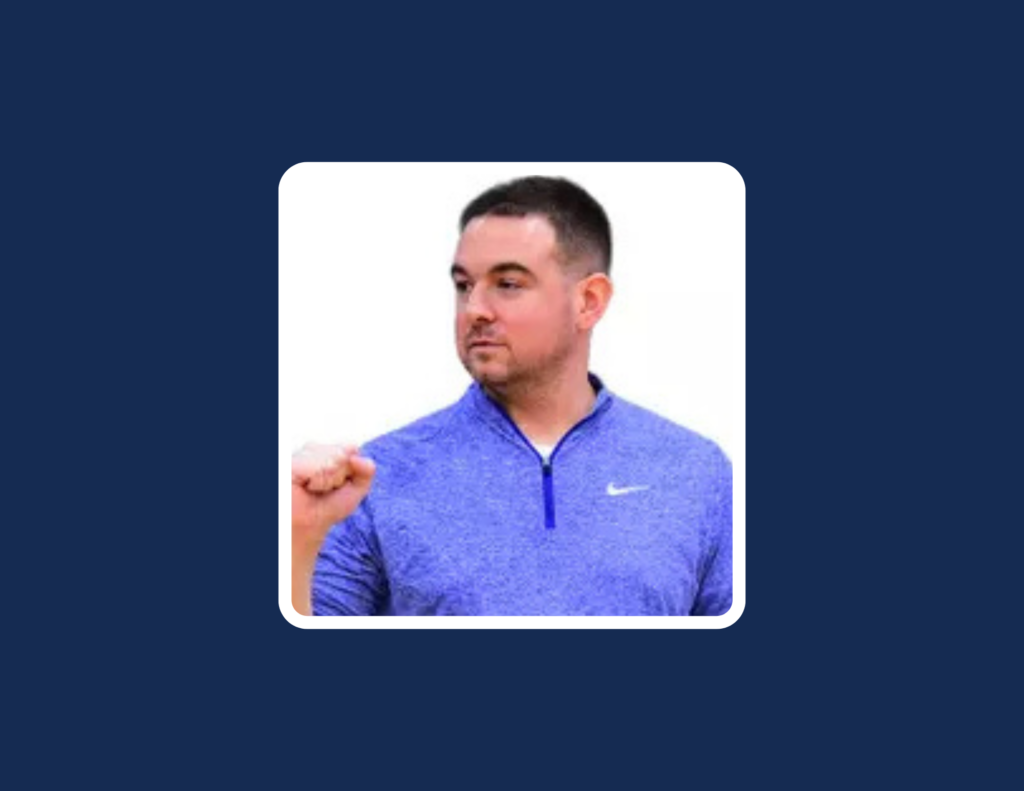
Nick Nichay is entering his first season at Dartmouth College as a Men’s Basketball Assistant Coach under Brett McConnell. Nick previously served as the Head Coach at D3 Franklin & Marshall College for seven seasons where he led the Diplomats to consecutive appearances in the NCAA Tournament in 2025 and 2026. Nichay was elevated to head coach in the spring of 2020. He served as the Interim Head Coach at the start of the 2019-20 season after spending the previous seven seasons as an assistant coach and recruiting coordinator with Franklin & Marshall.
Prior to arriving at Franklin & Marshall, Nichay spent two years as an assistant coach at the Division II level with Le Moyne College in Syracuse, N.Y. and began his coaching career with one season as a Division III assistant at Hartwick College after graduating from Rutgers where he served as a manager for 3 seasons with the Men’s Basketball Program.
On this episode Mike & Nick discuss how his lifelong love of basketball developed from playing in his driveway and listening to Nets games on the radio. Nick explains how working as a manager at Rutgers and gaining experience in every aspect of college basketball helped him build the foundation for a coaching career. Nick reflects on the mentors and opportunities at Hartwick, Le Moyne, and Franklin & Marshall that shaped his coaching philosophy and taught him the value of preparation, relationships, and consistent improvement. He discusses taking over Franklin & Marshall after a legendary coach, rebuilding the program through challenges such as COVID, and eventually returning to an assistant role at Dartmouth alongside his former college roommate, Brett McConnell. Throughout the conversation, Nick emphasizes that success comes from embracing each opportunity, caring authentically about players, and focusing on getting one percent better every day.
Follow us on Twitter and Instagram @hoopheadspod for the latest updates on episodes, guests, and events from the Hoop Heads Pod.
Make sure you’re subscribed to the Hoop Heads Pod on iTunes or wherever you get your podcasts and while you’re there please leave us a 5 star rating and review. Your ratings help your friends and coaching colleagues find the show. If you really love what you’re hearing recommend the Hoop Heads Pod to someone and get them to join you as a part of Hoop Heads Nation.
Grab pen and paper before you listen to this episode with Nick Nichay, Men’s Basketball Assistant Coach at Dartmouth College.
What We Discuss with Nick Nichay
10 Key Takeaways for Basketball Coaches
- Seek broad experience early in your career.
Nick’s time as a Rutgers manager exposed him to video, recruiting, workouts, camps, operations, and practice support. He later explained that this range helped him become a more complete coach than he might have been in a narrowly specialized role.
- Treat every responsibility as an opportunity to earn trust.
At Le Moyne, Nick described how coaches gradually gave him larger assignments because he handled smaller tasks well. Coaches should approach every job, whether preparing equipment, making recruiting calls, or building a scouting report, with the professionalism they would bring to a major responsibility.
- Use resource limitations to develop creativity and toughness.
Nick’s first coaching job at Division III Hartwick required him to do nearly everything, including recruiting, workouts, scouting, and player development. That experience taught him how to solve problems without relying on a large staff or extensive resources.
- Keep scouting information simple and usable.
Early at Franklin & Marshall, Nick prepared what he thought was an excellent but overly detailed scouting report, and Coach Glenn Robinson told him it contained too much information. The lesson was that players need to know what they can execute under pressure, not everything the coach knows about an opponent.
- Build trust through both preparation and genuine care.
Nick repeatedly emphasized that players need to see that a coach is prepared and also knows them as people. At Dartmouth, the staff called players during the summer to ask about their internships and lives, small gestures that helped demonstrate authentic investment.
- Establish a clear team identity.
During the rebuilding process at Franklin & Marshall, Nick involved the players in defining what the program would stand for. He identified connection as the team’s “secret sauce,” explaining that their unity helped them overcome deficits and perform in difficult moments.
- Focus on consistent improvement instead of dramatic changes.
Nick described himself as a “one percent better” coach who looks for small, repeatable gains each day. At Dartmouth, rather than obsessing over the program’s long NCAA tournament drought, he is focused on improving the defense and the team’s habits one day at a time.
- Delegate according to strengths, not convenience.
Nick explained that effective head coaches need assistants who are different from them and can own areas where the head coach is less strong. At Dartmouth, responsibilities are distributed across defense, player development, offense, recruiting, admissions, and operations.
- Honor a program’s tradition while allowing it to evolve.
When Nick succeeded a legendary coach at Franklin & Marshall, he viewed himself as a bridge rather than someone who needed to start over. He preserved the program’s core identity while adjusting its methods to fit new personnel, changing opponents, and the evolving game.
- Measure coaching success by player and team growth.
Nick’s greatest joy came from collective accomplishments and watching players develop, such as Kevin Nowoswiat progressing from the last player on the roster to an All-American and conference champion. Coaches should evaluate their impact not only through wins, but also through the growth, confidence, relationships, and long-term success of their players.
Like this show? Please leave us a review here — even one sentence helps! Consider including your Twitter handle so we can thank you personally!
Your first impression is everything when applying for a new coaching job. A professional coaching portfolio is the tool that highlights your coaching achievements and philosophies and, most of all, helps separate you and your abilities from the other applicants.
The key to landing a new coaching job is to demonstrate to the hiring committee your attention to detail, level of preparedness, and your professionalism. Not only does a coaching portfolio allow you to exhibit these qualities, it also allows you to present your personal philosophies on coaching, leadership, and program development in an organized manner.
The Coaching Portfolio Guide is an instructional, membership-based website that helps you develop a personalized portfolio. Each section of the portfolio guide provides detailed instructions on how to organize your portfolio in a professional manner. The guide also provides sample documents for each section of your portfolio that you can copy, modify, and add to your personal portfolio.
Aiming to go D3? The D3 Recruiting Playbook gives you a clear, step-by-step roadmap to the recruiting process – what coaches value, key milestones from early high school through application season, and how to build a target list of schools that fit your needs.
We’ll demystify researching D3 programs and how to stand out without chasing every camp or showcase.
The modules cover things like writing emails to coaches, building an effective highlight tape, using social media well, planning ID camps and visits, and navigating application strategy.
You’ll get templates, checklists, and an outreach plan to communicate confidently, learn how to compare financial packages, and avoid common missteps. By the end, you’ll have a prioritized school list and a decision framework you can use to land your best-fit opportunity.

Give With Hoops is a groundbreaking initiative that fuses basketball analytics with modern sponsorship. Built for teams who see data as opportunity, from AAU programs to college powerhouses.
By tying on-court performance directly to community and sponsor engagement, Give With Hoops help programs raise more while deepening support from those who believe in the game.
Traditional fundraising disconnects donors from the action. Sell candy bars, wash cars, beg for donations, it’s exhausting and ineffective. Players perform better when their stats matter beyond the scoreboard. That’s why Give With Hoops was created.
Give With Hoops connects game performance to community support. Every basket, rebound, and assist becomes a chance to raise funds. Transparent, exciting, and proven to raise 3x more than traditional methods.
THANKS, NICK NICHAY
If you enjoyed this episode with Nick Nichay let him know by clicking on the link below and thanking him via Twitter/X.
Click here to thank Nick Nichay via Twitter/X
Click here to let Mike & Jason know about your number one takeaway from this episode!
And if you want us to answer your questions on one of our upcoming weekly NBA episodes, drop us a line at [email protected].
TRANSCRIPT FOR NICK NICHAY – DARTMOUTH COLLEGE MEN’S BASKETBALL ASSISTANT COACH – EPISODE 1296
[00:00:00] Narrator: The Hoop Heads Podcast is brought to you by Head Start Basketball
[00:00:20] Nick Nichay: Any level, I don’t care if it’s Division I, II, or III, you have to get your guys to understand and believe what we’re doing is a great way to do this and we’re here to have success. We’re here to compete. We’re here to win. And I think that’s the stage with any new program where you’re at, building up trust, and that’s important.
[00:00:38] Mike Klinzing: Nick Nichelle is entering his first season at Dartmouth College as a men’s basketball assistant coach under Brett McConnell. Nick previously served as the head coach at D3 Franklin and Marshall College for seven seasons, where he led the Diplomats to consecutive appearances in the NCAA tournament in 2025 and 2026.
Nichelle was elevated to head coach in the spring of 2020. He previously had served as the interim head coach at the start of the 2019-20 season after spending the previous seven years as an assistant coach and recruiting coordinator with Franklin and Marshall. Prior to arriving at F&M, Nichelle spent two years as an assistant coach at the Division II level with Le Moyne College in Syracuse, New York, and he began his coaching career with one season as a Division III assistant at Hartwick College after graduating from Rutgers, where he served as a manager for three seasons with the men’s basketball program.
Ever since I founded Head Start Basketball in 1993, we’ve helped young players develop their skills, confidence, and love for the game. Now we’re partnering with coaches and athletic programs to bring the Head Start Basketball camp experience to new communities. Our camps run for five days, three hours per day, and serve boys and girls in grades one through six.
You or someone on your staff directs the on-court portion of the camp while Head Start Basketball manages registration, promotion, parent communication, T-shirts, trophies, website setup, and administration. There are no upfront camp planning headaches, and the profits are divided fifty-fifty between your program and Head Start Basketball.
If you want to reach more families or strengthen your youth basketball pipeline, or just create additional revenue for your program, visit headstartbasketball.com to explore hosting a camp.
[00:02:16] Marshall Cho: Hi, this is Marshall Cho from Meadow Park Basketball, and you’re listening to the Hoop Heads podcast.
[00:02:22] Mike Klinzing: Grab pen and paper before you listen to this episode with Nick Nichelle, men’s basketball assistant coach at Dartmouth College.
Hello and welcome to the Hoop Heads podcast. It’s Mike Klinzing here tonight without my co-host Jason Sunkel, but I am pleased to welcome in Nick Micet, assistant men’s basketball coach at Dartmouth College. Nick, welcome to the Hoop Heads pod.
[00:02:46] Nick Nichay: Thanks a lot. Appreciate you having me. Excited to be on here.
[00:02:50] Mike Klinzing: We are thrilled to have you on. Looking forward to diving into all of the interesting things that you’ve been able to do in your career, and talk a little bit about how you and Brett McConnell are going to build the program there at Dartmouth. Start by going back in time to when you were a kid. Tell me about your first experiences with the game of basketball.
What made you fall in love with it?
[00:03:08] Nick Nichay: Yeah. It was kinda the easiest game for me to play. I was the oldest of three kids, and I’m about five and a half years older than my brother that’s closest to me. So basketball was the one sport that I could go out in the driveway on my own and dribble the ball, shoot the ball.
I think like most people you watch on TV. I was… you make your own games, matching up in your head from watching some of the great players and great teams and I think that’s where it came. It was just something I could go outside, entertain myself for hours. Fell in love with the game that way.
Just was drawn to it. I it’s hard, so hard to remember, earliest memories at times, but, I just, I can remember watching those older and, I’m just approaching 40. I’m still 39 early ’90s, I can still picture flipping on the TV and seeing some of those like old highlights of, s- some of the throwback games and everything and kinda grew up right in the peak of Michael Jordan’s, era, and so he was obviously a big deal.
But another thing for me is I, I– a friend of mine their family had like partial season ticket plans to the New Jersey Nets. I grew up in North Jersey, and I remember me, my dad, my, my friend and his dad, they, they– we would go to a handful of games every year and I just I, I was one of those kids that liked to be different, so I originally went to those games rooting against the Nets thinking that was different.
Then I realized pretty quickly nobody’s rooting for them anyway in there. And I became a really diehard Nets fan over the years and fell in love with that team. And some of those Nets teams from the, the mid to late ’90s, early 2000s, I I was a crazy fan. Probably not a normal kid.
I would sit and listen to games on the radio before I had the TV package, that could watch the Nets games on SNY. And then I’d– Once I got it, I think I convinced my parents if I got straight As that they would buy it for me and started watching every game, and that’s really where I learned the game.
And between going out in the driveway and playing and watching those games is kinda my earliest memories of basketball. And, I really wasn’t a great player. I loved it, but I was a better baseball player probably. Still not good enough to play at the next level. Knew I, passion for basketball was always big for me. Like, when I had spare time, I would– that’s what I would want to do in the summers is just go down to the courts with my friend and play. And so it- it’s just always been a part of everything I’ve done. Basketball’s kinda been that, that consistent constant for me ever since I can think back to being five years old, really.
[00:05:33] Mike Klinzing: I love the idea of listening to the game on the radio. When you said that, took me back to many times where I was out on my driveway, and I can picture listening more to baseball games, ’cause in the summertime, I grew up in Cleveland, Ohio, so I wasn’t out necessarily as much during the basketball season on the driveway listening to games on the radio.
But certainly I listened to my share of basketball games in the house on the radio. But being out on the driveway just listening to, at the time, Cleveland Indians baseball, and now I could honestly say I don’t know if I’ve talked to anyone… You might be, seriously, you might be the youngest person that I’ve ever heard say that they listened to a game on the radio.
It’s a lost art that doesn’t exist anymore. Well- So it’s kinda cool to hear somebody say that they also did that, ’cause I have a lot of good memories of doing that.
[00:06:27] Nick Nichay: I think my parents must have thought I was crazy. I, and I listened to it on this weird boombox. I don’t even know what I was doing, but I had a Nerf hoop in my room, and so I’d be, running around, dunking on the Nerf hoop, listening to the game on the radio.
I think that’s what my parents were probably concerned, and they’re like, we, this is not normal for a kid. Let’s maybe just… How do we get the game so we can actually watch it on TV? ‘Cause this is scaring us a little bit.” But I don’t know. I was always just I may be wired a little differently with that
[00:06:52] Mike Klinzing: Do you think that as you’re growing up in the game and just the amount of affection you had for it, did you see yourself as a coach at that point?
Do you find that you were thinking the game like a coach, or were you just a fan/player at that point? ‘Cause I know there– Look, there are– I, I always feel like there’s two paths to coaching, and when I’m talking to guys that you have the person who was a player, loved the game as a player. Eventually, at some point, their playing career stops, whether it’s they get done and they don’t play in college, whether they get injured, whether they have a long career, and then all of a sudden, the game is gone.
And then they’re like, “What? There’s no more basketball? Now I have to coach.” And then there’s other guys who from the time they’re, like, seven years old, they’re drawing up plays on a napkin, and they’re the quarterback in football scratching out stuff with a stick in the huddle and that kind of thing.
So I don’t know if either one of those paths resonates more with you.
[00:07:50] Nick Nichay: Yeah, and I as any players or families or rec- recruits will know, and I can go off on tangents as I start explaining stuff, so I apologize ahead of time. But kinda what goes through my head with that, yeah, I think I was I, I always was drawn to the s-strategic side of the game.
I, I can remember being a little kid, another weird thing I would do, I don’t know if you remember this. I’m going to seem like I’m way older than I am probably. If you remember those Street & Smith’s preview magazines that would come out. Oh, yeah. So I remember buy– Like, here’s just an example. I remember buying one one year, and in it, I thought it was so cool because they had, quote, key plays teams would run.
There was, like, a section with one play. I thought that was the coolest thing. I was like, “Oh, they diagrammed these plays,” and so now I’m trying to draw up my own plays. I w- there is an element of I always was drawn to that. I don’t think, as a young kid, you think, you’re going to coach.
As I was still… I never was somebody who honestly, though, thought “Oh, I’m going to play.” I honestly looked at it like I thought playing in college was even wow, these are- that’s like almost impossible in NBA, forget about it. But it’s– So I think there’s an element where it’s like you think how do you stay involved with the game as you get older?
And I ended up originally in college thinking, when I went to college, I wasn’t good enough to play. I wanted to go to a big state school. I actually went to University of Maryland originally before transferring into Rutgers, but I knew I wanted to stay involved with sports, so I experimented with like journalism, sports broadcasting, but also in the back of my mind, I think I was always more drawn to the competition and coaching high school and teaching high school.
So I was like trying to wrestle with that. And I think I took one journalism course at Maryland and I’m like, “This is not it. That’s just not for me.” And I tried really hard to, to… I actually tried to apply to be a s- I had found out there’s these student manager positions. And so I thought, “Okay, maybe this is a way to be around the game and learn and potentially go on the path of, being a history teacher and coaching high school.”
And I just couldn’t get an opportunity with the Maryland team. Noth-nothing against them, but it honestly blessing in disguise because the move to Rutgers quite literally changed, probably changed my life because of the relationships and connections I made. And I had a connection to that staff through a friend.
Just being back– And also I think my parents appreciated in-state tuition transferring back home, and I grew up a Rutgers fan too and going to Rutgers football games. So it, it worked out great. Rutgers at that time was in, in some transition. I got an opportunity there and the rest is history.
And it was pretty quickly at that point, once I got involved with the Rutgers program that I knew I was all in, I was going to be all in on trying to coach. And really that’s where my, love for the college game kicked in. ‘Cause I grew up, like I mentioned, watching NBA. I wa- I, I’d watch Rutgers and Seton Hall, but I was definitely more attached to the NBA game.
But being around, Rutgers and college basketball on a daily basis, that’s when the itch kinda started. And it’s and I’m… I had a chip on my shoulder ’cause I wasn’t as good of a player as I wanted to be, I think. And so there was an element of it’s almost like getting a second chance at trying to do something in the game and making a career out of it.
And so I just kinda dove, dove in with everything I got
[00:10:54] Mike Klinzing: It’s so funny, Nick. I’ve told this story before on the podcast, but to me, one of the things that I never realized while I was playing was the connection between being a manager and the coaching profession. While I was playing, it literally never dawned on me, ever, that guys who were the managers for our team had an interest in coaching.
And I know there were at least three of the guys that over the course of my time that ended up in coaching at the high school level, and it never, it just never crossed my mind. I was like, “Oh, these guys, m- they just must like basketball. They want to hang around the players,” and never really paying attention to the fact that the managers are hanging around in the coach’s office.
The managers, when we’re on road trips, are hanging out with, not the players, they’re hanging out with the coaches. And it never really crossed my mind that, hey, this is a, an avenue into college coaching. And obviously, you saw that and knew that and took advantage of it. And it’s just interesting to me how many guys that are in the profession that is the route that they took to get them into college coaching.
And so when I think about guys who have had this experience, it always seems like there’s one coach on the staff that you end up bonding with or that kinda ends up taking you under their wing. Was there somebody at Rutgers that was kinda your guy that looked out for you, that you spent the most time with?
[00:12:29] Nick Nichay: I don’t know. Not really. It was different. It was like depending on– I was someone who wanted to get a really I think even at that age I knew I wanted a, a diverse range of s- a skill set. I wanted to be able to– I knew I needed a, I couldn’t hang my hat on a playing resume, so it’s like I better know how to do video.
I better know how to get on the floor and do workouts. I better know how to do recruiting mailers at the time, and how to visits and camp and like I was like, I need a skill set in everything because, I just, I was hungry to learn, and I just was so excited with the opportunity. There’s a lot of great coaches through the years on those staffs.
I was there three years ’cause I had missed a year from being at Maryland for my first year. And it, depending on the pocket of what it was, I feel like there was a different coach that kinda gave me an opportunity and kinda threw me to the fire. From the more operational side, Dennis Gregory the, director of basketball operations, he kinda was the one in charge of us, the managers.
And so from th-that side of the game, I learned a lot there. Jimmy Carr w-was big in the recruiting. I feel like he always had something for us to do recruiting. Darren Savino I, I remember being a manager just rebounding during his morning workouts with a lot of the big men. And Craig Carter, was a guy that was great to us and kinda got us involved in different areas, as managers.
He was very v- accessible for us and we had some great video guys over the years and just tons of people, on that Rutgers staff that were great. Ryan Kruger was a guy that as, he was there as working and really allowed he would even do chalk talk sessions and stuff wi-with and answer questions.
And so it, there was a lot of people there that, had influence. And then the managers themselves, like the guys who were a year ahead of me, one of which who was the head manager was Brett McConnell, who’s, we were college roommates and he was, we were managers together and th-those guys, him he looked out for me, as a year ahead and kinda showed me the ropes on things.
So it’s a lot that went into the experience and you’re kinda like you’re learning and without really realizing you’re learning. You’re just trying to soak up a lot and you learn what to do, what not to do, it’s it’s just it’s a whole lot and for somebody who, I think for me that, knew I really wanted this and it was like finally something that I feel like in the game I could be good, I could be pretty good at too.
So there is a level of you have to believe in yourself a little bit there. Probably s- a level of irrational confidence in every manager I think is clueless. You think your career’s going to go one way and then the real world hits and you don’t hear back on about 300 resumes and letters.
But it was a great experience for… Everybody treated me great there in those years and really just gave me opportunity and that’s all I wanted.
[00:15:13] Mike Klinzing: Was there one area that you really loved and dove into right from the very beginning that as soon as you got a, a taste of it, you were like, “Oh man I can’t get enough of this particular part of what a college coach does”?
[00:15:27] Nick Nichay: I, I think that’s what it is about the college game I was drawn to, is I did like the all-around, it was– it, it– there were so many different facets to it. And yeah I really did. It sounds crazy. Like there– believe me, there were long days that as a manager you do not enjoy, and that’s part of it.
But I think I understood that, and I think a lot of us, I look at the managers like Brett and we had another another guy who was a year ahead who was the head manager, my junior year, Tom Wagenblast, who we’re still great friends to this day. And th-those guys really led by example and put in the work, and so I saw…
it was like I had to chase them a little bit. And so it was a great… I was, I’m, I’ve been a be- a beneficiary of right place, right time, right people so many times in my, college basketball experiences. Yeah, I loved it all. I was drawn more, like I liked being on the court.
I liked helping out at practice. That, that part of it was enjoyable. I liked getting shots up before practice, after practice, once done rebounding and everything else. Like I did love to play. I liked being on the court. I didn’t mind… I thought the recruiting was cool. I thought the visits were cool.
I thought I was really interested in learning the camps ’cause I knew the operational side I had to be really good ’cause that’s your foot in the door in a lot of ways, so like I, I really tried to be intentional on learning that. And we had an unbelievable ops guy in, in Dennis Gregory, who I mentioned, who I thought, we were a, a well-oiled machine with the way things ran there.
Yeah, I was just… I loved it all. I loved being around a team. I loved the college level. The, at the time Rutgers was in the Big East. I would be pinching myself sometimes before games. It’s you grow up watching some of these legendary coaches, and then you’re staring down the other sideline and it’s like, “Oh wow there’s Jim Calhoun.”
It’s like it, it’s pretty surreal.
[00:17:08] Mike Klinzing: What was the relationship like between you and the other managers and the players?
[00:17:13] Nick Nichay: Yeah, it was good. You’re– As a manager, you’re in a very weird spot because you’re around the coaches a ton, especially the guys that are really… there, there’s levels to it.
There were managers that were there every day. When you’re not in class, you’re there, and you’re helping, you’re learning. And there’s other guys who are more like specialists. It’s like, “Oh, here’s a guy who can drive the players. This guy’s good on the court. This guy likes the equipment room.” And then there was others that, that were probably a little more serious and intentional with wanting a career in coaching.
But so you’re around the coaches a lot, but the players are your age. You’re a college kid still. And so it was… Honestly, for me, it was, I didn’t it wasn’t something that I really thought about. It was just kinda natural. But you kinda know you’ve have to be sensitive to if you hear someone in the office, you’re not like…
they’re talking about some stuff with dealing with playing time and different things and what’s going on, and you might overhear it. And so you really have to separate yourself, I think. And I think most managers, to be honest, are understanding of that and pretty good with it. But I would say I was closest, to be honest, not surprisingly, with the other managers.
That, that would be, we were our, we had a little crew, and some of us were roommates, and so that, that’s kinda who we stuck with the most time.
[00:18:22] Mike Klinzing: Tell me about the first job search when you graduate. I know what the process is like in sending out millions of emails. I’ll give you my own personal story, Nick.
So when I graduated in ’92, at that time, in the ’91, ’92 season, there were two graduate assistant positions at every school. And most schools had those graduate assistant positions staggered. So one graduate assistant was finishing, and then the other guy had a year coming back, a year left. So when I graduated, I thought I was one of the guys that I described earlier who I really, coaching was never on my radar at all.
Never thought about being a coach for even one second. But then when my playing career was over and I’m like Want me to get a real job and go and do work?” I’m like, “I don’t think I want to do that.” So I started thinking about, “All right, how can I stay in the game in coaching?” And so I ended up sending out– Again, this was on a dot matrix printer, where the computer monitor was like– We– I think we had a RadioShack computer that was my roommate’s.
It had the green lettering and the black screen, and just typing out these letters and trying to send them off, and I got tons of responses back of obviously just no, and most of them with the explanation of, “Even if we wanted to hire you, we can’t because a position was cut and we have somebody coming back.”
And it’s funny, I think about this all the time, that I just eventually then ended up going back home and trying to figure out what I was going to do, and applied for some regular jobs, and somebody offered me a job. Both my parents, my dad was a professor at Cleveland State, my mom was an elementary school teacher.
And so I got offered this job the summer after I graduated to work for Nestle and be like a salesman or whatever, and they’re like, “Yeah, you’ll start on July 1st.” And I was like… I went home and I told my dad, I’m like, “They want me to put on a suit and go to work in July?” I had never seen anybody work in the summer ’cause both my parents were off.
And as soon as I heard that, I’m like, “Ah, I’m not going to do that,” and hit college coaching just because I couldn’t get a job. So I ended up going back to school to become a teacher, and then coached in high school for 15 years before I had kids and started chasing my own kids around. But it’s just interesting how The luck of that year for me ended up being, good luck, bad luck, however you want to look at it, but my life certainly went a, would’ve went a completely different direction had I gotten into college coaching.
So just tell me about your experience writing all those letters and emails and trying to get your word, get the word out that you were looking for a job.
[00:20:54] Nick Nichay: Yeah, you get humbled real fast. And it’s, it’s– I’m thinking at that time, so if you go back, I graduated 2009, so at that time, the staff dynamics were, at the Division I level, which is all I knew.
I didn’t know what Division III was. I didn’t know what Division II was, and so when I was looking at it, it’s like, okay g- grad assistance or video coordinator or go down to a lower level. Y- as a manager in the Big East, you’re, you were such idiots.
It’s like, y- you just don’t have any idea what’s going on or how busy these– Even though you’re around it, you have no idea. But- … so you know I, I was very meticulous and, I really poured a lot into preparing what I thought was going to be this great resume.
I had stuff of everything from drills that I’ve seen and liked to a video edit that they let me– the video guy at the time let me use the equipment, so I put together a sample video edit of, I forget who. I think I might have done for UConn or something, and I had a- all different materials. A ha– I would have letters and I would personalize the letters and sign them and send them out and personally mail them to, again you’re an idiot at the time to these head coaches like they have time for that.
But sending out, it, it really was probably, I don’t know how many I probably sent out, mailed out, but this is a whole portfolio of like probably I’d say 150 schools or so. And and then I was sending emails as well. And I’m trying to remember. I think I was actually emailing somehow, I don’t even know how, I got a hold of like some like an NBA directory.
Like I, I had emails for like video coordinators in the NBA, and so I was hitting them up thinking “Okay, maybe that’s a route I could be interested in.” And I didn’t really hear back from anybody, and then I’m, like, starting to panic, and so now I’m expanding my search. And this is after– I probably started doing that in, typical time, like before the Final Four time and, a little bit after that, before graduation.
And I then started to expand my search and then started emailing and mailing to some Division IIs, some Division IIIs. And then being from Jersey, I was starting to communicate a little bit with some, some DIIIs in Jersey where I could live at home and maybe volunteer. And so again, I really didn’t hear back from any people.
I think I heard back from one or two NBA programs that did a phone interview with me. And then most of the colleges are send– you know, they send you back that, which you can tell now, that generic letter that secretary probably has and it’s– there were a few that– and I, there were some coaches that actually did even personally call, which I really respected, and some of those guys I, have a lot of respect for them to this day ’cause I can remember that they took the time, and looking back now it’s actually pr- pretty incredible that they would take two, three minutes just to call some random manager from Rutgers.
So I appreciated that, but really nothing was working and finally I got a more legitimate response from Le Moyne College. Steve Evans was the head coach there and he had a grad assistant spot open and wanted me to interview. And so I went up and interviewed. It was in the summer ’cause I remember they were running camps, and interviewed there and, met him, met his assistant coach, Gallagher Driscoll.
They were great. I thought things went well. And he called me, called me back not long after that and had said that they’re going with somebody else. And so obviously disappointing ’cause I was pretty excited about that spot. Really thought it was a great place. And and, with that, I’m starting to get beat down a little more.
I think I then interviewed at, and rightfully so did they pass on me because the guy they hired was Danny Lawson, who’s now had experience in the league and is now head coach of Bentley. They made a great decision with that. And I I think I interviewed at like Rutgers-Newark for a potential volunteer spot, but then I remember it was like August, and I’m at my best friend’s house back home in Denville, and we’re just hanging out that day.
I think we were going to like just hang out, typical, 22-year-old, like barbecue, have some people over. And I get this random phone call, and it’s this, this guy picks up. He says, “Hey, this is Todd McGinnis head coach at Hartwick College. The guys at Le Moyne recommended you to me.
I’m looking for an assistant.” And so I’m just excited and, so like I’m– He’s like, “Do you want to come up? Would you be interested in coming up for interview?” I had no idea. I’m like yeah. Oh, yeah.” And I remember like quickly researching. I’m like, “Who is this guy? Where am I going?
Where is Hartwick College?” And I drove up to Hartwick I think later that week and interviewed with Todd and the re- he, you know– I, I felt like it went well, but again, I didn’t want to get my hopes up and but he did offer me the job and I took it. But, it’s like all that, but it, it– the thing the interview with Le Moyne, even though it didn’t produce the job, it kinda led to the job, and it was my first introduction of just like who you know and right place, right time, and I worked for Todd w- and he’s been a, a great friend and mentor even to this day, and I was with him for nine months, and then the Le Moyne spot opened up again, and he, kinda got wind of it, and he’s I was enjoying working for him, and I had to feel like I need to be loyal.
And he’s like, “You need to go.” He’s like, “The job’s open. You’re doing great.” He’s like, “You should take that job.” And and then some of those connections actually then led to two years later how I landed at Franklin & Marshall
[00:26:18] Mike Klinzing: I got to know Todd a little bit just from my son. He was playing at Ohio Wesleyan, and he’ll be a junior there.
And so while he was trying to make his decision, obviously we’re here in Cleveland and Todd’s at Case, so had a opportunity to have him on the podcast and also just to be able to interact with him a little bit through the recruitment of my son and just really liked him. Great guy, great coach.
Just one of those people that was easy to be around, easy to talk to, and I’m sure he made a great boss. And again, especially for your first, quote-unquote, real boss, right? To be able to learn under someone who’s gone on and had the kind of success that he’s had and I’m guessing he was a lot of fun to work with just based on the limited interaction that I had with him.
He seems like he’d be a fun guy to sit in the coach’s office with and talk to
[00:27:01] Nick Nichay: Yeah. Just imagine I’m just out of college, he’s 28 years old and a first-time head coach, so it was a fun, it was a fun office for sure. But he’s– he honestly really working for him and I think you’ve met him, so you know, he, he’s a guy he’ll have a good time, he’ll joke around.
But I’ll tell you what he’s a very underrated and very he’s a humble guy, so he doesn’t really… if you start talking, he’s not somebody who does that. I think he’s confident, but he’s not one, he’s had a unbelievable success. Hartwick is a very difficult job, and he was able to go to multiple NCAA tournaments there.
Case Western had, in the UAA had never w- won the conference before, and he goes and win- w- wins the UAA at Case Western Reserve. So j- just unbelievable success and some very difficult jobs. And when I worked for him, he was just– he made the game fun. It was probably the most fun I ever had that first year coaching those guys.
We had an un- awesome group of kids that we worked with coached. And it was just, it was a lot of fun, but it was a build, it was a rebuild for that year. But he was a relentless recruiter, really taught me, ‘Cause I had no idea what Division III was, or how it operated or worked.
It’s him and it’s me and it’s like we’re doing… he had me, he threw me to the fire, credit to him. It’s I remember working for him, he’s like, “We’re going to make calls.” This was back in the day of go in the office and make calls from your office, and we would from probably 7:00 to 9:30 six nights a week we’re banging out phone calls, calling kids and recruits.
He put a lot of work into the recruiting. He’s a great recruiter, great evaluator. But at a place like Hartwick, to get six, seven guys that say they want to come to Hartwick, the reality is you needed to recruit due to the competition and other factors. You have to recruit a whole lot of kids.
And he was in- incred- really helped to build some of my work ethic of and, but also taught me you can ba- there can be balance. You can have fun while you’re doing this too. And it was a great year for me extremely impactful and incredibly grateful because he was the first person to really take a chance on me.
Without that, I, without him offering that job, I don’t know where I end up. I could have had a great career path, maybe figure it out, but that connection has led to pretty much my, my whole career down the line up until this point where the, the main connection was Brett. But honestly, that r- I needed to build that resume to probably have an opportunity to work for Brett again with him getting this opportunity.
So yeah, extremely influential, learned a ton unbelievable person to work for incr- just incredible like you work, but he also had a way of like making me more confident and better that like I could do it, like trusting me with different things. Yeah, it was great
[00:29:40] Mike Klinzing: And obviously kudos to him for encouraging you to take that next job, right?
‘Cause that doesn’t necessarily always have to be the case, right? That, “Hey, you should take this job.” So talk a little about the experience at Le Moyne.
[00:29:54] Nick Nichay: Yeah. Maybe he just didn’t want me there anymore. Maybe after nine months- There you go … he says, “I have to get somebody new,” i’ve had enough.
[00:29:59] Mike Klinzing: I’ve had enough of this guy.
[00:30:01] Nick Nichay: Yeah, had enough of me. But yeah, so the Le Moyne experience, obviously different level going from D III, and like I said, I, I just felt like I learned D III and it was, y- cra- with the recruiting, like what, how do I identify it, and, I could tell you crazy rec- recruiting story with Hart with the one player that we helped, I had recruited there.
But Le Moyne was back at scholarship level and it just was… when you start looking at the preparation, I think from Steve Evans he’d been the head coach at Le Moyne for a number of years. Prior to that, he had spent time as Division I assistant in some really good programs and for some really good coaches.
Really one of the biggest things I took there was just his he was incredibly prepared for practice, for ca- whatever it was. It just great preparation, very thoughtful. Really put the time in to make sure that this was the, we’re maximizing what we’re doing to get this team better and ready to play.
And another guy that, a- again, you don’t know when you’re in it, but another guy that really empowered me basically to “Look, we hired you for a reason. You’re going to do some recruiting, you’re going to do some scouts. You’re going to do, you’re going to help with this. You’re going to help me with camps.”
Like he, he wasn’t afraid to… I think you have to build that trust. You have to do a great job with the tasks given to earn, trust for bigger tasks, and like I understood that. I was a manager. I think that’s why some people like hiring managers, we’re used to doing the jobs nobody wants to do, and you just treat it like it’s the best job you got.
And the, it, it was a great experience. They were a great level. The Northeast Tenna was a great league. At the time there’s a lot of schools that have jumped levels now, including Le Moyne, and have had success jumping levels. You look at, Merrimack and Stonehill and some of these programs, like it was a really fun league to compete in.
And so definitely big part of my growth. I didn’t love taking classes along with it. I, I thought, “I’m done with school now I’m back in the classroom.” But, at that time, I hadn’t made too much money in this coaching, so it’s like I better start working towards, I better have a fallback with maybe teaching and coaching if this college thing doesn’t work out.
[00:32:00] Mike Klinzing: Yeah, I think that’s one of the things that everybody struggles with a little bit internally, right? When you start out and you’re at a small school, and for anybody who’s in the coaching profession, you know that y- you’re not starting out making huge money, and in some cases, a lot of guys start out making no money, and y- you’re having to really grind and figure out, “Do I love this enough to go through the process of having a number of years in my career where I’m not making money?”
Especially when you look at comparatively to your peers. If you have friends and people that you graduated from college with, and you’re looking at them, and they got real jobs, and they got real apartments and real stuff, and you’re living in somebody’s basement on a mattress and just spending all your time in a coach’s office, it really has to become, I think, a, a labor of love in order for you to be able to do that.
And I think guys do go through that process that sounds like you were going through of, “Hey I love what I’m doing. Is this… Can I really make this, make a go of it? Can I make this a career? Can I make this, this a life and make it work?” And so I think guys do go through that process as they start out early in their career.
And for you, I think one of the things that is interesting because on the managerial side, as you said, the only thing you knew was Division I, and then you go and you start out in Division III. And one of the things that always is interesting to me, Nick, is just guys who start out at the Division III level usually express something similar to what you did, which is, “I got to do everything, and as a result, I feel like I’m a much more well-rounded coach, and I have an understanding of the operations side.
I have an understanding of the fundraising side. I have an understanding of what goes on the floor. I’ve got an understanding of the video,” because I had to do all those things as a Division III assistant. Whereas sometimes you start out Division I, and you maybe are more tracked into one particular area, and you don’t get the same experience with all that stuff.
And so I- I’m guessing that even though it may not have gone exactly the way you wanted it to, that in the long run, I bet you would say it’s beneficial kind of the way your career started
[00:34:02] Nick Nichay: Yeah it’s much more comforting to know where I’m at now. Putting that time in, at the time you’re scared “Is this going to work?”
But what I would say is and what I didn’t– couldn’t have appreciated or known at the time, going to work Division III as my first job out c- there’s nothing better. Especially when you’re a manager, like you’re, y- you’re kinda able to do e- be around everything but not really do anything in a sense.
Going Division III, like I think if I had stayed Division I, and let’s say I was a video coordinator, it would’ve been cool, it would’ve been great. Who knows who you meet? I think it’s a who you know business, so yeah, path to Division I if that’s the goal. But going Division III threw me to the fire on like I ran workouts, I did scouts, I was coaching on the floor, I was doing recruiting, making the calls, make– doing the trips, working on evaluations.
And you– It’s like anything, you think you know what you’re going to do, but once you’re thrown to the fire, and you’ve actually have to do it, and produce, and get results, and you’re responsible, like I was responsible to Todd for helping him try and flip that program around and get it built up, like it’s hard.
And you start learning the nuances and why diff- there’s different challenges at different schools. And but that experience, it helps you gain your coaching voice. It’s like getting reps at anything. So had I been a video coordinator, I’m not getting reps at recruiting calls.
I’m not getting reps at getting on the floor and running workouts with players. I’m not getting reps at running a drill in practice, or building a scout, or cutting up video, maybe cutting up video, right? But it’s, it was a really r- good experience. And it made me– it accelerates the process because of how much you have to learn and do, and I think you learn to appreciate things.
To me, it was normal the way we traveled on the road, and then it’s like I go, I’m like, “Man, I worked in Division III so many years. My g- if I could just give our guys one road trip like we experienced at Rutgers, flying charter and staying in the nicest hotels and eating at a great steakhouse and having an omelet station in the ho-” our guys, their head they’d be like, “This is the greatest thing of all time.”
And so y-you start to learn. And but that’s what was so cool working D III is despite all that, and I loved my time at Rutgers don’t get me wrong. But I’m not kidding you, that first year at Hartwick, to that point, I was like, “This is the most fun I’ve had around basketball.” And we weren’t even that good that year.
That was year one of trying to build it back up. But we just our guys played hard. We had fun together every day on the court. I loved working for Todd there. And but it made me such a better coach than if I had just stayed as a specialist or been one of 10 people on a staff.
It’s so valuable. And then even up to Division II, it was really, it was, head coach, assistant coach, grad assistant. And the way Coach Evans approach it is like you’re an assistant coach. You’re not just here to, do laundry or do video. You’re going to recruit, you’re going to do– And I appreciated that so much, knowing that wasn’t the case for everybody at certain levels.
So I-I’ve been really lucky with, kinda the people that I’ve had to learn from, and I’ve just worked for good people just good people. And I, I think I’ve tried to not forget where I came from, and so I’m, I hope that I had experience as a head coach.
I wanted to, I wanted the same experience for my assistants that I had, for the guys I worked for
[00:37:07] Mike Klinzing: I think what’s cool about what you just said, and it comes across loud and clear, is that at every place where you’re at, that you can make it great, whether it’s Division III, whether it’s Division II, whether it’s Division I, wherever it is that you are.
If you have the right people in place, both your staff and then the kids that you’re recruiting that you have as part of your program, you can have the greatest career wherever it is that you’re going to be at, whatever level, and get to do all the things that you love to do as a coach. And I think sometimes guys who are starting out do get caught up in, what level am I at?
What’s my title? And I think that ultimately it, what you want to do is coach, and there’s so many different facets to what a coach does, and today you can throw on a bunch of other things that five or 10 years ago nobody would’ve ever envisioned coaches at the college level having to do a- and manage and all the things that go along with the, the current era of college basketball that we’re in.
But what I got from what you were saying is, “Hey, it di- it didn’t matter if I was at Rutgers or I was at Hartwick or I was at Le Moyne or Dartmouth or Franklin.” Where- wherever, whatever your stop is, that’s where it’s at, and you’re doing the best job that you can, and you’re enjoying the people that you’re working with, and that’s what it’s all about, and you just keep growing as a coach and get opportunities as, as you go along by building r- your relationships with the, the people that are part of your staff.
So let’s go to your next stop, which is a long one, and you go through a lot of different roles there at Franklin and Marshall. So let’s talk about the time as an assistant first, and then how the opportunity to kinda get the interim job and then get the head coaching job and what that transition was like for you going from assistant to head coach.
[00:38:53] Nick Nichay: So yeah, the F&M thing came about through, again, relationships, Brian Murphy was the assistant at Franklin & Marshall. He was leaving, and this was late again, probably like August. And he was in a, friends with Todd and who Todd worked for at Case Western, Sean McDonough. And Mc- and so I remember, I was getting done with the GA, and so I’m getting ready for anything.
And I was looking at certain schools in Jersey to maybe do like volunteer ops or something, just to stay in the game and maybe try to go up another level again. And then Todd calls me one day and is like, “Hey, would you be interested in the assistant spot at Franklin & Marshall?” And now I kinda know the D3 world, and so I’m not an idiot.
Like again, with … i’m like, “This is not the time to joke around or mess with me. I’m not sure.” And he’s like, “No.” He’s like, “I’m serious.” He’s like, “Sean called me, he said there’s an opening. Ryan told him.” He’s like, “If you’re interested, I’ll… Your name’s come up, like we’ve recommended you.”
And I said, “Yeah, no.” And Coach Robinson called. Vi- phone call went well enough for him to bring me up on an interview. I remember going to interview. I was extremely nervous. This is a guy who’s the winningest coach in D3 history, and I’m like, “Man, would this be a unbelievable opportunity?”
And interview I thought went pretty well. We’re both Eagles fans, so I’m like, I got that going for me. Coach is a big Eagles fan and he calls and he’s like I remember picking up the call and he starts talking about salary and health benefits, and I’m just like, first of all, I’ve never made a salary to this point, and so I’m like, “Coach, are you Offering me the job, and he’s “Yeah I wanted to lay it out first.” And I’m like, “Coach, I’ll be there tomorrow.” “Pay me whatever you want to pay me. And I, I’m 25, I’m healthy, I don’t need health insurance, whatever.” So yeah I go there being an assistant again, like what an opportunity to work for somebody who, Coach Robinson, just an absolute legend.
And it opened my eyes immediately. I’m nervous and it’s like if– This guy’s had a lot of success, so if we’re not any good, we know what the variable is, right? So hopefully I don’t screw this up for him. And he– I, I just remember being so nervous for the first practice, make sure I’m on top of it for drills and what we’re doing and and the first scouting report I did, I remember I thought I did the best scout ever.
And I like turned it into him. He’s like, “No, this is not good.” He’s like, “This is too much.” And I’m like, “Oh, my God.” He’s like, “The players are never going to remember all this.” He’s like, “This is great,” he’s like, “but we need to cut this down.” And so I’m like, “Oh, my God.” So now– And I’ll tell you, it’s actually, for anyone that does it, coaches know, it’s actually harder at times to be more concise with your scout than to just- Sure
throw information out there. And, but his point was it’s like and I’ve taken this to this day, I’m such a believer in it less is more with some of that. And it’s like it doesn’t matter what we know, it’s what they can do under pressure in the biggest moments. And I remember practices that whole year, and we actually had– We’re– The team was coming off a great year, but Lu had just lost an All-American point guard, some other great players.
We were still going to be a good team, but it was like, there was a lot of question marks for who’s stepping into roles. And I remember Getting through practice leading into the first game and thinking, “Man, are we ready?” ‘Cause it didn’t feel like we covered as much as I would’ve thought we would’ve.
And we ended up starting that year, I think we were like undefeated for the first– I think we were like 10 and 0, 11 and 0, and it’s we were rolling. And it just was a great lesson for me on keep the main things the main thing and get guys to play really hard with intelligence and playing together.
And coach was just an unbelievable motivator saw the game clearly, like we had a clear identity. He had a lot of practice, had a lot of success. We had great players and it, it was just amazing. It was amazing how much he locked in on every game. Like I, I can’t– I think people think I’m exaggerating or joking, but what…
Didn’t matter who we were playing, what time of year, the same intentional focus on practice. His energy level and his level of focus was the same for every p- every opponent, and practice was sacred for him. And so I’ve tried to steal some of that, and obviously I took over for him there but he was just a unbelievable influence on getting me to– Again, that was like the ultimate, like I was starting to gain confidence, like, “Hey, maybe I can do this.”
When I worked for him and earned his trust and it was like, “You’re going to do the scouts, you’re going to do this,” it was like, “
[00:43:07] Narrator: Wow,”
[00:43:08] Nick Nichay: This guy that was like I might be able to do this. Just a such a cool experience for me and we had a lot of success, there and it was a lot of fun.
That, that was… It’s fun to win, and when you’re in a program that because of what he has built, like kind of the bones of the program are so strong that we just… it was a program. And learned so much about what goes into maintaining, that, that kind of program and what goes into it and really it’s nothing complicated.
It’s– That, that’s the thing that hit me. It was simple things done really well, really consistently to the best of your ability and making sure everybody’s on board. And he’s an all, y- all-time great to me should be in Hall of Fame. I’m not– He’s been in– My time working for him, he’s inducted in pretty much every other Hall of Fame you can imagine that he’s eligible for.
But yeah, just really cool experience being an assistant there. And then, that led into the, a bunch of different hats being worn for a couple years.
[00:44:03] Mike Klinzing: So what does that… H-how is it- Following a guy who has had that much success that you’ve worked for, that you’ve had a tremendous amount of respect for, and then when you take the program over, obviously you and him are different.
You have some different thoughts, but yet he’s had so much success that how do you go about treading that line of, “I got some things that I want to implement that I think can take us to an even higher level,” and yet not feel like you’re distancing yourself from what somebody who had so much success that was integral in your development as a coach?
How do you walk that line when you take over the program?
[00:44:52] Nick Nichay: Yeah I actually it, it was a time too where there was a couple seasons where I actually had served as interim for different pockets, and so it was almost like a trial run, at least for the games and some of the practices.
It has n- it, it still is not even close to like you’re running the program now. But and I was pretty– I, after seven years, I was starting to get more involved with kinda the totality of everything, and I kinda r- right from the jump was really heavily involved with the recruiting, which helped obviously with developing that type of connection and relationships with the players and families and everything.
But I did not… A lot of people there’s that stuff to oh, never follow the person with success or don’t follow a legend or… I, I actually never could understand. I do understand. It’s not that I don’t understand it, but I looked at it like this is a great place to be successful. I’ve been here seven years.
I, I understand. I know a ton of the people here. I know these players. I know this conference. And I thought it was an unbelievable opportunity, and it’s one that I, try to explain to people. We are, so much of what we did rubbed off on me. Of course, I had certain things that I would, like every assistant, you do it differently, and as a head coach, you get to try it.
But I, I really think what makes F&M special, and I wanted to honor is you honor the tradition and we have such great alumni there. You honor the tradition, and I think the core identity of the program was so strong as like we’re going to build off this, and we’ll tweak some things, and the game changes, and your personnel changes, and the conference opponents change.
But I, to me it was important to build on the foundation and almost be a bridge. To me, it was like I’m a bridge that makes the most sense for this program because I worked for Coach, and I know this program. I know these players. I know this community. And so it’s a- again, I was probably beneficiary of right place, right time.
When I officially got the job, it was basically right around the COVID time, and like, when I was interviewing, this was a time of great uncertainty for higher education and institutions. I don’t think they wanted, they weren’t traveling people to interview on campus.
They weren’t spending a ton of money. The salary wasn’t you know, what was going to attract a certain candidate pool. I really think it was right place, right time for me, ’cause I think at a different time, especially because for people that follow the program or knew, like we, we were for, by F&M standards, not playing very well at that time.
So it would’ve been real easy to say, “This guy can’t cut it. He had a chance as an interim. We’re going in a different direction.” And fortunately, I, th- I think through the interview and really I think people, some of the alums and other people that helped got me that opportunity and then it was like, boom COVID hit.
That first year, like that’s where I felt so prepared. Like my first year, the amount of things that went on, like COVID was just one piece of it. Like there was other things that, not to get in the weeds with, but the– like there were some things going on around campus. There was a really serious health scare with one of our players on my first day on the job, where I found myself in the hospital that night with it.
Like it was like everything hitting at once, not to mention being a first year head coach at 30, in my early 30s, survived that and we had a team of, we during COVID some schools, their players sat out. Our players didn’t. They still went to class. So by the time we returned to the court, we pretty much were a brand new team.
Like it was like a whole, like nine of our 10 rotational players were gone. So you have a new coach, guys who’ve never played college basketball in a league that’s pretty darn good, and we took our lumps early on and it, we had to build it back up. But I’ll tell you the first year, Because we were struggling, it gave me an opportunity to hit the reset button and rebuild and really think about what matters.
And and we really, with the COVID time, we couldn’t play, we really did a deep dive on resetting our the culture of the program, I guess you would say, but what are we going to be about? What’s our identity? And I put it on the players, and I’m like, I knew these, these are smart kids at Franklin & Marshall.
I knew they were going to come up with something good. And what they came up with was something that we just, as we started building with success each year, we leaned into more, and I was really blessed with great leaders and great players that had influence to help it get back up to where we eventually, were able to get back to win the conference again, but th- that struggle was, again, it’s kinda like that going back to when I, my first job was a D3 job and not staying. Like I if things were just rolling I don’t know if I’m as good of a coach as I am right now because I wouldn’t have had to figure it out, a- and I probably would’ve been blind and arrogant to, “Oh yeah, this is the way it’s done and we’re going to keep on it.”
It’s like no we’re getting our ass kicked right now, and this is not working, and we need to get this figured out. But the b- the Franklin & Marshall, like I said, the bones of the program were good. It’s just how do we mend them and get back up?
[00:49:30] Mike Klinzing: When did you feel like you had a handle on who you were as a head coach and what you wanted your team to look like?
How long did that take?
[00:49:39] Nick Nichay: Took a while. Honestly, I think you’re just always chasing. I don’t think I ever had that feeling until we won the league, because you’re like, at F&M, that’s the standard, and so I’m like, “This is what we should be. This is what we need to be. This is what I have to be for these players and this program and these alums.”
And I think I could feel we were improving. You can see the progress, and that’s, I’m a huge, corny cliché, but I’m a 1% better kinda guy mentality. Like, how do I get a little bit– If I want to get better at something, what’s one thing I can do to get a little better? And just compounding that over time.
And so that’s what it took for us. And so– but even when you get to that, it’s like then we got whacked in the NCAA tournament, and so man, that again, you’re just humbled again. It’s a humbling profession. You just, you’re never– I think you’ve have to just continue to want to improve yourself.
It’s the same thing you tell a player. You never tell a player “You got it figured out. Stop working.” So why would I as a coach say I’ve got it figured out and you have to do– And that’s what I’m excited about the opportunity now. I feel like I’m around other coaches that we have an unbelievable staff here.
I’m learning from everybody, and it’s in different areas. So you have to just stay, keep somehow keep that burning. But I think athletes and coaches and competitors, you’re kinda wired that way. I’m not saying it’s healthy. Like I, I really don’t think it’s the healthiest thing, but it’s just kinda how you have to be.
You just have to kinda compete every day and, if I think if I ever truly felt like I was, I’ve done everything I can do I don’t know. I don’t know if that’s good. I don’t know if I would still do it, to be honest, as weird as it is. I I think that’s part of the challenge why I lo- you know, it plays a role.
It’s not why I left or took this opportunity really. I don’t see it as leaving F&M. I could’ve stayed there forever, but there’s an element of like can I do it ano- can we do this again? Can I help somebody else? Can– Does it work at this level in the Ivy League? Like I’m excited to find out
[00:51:31] Mike Klinzing: I think it’s always right the next challenge.
You’re constantly pushing yourself to, “Yeah, I’ve reached this milestone, now let me push to the next milestone. Now let me see if I can get to that next victory, that next piece of impact, that next level,” whatever it may be. And I think, again, as you said, the competitiveness, whether as a player, as a coach, just as a human being, I think a lot of people in athletics and coaching are obviously wired that way because you need to be to keep pushing yourself because there’s going to be inevitable successes and failures along the way.
You have to be able to handle both of them and then be ready for the next thing, whatever that next thing may be. So as we talk about the transition from Franklin & Marshall to Dartmouth, a two-part question that bridges those two places. And when you think about you as a head coach Obviously, you had been an assistant before, and then now you’re going from being a head coach to back to an assistant coach.
What did you learn about each one of those positions that you feel made you better as a head coach in helping your assistants, and now as an assistant, how you can better help your head coach because you were a head coach? So a two-part question, looking at it from both perspectives, if that makes any sense to you.
[00:52:50] Nick Nichay: Yeah. I think as as a Division III head coach at a high academic school like that it’s just you’re wearing so many hats that there’s times I felt like I, I couldn’t be as good for my staff as they were being for me because I’m just trying to do fundraising. I’m trying to do s- scheduling.
We’re trying to do, still prepare for the game and study what’s the best thing to do. And when you’re the head coach, every decision, every email, every– you have to answer to it. And so it’s a lot and it’s a lot of pressure at that level to just kinda I think keep the program going to the level it needs to if you want to win games.
Because everything needs to be synced up. You need to have synergy with your staff, but your administration and as we were good, it was really good at F&M. Like we had that. We had a, an, The time I had left, it was like I felt great about, my, my AD, the president and sports system, our alumni.
And so when it comes to the assistants, like trying– I think the hardest thing with a head coach, or at least for me as a younger head coach, is to when you can get comfortable delegating certain things and like knowing I need to just trust them.” Like I was really lucky. I had great assistant coaches.
I would not be here today or have the success if I didn’t have like Nick Monroe was our part-time guy who I bumped up to our full-time guy when I got the job. It I don’t know if things hold together and we’re, I’m at where I’m at now, have the success I have if he didn’t stay with me and have my back and stick it out with me and be a great assistant.
He got out of coaching and then Matt Walsh, who was on my, on as, on the staff elevating, got bumped up to the full-time spot and I had him as a full-time assistant for four years. And really lucky to at the Division III level to have that kind of continuity. And Matt was somebody– Matt’s good enough to run his own program right now, I can tell you.
And the right opportunity’s going to come for him and he’s going to be great. He landed in a great s- With with Tim Sweeney taking over at F&M, he actually played for him at Hobart, so it was kinda like a, a perfect fit for him to stay at F&M and continue. He’s going to develop great under, under Coach Sweeney a- and he’s going to learn things I couldn’t teach him, right?
But, I like to think that I taught him ways to with the staff, teach them that preparation that I learned, teach them, how to how to go about your, be a professional, how to be a coach. You really want to coach? Like this is what it’s going to take, and there’s sacrifice.
So I think I was good at like getting him to, to those coaches to kinda elevate their level and understand, what Coach Robinson taught me, which is being a part of something bigger than yourself. And and then you just tap into your skill sets. I think as a head coach, you need to find people different than you with your strengths and let them take advantage of their strengths that are your weaknesses.
And as you transition from a assistant to a head coach, and I’m obviously in the process of that, and who knows how that’s going to go, but I will say because I’ve been a head coach, I think I can really relate to what Brett’s going to be going through as a first-year head coach now, and just as a head coach in general.
Like I I’ve sat in that seat. I understand. Everybody thinks head coaches are crazy, but I understand why. Because, there’s a lot. It’s a lot coming at you. So I think I’m going to be able to talk him off the ledge, in a sense, when there’s times it gets stressful, although he’s such a, a incredible just co- Like he brings an energy that, just makes everybody around him want to, want to be great and be better every day.
Here to support him, and I think I know how to do that, and, I’m very comfortable with what my strengths are, and he hired a unbelievable staff, and I’m learning from them. And I’m hope- hopefully just able to give some input on my experiences. That’s all I can do.
“Here’s what I did when I had this decision,” or, “Here’s how we did this,”
[00:56:11] Mike Klinzing: what are some of the first things that you guys talked about when you came together as a staff? When Brett gets the job, you get hired, he puts together a group. What are some of the first things that you guys talk about when you get together?
What are some of the main priorities of what you felt like you needed to do?
[00:56:28] Nick Nichay: I missed the beginning part because I was the last one to jump on staff, so they had to hit the ground running. He was able to get here and started to assemble the staff with, Amir Bell and Eamonn Carney and Bill Courtney.
There’s a heavy Jersey contingent to the staff, and it’s a very connected staff. Really, Bill is the only one without any prior connection to Brett, but we hit a probably a grand slam with him, man. He’s just a– He’s been unbelievable. Amir was one of Brett’s first recruits at Princeton, eamonn, Brett’s known for years, and he was on staff with him at Prin-Princeton. Eamonn’s for his age, has just incredible experience in coaching and is another guy who had spent time at D3. Brett actually initially had started at D3, so we’re guys that I think have kinda come up and kinda, worked our way up through the business in different levels, but obviously have had some longer stops in places.
But I think from the start, obviously recruiting and retention, like getting to know– I think the first thing they jumped on was just obviously getting to know the team that was there. And obviously with the transfer portal and everything, trying to retain some players, trying to bring in some players, and then hit the ground running recruiting.
But really when I got in, I started in May. Because of the academic calendar here, we could get out on the floor with our guys ’cause they’re still in class, and so that it gave us a, good… Now, there was obviously we don’t have the incoming freshmen, the seniors weren’t there, there was transfers, and we, the tran- But we had, like seven, eight guys to get on the court with that are going to be returners, and so starting to just, build relationships there and maybe lay some of the groundwork for how we see the game, how we’re going to work, how we’re going to practice and just kinda core philosophy type stuff.
Getting that base down, getting that foundation down simultaneously with th-there’s no question recruiting was a heavy part of the, the first couple months here.
[00:58:14] Mike Klinzing: What are you finding is unique to this point about coaching in the Ivy League?
[00:58:19] Nick Nichay: Hard to say ’cause it’s, I haven’t gone through a season yet.
To be honest, the recruiting is really, in a lot of ways, not much different than where I’m coming from because of the academic– I’m used to the academic component. So the type of academic profile and the type of kid and family and experience and the, the type of kid you’re recruiting and the type of sell and the type of institution.
The one thing I would say about the Ivy League and a place like Dartmouth’s c- the, the– I’ve been ex- unbelievably impressed with the community here, and it’s, it’s the Ivy League. Like to me, like I was at a great institution, love F&M, the alum. The, just absolute power program and place in terms of just success after college.
But, the Ivy League is the cream of the crop, and to me, the pinnacle of like what my experience has been and like what I– has intrigued me. It’s kinda like elite basketball Division I in a great league like the Ivy League meets the top insti- academic institutions. And I’ve started diving into film on the league and it’s ooh man, I recognize these coaches’ names and I know these programs and these are some talented groups.
And so it’s been a lot of fun diving in, learning the league and trying to, okay what are some things we can do? And that’s what we’re doing as a staff right now. We’re talking about different ways that we think we can play, gain an advantage and put our players in position to be successful. But, it’s have to start with the other stuff too, like the, and I think that’s one thing as you come in, whether it’s Dartmouth or wherever, any level, I don’t care if it’s Division I, II, or III, you’ve have to get your guys to understand and believe like we’re going to, what we’re doing is a great way to do this and we’re going to, we’re here to have success.
We’re here to compete. We’re here to win. And, I think that’s the stage with any new program where you’re at in getting, building up trust and that’s important.
[00:59:59] Mike Klinzing: What does that look like on a day-to-day basis, building that trust, getting guys to believe in what it is that you’re trying to put together?
How do you go about that day in and day out? What does that look like through the eyes of a player?
[01:00:13] Nick Nichay: Yeah, so I think I can speak through the lens of a coach in terms of how I would perceive. To me, it, I always take a lot of pride in, like I want to make sure, and that’s why I’m diving into league.
To me, preparation, they’ve have to know that you’re prepared and you know what you’re talking about. But that works simultaneously with they have to know that you also care about them. If they d- if they think that you see them as a pawn in your game, like that’s not how it works well. Like I, I always felt like our secret sauce at F&M when we got really good was how connected our team was.
Like I don’t know if we were the, the best shoot– We definitely weren’t the best shooting team. I don’t know if we were the most talented team. I don’t know if we were the biggest team. We, but, we had good players, but like I was very confident we– Like I told our guys, I said, “We’re the most connected team, and that’s our secret sauce.
When the game gets tight or things aren’t good,” that’s why I think we had ability to have games where we came back from down 17 or down 19 or, grinded through and we were able to cut down nets one year. Like that, that’s, you know The guys were invested. They put so much in, there’s so much care.
Like you’re– the more you care, the more you’re going to invest. But as a coach, you have to have the preparation angle. It’s not enough to just show them you care. And so the care part is, like for me, it’s been trying to, build relationships with these guys. I’m more of an in-person, eye to eye, look ’em in the eye, I wanted to call the guys a few times this summer and, “Hey, what are you doing?”
I think for some of them it maybe caught ’em off guard a little bit, like us, but that was our whole staff, and that’s it. Direct. Honestly, it was like one of the things, I think was great. It was really one of Brett’s ideas we need to be, we need to be in touch with these guys.
And it sounds simple, but there’s a lot of, I think there’s a lot of staffs out there that don’t do that, and I could tell it meant a lot to these guys. Man, these guys didn’t even recruit us and they’re, they want to know what, how my internship’s going. And it’s a little thing, but that’s again, it’s, I’m a 1% guy.
You don’t just go from, “Oh, I called you once, so now you know I care about you.” Like it’s going to take a full year, it could take two years. I hope three, whatever. But you’ve have to just pour everything. I’ve just tried to pour everything I can into the program I’m working for. I want every coach that I work with to know I’m going to do what’s needed.
I’m not, I’m put- giving you everything I got, and if players know that they’re giving you everything you got, that you care about ’em, that I know what I’m talking about, then I think you can coach guys. And that, that’s how I approach it. And if I was, I hope that players, I think they can smell fit, phony.
They can tell when you’re not prepared. I b- I was big on at F&M, like if, when I was the head coach it was important to me that I didn’t have to look at a scouting report or at a play diagram when I’m going over stuff. Because to Coach Robinson’s point, if I have to read it as the coach who’s been watching hours of film, how the hell are these guys going to remember it with two minutes left in a game when they’ve played 32 minutes?
There’s no way, man. But if they know “Oh man, Coach we should know this. Coach know…” Like I, like you have to know this, and he knows it’s important. I’m not fumbling through my notes or I’m not misspeaking or, we try to be real intentional and concise with our film. This is what’s important.
You don’t need to know everything. And I’m more of I’ve been through my career more of an attacking style defense. So hopefully we don’t have to guard anything that they run. But but it’s all those elements. I, and I don’t know if there’s one right way to do it or a simple way to do it.
I think it comes down to like being authentic, being genuine. Like I couldn’t be Coach Robinson, but I could be me, and if that’s not enough, we’re in trouble, right? They have to find a new coach. But I think if you’re just genuine with your guys and you give them everything you got, like They’ll get– They’ll do that in return.
Kids want to be co- they want to be coached. They don’t always like it, and I’ve had times there’s players, especially young players, like I always joke I hate freshmen. Sorry to our freshmen that are coming in. Can’t stand freshmen. Don’t know anything, don’t know what’s going on. But then I have to explain, I always explain to upperclassmen who get frustrated with freshmen, I’m like: “You know that was you, right?
You’re mad at him for not doing this, like you were worse than him. Like you don’t remember it now, but you were– you drove me crazier than he’s driving me right now.” And it’s a process, but that’s the fun part. Like I actually that’s what… it’s so cool when you build something and whether it…
It’s easier when you win, and it’s more fun when you win. But the, the coolest moments are when it’s like all this investment pays off to this feeling that you’re a part of something and you accomplished something, and these guys are your friends. And five years, I’m starting to get older now where it’s like guys 10 years that graduate are coming back and they’re still great friends and they’re calling and texting and stuff, and it’s man, at one point you didn’t know if that would ever happen.
You thought the guy hated… He probably did hate my guts, 10 years ago. But it’s all part of it and it’s all fun, but it’s, that’s my philosophy on it,
[01:04:44] Mike Klinzing: yeah. Relationships and preparation I think are two critical pieces to being successful as a coach. I know I can speak to moments at various times in my coaching career with even just coaching my own kids’ teams, where there was a practice or a day where I had lots of stuff going on, got to practice and had my written practice plan, but maybe had to be the guy that was looking at something and being like y-,” and those practices never go well when you’re not prepared.
And to your point, even if you’re coaching fourth grade girls, if you don’t know what you’re talking about, very quickly you lose your team. And I’m sure at the college level, obviously it’s multiplied by X number in terms of what you need to be prepared with. So I think that preparation piece, any coach who’s stood in front of a group of players and tried to teach something, if you’re not prepared to teach it, it usually doesn’t go well.
And so I think that’s a great point. And then obviously the relationship piece that you talked about right from the get-go, right? The staff gets there and all you guys are reaching out and already trying to build relationships with players. I talked to so many coaches, Nick, that as they’re trying to navigate right at the college level You guys in the Ivy League have, again, a little bit of an advantage just because of the, the gravitas of your institution and guys wanting to get a degree from Dartmouth.
But obviously, seven, eight years ago, what the Division I college basketball looked like then versus what it looks like now, completely different. I think a lot of coaches are struggling with the idea of building that relationship where it used to be a four-year build of a relationship. Now, in a lot of cases, unfortunately, it’s nine months of trying to build a relationship, and guys are trying to figure out, how can I still have the kinda impact that I want to have and do it in this new environment?
And people are kinda trying to figure that out, so it’s definitely interesting how the college basketball landscape has shifted. Let me ask you about the makeup of the staff and how Brett divvies up, and you talked a little earlier about Being able to give something to somebody else, right?
And just distribute the, the, the workload. How do you guys d- how does he divide up what you guys do as coaches? Do you have an offensive/defensive coordinator? Is it everybody’s kinda coaching everything? How does he divide up the responsibilities? How does he delegate?
[01:07:01] Nick Nichay: Yeah, he I, I think we’re still working through some of that, but there is, a plan and, for me I know he speaks very intentionally with me on my role is, basically you’re here think like a head coach and advise, and there’s certain areas of, the non-basketball related stuff with admission.
Like at this level, the academic, the admissions, and some of those things that I, have familiarity with and am comfortable with and can help with. But defensively is going to be an area of more focus for me. Amir Bell is going to have a heavy focus in player development for us.
We’re so lucky. It’s so great for me when I jump on a recruiting call, when I can talk about our staff, and it’s like you get to where you’re talking, especially if it’s a guard, it’s look man, I’m not sure there’s a better mentor in the league than Amir Bell. If you’re a guard who wants to come play in the Ivy League, like you’re looking at a guy who was a, four-year starter, Ivy League Defensive Player of the Year, played professionally, won championships in the Ivy Le- who where else are you going to get that?
And not only that, it, for a young… Really, he just got done playing. For a young coach he’s extremely… you would never know it. He he’s, you can just tell he’s one of these guys that gets it and has a great way with players and for developing players and working with them, and I’ve seen that just in a month in May.
So I, It’s unbelievable to think what he’s going to do. But Eamonn being tasked with the offense. Again, like I, I feel like I’m not the oldest coach, but I feel like the, an older man next to, with some of these guys. But it’s crazy, when I talk to them, I forget how old they are because it seems like they have more experience than they do.
Like Eamonn with his time at spent time at Division III at Kenyon. He spent time at Princeton, which is where he worked. He spent time at Air Force recently in the, high level in the Mountain West. He’s a guy that doesn’t, he has a, a tremendous coaching background, versatility of skill set.
Really thinks the game well. And is, I think somebody that has the ability to, with as he’s, his focus is probably going to be more on offense, is he’s not afraid to think outside the box. And at a place like this, I think you need to think outside the box a little bit, right?
And there, there’s great synergy among the staff, but we’re all involved. We’re basketball coaches, so it’s not don’t coach certain areas- Yeah … or certain things. And then we’ve got the true MVP on staff with, Bill Courtney who was the guy who- Not the jersey guy and we didn’t have prior relationship existing with and he’s come in, he’s just, he’s, he is like just gets things done.
Gets things done, extremely intelligent. He’s everything you’d want in an ops guy. He’s adaptable, he’s smart, he’s hardworking figures it out, and he’s got a, just from talking hoops with him too from his experience, a good basketball mind. And then Brett’s overseeing, and he’s, the thing I love about working for him is he’s not this head coach who doesn’t– he’s not in the, that’s not in the trenches with you.
He’s make, he’s on the road recruiting, Brian. He’s on the, making the calls. He’s involved in how we’re building the defense and the practice and the scouting and he’s he’s great with the player relationships and instilling, I think, the culture. At least, that’s what it appears to me.
He’s crushed a lot of this so far for the transition. So again, I feel lucky. I’ve always been right place, right people, right time, and I’m excited about the staff we have. I love the players we inherited, just from working with them for a month. These guys they’re buying in, they’re hitting the ground running.
They’re great kids. It’s a credit to the previous staff for the quality of player and person that they brought in. And so it’s exciting. It’s it’s an exciting time, I think, for Dartmouth for me for everyone else on staff
[01:10:22] Mike Klinzing: All right, let’s build on that with one final two-part question.
Part one, when you look ahead over the next year, right? Your first year as a staff going through the season together, what do you see as being the biggest challenge? And then the second part of the question, when you think about what you get to do each and every day as a college basketball coach, reflecting on your entire career, what brings you the most joy?
So first your biggest challenge, and then your biggest joy.
[01:10:47] Nick Nichay: Yeah, I think you’re probably going to hate this, a lot of people hate this answer, but it’s really how I look at things from just experiences I touched on. I am very much, I think you have to have big picture, and of course there’s goals, and the goal is, I think some people coming in, you look at Dartmouth, like everybody I talk to, it’s “Oh, wow, hey, they haven’t made the NCAA tournament since 1959.” And what our staff has been saying is like some people run from it, some people are excited by that, the challenge. And so we’re excited by that challenge.
But to me, that’s not, that’s not where the mind’s at. To me it’s again, like tomorrow– I’m focused on tomorrow. How am I getting closer to, if I’m tasked with helping build a defense, what am I doing to plan and prepare so that on day one we practice, we’re going to get 1% better defensively, and then we’re going to get 1% better the next day, and then the next day.
So to me, the challenge is in the preparation and the discipline to stay focused on today and on, on what the short-term goals are. I think that’s everything. I think coaches can– There’s so much going on, but to, to be able to isolate and have that routine and discipline to just work on getting better at simple steps, and it’s going to build over time, right?
And it’s creating your identity. I think that’s for any program. I think the best programs have a clear identity. They know who they are, and they’re connected, and they play hard, and they play smart, and they play together. It’s– everybody has a different way of saying it, right?
But I touched on we, we have to build the relationships. We have to be extremely prepared. And when you have that, you can hold guys accountable and then you can set goals, and then you can, go from there. So I think that’s the challenge is just it, it– there’s no magic dust you sprinkle on it.
It– I don’t know how long it’s going to take. I don’t really care as long as we’re getting better. It doesn’t matter to me. I- it’s– I’m not worried what everyone else in the league is doing. I’m not worried what people say. I’ve never cared. They’re not in it every day. We’re in it every day.
Our players are in it every day. It’s about us, and we’re going to battle. And if people doubt us I won’t repeat a slogan that we had at my time at F&M when we were picked sixth in the league, but our guys, I slipped up saying it one time, and unfortunately, it caught on for most of the year.
But we– it’s a sort of a rallying cry for us. But the greatest joy man it’s going to sound it sounds crazy, and it’s very hard for me. I love what I do, but It’s one of those things I wish I was better at it. It’s hard to enjoy it in the moment when you’re in it, but my biggest joys from coaching have been I think there’s no doubt, like when you w- when you win a championship together, you win a big game, or you accomplish something that you set out to do as a group that, it’s the group accomplishments.
But it’s also seeing players just get better. It’s kind of the totality. I kinda the most joy comes for me from unfortunately, when you’re at a finish line of a certain type, and it’s kinda sad, but I’m also thrilled like I’m, you know– Again, I was a guy that sent out however many hundred applications and nobody responded, and I get to, I’m almost 40 and I’ve, been coaching, and I get to coach, and I’ve coached at Franklin & Marshall, and now I’m at Dartmouth, and I’ve worked for great people like, like this is crazy.
Like I’m very appreciative of that and the people I get to work for. Like it was crazy at May when I stepped on the court and I saw Brett there, like we were college roommates. We were at Rutgers together. We’ve been friends texting every day, every week. We hadn’t been on a basketball court together in almost 20 years.
Like it was– That was a joy moment, stepping in the office the first day. Joy for me was, we had a player at F&M Kevin Nwazied. He was barely recruited. He was the last guy on the roster at one point his freshman year, worked his way into being an All-American and a conference champion.
Just awesome to be a part of that. And you like to think that you play a little role, but the reality is it takes a village. It’s everything that goes into it. And so the joy is when you get everything working together and players have success or you enjoy where you’re working every day.
Not everybody works for people they like working with, I’m sure. I’ve been lucky. I have always liked Showing up and working with the people I work with. I love the players I’ve coached over the years. Some more than others. I joke with my guys, they’re like… I was like, “You’re right, coaches do have favorites.
You want to know who my favorite is? It’s the guy who’s doing everything we’re asking them to do. The guy who dropped 20, the guy who grabbed 15 rebounds, the guy who’s a lockdown defender.” I do like him more, but but they all know, it’s– that, that’s the fun part and the joy is just, it’s everything.
Like I said, I love college basketball. I love all the aspects of it. If I didn’t, I wouldn’t do it. Believe me, it’s not a, it’s not the healthiest of professions, and it’s not easy on my family, but I’m very lucky to have people that have supported me the whole way and whether it’s my parents or, extended family or my wife, my kids it’s really cool.
So I just, I try to enjoy it. I don’t try to dwell on the negative. I just want to be in the positive and try to get a little better every day.
[01:15:42] Mike Klinzing: The joy and the passion that you have for the game and for coaching clearly comes through loud and clear, and I don’t think anybody who listens to this or watches this is going to have any question about where your joy lies.
There, there’s no doubt that your passion for the game of basketball and for doing what you do every single day is loud and clear. Before we wrap up, Nick, I want to give you a chance to share how can people connect with you, find out more about what you guys are building at Dartmouth, whether you want to share social media, email, whatever you feel comfortable with.
And then after you do that, I’ll jump back in and wrap things up.
[01:16:16] Nick Nichay: Yeah. I try to take a lot of pride in getting back to everybody that, that reaches out to me ’cause I was that guy that got ignored, and I was a manager, so I really try. I would say my email’s obviously on the Dartmouth site.
I’m happy for if anybody reaches out to, to share my cellphone number or anything else. I’m definitely a guy if… Or if you know somebody that knows me and gets my phone seriously, just text me, call me. I, I’m not one of these people who’s going to ignore anybody. It might take me a couple days to get back to you, depending on time of year or if it’s bedtime with three crazy kids running around.
But yeah I would encourage anybody who’s, if they’re interested, if I can ever be of help or resource or, I love talking to coaches, I love talking basketball, I love trying to help people if I can. So yeah, highly encourage anybody to reach out.
[01:17:04] Mike Klinzing: Perfect. Nick, cannot thank you enough for taking the time out of your schedule tonight to join us.
Really appreciate it. And to everyone out there, thanks for listening, and we will catch you on our next episode. Thanks.
[01:17:16] Narrator: Thanks for listening to the Hoop Heads Podcast, presented by Head Start Basketball.