
If you watch an NBA game from the early 2000s and then jump to a recent one, it almost feels like two different sports wearing the same jersey. Back then, the floor looked tighter, possessions dragged a bit, and a star player would often call for the ball and go one-on-one. Today, things move faster, and the ball rarely stays still. There’s more passing, more cutting, and a lot more shooting from deep range. It’s not just a style shift; it’s a whole mindset change.
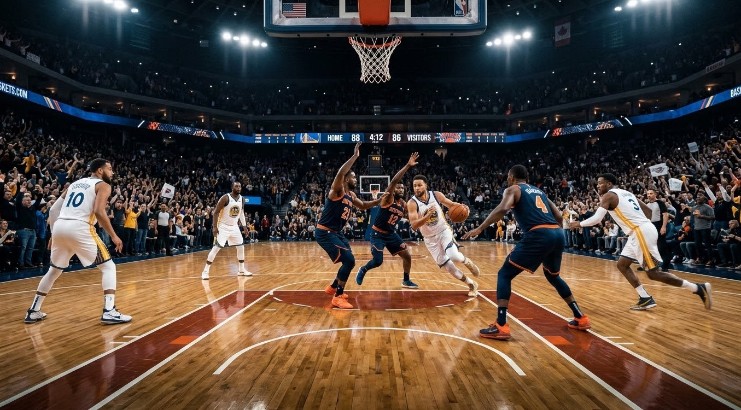
A big reason behind this is space. And it’s not just physical space, but how teams actually think about it. Every step a defender takes matters now. Every extra foot beyond the three-point line stretches the defense, almost like in “온라인 축구 베팅”, where every small decision can quickly shift the entire picture – coaches often talk about “gravity,” and no, it’s not about physics. It’s about how defenders react to shooters and how that reaction opens up lanes for everyone else.
And here’s the funny part: isolation basketball hasn’t disappeared. It still shows up, especially in late-game situations. But it’s no longer the main idea of the game. It’s more like a spice than the main dish. So what pushed the league away from those older patterns? Let’s rewind a bit.
When one-on-one ruled the floor
There was a time when teams leaned heavily on isolation plays. You’d see a guard or forward at the top of the key, teammates clearing out, and then it was just him and his defender. Simple. Direct. Almost like streetball under bright arena lights. It worked because the league was slower, and defenses weren’t stretched as far as they are now.
Players like Allen Iverson or early Carmelo Anthony thrived in that rhythm. Give them the ball, get out of the way, and hope for magic. And sometimes, it really was magic. But over time, defenses adapted. They got smarter, quicker at help rotations, and better at forcing tough shots. The isolation style started to feel less efficient, even if it still looked exciting.
At the same time, analytics started creeping into coaching rooms. Teams began asking a basic question: is a contested mid-range jumper really worth it when you can get a catch-and-shoot three or a layup instead? The math nudged the game in a different direction. Not overnight, but steadily. And once teams saw the results, there was no going back.
Still, it’s worth saying: isolation didn’t die. It just lost its throne. Something else took over, and it changed how every inch of the court is treated.
Space, threes, and why the floor feels wider
Now we get to the heart of it: spacing. If old-school basketball felt like a crowded subway car, today’s game feels more like an open train station. Players are spread out, often standing near or beyond the three-point line. That simple shift changes everything.
When shooters can hit from deep, defenders can’t sag inside. They have to stay honest, sometimes glued to the perimeter. That creates driving lanes. Suddenly, a simple pick-and-roll turns into a chain reaction. The screener rolls, the corner shooter drifts, the weak-side defender hesitates, and boom—there’s a gap.
This is where teams like Golden State reshaped expectations. Quick passing, constant motion, and shooters everywhere forced defenses into uncomfortable choices. Do you stay home on the shooter or help inside? Either way, something opens up.
And here’s a small twist that feels almost unfair: spacing doesn’t just help stars. It helps everyone. Role players get cleaner looks. Big men get easier rolls to the rim. Even average shooters suddenly look dangerous when the defense is stretched thin.
So yes, threes matter. But it’s not just about shooting them. It’s about what they do to the rest of the floor. That ripple effect is what really drives modern offense.
Fast feet, quick reads, and constant movement
Let’s talk tempo. The game today isn’t only about standing in the right spot. It’s about movement, timing, and reading what the defense is doing in real time. Players are expected to react fast, sometimes in half a second. That’s not an exaggeration.
Ball movement has become almost like a language. One pass leads to another, and defenders are always a step behind. When the ball swings from one side to the other, defenses stretch and bend. If even one defender reacts late, the whole structure wobbles.
And then there’s pace. Not just running fast, but playing with urgency. Some teams push the ball after every rebound, not because they’re reckless, but because early offense creates cleaner chances. A defense that isn’t set is easier to break down. It sounds simple, but it changes everything about shot selection.
At the same time, players are reading more than ever. They’re not just running plays; they’re reacting to how defenders shift. A small hesitation, a step in the wrong direction, and the offense adjusts instantly. It’s almost like a conversation happening at full speed, with bodies instead of words.
And yet, there’s still room for creativity. Sometimes a possession slows down, and a star takes over. That contrast—fast flow mixed with sudden isolation—is what keeps defenses guessing.
So what does it all feel like now?
Watching today’s NBA offense feels a bit like watching traffic at a busy intersection that somehow never jams. Cars move, shift lanes, pause, then suddenly speed up again. There’s structure, but also freedom. That mix is what makes it interesting.
You might think the game has become predictable with all the threes, but that’s only half true. Defenses have adapted, too. Switch-heavy schemes, zone looks, and aggressive help defense are all responses to spacing. It’s a constant back-and-forth, like a long conversation that never really ends.
What stands out most is trust. Players trust each other more. A pass might leave a star’s hands early in the clock, and nobody panics. Everyone knows the ball might come back. Or it might not. That trust keeps the system alive.
And where does it go from here? Hard to say. Maybe even more shooting. Maybe bigger playmakers who can pass like guards. Or maybe defenses find another counter. That’s the beauty of it. The game keeps shifting, and no style stays untouched for long.
One thing feels certain, though: basketball isn’t standing still. It’s stretching, moving, and opening up in ways that keep surprising even longtime fans. And honestly, that surprise—that little moment where you think “wait, how did that happen?”—is what keeps people watching.