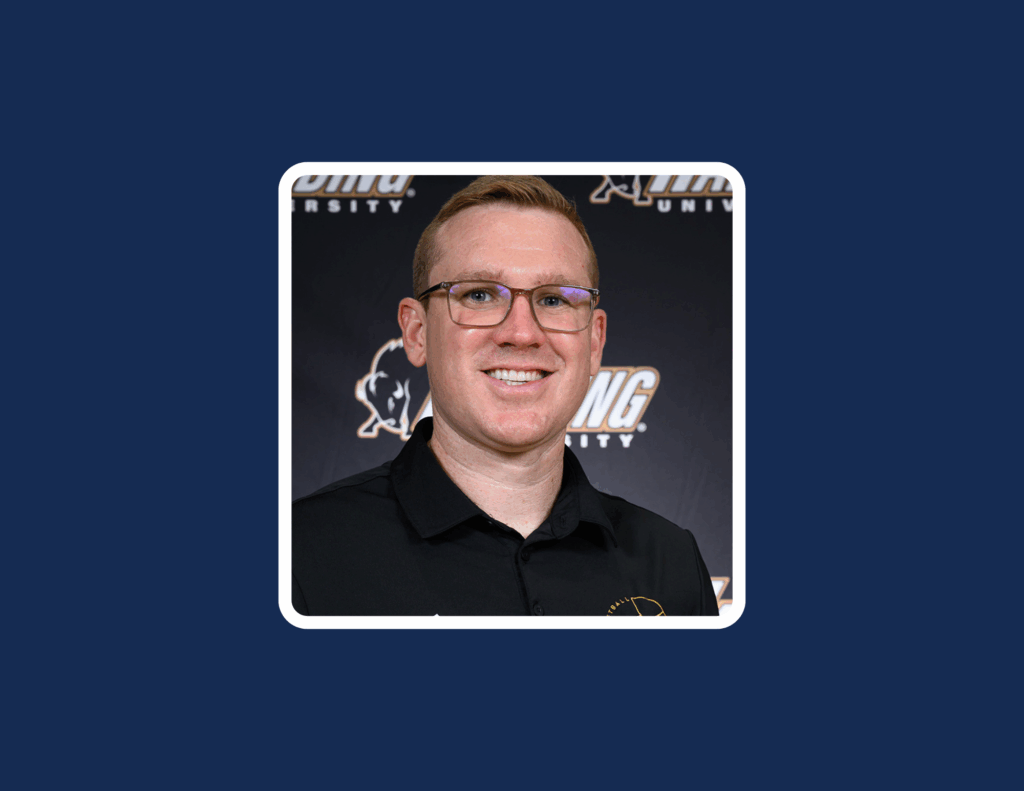
WESTON JAMESON – HARDING UNIVERSITY MEN’S BASKETBALL HEAD COACH – EPISODE 1161
Website – https://hardingsports.com/sports/mens-basketball
Email – [email protected]
Twitter/X – @coachwjameson

If you listen to and love the Hoop Heads Podcast, please consider giving us a small tip that will help in our quest to become the #1 basketball coaching podcast.
Weston Jameson is the Men’s Basketball Head Coach at D2 Harding University in Searcy, Arkansas. In just his second year at the helm in 2024-25 he led the Bison to a 22-10 record and the NCAA Tournament after winning the Great American Conference Tournament.
Prior to taking over the men’s program at Harding, Jameson was an assistant coach for the women’s basketball programs at Abilene Christian University (2021-2023), Arkansas State University (2020-2021) and Harding (2015-2020).
Before his first stint at Harding, Jameson worked as the junior boys head coach and senior boys assistant coach at Central Arkansas Christian School in North Little Rock in 2014-15.
Jameson was a three-year starter and four-year letter winner at point guard for the Harding men’s basketball team from 2010-14. He had 474 assists in his time as a Bison, fourth on Harding’s career list, and helped lead the Bisons to the 2014 Great American Conference Tournament championship. Jameson played in three NCAA Division II Tournaments during his career.
On this episode Mike & Weston discuss the importance of establishing a strong team culture, which serves as the foundation for achieving competitive success. While the ultimate goal in sports often centers on winning championships, the true measure of a program’s success lies in the cultivation of ‘championship standards.’ These standards encompass the values, attitudes, and behaviors expected from the team, creating an environment where individuals can thrive both on and off the court. Jameson’s emphasis on the need for consistency in leadership and the importance of embodying the values one wishes to instill in the players resonated throughout the conversation, offering a refreshing perspective on coaching that prioritizes holistic development over mere victories.
Follow us on Twitter and Instagram @hoopheadspod for the latest updates on episodes, guests, and events from the Hoop Heads Pod.
Make sure you’re subscribed to the Hoop Heads Pod on iTunes or wherever you get your podcasts and while you’re there please leave us a 5 star rating and review. Your ratings help your friends and coaching colleagues find the show. If you really love what you’re hearing recommend the Hoop Heads Pod to someone and get them to join you as a part of Hoop Heads Nation.
Grab your notebook and pen before you listen to this episode with Weston Jameson, Men’s Basketball Head Coach at Harding University.
What We Discuss with Weston Jameson
- Emphasizing championship standards rather than merely focusing on winning games and championships themselves
- The transition from high school to college coaching encompasses significant challenges, particularly related to managing expectations and developing a competitive culture
- The Harding Men’s Basketball Mentorship Program implemented at Harding University serves as a vital tool for the personal and professional growth of student-athletes, connecting them with alumni in their desired career fields
- Coaches must constantly evaluate their methods and adapt their strategies based on player feedback and program needs to foster improvement and success
- Effective communication and clear expectations can significantly enhance team dynamics and individual accountability
- The recruiting process is critical for building a successful program and should align with the team’s long-term goals and values
- Nurturing a passion for the game and instilling a strong work ethic
- A coach’s demeanor and consistency significantly influence the team’s overall performance and morale
- Understanding the nuances of individual player development.
Like this show? Please leave us a review here — even one sentence helps! Consider including your Twitter handle so we can thank you personally!

We’re excited to partner with Dr. Dish, the world’s best shooting machine! Mention the Hoop Heads Podcast when you place your order and get $300 off a brand new state of the art Dr. Dish Shooting Machine!
Your first impression is everything when applying for a new coaching job. A professional coaching portfolio is the tool that highlights your coaching achievements and philosophies and, most of all, helps separate you and your abilities from the other applicants.
The key to landing a new coaching job is to demonstrate to the hiring committee your attention to detail, level of preparedness, and your professionalism. Not only does a coaching portfolio allow you to exhibit these qualities, it also allows you to present your personal philosophies on coaching, leadership, and program development in an organized manner.
The Coaching Portfolio Guide is an instructional, membership-based website that helps you develop a personalized portfolio. Each section of the portfolio guide provides detailed instructions on how to organize your portfolio in a professional manner. The guide also provides sample documents for each section of your portfolio that you can copy, modify, and add to your personal portfolio.

Hey coaches — you’ve got a game plan for your team… but do you have one for your money?
That’s where Wealth4Coaches comes in.
Each week, they deliver simple, no-fluff financial tips made just for coaches. Whether you’re getting paid for camps, training sessions, or a full season—Wealth4Coaches helps you track it, save it, and grow it.
It’s time to stop guessing and start building.
Subscribe now at wealth4coaches.beehiiv.com/subscribe
And follow them on Twitter @Wealth4Coaches for daily money wins.
Your money needs a coach.
Start with Wealth4Coaches.
THANKS, WESTON JAMESON
If you enjoyed this episode with Weston Jameson let him know by clicking on the link below and thanking him via Twitter.
Click here to thank Weston Jameson via Twitter
Click here to let Mike & Jason know about your number one takeaway from this episode!
And if you want us to answer your questions on one of our upcoming weekly NBA episodes, drop us a line at [email protected].
TRANSCRIPT FOR WESTON JAMESON – HARDING UNIVERSITY MEN’S BASKETBALL HEAD COACH – EPISODE 1161
[00:00:00] Narrator: The Hoop Heads Podcast is brought to you by Head Start Basketball.
[00:00:20] Weston Jameson: The things that are important to you, they have to be important to your guys. I love culture. We don’t talk about winning championships. We do talk about championship standards. These are things that championship teams do, but it’s never about wins and losses. It can’t be about those things. But I do feel like from a culture standpoint, if our culture is where it needs to be, then whatever our ceiling is as a team that year, if the culture’s right, we’re going to reach it or get really close.
[00:00:52] Mike Klinzing: Weston Jameson is the men’s basketball head coach at D two Harding University in Sealy, Arkansas. In just his second year at the helm in 2020 4 25, he led the bison to a 22 and 10 record and the NCAA tournament. After winning the Great American Conference Tournament, prior to taking over the men’s program at Harding, Jameson was an assistant coach for the women’s basketball programs at Abilene Christian University from 2021 to 2023 Arkansas State University from 2020 to 2021 and at Harding from 2015 to 2020.
Before his first stint at Harding Jameson worked as the junior boys head coach and senior boys’ assistant coach at Central Arkansas Christian School in North Little Rock in 2014 2015 as a player. Jamison was a three year starter and four year letter winner at Point Guard for the Harding Men’s basketball team.
From 2010 to 2014, he had 474 assists during his time as a bison fourth on Harding’s career list. Help lead the bison to the 2014 Great American Conference Tournament Championship. Jamison played in three NCAA Division two tournaments during his career.
This October, our friends at Dr. Dish Basketball are giving away one Dr. Dish CT Plus to a school or facility and one Dr. Dish home to a home user. Enter to win at info.drdishbasketball.com/sweepstakes for a chance to win your own Dr. Dish Shooting machine. Entries close October 10th at 11:59 AM no purchase necessary.
You can also follow their incredible content @drdishbball on Twitter, Instagram, Facebook and YouTube. Mention the Hoop Heads Podcast and save an extra $300 on the Dr. Dish Rebel, All-Star and CT models. Those are some great deals Hoop Heads. Get your Dr. Dish shooting machine today.
[00:02:43] Mike Winters: Hi, this is Mike Winters, head, boys basketball coach at Harlem High School in Chesney Park, Illinois, and the author of The Journey Lessons from the Hardwood. And you’re listening to the Hoop Heads Podcast
[00:02:56] Mike Klinzing: Coaches, you’ve got a game plan for your team, but do you have one for your money? That’s where Wealth4Coaches comes in. Each week, we’ll deliver simple, no fluff financial tips made just for coaches. Whether you’re getting paid for camps, training sessions, or a full season, Wealth4Coaches helps you track it, save it, and grow it.
It’s time to stop guessing and start building. Subscribe now at Wealth4Coaches.beehive.com/subscribe and follow us on Twitter at Wealth4Coaches for daily money wins. Your money needs a coach. Start with Wealth4Coaches.
Grab your notebook and pen before you listen to this episode with Weston Jameson, men’s basketball head coach at Harding University. Hello, and welcome to the Hoop Heads podcast. It’s Mike Klinzing here without my co-host Jason Sunk tonight. But I am pleased to be joined by Weston Jameson Head, men’s basketball coach at Harding University.
Weston, welcome to the Hoop Heads Pod.
[00:03:57] Weston Jameson: Yeah, thanks for having me on. I’m excited to be here.
[00:03:59] Mike Klinzing: We are thrilled to have you on. Looking forward to diving into all of the interesting things that you’ve been able to do in your career. Let’s start by going back in time to when you were a kid. Tell me a little bit about some of your first experiences with the game of basketball.
[00:04:12] Weston Jameson: Yeah, so I grew up in a small town in East Texas. My dad was a high school basketball coach and a little two, a school called Edgewood, 1200 people, couple stoplights. And he was the head coach there for I think close to 30 years. And so from the time I was really, really young, I was going on bus rides and sitting on the bench.
And I was just in the gym after school every day. So I guess my earliest memories my mom would say was like, when I was a baby pushing me around, like the gym in a laundry basket, ? So from the time I was in diapers, I’ve been in the gym, got to got to watch a lot of basketball games watch my dad coach I’ve been invested and been in a basketball family since the very beginning.
[00:05:00] Mike Klinzing: When you think about the influence of your dad and just who he was as a coach and growing up watching him, and then you think about yourself today as a coach, what are one or two characteristics, things that you have taken with you that you think, wow, when I, when you do those things or when you see yourself acting in a certain way, you’re like, oh, that’s from my dad.
Well, what, what carried down from your, from your dad’s legacy as a coach, from watching him for all those years?
[00:05:30] Weston Jameson: Yeah. really like thinking about what do I want to coach? Like how who do I want to be? I think my dad was, was my, my primary example, he’s, he’s retired now, but really even just in a small town in general the people who influenced me the most were, were all of my coaches.
And so my dad is my basketball coach, but it was a small school. So you played everything. So baseball coach. Football coach, all those people. But when I, when I’m thinking about just who my dad is and how he has influenced me, one is just his demeanor. He was always really calm on the sideline. I would just say he never got too high or too low composed maybe is the best way to say it.
I really, to me, that’s just a really valuable quality in a coach is if you want your team to play composed, then, then it’s helpful for you to be composed to, and that’s not to say that I never go crazy or never lose it or anything. But just I would just say just his demeanor on the sideline.
And then the other thing is just his consistency. I feel like you knew what you were going to get every single day when you showed up to practice. There just, he was the same person every single day. And playing for him he did a great job of I know that. It’s special getting to play for a parent and those were some of the best years of my life playing for my dad.
But he did such a good job of not taking it home with him either. And so just, it was really special getting to play for him for four years, and I appreciate how he balanced being my coach and also being my dad.
[00:07:12] Mike Klinzing: How old were you when you realized how lucky you were to be able to have access to a gym 24 7?
When did that kick in that you’re like, oh yeah, not everybody has the same access that I do.
[00:07:24] Weston Jameson: Yeah, I I don’t know that I, that I really fully appreciated it ever growing up, to be honest. I think now that I have three kids of my own and just now they’re around lots of friends who don’t, who can’t just go to a gym anytime they want.
And even some of my, my good friends who are raising kids, we’re in the same life stage and I’m just going, man, what a blessing it was to, to really. Get shots up anytime I wanted to just have, have 24 7 access to a gym. So I don’t know that it ever clicked until probably I had kids of my own.
When,
[00:08:00] Mike Klinzing: when you think back to, think back to your, your development as a young player, so I’m thinking before the time that you get to high school and you’re playing for your dad, but when you’re in late elementary school, middle school, how much time did you spend with your dad on the court? In other words, how much did he help you with putting you through different types of workouts and just kind of helping you figure out what you needed to work on and that kind of thing?
What was his style of helping you to advance in your career as a basketball player?
[00:08:37] Weston Jameson: Yeah, I was actually just talking to someone about this today. Who who’s trying to figure out what that looks like. What, what I will say that I, that I truly appreciated about my dad was he wanted me to be as good as I wanted to be, but he wanted that to be my dream and not his dream.
And so he would always say, I will rebound. back then we didn’t have a gun or a doctor dish or anything like that. So he was doing the rebounding, but he, he said, I will rebound as much as you as you want me to, or when it came to baseball, I’ll, I’ll throw you as many pitches as you want.
But he never, he never just pushed me over the top. He always wanted it to be something that I wanted to do. Something that it was important to me and not him. And so I feel like he had such a great balance. I played. Several sports because it was a small town. But I think because of his approach, I just didn’t burn out of anything because he was going to push me as hard as I wanted to be pushed.
And when we were in the gym, we were working. If it was, Hey, I want to be in the gym, then, then he was serious about it. But it was never he understood the dynamics of a young kid and the need to say Hey, if you’re not working, somebody else is. And he knew when to nudge me in certain directions, but it was never forced.
He always wanted it to be fun, I think, for me. And he just, he did a great job of handling that. Just now that I have my own kids, just trying to find that balance of they’re being raised in a gym too, right? And you want them to love the game and you want them to, but, but also just realizing it can’t be my dream.
It needs to be theirs. And so now I’m navigating that as a dad a little bit myself.
[00:10:26] Mike Klinzing: Have you had a conversation with your dad since you’ve become a parent about the way that he handled that situation with you? Is that something that you guys have ever talked about? Like, Hey, what were you thinking about back in those days as you were trying to help me to be the best player I could be?
How hard was it for you not to push me? Maybe a little harder or whatever? I’m just curious, did you have you guys had an adult conversation around some of those topics?
[00:10:54] Weston Jameson: Yeah. we never have. And that is something that we should do because he’s retired now and he actually lives in the same town as me, and we see each other quite a bit.
And so it’s not like, it’s not like we can’t make that happen. I just think he really. I don’t know if he had seen bad examples of, of just kind of crazy over the top sports parents. I’m not really sure what, what led him to that approach. Maybe it was just the busyness of working in a small school and having to coach multiple sports and all of that.
But he always made himself available when I wanted to be. But just, it was never, it never felt forced. It never felt like it was just a just a pain to do. It was always something that I wanted to do and so that it was, he, he made it fun.
[00:11:41] Mike Klinzing: Do you ever find yourself as a parent, and I’m going to put myself in your shoes and other parents’ shoes, that I’m someone who theoretically right.
Knows what the pitfalls are of trying to push their kid too much and trying to get them maybe to do something on a day where they don’t really want to. And so I know all the dangers of that, and yet I still. In my mind, sometimes I still find myself going, gosh, like I have access to this gym, or I’m going to do a workout with some kids, or I’ve got camp.
Why? Why? Why didn’t the kid? Why don’t you want to come? What do you mean you don’t want to come? Like, I would’ve killed for this kind of access to a gym when I was your age. What do you, what do you mean you don’t want to come? And I had to find myself constantly reminding in my own head, and I was pretty good most of the time.
I never let it actually come out into the real world. Most of the time that stuff stayed trapped in my mind. But I know how difficult it was for me sometimes to not push a little bit more. And so I’m just curious, for you as a parent, how do you think about that process? And obviously you had a good example in your dad and how he handled your situation, but just do you ever find yourself sort of having that good versus evil argument up in your mind on your shoulders as, as you’re dealing with your own kids?
[00:13:05] Weston Jameson: All the time, constantly and you’re watching them every day just going like if you want to be better, you need to practice. and tried to try to, trying to find a balance of that. All my kids are young right now, and I feel like there is a lot of time, but at the same time, if you, if you wait a year or two, then you’re just, you’re behind.
And so that’s the reality of it. I have tried to take my dad’s approach as much as possible. I do want it to be because the reality is they’re going to spend a lot of time in the gym whether they want to or not. That’s just, that’s, that’s our, the rhythm of our family. And so I don’t want to push them in a way where, where I I want them to enjoy coming to see me and being in the gym with me and all of that.
But it is, it is a challenge because they’re getting old enough where they can participate in youth sports. And as a dad, you want them to be as good as pos you want them to be the best player they can be. And that takes work and it takes time and it takes commitment and so just trying to, I would say right now, and again, my kids are seven, six, and four, so they’re young.
But right now just trying to teach them like the value of hard work and the benefit of trying things that like, maybe you’re not very good at right now, but the only way to to improve is to, is to do it. And so we’re spending a lot of time working through some of those lessons. At the moment,
[00:14:30] Mike Klinzing: you’re just getting into it.
You are just heading in that direction of all the things that we’re talking about here. And it’s, it’s a lot of fun. I will say there’s nothing more enjoyable than watching your kids play whatever it is, whether it’s basketball or something else, or it’s playing the violin or being in the school play, whatever it might be.
It’s, it’s just, it’s so much fun to watch them. And yet at the same time, I think that you expressed a sentiment that. I know, I feel, and I think a lot of people who are coaches and have kids and have had some success in athletics themselves, that I think we all feel that push and pull of how much do I push?
When do I push? What does that look like? And I always tried to default to, I always wanted to have the relationship when my kid is 25 years old, I don’t want them to have hated me because I made them go out on the baseball field and take 21 more grounders or get out on the basketball court and shoot a hundred more threes or whatever it might be.
Ultimately, we want them to be their best, but we also want to make sure that we don’t alienate him so that they’re like, man, my dad was a pain in the neck. I don’t want to be around that guy anymore when they get older. And so it’s a, it’s a fine line to walk sometimes in your mind. And so It’s, I know how difficult it is for me and I again, theoretically know better.
And so I can only imagine for people that are trying to navigate and who maybe don’t have as much experience. In sports and athletics as I do, how difficult it can be for, for some parents to figure out where that where that line is drawn. So you obviously had a great experience with your dad, not only as a kid and just the way that he helped to facilitate your development as an athlete, but then you get a chance to play for him at the high school level.
So when you think back to your high school experience, what was your favorite memory of playing high school basketball. And what do you think that you and your dad did well in terms of navigating that player, parent, child, sort of again, the, the triangle there of, of those three things putting together.
So your favorite memory and then how you guys went about sort of handling that. What did you, what do you think you did well in that environment?
[00:16:43] Weston Jameson: Well, I can start with maybe my least favorite memory. And then move to the best part. But it was my junior year and it was kind of at the stage where.
I felt like maybe I knew a little bit more than I did. And we were in practice one day and I was just I, I wasn’t I really just wasn’t acting right and my dad kicked me out of practice and so really early into practice and he’s like, don’t come back in if you’re going to act like this.
Don’t come back in. And so I went home, I walked in the door and my mom said, you’re home really early. And I said, I got kicked outta practice by dad. And she was like, I bet you won’t do that again. And I just said, at home until practice was over, my dad walked in the house a couple hours later and he goes, we good.
I said, we’re good. He said, okay, I’ll see you at practice tomorrow. And then kept walking into past where I was at, into the kitchen and had dinner. But that was it. Like he didn’t need to say anything else and I learned my lesson and it did not happen again. And so that was just a great example of him not bringing some, I mean, he could have just shooed me out and I deserved it too.
And he just walked in and said, we good. And that was all it took for me to know you’re still the coach and you’re the boss. And I was way out of line. And so really just the best memories though are, are experiencing success with your dad. I mean, we won. He was a very successful high school coach.
I think he won around 700 games and lost fewer than 200 in his career. So it was a very successful program. The standard was. Was winning at this school for a very long time and just a lot of basketball tradition. We were in a good spot. But I think just experiencing all the joys of like big playoff wins and advancing to maybe different rounds of the playoffs.
We, we, my junior year we lost in the regional final and overtime in Texas, which we lost to the eventual state champion, but there were eight teams left and really we were probably the second best team in the state. But just experiencing all the, all the, all the success I would say individually and collectively with your dad is really special.
Hugging him after big events. I’ve had, I’ve had so many great coaches who have been great models to me, but there’s nothing better than hugging your dad after a big game that you were both a part of. And so just things like that are, are still really great memories for me.
[00:19:20] Mike Klinzing: Tell me a little bit about the recruiting process for you and what that was like.
Obviously it’s a little bit different than a normal recruiting process when your dad is your high school coach, so he’s got a little bit of experience, I’m sure, in the recruiting world, number one. But then number two, when somebody’s talking to your parent, they’re also talking to your coach. And so I’m sure that led to at least a little bit of a different experience than maybe what somebody might have who doesn’t have that situation.
So just tell me a little bit about your decision eventually to go to hardening and just what you went through in making the decision and how the conversations with your dad went as you were going through the process.
[00:20:01] Weston Jameson: Yeah, so I mean, the first thing that I would say is my dad was willing to drive me anywhere, take me anywhere, or give me whatever basketball opportunities.
He wanted to put me in a position to be successful. If that was my dream and it was my dream. And so he was he was invested in that. So I played a a u and I did the travel ball thing and all that. Recruiting looked very different when I was in high school. That’s been 16 to 20 years ago.
And so, and really in, in the town that I grew up in, there weren’t just a lot of college athletes in general, or college basketball players, and I was the oldest kid in my family. And so I feel like we were all kind of learning this on the fly back then you, you sent DVDs maybe a lot of the audience maybe that doesn’t even know what A DVD is, but you sent he burned game film on DVDs and send those all over the country.
I remember him driving me to camps and, and all those things. E eventually that led to some interest from Harting. Both of my parents are from the state of Arkansas and so. I was being recruited by a couple of schools in the state of Arkansas, and Har Harting was one of those. I didn’t really know a ton about Harting at the time.
I was familiar with it, but didn’t know a lot about it. They, they had a really strong basketball reputation and really a great basketball atmosphere in general. And so I don’t know what I was looking for. I don’t, I don’t really re know like why I picked Harting other than just the gut feeling there.
fortunately, I I, there were, I was kind of down to two schools and if I had known what I, what I knew now, I would’ve thought about what’s the play style like, does that fit how, like the other school that was recruiting me picked up 94 feet. I mean, I’m a, I’m a slow unathletic short guard that, that I would’ve just.
Really struggled playing in that system. But I wasn’t thinking through that, those things at the time. And so, so now as a college coach, I think I just have a way better understanding of questions I should have been asking or things that, that I, that I, that we should have known that maybe we just didn’t.
But fortunately whether it was luck or the grace of God or whatever you wanted to, to say. I ended up at Harding. I redshirted my first year I played for a guy named Jeff Morgan. He was the head coach at Harding for 30 years. He’s now my athletic director and so I still get to work with him every day.
And so I played for him for five years, red shirting, and then four years I had an amazing I was an okay basketball player. That’s what I like to say, because that’s the truth. I was very average, but I played with a lot of really talented people and I figured out. If I could get them the ball in scoring positions and didn’t care I could play on the, I could play as much as I wanted to, so that’s what I did.
I just, I just passed it to people who could make plays and I had a great career. We won a lot of games, but really, I played with some amazing teammates. I played for an unbelievable coach and so really, Harting was a life-changing experience for me on Danoff the floor.
[00:23:21] Mike Klinzing: It’s amazing to hear you talk about just the lack of knowledge in terms of what the process was like and what kind of questions you were going to ask.
We’re talking in the basic pre-internet, pre-Google Age, where now you just go on and be like, Hey, I’m going on a recruiting visit. What kind of questions should I ask? And you could have a list of a thousand questions that you should ask immediately and experts that you could talk to and whatever. And I tell people all the time that when I was being recruited, I’m even older than you, so I’m graduating from high school in 1988.
I mean, there was nothing like, my parents didn’t know anything. I didn’t know anything. My high school coach didn’t know anything. We were completely in the dark. And now we’ll even go back further back. You were talking about DVD. So I’m talking about VHS tapes and I’m sending out for people to be able to watch.
So we’re going, we’re going way, way back. But it, it’s just funny again because people, yeah. Chad gt people.
[00:24:14] Weston Jameson: Yeah, no, I was just going to say Chad, GPT has made it, has made it so easy to, to, to figure out what questions I’m going on a visit to this school and what do I need to know? What questions I ha I knew none of those things we got back when I was being recruited.
The coaches could make one phone call a week to you. That was the rule. One phone call, no texting. I don’t remember that. You could text, but one phone call. And if you missed that phone call. You just had to wait until the next week. That was it. So you better answer the phone. Now coaches can talk as much as they want, whenever they want.
Unlimited access, really both ways. And so the re, the recruiting landscape is just totally different now,
[00:24:53] Mike Klinzing: really is just incredible when I think about the wealth of knowledge that people have at their fingertips today to be able to make better decisions. And to your point, I think what’s interesting is you said, Hey, I ended up choosing to go to Harding by Feel.
And in some ways you think, well, okay, it might’ve been nice to have all that information, but I can honestly tell you that I’ve sent two kids to college so far, and both of them have made the decision not so much on anything besides walking on the campus and just saying. This feels like the right place for me, either because of the campus itself, because of the couple people that they met.
They’re not choosing the school necessarily because it has a perfect major for them, or there’s not any real like super analysis or facts or data or any of this stuff. It was more just this place feels like the right place. And so even though you have a lot of data at your fingertips and you can go and you can find out what all the questions are that you should ask.
A lot of times still today, it just comes down to, I feel at home here, this feels right. This is where I belong, this is where I should go. And both of my kids who have chosen schools, I’d say that that feel piece of it has been definitely, I would say the majority of what they based their decision on in terms of where they ended up going to school.
So when you were headed to school, did you have any idea that did coaching? Was where you wanted to end up or were you thinking about something else in terms of a major, in terms of a career? Because obviously growing up with your dad as a coach, you’ve got coaching, you’ve been exposed to it at least what the life of a high school coach looks like.
So where was your mindset as you’re coming into school in terms of, were you thinking about coaching at all? Were you still just completely focused on being the best player you could be?
[00:26:52] Weston Jameson: Yeah. My, my dream has always been to be a coach. I’ve known from a young age. That’s what I wanted to do. And really I loved my life growing up.
I loved coaching. I loved the idea of finding a small town to coach in, just like my dad raising a family there. I move at a much slower pace than. Most people. And so coaching in a big city with, fighting traffic every day, that just does not appeal to me at all. And so I, the dream was always to, to coach and be a high school coach and coach in a small town.
And really what if, if, if people are considering coaching I obviously played in college, but man, if people are considering coaching, especially at the college level, which was never a dream for me I would encourage them to, to find a spot where they can get plugged into a program.
And really the higher level you go, the more connections you have. And so even if you’re a manager at a division one school and you do a good job, like maybe two or three of those assistant coaches during your time there. Are going to be division one or division two or whatever, head coaches one day.
And you’ve made that connection to them and just your, your, your net can get really big, really fast. That was never my dream. And really I was going to college to play basketball anyway, and I had no idea how college basketball even worked, and that was not on my radar. I, when I finished playing, I actually taught eighth grade history.
I coached junior high football and junior high basketball at school in Little Rock. And I did that for a year. My wife was in grad school at the time. She’s a speech therapist now. But I was, I enjoyed that. I thought, this is what I’m, I’m enjoy, I love the classroom. I like history. I’m an, I am a nerd.
I like to read. But I enjoyed that, that side of, of my job. I enjoyed the coaching side of my job. I, the assistant women’s. Basketball job at Harting opened up a year. A year. Well, the year that I was doing that at the school in Little Rock, the assistant women’s job opened up and I had some people reach out and go, would you be interested coming back to Harting?
And I was like, well, I love Harting, but I’ve never thought about coaching in college, and I’ve definitely never thought about coaching women’s basketball. That was, that was not in the plan. And I ended up talking to the head coach Tim Kirby, who I worked for, for five years. But he said, he said, what what are you, what do you teach?
And I said, I teach eighth graders. I teach them all day. This was around the time of spring break and the classroom was getting kind of rowdy. Everyone was it it was just, it was getting a little challenging. And he goes, Hey if you came back and coached here, you wouldn’t have to teach.
I said, well, I may try out what, what, what coaching in college looks like. And so I did that. I, I coached women’s basketball at Harting for five years. I loved every second of it. I had no idea that I would’ve liked it so much, but I ended up doing that for five years. Harting is special to me. And I got to coach a lot of special players.
And so that was my transition to college coaching. That wasn’t, that wasn’t something that I dreamed about doing. Really the kind of, the only reason that it happened is because I had played here and Coach Kirby was familiar with me. And I’m, I’m really fortunate that, that he, he decided to make that phone call to me.
[00:30:28] Mike Klinzing: Do you think, while you were playing, I’m always curious to ask guys who have a playing career while you were playing, did you find yourself thinking about the game from a coaching perspective in addition to. As a playing perspective, I always feel like when I was playing, I was kind of focused on what I was supposed to do.
My role, I was focused on how I, how what I did was going to impact how the team was going to do. But I wasn’t necessarily ever focused on sort of the bigger picture of looking at how coach was managing the team or why were they making more of these big picture strategic decisions. because I just was so focused on my own performance and how my own performance played into whether or not our team was going to be successful or not.
So when you think back to your time as a player, do you feel like you were thinking the game as both a player and a coach? Or did that coaching kind of leave until y you, until you got done playing? I,
[00:31:26] Weston Jameson: I really tried to think like a coach. I feel like just growing up in a coaching household I had access to like.
How coaches thought after games hearing, like I would be in the coach’s office when I was a kid, and the coaches are my dad and the other coaches are talking through things. I always tried to really think through the game. I would’ve I would’ve liked to have thought of myself as a player, as an extension of the coach on the floor.
And so again, I wasn’t, I I wasn’t tall or athletic or quick, or I didn’t, I had very, I had no really no skill. So I needed to be smarter than everybody else. And so as a player, I was trying to think through some of those things. I feel like maybe this is more of a, of a modern approach, but I like generationally, the way people talk was a long time ago what the coach said was, was true and you didn’t question it and you didn’t.
And I feel like I was kind of. Right in between where we’re at today and kind of the old school approach to where there were times where I felt comfortable asking my coaches why are we doing it this way? Or, or what are, like, why do you want to call this here? What are you seeing? And I felt like my coaches were really approachable in those ways in high school and in college.
And so I do think, I do think I was trying to, I it wasn’t like, I remember a team ran the Princeton offense and they ran it really well in college that we played against. I played them all four years of my career. And as a player, if you had gotten on the board with me and said, Hey, I want you to draw up Princeton.
I mean, I couldn’t have done that. There was no way I could have done that. And so I wasn’t really thinking through like the Xs and Os side of things, but I was trying to. Think through thinking through the game of basketball and trying to figure out why are we doing this here? What’s the reason for that?
Just, just to, just to really think through what my coaches wanted.
[00:33:35] Mike Klinzing: You talked a few minutes ago about making the decision to first as after you graduate, to go and coach and teach at the high school level and kind of following your dad’s footsteps, and then you get the opportunity to go back to Harding to coach on the women’s side of the game.
So two pretty big transitions there. One, going from coaching males to coaching females, and two, going from coaching at the high school level to coaching at the college level. Talk a little bit about each one of those transitions, those changes. So going from high school to college and then going from, in your case, I guess, boys basketball to women’s basketball.
[00:34:18] Weston Jameson: Yeah. You one of the, one of the challenges at the high school level, especially if you’re at a smaller school, is you’re just sharing athletes. And so maybe you have on your basketball team, just a couple of people who are basketball only, and the other people are playing a fall sport or playing a spring sport or basketball really isn’t something that they just love to do.
That was I loved, I loved where I coached and I loved who I got to coach at the junior high and high school level. But, but I realized when you’re growing up the, the town that I grew up in, it was a basketball school. So people people love to play basketball and then, .
At the, at the high school I was at, it maybe wasn’t necessarily a basketball school. And so you just had a couple of people who were all in on basketball and you had others who played and were good and all that. But it wasn’t, it wasn’t their passion, it wasn’t what they wanted to do all the time at the college level.
They’re there to play basketball and they’re there to get a degree in all the, all the other good things. But like they’re being recruited to play college basketball. And so I loved the 24 7 basketball, just like we’re practicing and we’re watching film and we’re doing individual workouts and it was all basketball all the time.
And as someone who, who loves basketball, that was enjoyable for me. I really didn’t. I don’t know that I understood that when I was making the jump. I don’t know that I knew that that’s what I was getting into, but it was a lot of fun to go from basketball only being a piece of what I did at the, at the high school level, because you’re teaching class all day and you’re doing parent-teacher conferences and there’s just, you’re, you have lunch duty and all that too at the college level.
Man, I’m in the office all day and I’m scouting, or I’m recruiting or, it’s, it’s just all basketball all the time. So, so that, that, that was a really a really fun part of the transition coaching guys and coaching girls. So I, I coached junior high and high school boys. Then I made the jump to college women and now I’m coaching on the men’s side at the college level.
And so I’ve kind of gone, I’ve yo yoed a little bit. I do think. It’s very different coaching, coaching guys and girls. I don’t know, maybe some people would say it’s, it’s, it’s been a very different experience for me. What I would say is, is there are challenges coaching guys and coaching girls, and you’re just kind of deciding what challenges you want to deal with.
A lot of times on, on the guy’s side we’re, we’re, we’re dealing with maybe oh oh, well maybe, let me start with, on the girls side. On the girls side, a lot of the challenges might be like locker room drama or talking about people or maybe it’s just more just kind of those, those types of things on the guy’s side.
maybe the challenges are guys thinking they know, like girls are extremely coachable. I mean, I, no girl has ever like whatever dream. Talking back or that kind of thing. I mean, it was just, they were very, they were very, they were so easy to coach and they wanted to, to do the right thing.
And guys, they think they know more than you. And so every day I’m just going, oh man. Like this is the way we need to do it. And trying to explain those types of things. So there are challenge there, there, there are positives and negatives to both sides. I’ve done both and I’ve loved both. And I think just trying to figure out what lane, what, just adjusting to the lane that I’ve been in.
I, it took me five years to at Harding. And then I went a couple of other spots as well on the women’s side, but my wife played college basketball too. And so we met at Harding. We were in school together. I always try to say that having coached women’s basketball, we run school together, but she was a great.
Just a great person to throw stuff off of just going like, Hey, I’m dealing with this. What advice would you give me? She was great. She’s been great in those situations. And then coaching on the guy side again. There, there are challenges with that, but there are also some, some really some things that are really easy.
Like for instance if we have never practiced something, we show up in, there’s, there’s a game and a team, a team shows up in a 2, 2, 1 press and we’ve never worked on a press break for a 2, 2, 1. I can just go, we’re going to get in this alignment. And they go, we gotta coach. We’re good. We, we, we can figure it out.
And on the girl side, it just, I, it was, it never felt that easy. It was like, we have to practice every situation and every scenario and give. If they do this, then we do this. And the guys are, are are they, they’re more, they’re, they can just, they can just go, we, we, we, we know how to do it. We got it.
So I’ve enjoyed both. It’s been a lot of fun. I love what I’m doing now, but I also love my time coaching women’s basketball as well.
[00:39:28] Mike Klinzing: Tell me about the lessons that you learned in your various stops as an assistant, that once you got an opportunity to become a head coach, that you feel like benefited you as you stepped into that head coach’s role.
Gimme one or two things from being an assistant that you learned, that you felt like, man, learning this as an assistant is really going to help me, or really has helped me once I got to take over my own program.
[00:39:57] Weston Jameson: Well, I worked as an assistant college basketball coach. I worked for three really good, really good coaches and really good bosses.
As, as my, my first stop was at Harding for Tim Kirby. And really what I learned from him was just the ability to empower assistants, the value in that. I was really learning. I mean, I didn’t know how to be a college coach. I’d never done it before. And every year I just felt like I got a little bit better and I wanted a little bit more responsibility.
And I would just say, Hey, what do you think about if we did this as a program? And he was, he would always go, great. You do it. You do it. Like if, if it’s important to you, you take, you take charge of it. But I love the idea. And so when, when, when you do that over five years. You end up growing and learning in a lot of different areas.
But he was so good at empowering me to grow, to learn, to improve. There were times where I would go coach, sometimes I just throw random things out there. You do not have to agree to this, like you are, you can just say, no, that’s a dumb idea. That is perfectly, that will not hurt my feelings at all. But he was so great about if, if I thought it was important, then he thought, this is important to him, so it should be important to me.
And so I grew a lot working for him over five years. Just because he was empowering. And so as, as a head coach, I mean, that, that has, I wasn’t, I’ve been an assistant coach the majority of my career. And this is year three as a head coach, but I really want to empower the people who. Who, who are in our program.
If this is your, if this is what you’re good at, I want you to, to feel like this is your responsibility. one of the things currently is I call the offense. I think our assistant coach, we have one assistant that’s life at division two, one assistant coach. But he’s a really, he’s a, he’s a really good defensive coach, and he handles all the defense, and that’s his thing.
And of course, we talked through how maybe I want things done or things that are important to me, but this is his thing and I want it to be important to him. And so, working for Coach Kirby at Harding on the women’s side empowering assistants. I worked my next job was at Arkansas State. I worked for a guy named Matt Daniel, who was a longtime division one head coach and at, at a few different places and had a lot of success.
He’s retired now on from the college game. But really working for Matt, I learned. How to be organized and efficient. There’s, if, if you, if, if, if people who are listening to this know Matt Daniel, they know he is, he is so detail oriented that nothing I I was just, I was, I was just way too go with the flow or way too we’ll, we can figure it out on the fly.
And he wanted a plan for every single thing. And so I just learned to be extremely detailed that everything was important. I mean, there’s a story that, that this didn’t happen when I was at Arkansas State with Matt, but it makes me think of this Tom Herman, who was a college football coach, he was, he was actually a coach at, at Rice at the time, and there was a really good quarterback in, in Houston, and he and his dad just showed up for a campus visit.
They just showed up to Rice. Very highly recruited quarterback. They do a tour of the facility. It’s not organized. It’s messy. It doesn’t look good. And they ended up leaving that day. And Tom Herman, he goes, I knew we had no chance. Not that we could have gotten this kid anyway, but I knew when he left, we just weren’t prepared in a way for us to get this kid.
Andrew Luck ended up going to Stanford and becoming the number one pick in the NFL draft and all of those things. But it’s just like, let’s run our program in a way where it doesn’t matter who shows up on what day it’s going to look like we know what we’re doing and we’re prepared for everything.
And so Matt was extremely detail oriented. I learned a lot about running a program from him. And then my last stop was at Abilene Christian. I worked for Julie Good enough who she’s been a division one women’s basketball head coach for man, probably over 25 years. And. Is a brilliant offensive mind.
I mean, a lot of really pretty much everything that we do offensively comes from my time working with her at a CU. She’s, she was doing dribble drive. I would just say she was on it kind of from the beginning, I feel like. And I knew that as as an assistant coach, scouting dribble drive teams were always challenging for me.
I loved the pace at which they played. I loved the ball movement, I loved the gaps, the spacing. It just looked like a really fun way to play. And so working working for her at a CU, I just learned the ins and outs of Dribble Drive and she’s also had a lot of success. E everybody I work for has been really successful as head coaches.
But I would just say just the way she ran a program too, things that are important to her. This weekend in our program. At Harding we’re going, we, we pair each of our players up with a Harding basketball alum and that’s their mentor, and I got that from a CU. Our, our girls at a CU were paired up with mentors, but it, it’s been a, it’s, there were just so many just different culture ideas from my time at a CU where I just, I’ve implemented at our program here.
And so just really, I’ve worked for really good people. All of all of them helped me grow as a coach and really prepared me to be in this position. And I don’t know that I would’ve been ready had I not been at each of those spots.
[00:45:50] Mike Klinzing: Yeah, those are great lessons without a question. And I think when you hear each one of those things and you think about how those play into your ability to be a successful head coach, right?
One is the ability to pour into your assistance and help them to grow. Two, you’re talking about being detail oriented, and three, you’re talking about building culture. So those are all, clearly, if you’re talking about building a successful college basketball program, those three things are hugely important.
Tell me a little bit more about that mentorship program. I’m curious, just how do you get your alums, what’s the process for reaching out to them, figuring out who’s going to get involved? I haven’t heard anybody doing anything like that. I’ve never talked to anybody on the pod who’s had that program in place, so I’m just curious.
Tell me a little bit more about it.
[00:46:38] Weston Jameson: Yeah, so what we do is I really think through me and me and the assistant coach we, we really think through who is a great, who is a great match for our player. And so we’re, we’re thinking through what do they want to do career wise. That’s probably the most important thing because ideally we’re pairing them up with someone who is doing what their dream job is.
Now, if you were to ask. Everybody in our program, what’s your dream job? They would all say pro basketball. So I say, all right, you can’t, it can’t be pro basketball. That’s not it. That’s not that’s your dream. But after pro basketball. And so I’m thinking we’re, we’re getting feedback from them, and so maybe that’s be a coach or do something in the business world or sell insurance or whatever.
And so really I’m thinking through who in the harting basketball family is doing what they want to do, and then who can show up. Really the way we kick it off is you have to be here in person and we’re going to do a mentor lunch where they they’re going to meet their mentor in person. They’re, they’re hooked up with them for the, that’s their mentor for their year.
And then ideally we’re going to, we’re going to talk through what the pairing was like, and then if that’s a great match for them, then they’re just going to keep that. So this is year three for me, and we have. Some people coming back for their third straight year because they, they were matched up with someone a couple of years ago that, that, that, that makes sense for them.
And so really the whole goal is we want to, we want to pair them up with someone who who who has been in their shoes as a Harding basketball player who has been in their classes, who has been in their dorm room, but someone who is, who’s a great role model for them. Now our mentors are, are, are various ages.
We have people who are retired all the way down to people who are 25 years old. And so it’s really intergenerational. But really just putting people in front of our guys so that they go when, when, when I’m 25 years old. I would love for my life to look like that or when I’m 35 or 45 or 65. And so it’s been a really cool thing that we’ve done.
There have been a lot of benefits of it. It’s great getting people back to campus who maybe giving them a reason to come back to campus. But really people have wanted to, have, wanted to partner up with us on this. And I’ve been really pleased with just the effects of it over the last, over the last two years.
And now going on year three.
[00:49:10] Mike Klinzing: Tell me a little bit about, obviously you have experience at Harding as a player. You’ve been there as an assistant coach, so you have an idea of what it’s going to take to build a successful program. So when you take over the men’s job, what is it that you see as some of the key things that.
Needed to happen in order for the program to get where you wanted to go. And where are you currently in the process of accomplishing those things that you had in your mind when you first took the job? Yeah.
[00:49:43] Weston Jameson: it’s really special getting to, getting to coach at, at the place you played at. Your recruiting is such a big part of our jobs as college coaches and to recruit to a place that you love it college coaches have to recruit because it’s their job, but it’s really special getting to, getting to recruit to a place that changed your life as a student and as a player.
And then offering that opportunity to, to kids who that if they were to pick Harting, it could totally change the trajectory of their life like it did for me. And so I feel like just getting kids on campus and talking through, Hey, here’s what Harting did for me. I feel like. That, that connects to people in a way where, where maybe if I’m just recruiting as my job it’s just, it doesn’t have the same effect.
When I, when, when, when, when we, we took over at Harding coach Morgan, who I, who I played for he retired as the men’s basketball coach. He’s now the athletic director. And so Harding was just maybe going through a little bit of a rebuilding phase. They had finished at or near the bottom of the conference for, for a couple of years.
And there, there are reasons for that. But really just kinda working through the things that were important. one of the biggest things that that has, has been really important is just the culture being what you want it to be. As a head coach, that’s, that’s been a huge challenge. this is my first head coaching job, so I really didn’t know.
What, what, what were going to be kind of the easy and difficult parts of the job. Fighting for the culture you want every single day can be exhausting as a head coach. But man, you just have to do it. The things that are important to you, they have to be important to your guys. I love culture to me.
we don’t talk about winning championships. We do talk about championship standards. Th these are things that championship teams do, but it’s never about wins and losses. It can’t be about those things. But I do feel like from a culture standpoint if our culture is where it needs to be, then whatever our ceiling is as a team that year, if the culture’s right, we’re going to, we’re going to reach it or get really close and as a coach I try not to evaluate.
How our success on wins and losses, although you get hired and fired based on that. I understand that as a college coach, that’s part of the job. But to, to me, to me, the teams that underachieve underperform don’t hit their ceiling. It’s because there’s something off and it’s not because of a lack of talent.
Everybody that we play has really good basketball players. Our, our conference is really balanced. It’s a great league. And so I feel like getting the culture piece right from, from day one is, is really important. And in the, in the transfer era right now of college sports, you’re getting so many different people in your program that have different standards and different values, and they may think their definition of playing hard is not your definition of or their def definition of a good teammate is not your, and so we’re, we’re.
We’re having to just really get the culture things down. That’s, that, that’s so important. Year one when we took over it was just getting the, getting the culture what we wanted to be, getting the competitiveness level at a place where we felt like it needed to be. Year one, which was two years ago, we made the conference tournament for the first time in seven years.
And so that was no one in our locker room had ever played in the conference tournament before. And so we won enough games to qualify. It was below what, what. We would want our standard to be, but it was still really special getting to, getting that experience. We lost in a close game in the first round to a high, to the team that won the conference tournament and a really good team.
And then this past year was year two, and everyone came back. Nobody entered the portal. I really liked where we had gotten the culture to, I I, that, that, that stuff just matters. And we ended up winning the conference tournament making the NCA tournament this past year. We won 22 games. And so it’s been a lot of fun.
It, it’s been a lot of hard work. I don’t want to glamorize it there all the guys who won a championship last year, there were hard conversations along the way and pushing people, just going like. Don’t settle, don’t be average. Don’t, ? And so I don’t want to say it was always rainbows and butterflies, but then to celebrate with a group of guys and to hold a trophy and really just watching that transformation over a couple of years has been really special.
And so now we’re moving into year three. We’ve lost a lot of of players from the championship team. People graduated. We had a, a couple of guys who are playing at the division one level now from, from that team. And so there’s, so now, now I feel like we’re in, in a lot of ways we’re kind of back to year one, which is just making sure that the culture and standards are where they need to be.
[00:54:58] Mike Klinzing: How do you build that culture and those standards into. Your daily practices. So if you want to maybe expound a little bit just on how you go about planning a practice, and then not only from an Xs and O standpoint, but also how do you try to build in those culture and standard things that are so important clearly to being able to have a successful program.
So just talk through the lens of planning a practice. What is incorporating that culture and standard on a daily basis? What does that look like?
[00:55:32] Weston Jameson: Yeah, I mean, every program is different. I think every coach has things that are important to them, and if I were to give you my list of things that are, that are important to me, I don’t know that it would match up with necessarily anybody’s list anywhere else in the country.
But the things that are important to you, you better emphasize them. You better incentivize them, and you better, you better let, let let the people know when they’re doing those things. Well, I mean, that’s what somebody very early on said to me when you find somebody doing things the way you want them done, man, everybody needs to know that.
And so there, there’s just certain values in our program where when people are, are meeting our standard for those things. We want the rest of the team to know this is what that looks like. And so we say edge in our program. Those are our four core values. It’s an acronym, energy discipline, grid Excellence.
But we’re going to highlight the guys who from an energy standpoint, are doing things the way we want them done. They’re communicating at the level at a championship level. Their effort, their body language. Body language is a big deal. I mean, again, when you’re getting guys in from, from different programs some some, some things that other that, that guys have been allowed to do, we just go, we don’t do that here.
we don’t complain about officiating here. We don’t, we move on to the next play. And so the e part of that, the energy part of that, we’re going to, we’re going to highlight those guys and reward those guys who are doing things the way we want them done. I could talk about discipline, I could talk about grid, I could talk about excellence, but we define.
Each of those things and what those things look like and why those things are important and, and we, it’s more than just on the floor too, right? What we’re saying is people who are disciplined on the floor, that’s really important. But people who are disciplined off the floor are going to be more successful in life.
And here are all the, are, here are all the benefits of, of living a disciplined life. And the same with grit and the same so it’s more than just the basketball piece, but I would just say from a, from a coaching standpoint, I would really think through what are the things that are important to you?
And that can’t be a very long list because if you have these four things here and these six things here and these three things here, and the, if I want, I want people to be able to walk into our gym and ask our team. Hey, what are, what are the, what’s the most important thing? And I think everybody on our team would say Edge, even though it’s still pretty early in the year and all that, I think they would know that because I just want the messaging to be really tight, to be really succinct.
And then when we see people who are doing those things, we just go, this is the way, this is what it looks like.
[00:58:22] Mike Klinzing: You’re getting prepared for this season or any season. And you just go through your process of preparing yourself to get ready to share with the team what you want to do. And obviously you’ve had an opportunity to work with them in the summer and in the, and into the fall, but as you’re kind of putting together the plan and you’re getting to know your personnel, as you said, you had some turnover from the previous season.
As you’re starting to get to know that personnel, what are the conversations like between you and your assistant coach in terms of, Hey, how is it that we want to play? What do we want our team to look like offensively and defensively? How much of it is, this is our style of play, and obviously you’re trying to recruit guys that are going to play the way that you want them to be able to play, but yet year to year, there’s probably some tweaks and some things that you have to do based on personnel.
So just what’s the process that you go through? What are the conversations like in terms of putting together what’s our team going to look like on the floor this year, offensively and defensively? How do those conversations go?
[00:59:28] Weston Jameson: Well, first I’m really fortunate that the assistant coach is a guy named Bradley Spencer, and Bradley and I were teammates at Harding for four years.
And so getting to work with when, when, when I thought this could be a possibility of, of maybe coming back to Harding. I I really just wanted to make one phone call. And fortunately, when I called Bradley and asked if he would be interested, he jumped at it. And so now this is year three of, of us working together.
Every year there have been, there have definitely been tweaks that we’ve made. I have in fact I have made way more mistakes as a head coach than gotten things right. And so I feel like just learning this, this, we tried it, this wasn’t the way to do this, or I thought this was a good idea.
It wasn’t. I think even just having the ability of someone to offer that kind of feedback to you, where, where he’s just going like, Hey, I don’t know if this is the best way to do it. And you go, yeah, you’re right. This what, why did I think this was going to be? It wasn’t a good, so we’ve had tweaks every year.
fortunately we are able to recruit to how we want to play, but year one we inherited, I mean, we inherited the roster. And really we, we had the roster that we had and we were kind of trying to we, we did change up stylistically how we played. And so that was an adjustment. Now into year three, I feel like our roster looks a little bit more like we’ve been able to recruit to that a little bit more, but at the same time you have to coach, you have to coach the players on your team.
And at the high school level, that’s definitely true. But at the college level it would be nice, it know, I don’t coach at Kansas or Duke or. Or Arkansas or where like everybody that we want, we don’t necessarily get either, right? So you’re, you’re having to maybe you want them to do these three things and they can only do two out of those three things.
And so you’re having to, you, you’re having to coach the guys that you have. I think for, for me, just evaluation is, is such an important piece of the coaching process. There are always ways to get better. There are always things just the aggregation of marginal gains, right? Where if we can get 1% better in something, man, in a, in a, in a, in a, so many of our games come down to one or two possessions, that that could be the difference in winning and losing college basketball games.
Every spring we’re going to just sit down and do a very thorough program evaluation and in all areas of our program there was something when I got hired that I thought was a good idea academically. In our program. It was a terrible idea. We tried it, it didn’t work. And what? There’s a better way to do it.
And so it’s not just the on the floor stuff, it’s the off the floor stuff too. I just have from an organizational standpoint in our Google Drive, we have all of these different folders of things that are important to running a program. And so there’s an offensive folder and a defensive folder and an academic folder and an off season folder and just I’m, I’m, I’m thinking we’re, we’re just going through all of those areas and talking through recruiting folder what do we like that we’re doing?
What can we tweak? There’s a, there’s a good exercise that one of my bosses did called Start, stop, and Keep, and I’m going to work from, from the end to the front so the keep part. What are we doing that works? if it’s not broke, don’t fix it, right? So what do we need to keep doing?
All right, what do we need to stop doing? So, my very first year, our team has, we communicated in, in a group meet, and I said, everyone needs to like, like the message when a coach sends it in the GroupMe. That was a dumb idea. I learned really quickly. I did not want to police that all the time.
And so there, there are definitely some things that we needed to stop doing. And it’s the same with year two where there are some things that we evaluated that we go, wow, we, we don’t need to do that anymore. And then what are some things that we’re not doing that we need to start doing? And something else that has been really good for me is.
Our seniors who are graduating I’ve done this exercise with them as well, and they have really great ideas. And so just getting the player’s perspective on start, stop and keep has been really helpful. Because ultimately you want these things to be good for the players. You want to do things in a way that the players are bought into that.
And so just doing that start, stop and keep exercise with the players. I’ve gotten a lot of really good feedback. Not all of it positive, right? Just some constructive feedback from some of them going, I think there’s, this is a better way to do it. And so I think, I think the evaluation piece not just offensively and defensively, just all across the board has been really valuable for us.
[01:04:20] Mike Klinzing: Have used start, stop, keep. Just in my own life, I’ve used it just personally. To try to improve myself. And I’ve also used it when it comes to my basketball camps as well, to, it’s just a very easy way to kind of think through the process and it makes it very, very simple. So I could see, again, when you’re talking about the value of trying to figure out, Hey, I’m evaluating my program.
It’s a very simple framework to work through, and yet again, I’ve found it to be very effective in the times that, that I’ve used it, used it both personally and professionally. So I think that’s really a good way to approach things. And like I said, it’s just a simple method for getting that evaluation piece done.
Before we wrap up, I want to give you a chance to ask or answer this one final two part question. So part one, when you look ahead to the next year or two, heading into year three obviously, but as you head into this next year or two, what is going to be your biggest challenge? And then the second part of the question, when you think about what you get to do each and every day, what brings you the most joy?
So your biggest challenge and then your biggest joy.
[01:05:26] Weston Jameson: Just, just from a personal standpoint and maybe from a program standpoint as well. the challenge that I was not expecting was coaching with expectations and really wrestling with that too. The last couple of years I feel like we were picked my first year.
I think we were picked last in the preseason poll, right? And you do better than that and people would say you had a good year and that kind of thing. And even last year, we didn’t really have a target on our backs. I think people thought we would be better, but we won 22 games and made the NCA tournament.
And so just coaching coaching and really just day to day, I mean, I know our, I know our guys feel that too. Just that it’s, it, it’s, it’s a little bit weird going from . hunting to, to you got the target on your back now. I, I’m really wrestling with just the challenges of that because really at the end of the day, we want our guys to stay aggressive and we, we gotta be the ones hungry.
And so I feel like I’m just coaching from a little bit of a different perspective this year. So I, I know our team fills that too. We just, we just hung a banner up. We have a new trophy up, we got championship rings, right? And so there are all these constant reminders of the success that you had last year, but that was last year too.
And people our season hasn’t started yet, so people still want to talk about it. But it, it can, I understand why Nick Saban went on the Rat Poison rant several years ago. I know that, that that’s what it can do to you when you just hear about. All the good stuff all the time.
And so that, that would be my answer to the, to the first question. The second question, man, I love what I do. I love where I get to do it. I love who I get to do it with. And so I wake up every single day excited to come to work, excited to, to do to, to, to, I feel blessed that I get to, to do the job that I, that I have.
And really just the relationship building. I, we, we, we have a great group of guys. We’ve been very intentional. there, there’s, there are probably going to be teams who are more talented than, than us in our league. But I have three young kids. Our assistant coach, coach Spencer, he has three young kids.
Our athletic trainer has four young kids. Our strength coach has, we got, we got a lot of. We got a lot of kids in our program and to me it’s just so important who our kids are around every day. I’ve, so going all the way back to the beginning, what I learned from my dad just the value in coaching, coaching people that you enjoy coaching.
He, I remember a really talented player moving in and he, and I was young, but he left like he never made it to the season. He and his family moved out and he was so good and I said, dad. we, we would be so much better if he was around and he was like, we’ll be just fine without him. we’ll be just fine without him.
It, it, it, I found that just coaching people that I, that I enjoy being around every day, man, it just makes such a big difference. And my mood, the mood of the locker room. I love coming to work every day. And so really I don’t know if, if that just totally answered your question, but I love what I get to do, where I get to do it, who I get to do it with, and so it just makes every day a lot of fun.
[01:08:56] Mike Klinzing: There’s nothing better than that. That last sentence, wish you could wrap it up, right? And give that as a gift to everybody in the world, right? You get to do what you want, you get to do it with who you want, and you get to do it where you want. If, if, if anybody could have that as a wish for whatever your profession is, life would be pretty good for just about everybody.
So I think you’ve got things right, Weston when it comes to that. So. Before we finish, I want to give you a chance to share how people can get in touch with you, find out more about you, your program, reach out, so whether you want to share social media, email, website, whatever you feel comfortable with. And then after you do that, I’ll jump back in and wrap things up.
[01:09:32] Weston Jameson: Yeah, I’m, I love connecting with other coaches. Just something that I learned early on. There was a situation where I, there I should have reached out to someone and I didn’t. And then from that point forward, I was just like, never be afraid to reach out. Never be afraid to ask questions.
I found the college coaching world I found. 99% of people to be really generous and really open and, and wanting to help. That’s just the basketball community in general. Even the work that you do, right, where people, people love to talk about basketball and love to share ideas and people want to grow and improve.
And so just, just don’t if, if you listen to this but, but I’m not your cup of tea. But there’s somebody who is, don’t be afraid to reach out to them and try to build a connection because coaches are extremely generous. So that’s what I wanted to say first. My email is w jamon wj A-M-E-S-O-N, at harding.edu.
That’s the best way to get in touch with me. You can also follow me on. I guess it’s X now and not Twitter, but x maybe it’s the best way to connect with me. I think my handle is Coach w Jameson is my guess. But yeah, just shoot me an email or reach out on social media and I would be happy to answer any questions or connect with with anybody who’s interested.
[01:10:54] Mike Klinzing: Weston, you just spoke the truth about the basketball community and it’s one of the things that I don’t think it surprised me about the podcast, but it’s certainly something that has been reinforced by all the great people that I’ve been able to have on and share the game of basketball. And I think what it comes down to is we all love the game so much.
We want to see it continue to grow and get better. And so that’s why people are so willing. To share. And plus now we’re not in the days of VHS or DVD, you can’t hide anything. Even if you wanted to, you can’t hide it from people. So it’s, it’s, it’s all out there for the, it’s all out there for the taking no matter what.
But I do think that the basketball coaching community is just an, it’s an incredible community of people who just care about the game and want to see it grow. So to you, I say, thanks for taking the time outta your schedule tonight to join us. I really appreciate it. And to everyone out there, thanks for listening and we will catch you on our next episode.
Thanks.
Your first impression is everything when applying for a new coaching job. A professional coaching portfolio is the tool that highlights your coaching achievements and philosophies, and most of all helps separate you and your abilities from the other applicants. The Coaching Portfolio Guide is an instructional membership based website that helps you develop a personalized portfolio.
Each section of the portfolio guide provides detailed instructions on how to organize your portfolio in a professional manner. The guide also provides sample documents for each section of your portfolio that you can copy, modify, and add to your personal portfolio. As a Hoop Heads Pod listener, you can get your coaching portfolio guide for just $25.
Visit coaching portfolio guide.com/hoop heads to learn more.
[01:12:39] Narrator: Thanks for listening to the Hoop Heads podcast presented by Headstart basketball.