“THE TRIPLE DOUBLE” #18 WITH ROB BROST, BOLINGBROOK (IL) HIGH SCHOOL BOYS’ BASKETBALL HEAD COACH – EPISODE 1087

Website – https://il.8to18.com/bolingbrook/athletics/basketball/b/v
Email – [email protected]
Twitter – @BrookHoops

If you listen to and love the Hoop Heads Podcast, please consider giving us a small tip that will help in our quest to become the #1 basketball coaching podcast.
The 18th episode of “The Triple Double” with Rob Brost, Bolingbrook (IL) High School Boys’ Basketball Head Coach. Rob, Mike, & Jason hit on three basketball topics in each episode of “The Triple Double”.
- The Nike Hoop Summit Experience
- Coaching Takeaways from the Nike Hoop Summit
- Players that impressed Rob at the Nike Hoop Summit
On this episode Mike and Jason welcome back Rob Brost to discuss The Nike Hoop Summit Experience, coaching takeaways from the Nike Hoop Summit, and players that impressed Rob at the Nike Hoop Summit.
Be sure to follow us on Twitter and Instagram @hoopheadspod for the latest updates on episodes, guests, and events from the Hoop Heads Pod.
Be sure to have your notebook handy as you listen to “The Triple Double” with Rob Brost, Bolingbrook (IL) High School Boys’ Basketball Head Coach.
What We Discuss with Rob Brost
- The Nike Hoop Summit Experience
- Coaching Takeaways from the Nike Hoop Summit
- Players that impressed Rob at the Nike Hoop Summit
Like this show? Please leave us a review here — even one sentence helps! Consider including your Twitter handle so we can thank you personally!

We’re excited to partner with Dr. Dish, the world’s best shooting machine! Mention the Hoop Heads Podcast when you place your order and get $300 off a brand new state of the art Dr. Dish Shooting Machine!
Your first impression is everything when applying for a new coaching job. A professional coaching portfolio is the tool that highlights your coaching achievements and philosophies and, most of all, helps separate you and your abilities from the other applicants.
The key to landing a new coaching job is to demonstrate to the hiring committee your attention to detail, level of preparedness, and your professionalism. Not only does a coaching portfolio allow you to exhibit these qualities, it also allows you to present your personal philosophies on coaching, leadership, and program development in an organized manner.
The Coaching Portfolio Guide is an instructional, membership-based website that helps you develop a personalized portfolio. Each section of the portfolio guide provides detailed instructions on how to organize your portfolio in a professional manner. The guide also provides sample documents for each section of your portfolio that you can copy, modify, and add to your personal portfolio.
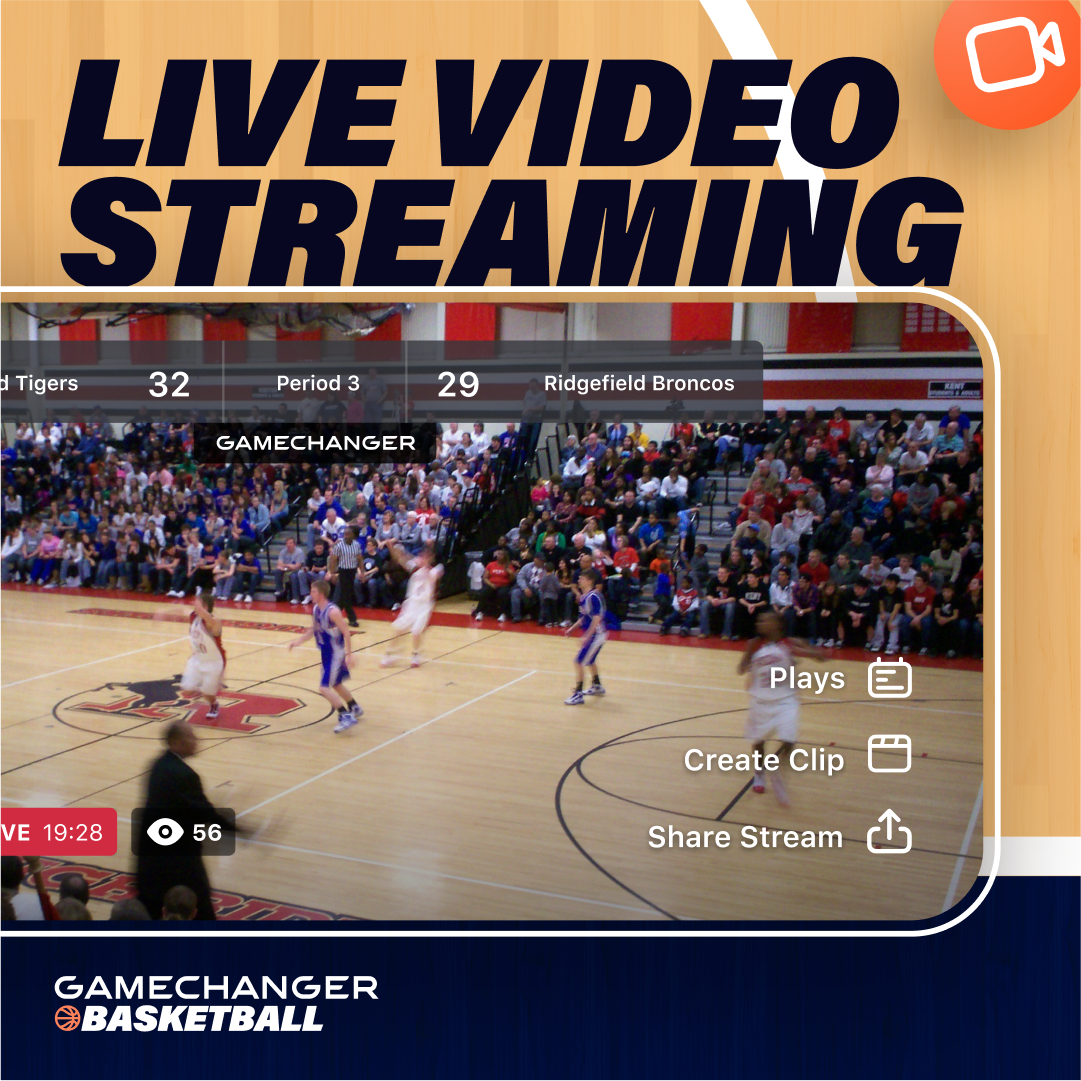
Hey, coach! Want to take your team to the next level this season? Introducing GameChanger, the ultimate game-day assistant with tools to give you a winning advantage. With GameChanger, you can track stats, keep score, and even live stream games, all for free! Get the stats and crucial game video you need to lead your team to victory, all from the palm of your hand. Coach smarter this season with GameChanger. Download GameChanger today on iOS or Android and make this season one to remember. GameChanger. Stream. Score. Connect. Learn more at GC.com/HoopHeads

High school and middle school basketball program directors, listen closely. Coaches are expected to do far more than just coach. You know this. It doesn’t matter if you’re doing the coaching yourself, or you have a full staff of coaches with you. You know very well that coaches handle scheduling, academic issues, parent communication, leadership development, and even mental health concerns for athletes. A lot to deal with, and they haven’t even gone home yet to balance those responsibilities.
No matter the passion for the game, and burning desire to help athletes develop, this level of responsibility can lead to burnout, inefficiency, and less time spent on actual coaching. You know it’s true.
When coaches are stretched too thin, it impacts the development of athletes, team morale, and the overall success of the program. Now here comes the outsiders throwing their two cents in about what’s happening. Then come the parents complaining about how you’re running things, as if they know what they’re talking about. When’s the last time you went to their place of work chiming in from outside their window?
Before you let that fire fizzle out, know that it doesn’t have to be that complicated. There are several ways to prevent you or your coaches from feeling overwhelmed. However, I’ll tell you one of our favorite ways to keep coaches firing on all cylinders, and that’s athlete-driven accountability and organization.
Instead of coaches constantly reminding players about assignments, grades, and practice schedules, our programs at Playmaker Planner puts the responsibility back on the athletes. By tracking their own academics, goals, and commitments, student-athletes become more self-sufficient, which of course allows the coach to put their babysitter hat in the closet, and put their coaching hat back on, allowing them to focus on what they love doing.
Are we offering planners that you can get at the dollar store as a solution? Of course not, but we are starting a conversation with you to see if our programs can be a compliment to what you’re already doing. Let’s find out. To learn more visit https://playmakerplanner.com/stop-is-this-for-you
THANKS, ROB BROST
If you enjoyed this episode with Rob Brost let him know by clicking on the link below and sending him a quick shoutout on Twitter:
Click here to thank Rob Brost on Twitter
Click here to let Mike & Jason know about your number one takeaway from this episode!
And if you want us to answer your questions on one of our upcoming weekly NBA episodes, drop us a line at [email protected].
TRANSCRIPT FOR “THE TRIPLE DOUBLE” #18 WITH ROB BROST, BOLINGBROOK (IL) HIGH SCHOOL BOYS’ BASKETBALL HEAD COACH – EPISODE 1087
[00:00:00] Mike Klinzing: Hello and welcome to the Hoop Heads Podcast. It’s Mike Klinzing here without my co-host Jason Sunkle tonight. But I am pleased to be joined for Triple Double number 18, Rob Brost, head boys basketball coach at Bolingbrook High School in the state of Illinois. Rob, welcome back in!
[00:00:20] Rob Brost: Man. Great to be back. I know it’s been while…now without Jason.
[00:00:31] Mike Klinzing: Very excited to talk to you tonight, Rob, because for anyone out there who doesn’t know Rob just had an opportunity to have an unbelievable experience at the Hoop Summit in Portland, Oregon, where he got an opportunity to work with some of the best young talent. On the court, but also a ton of great talent on the sidelines.
And so we’re going to talk to Rob a little bit about his experience, hit on our normal three topics, and we’re going to start with just the general overview of what that experience at the Hoop Summit was like for you. So kind of take us through, first of all, how the opportunity to participate in that came to you and then we can go from there.
[00:01:14] Rob Brost: Yeah. I’ve done a lot of things for USA basketball and had a lot of different assignments, whether that be court coaching, coach academies youth camp 16 U tryouts, 17 U tryouts, all of those things. And I think it was maybe. Maybe even November maybe even October when I got the call asking if I could do Hoop Summit.
And when there’s three high school coaches in America that get asked to do that you feel pretty good about it and I was thrilled and excited to do it. obviously I had worked with a lot of those kids prior through USA basketball, so I knew a lot of the kids and the, the coaches I knew pretty well, but now I feel like I know them very, very well.
Which we’ll probably get into later. So I got the call probably right before our high school season started, and of course, that was all under wraps. The official announcement in January, maybe late January, early February as to who was coaching the team. And then the team was announced which was also exciting to know exactly who’s going to be there.
And Frank, Charlie and I’ll get into those two guys here in a little bit. But Frank, Charlie and I met at least 10 times or so over. Prior to even getting there because it’s a, it’s a unique event, right? Because you’re getting 12 players who really they know each other, but they haven’t really played exactly together in this situation.
And it’s not a, it’s not an all star game. It’s not anything like that. It’s one game. So from a coaching standpoint our job is to obviously win the game. We have a lot of different factors in addition to win the game. And so and I’m quoting Don Showalter here, that this is the best world team that has ever been assembled.
And so that was provided some unique challenges as well. And I had some good fortune of some. Good things on there, which I’ll probably get into in a overall. The way that USA basketball runs things from top to bottom is first class in every way, shape, and form. And, and the world team was really, really talented.
This year in particular. Not that there hasn’t been talented world teams in the past but this one, I think was like Coach Show said. The best world team that they’ve assembled. And so it’s great to be around that caliber of player, but also we’re practicing at Nike headquarters.
We’re practicing at the Trailblazers practice facility. We’re playing and practicing in the Moda Center where the trailblazers play their, so the entire thing to bottom. It’s first class in every way. And the support staff. I cannot say enough about the support staff of USA basketball.
Anything we ever needed, we just simply asked for it. And usually between 30 seconds and a minute later, we would get whatever it is that we said we needed. And so. It’s really, it was a really unique experience, of course, and one that few high school coaches get to do. But I’m just grateful beyond measure that, that I got participate and really participate in the lives of.
12 guys whose lives are really, really about to change and in the next month they’re going to go off to college and then that NIL money is kicking in and all of those things. So their, their lives are really about to really take off in a different direction in a good way. And it’s, it’s great to make connections with all of and per.
And I’m so excited to watch how their careers progress and how they do moving forward
[00:05:38] Mike Klinzing: now we’ll talk a little bit about the players in a second. Walk me through the itinerary of what day to day you get there. Yeah, just kind of walk us through how this event gets put together and what are some of the things that you participate in that are an official part of the Hoop Summit?
Obviously, I’m sure there’s a lot of time. Sitting around informally, just, just talking. But what are the, what are the formal things that, that you’ve gone through?
[00:06:04] Rob Brost: Just one quick thing that happened on my way there, and I’m not going to say this person’s name or the team that he works for, but I get onto the plane to go to Portland on Tuesday morning, and I sit down and the person next to me says, Hey, I had a USA basketball sweatshirt on.
And they say, Hey, what are you doing? going to Portland, I said, well, I’m going to coach the a Nike Hoop Summit. And this guy says, I’m the director of international scouting for such and such a team. I’m not even going to say the team because and so he and I immediately start talking about the entire roster of the world team.
He knows every player just by their names. Starts telling me about every single one of the players, and so that was just a unique thing that I just, just happened by. And so that’s how the trip started off me sitting by the director of international scouting for an NBA team. And he and I talking about the entire roster of the world team and me taking notes just from the thoughts off the top of his head of about every single player on the world team.
So that’s how the trip started. But to get, to get back to your question, we, we got there on Tuesday and then on Wednesday we had two practices, two formal practices. On Thursday, we had a practice in the morning, and then we had a scrimmage Thursday night. And then on Friday we practiced and then had a team event Friday night, Saturday morning we had a walkthrough, and then we had the game Saturday night, flew home on Sunday.
Now obviously that’s the abridge version of all the the formal things that we, there was. More preparation than you could imagine, I guess you, you would say, because we’re playing a team that has got, the world team gets, I think it’s six or seven more practices than we got. So they all got there several days prior to us getting there and, and.
several days more practice than we had. So and Marshall, the coach of the World Team Marshall Show he does a great job and he is an outstanding coach, who’s also a good friend of mine as well. So we knew we were up against it. But it, it went, it went okay at the, at the end of course.
Everything from the practices to the team meals to the team event that we had on Friday night to things that you don’t really think of. those guys signing basketballs the, the security detail that protects the players. all of those things are factors. the game on Saturday and you have to take all of that into account and USA Basketball does a great job of all of that.
[00:09:10] Mike Klinzing: Tell me about the coaching staff. Let people know who are the people that are a part of the coaching staff, and then after we do that, let’s talk a little bit about sort of the practice planning process that you guys in USA basketball go through.
[00:09:22] Rob Brost: The staff was tremendous. I, I was when you look at the coaching staff, you might be wondering how is Rob Brot a part of this thing right here?
Like, how did he get in? So which will become a little more clear when I describe and tell you about the other coaches. Frank Bennett was the head coach, or is the head coach was the head coach. Hoop Summit. He’s the head coach at Shaman High School in St. Louis, a perennial powerhouse on a national scale.
Jason Tatum went there. He had Jason Tatum among several other great players and has built just a great, great program. On top of that, he teaches math at the high school and is just a brilliant. High school basketball coach. And on top of that is one of the most humble, and, and this, it sounds generic, but is one of the nicest human beings that you’re ever going to meet.
Totally grateful, totally humble. Let us. And by us, I mean the two assistant, and I’m about to describe to you the other one the, the other assistant in a second. But Frank really set the tone for everything from an organizational standpoint to what we were doing on the floor. But at the same time, he gave us a lot of freedom to do what we do and to contribute what we know.
So I think it was egoless as much as possible. And that all started with, with Frank Bennett. So he is the head coach. And then the second, the, the one of the, as the other assistant coach besides me is Charlie Ward. And I have, I have tried to describe this to my son who’s 17 years old, and now I’ll try to describe it to the listeners who might be not quite as old as.
Charlie Ward for my Money is the greatest athlete of all time to walk the planet. He was a first round draft pick in baseball. He was a first round draft pick in the NBA and he won the Heisman Trophy, which means he was the best football player on the planet. At time and he would’ve been a first round draft pick in football.
And so I don’t know any other human being that has all three of those. Incidentally Charlie was just named the head coach at today as we’re recording he kind of gave us a little heads up that it was coming but I’m so happy for him and for somebody that’s a 12 year NBA veteran, that was a first rounder draft pick in Major League baseball and a Heisman Trophy winner is the most humble person that I’ve ever met with those type of accolade.
Being.
The other two coaches. And then for some reason there’s this bald a little overweight guy from Illinois thrown in with these two guys. So
[00:12:25] Mike Klinzing: you can go, you can go, you can go through your draft history now of all the different. Sports where you were draft, where the slots, where you were drafted in, right?
That, that I’m waiting for that, I’m waiting for that part of your bio. Next.
[00:12:35] Rob Brost: I just, I just went over all the slots that I was drafted in professional athletics and it’s over. That, that is the whole list. There’s nothing to the list. And so it, I, I’ve known Frank and Charlie for several years, but this experience just brought the three of us much closer.
And those guys are dear friends and I totally respect how they go about their business and how they relate to kids and for that matter, how they relate to other people. And we’ve been doing this long enough, this pod, long enough that I, I truly believe that relationships are the key to.
And they do as well. And so it was really refreshing to get paired up with two guys that are like-minded and think very similar to how I think. And not that everybody has to think how I think, or not that I need to think how they think, but just the genuine care that they have for. The respect and admiration and quite honestly, gratefulness, for lack of a better term, that they show towards people.
It was just refreshing and exactly how it should be. And so you hear that. Nice guys finish last, well, here’s two nice guys for sure. I would, hopefully people consider me one of them as well, but here’s three really nice guys. Working and actually doing things quote unquote the right way and being rewarded for it.
And so I I just cannot say enough about those two guys. And I still haven’t quite convinced my son that Charlie Ward is the greatest athlete ever to walk the planet. But I think I told Charlie, like if he was coming, if he was in college right now. He would be like a $5 million a year quarterback at Florida State.
Like, it, it would be unbelievable the money that he would be able to make, but not demand. ’cause he doesn’t demand really anything and he so humble about it. But, so anyways, those are the two guys I was working with. Frank was outstanding from, from the get go and Charlie Super cerebral and one of the nicest human beings that I’ve ever met.
[00:15:13] Mike Klinzing: What are the conversations like with the three of you as you’re going into a practice session? Guys, what are you guys talking about? What’s the process like? How many people are just the three of you involved in getting that? Are there other people, representatives from USA basketball? How does that work?
Yeah, when you’re starting to think about how do you put your guys through a practice session?
[00:15:35] Rob Brost: The practice planning itself was the three of us. And then Anthony from USA basketball was our film guy and he really helped us. Clipping practice clips, getting clips of some of the world guys ready and exactly how we wanted them.
And, and getting all the film spliced down for our guys. And we showed some clips from last year’s game and all of the things that you would do to prepare Charlie, the practice plan itself, and then obviously Frank put together the final practice plans and then we were, we would execute them.
Obviously when we got there, we had the first practice plan completely done before we got there. And then we templated the second and third practices and then after that.
A big chunk of the work done before we even gotta Portland. But we wanted to have the flexibility to change things obviously as it as we needed. And so our, one of our biggest concerns was not to give the players too much. First of all, these guys are the best players on the planet, number one.
At their age group. And then number two, we’re preparing for a game, but we didn’t want them to be paralyzed by all the stuff that we put in, so to speak. And so it, that provided a unique challenge because you’re only preparing for one game, right? So you might need this, but you probably won’t, but you might.
And so we had to be prepared, meaning we, the coaches had to be prepared for just about everything. Whereas the players, we kind of picked and chose what we wanted them to get during practices in order for them to play free and to play loose and to be able to basketball. But a tructure most did.
[00:17:46] Mike Klinzing: Cut out that you guys thought, man, we really want to get this in, but we just don’t have time to include it. Did that, does anything fit
[00:17:54] Rob Brost: that bill? I think like all the special situations that could have come up. like when you’re dealing with your high school team, you put in like one a day, right?
Or two a day. Just so they at least see that situation. And obviously you can’t predict every single thing, but we were like, well, what if. X happens. Well, what if Y happens? And then we were finally like, well probably that’s not going to happen. And so we, we had kind of a Rolodex of things that we were prepared to kind of draw up on the fly that we hadn’t introduced to them yet.
And we had discussed this with the team, like, Hey, we only have three days, literally where the world team has six or seven days. Completely prepared, but we, we use the term map it, I do this with our guys and this was one of the things that Frank let let us do. We would say map it a lot, which means make a play.
And so we would give them spacing and then we would say, you’re going to have to map it from here, which means make a play. And so there was a fair amount of that. Four or five general things we wanted to do on offense and four or five, actions that they kind of had at their disposal.
And and, and then it’s just, just like a, a regular game. we want to control the glass, we want to get paint touches and we want to spread the floor. And then after that you can just map it and just play. And so that was, that was. Probably the biggest challenge as far as like what to give them and what to, and when I say give them, I mean like actually practice and go over because this is a really unique situation.
[00:19:45] Mike Klinzing: Walk us through the game.
[00:19:47] Rob Brost: Yeah. Oh, the game was great in a lot of ways, but it was very challenging. I think, . We knew, especially the three coaches, that the world team was going to be good. I don’t think any of us, including the players and the coaches, thought the world team would be that good.
And they, they were really good. And two or three of them have played professional basketball in Europe for several years and have, were used to playing against. grown men, I guess you would say. And so they were prepared. And so we, we came out right off the, right off the bat and we kind of hit ’em in the mouth a little bit and we got up six or eight.
And then in the second quarter, the exact opposite happened. We kind of had a little let down. We had some issues turning the ball over. And next thing we go into halftime down by 10. And so I’m, I’m not going to lie to you, there was a little bit of I would say nervousness from the team, USA brass, I guess you would say as we walked by through the locker room.
And you could feel that a little bit, but rightfully so, because we did not play well in the second quarter and then in the third quarter it was similar to the first, except for we kept going. I, we won the third quarter. To 15 or something. So we really, really played well, played together, shared all of those things.
In the fourth quarter Marshall made some adjustments. They went zone, we acted like we had never practiced against that before. For about a three minute stretch they made a run. And so long story medium, we go to overtime. And then we pretty much controlled the overtime and I think we won by 10 or 12.
I don’t even remember what the final score is, but bottom line is we won. And so we get, we got a victory for the United States, and I think that’s the fifth win in a row for the United States in the, in the Hoop summit. And so I think the world team had won seven times previous. I think it’s like 18 to, we’re 18 and seven now in, in the hoop summit, but we’ve won four or five in a row now.
So that part is, is really, really good.
[00:22:11] Mike Klinzing: And you’ll be invited back now, Rob. That’s the good news. Well, well who knows? I, I dunno if
[00:22:16] Rob Brost: the, if the, the guy that doesn’t really fit with the other two will whatever. I, I, I mean that’s, that’s above my pay grain. That’s for somebody else to decide. But it, it was really enjoyable and it was great because we were preparing.
to do so, like we had a goal in mind, we had an end game and that was what we wanted to do. And Frank did a masterful job at halftime of challenging the guys without getting on him so much that it crushed him. And so he did a really, really good job of that. And you quarter.
I think it was by like 18, going into the fourth quarter. So I think we got a little comfortable and then they went zone and we turned it over a couple times and they hit some really big shots. You gotta give them credit. Their kids were very prepared and a couple of ’em are pros already. And so they, they did a really, really good job.
[00:23:22] Mike Klinzing: Alright, let’s flip it into reflection mode for you from a personal standpoint. As a coach. Coach, and you think about that experience and what you are able to draw from it and bring back home with you, what are one or two lessons, ideas, thoughts, things that struck you while you were there that you think are going to impact you as a coach moving forward?
[00:23:49] Rob Brost: Yeah, I, I think about this a lot. whenever I have a USA basketball experience, whether it’s training camp or. Part of the 16 U team or 17 U team and, and this can’t, in particular, it’s not so much the Xs and that I learn about, although that’s part of it. It’s how like I see Frank, for example, connect with the players.
And how I see Charlie make a connection with the players and hopefully they see me do the same. And hopefully they gleam some of that from me as well. And so I think from an xs and o standpoint I don’t want to say we do everything right at Brook High School, but we’re a lot of the concepts and a lot of the things that we do at USA basketball we also do at Bolingbrook High School.
And that’s probably because those are guys that I. Closest to not just Frank and Charlie, but all the USA basketball guys and, and good basketball is good basketball. Whether you’re coaching NBA players, whether you’re coaching high school players it, it doesn’t matter. The other thing I will say, that was refreshing, .
If you take the talent level aside, obviously these kids are really talented, but off the floor, they act just very similar to the kids at Bolingbrook and what they do off the floor and how they act and how they goof around and how they. Do things as very similar to kids everywhere. And they wouldn’t just be similar to kids at Bolingbrook, it similar to kids everywhere.
And so that part was refreshing. the fact that they can jump really high, that they have great bodies, that they’re skilled beyond measure. The.
people are people and kids are kids and whether I’m coaching at Bolingbrook or whether I’m coaching the Hoop Summit, some of the issues are the exact same. the issues inside the gym. The issues like when we go out for team meals, and I’m not, I don’t mean issues, but like just the way people carry themselves are very similar.
it’s, it’s just refreshing to see that those kids, meaning the Hoop Summit guys aren’t any different than our guys. And they’re, all of them are about to become millionaires here in about a month through college and NIL and all of that stuff. So and then some of them are going to be ultimately.
Players and NBA money. And so that part is different of course, but the music, they listen to how they goof around the clothes they wear, the shoes they like. All of those things are very similar to what our guys at Bowling Brook like. And so that, that part was refreshing and, and to a large extent.
The preparation for the game and all of that is also very similar to what we do at Bolingbrook. And so that part, just not that you need confirmation that what you’re doing is correct, but that part is always refreshing for me because we, I know that what we’re doing and how.
At Bowlingbrook is, is in the right direction. That doesn’t mean everything’s correct all the time and that I do a great job every second. That’s not what I’m saying. What I’m saying is that in general good basketball is good basketball and how you get a culture of good basketball happening.
The same no matter what. And you can look we were talking right before we jumped on air. Like you can look at the Phoenix Suns and what differentiates them and their culture from some many other teams. And I don’t want to get into an NBA debate here, but what I’m saying. The good culture is good culture.
Whether you’re at the NBA level, whether you’re at Bolingbrook High School, whether you’re at Hoop Summit, everybody needs to work hard. We try to be as unselfish as possible. We try to share, we be happy for others. We’re grateful for any experiences that we get and, and we’re certainly grateful for, for other people’s success and, and we want to help them be successful.
So those things are true throughout basketball and life. And so just the overall experience was just really, really, I’m just grateful.
[00:28:32] Mike Klinzing: So much of that, what you just described, Rob, to me, as you’re talking, what I’m thinking is that the processes that are required to have success at, let’s say a school like yours where you’re playing high school basketball at a very, very high level, the processes there are the same. If I’m playing at. A small rural high school that has an enrollment of 75 kids, and that process is the same at the Hoop Summit.
That process is the same if you’re coaching at Duke or you’re coaching at Kent State, or it’s the same if you’re coaching at the NBA level or you’re coaching in the Euro League, whatever. There are just certain things that, regardless of. The level of play, regardless of the talent of the players that are playing.
And it’s funny, and I know I’ve heard you say something similar before when you’ve been to these USA basketball events, that the way that the kids conduct themselves, you watch them on the court and because of their talent and because of their skill level and because of the physical tools that they have, you watch them and.
Wow. Like you’re just, you’re blown away by what they can do on the basketball floor. And then as soon as that buzzer goes off and they walk off the floor and they pick up their duffle bag, they’re the same as any other kid. And I think you could talk and take that to any other level as well. Like we spend so much time watching basketball on tv, whether we’re watching college basketball, whether you’re watching the NBA and when we see players on tv.
We see them for their talent and their skill level, and occasionally you see things that are indicative maybe of their leadership or the type of teammates that they are, but we don’t see that nearly as much. And then we definitely don’t see, unless they want us to see it, we don’t get an opportunity to see what they’re like off the floor.
And yet I’m sure that. B, a coach or an NBA player, if you put somebody in their same age demographic and looked at what they’re doing off the floor and the way that they’re just being as a person, it’s all similar. And yet we kind of put people on a pedestal. And I think what I always take away from your experience, Rob, and again this is me vicariously living through you, is the fact that when you’re working with players that are at that high of a level.
I think that from the outside there are many people, probably I would include myself in this group, that if all of a sudden I’m working with a kid who’s 17 years old, who I know that probably two years from now, this kid might be the number one pick in the NBA draft, that I’d be a little like, oh, I don’t.
I don’t know if I should. Yeah, should I say that? Should I correct? Like who am I to correct this kid who’s going to be making
[00:31:36] Rob Brost: Yeah.
[00:31:36] Mike Klinzing: Millions of dollars and might end up being a top 10 pick in the NBA draft. And every time I have this conversation with you and I hear you talk about it, it always brings me back to the fact that those guys, yeah, their talent level may be higher, but ultimately every player wants.
The same thing, right? No. They want to get better. They want to be coached regardless of where they’re at. And that’s what I always take away from your experiences. Just the fact that I’m sure there are people that listen to this and are like, how are you a high school coach? And you go in and all of a sudden you’re talking to guys who are future pros.
How do you, like, how do you navigate that? And I always think that your answer is always just, I do the same thing. I, I’m doing exactly what I do with my high school guys. I’m doing the exact same thing. The guys that I coach with USA basketball and that’s what always strikes me whenever you and I have this conversation, I don’t know if that makes any sense to you at all, what I just said, but that’s what I take away.
[00:32:32] Rob Brost: I think it, it makes total sense and it just little things like as soon as we get done with practice. Now, obviously there’s a 20 minute media session, but that wouldn’t happen at Bowl Brook High School except for one day when we have Media Day. But so then there’s a 20 minute media session, and then when everybody gets done, they immediately pull out their phones before they even change their shoes and check their phone.
And it’s just exactly like. What happens at Bowlingbrook and then they start making fun of each other and poke fun each other. it’s just, it, it’s it, it was so refreshing in that way, but I had been around those guys long enough that I knew that that’s what it would be like. And I know that they all want to be coached and, and they’re the same thing as us, right?
Like they come to Hoop Summit and they think. Hey, I’m going to have the best coaches in the country, so I better be quiet and listen. ’cause these guys really know their stuff. Know whether that’s true or not, I don’t know. But I would hope that it is. I would hope that it is. But, and, and it’s just like we end up practice, there’s, at Hoop Summit, there’s three or four guys getting extra shots up.
And there’s six or seven guys just getting their gear on and getting, just like at Bowlingbrook, there’s three or four guys getting extra shots up and then there’s three or four guys that just want to take off and be done and, and that’s fine. I’m not judging any of those that are doing any of those things.
But the gym is very, very similar. As soon as practice gets over two or three guys immediately. Get some support staff and get extra shots up and get this and that and done. And then other guys wouldn’t do that and it’s all fine. But that’s the exact same thing that happens at Bolingbrook when we get done with practice.
Two or three guys will try to get extra shots up and get more work in before we have to leave, and then most will just get their stuff on and get, get to the next thing. So it’s just very similar. In more ways than you think and that obviously the hoop Summit guys have a little, little bit I don’t know if pressure is the right, right word, but there’s dollars that follow them based on their performance.
Right. And so that’s a little bit different than and then, and when there’s every NBA team. And every move you make and all of that, that’s a little bit heightened focus on everything you’re doing, which that is definitely not happening at Bolingbrook High School. But it’s more similar than it is different.
I’ll just, I’ll just say it like that.
[00:35:20] Mike Klinzing: Tell me about some of the guys that you had an opportunity to work with. Maybe. And I, and I don’t want you to, I don’t want you to slight anyone and just No, and I would never
[00:35:30] Rob Brost: do that, but,
[00:35:31] Mike Klinzing: But, but maybe a guy or two that just stood out to you for whatever reason.
That, that somebody out there who’s listening, that’s part of our audience, that’s a, a college basketball fan, an NBA, who are some guys that we. Come on the national radar if they aren’t already there now. Yeah.
[00:35:50] Rob Brost: Well
[00:35:50] Mike Klinzing: that, that what, what, what, what, what are we going to like about these guys?
[00:35:54] Rob Brost: Yeah. Well, I, I am an enormous, enormous, probably the number one fan of Cam boozer of, of anyone on the planet.
He just, the way he goes about his business, the way he doesn’t take things too seriously, but at the same time, he. Handle like a professional already, and he 17, 18 obviously without saying with all of these guys but Cam and, and Caden both. Really humble kids, really nice kids and really handle their business in a way that I really respected.
And then, and cam is ultra talented, obviously. And, and I’ve told many people, I, I mean, I think he could play in the BA right now. Stop off at Duke for a year or two, probably is not going to hurt him at all. Probably not. And so I, I think he, he was great and the talent level is just immense from all of these guys. But you take a, take a guy like Trey McKinney, who I think he had 18 or 19 points in our game he played a role and.
was, was able to take everything that we threw at him and everything that the game threw at us, if that makes sense. And so I really respect that. But all of our guys, I mean, I could go down the entire list. Darius and Nate and Caden and Mikel Chris, all of them. Jaylen, Jasper. Nick is a really, really unique player from California who’s going to Duke as well.
I, I love him. Malachi is going to be a really, really good player as well. So all these guys are at the next level. But AJ, of course, is ultra talented as well, and can do just about anything he wants on the basketball. And so they were all really, really, really good. But I’m, I’m super, super high on, and not just because I think they’ll be in the NBA or something like that, but cam the way he carries himself and he was on my team several times.
At training camps and, and at other USA events. So I knew him a little bit better than maybe I knew some of the other guys. So that was helpful. But just the way he just is steady and just does what he does. And, and I think in the game he had 20 some points, 16 rebounds. I mean, he dominated from start to finish.
I have nothing negative to say about any of, of the Hoop Summit guys and some of the world team guys were much better than I thought as, as well. And, and those guys are going to have great careers as well. And you take a kid like Dame SA on the world team, he is getting recruited by every top school here in in America as well.
So some of.
Basketball terms as well, and some of them already have made their mark in Europe and now are going to do it in the NBA eventually
[00:39:25] Mike Klinzing: as part of the event. Is there any, I dunno if off the court discussions sort of the mental side of. What these guys have to go through in terms of, you talked about sort of the monetary pressure that’s obviously pushing on them.
That’s not pushing on the average 17 or 18-year-old kid, the spotlight that some of them have been under. Obviously in the case of the boozer twins, they’ve been sort of under the microscope ’cause their dad was a professional aall player. Talk with any of them about sort of that off the court? Well, just being able to handle things.
[00:40:04] Rob Brost: Yeah. Well, we, I mean, obviously each coach has unique conversations with every player, so and the connections you make and those conversations obviously are between them. But USA basketball does a really, really good job. They had Jamal Crawford come in. And go to dinner, dinner with the guys, and it was just them, right?
So they could ask him anything because he knows what they’re about to go through. And then Chris Bosch came in very similar situation. So USA basketball does a really, really good job of, of taking a holistic approach to this whole thing in training camps. We’ve had prior, which all these guys have been to the NCAA is a part of it.
NBA Players Association is part of it, where they get some financial literacy, they get mental health issues awareness about all of those things and the resources that are available to them. And then for this particular event, like I said, a basketball did Jamal in and not just, and Jamal.
Outstanding job. And I’m not privy to the conversations obviously that he had with individual players and they had with with them. But he did a great job of just, Hey, let’s talk about it all. That’s why I’m here. And so this is not about basketball, although it is, that’s what brings us together. And, but if.
Really earnest conversations with him. And the same thing with Chris Bch, when, when he came as well. So USA basketball does a great job with the holistic approach to this entire thing, even though it’s an abbreviated part period of time. And we’re still trying to prepare to win a game. So that’s another thing that USA basketball does a really, really good job of.
And that is taken a holistic approach to the, to every single player.
[00:42:01] Mike Klinzing: I think that’s been, if you look at the history of basketball and you go back Rob to when you and I were young kids, and you look at guys who made it professionally to the NBA and the number of players who ended up having challenges in one area or another in their personal lives.
And that’s not to say that there aren’t guys today that. Have challenges in their personal lives or have made mistakes. But it does feel like for the fact that the NBA especially is younger than it’s ever been. Yeah. And the guys that come in, how well they’ve been prepared in terms of. Managing their lives off the court and handling the media and being able, being able to deal with the spotlight.
And of course we all know sort of the attention that’s been given to, to players’ mental health when Kevin Love and DeMar de Rosen talked about their struggles with that. And it just feels like guys have come in to the league and have a better understanding of how to manage their life off the court.
And to me that’s always. I think an amazing part of what these players have to go through at age 16, 17, 18, as they become more famous than you and I Yeah. Could ever imagine the number of people that know them and for them to be able to handle that. And I, I try to go back and think about myself as. A 16, 17, 18-year-old and where I was from a mental standpoint and, and just being able to handle all the things that are thrown at these guys that they have to be able to deal with not, and that’s irrespective of what they have to do on the court, which as you said, yes, they’re practicing with 30 NBA teams sitting in the stands, evaluating them, figuring out, Hey, where are these guys?
Eventually going to slot when they become eligible to be drafted and all those things, which is a whole nother level of pressure. But I just think that whether it’s USA basketball or the NBA Players Association or the NCAA or different college programs, or even high school coaches in so many cases, right, are are talking to guys about making good decisions, not just on the floor, but off the floor.
And I think there’s, it’s a credit to the basketball community. That we’ve given the kids who have this much talent on the floor, some of this guidance that I think in the past, if you go back to the seventies, eighties, early to mid nineties, a lot of this was, it just wasn’t there. Yeah. And you look at the number of guys that potentially their careers.
Didn’t turn out the way that maybe they would have if they had had some more stability off the court. I just think it’s a credit to the entire basketball community that this is the direction that we’ve gone.
[00:44:59] Rob Brost: Yeah, there’s no question that there’s been a big focus and a big shift really towards that.
And a lot of times kids. The basketball part is the easy part for them a lot of times. Right? Because that’s what they been training since they were six years old or whatever it was to, to do, and they’ve been working out and they’ve been doing. But the, the mental health aspect of it, the financial literacy aspect of it and all of those things they need training in that as well. Just like you and I probably needed the training, but we didn’t get that because we, we were not that and it wasn’t really absolutely as readily available. And, and there’s less stigma on that now than there was. 20 years ago where, or even like 10 years ago, to be honest with you.
And so I, I think USA basketball in particular has done a really good job of recognizing and then not only recognizing that it’s a need, but then putting resources and people in place to address those things which is great. Around as coaches at the last training camp. Like remember at training camp we used to have like four hour practices and we just had four hour practice and then we ate and we came back and practice for four hours.
Well, now we don’t do that because they have those other things are embedded in there. like the financial literacy piece, NCAA rules, mental, mental health issues, those things are embedded in the curriculum, not just on court. And so the, the steps forward in the, in those areas have been refreshing as well.
[00:46:49] Mike Klinzing: Absolutely. All right, Rob, is there anything else, a final story, a final takeaway that you want to leave us with your experience at the Hoop Summit?
[00:46:56] Rob Brost: Man, I’m just grateful for the entire experience. There’s a lot of, . Scoop inside story those types of things that maybe you and I’ll discuss if we ever meet up in Louisville again or something like that.
But it was a great experience for me professionally, but it was even more great experience for me personally because I learned you learn more about people, and the more I do this, the more I realize that. People are that really, really good stuff happens to. And so not that it’s a guarantee of any sort and obviously bad things happen to, to good people.
And I’m not saying that, but you, you kind of get the gist of, of what I’m saying and, and that I used to think like, man, I just have to grind it out. I’m going to have to be an, a-hole here and I might have to burn some bridges here. And the exact opposite is true. And the longer I do this, the more I realize.
That. And, and it’s, it’s, to be quite honest with you, it’s refreshing. And so that’s, that’s been a great part of my journey, the whole USA basketball family and, and, and everything that’s been a part of it. So I’m just grateful beyond measure and I’m looking forward to, to the next opportunity if one comes and if one doesn’t come, I’m grateful that for the opportunities that I.
[00:48:26] Mike Klinzing: It’s great stuff Rob and I always enjoy the conversations after you get an opportunity to go because like I said, I feel like I learn from what you’ve been able to experience as you go and work with USA basketball in these various capacities. So thanks for sharing. I know the audience, I’m sure enjoyed the episode, Triple Double number 18 in the books, and we’ll be back next month with number 19.
So Rob, again, thank you for joining us tonight. Really appreciate it. Thank you. And to everyone out there, thanks for listening and we will catch you on our next episode. Thanks.